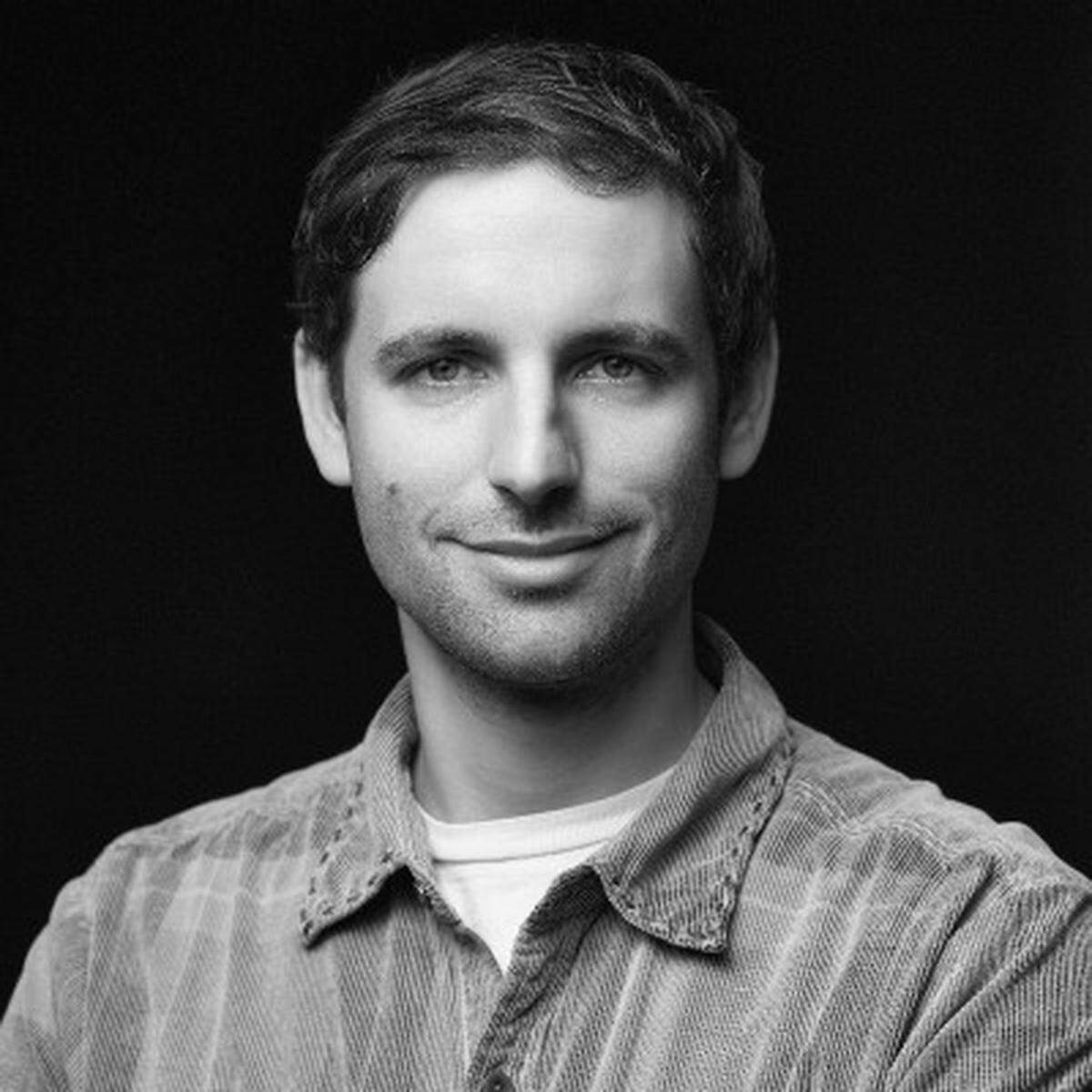
Bill Spruill expects startups to ask him for money. Here’s what makes him say yes.
Bill Spruill was all smiles last week as he toured the progress being made on his future office space in the new mixed-use Smoky Hollow district near downtown Raleigh.
Exposed beams stood in place of walls and ladders outnumbered places to sit, but Spruill was still pointing out how each area would be used when construction completes: a section for him and his team, a central conference room, and work zones for the companies he will invest in through his new venture.
After a life-altering 2022, it was clear Spruill wasn’t slowing down as the calendar turned.
In May, Spruill achieved one of the most lucrative exits in Triangle history when Global Data Consortium, a company he cofounded in 2012, was acquired for $300 million. He’s known many who retired after hitting their respective windfalls to enjoy what he calls the “two houses and a boat” lifestyle. It’s not a path Spruill has taken.
Since selling GDC, he has launched 2ndF, which looks to make early-stage investments in local companies with an emphasis on expanding opportunities for minority entrepreneurs. Spruill already has committed several hundred thousand dollars through the venture, which he named after the Second Foundation organization in science-fiction writer Isaac Asmiov’s Foundation series.
And in September, Spruill was named board chair of the Council for Entrepreneurial Development, an economic development nonprofit in Research Triangle Park.
A native of Goldsboro, about an hour southeast of Raleigh, Spruill spoke with The News & Observer about how the Triangle startup ecosystem ranks among its rivals, how it could improve, and why he’s chosen to stay local. Plus, he shared what he looks for in an ideal startup and the best (and worst) ways to pitch him.
This conversation has been edited for clarity.
N&O: Where does the Triangle stand relative to other startup ecosystems?
Spruill: Something this area has forgotten over the annals of time is that we have been a leader in entrepreneurial development zones for a long time. The (Council for Entrepreneurial Development) was one of the first nonprofits that focused on entrepreneurial ecosystem development. And so, from a community perspective, it’s always been difficult for me to hear that somehow we’re behind these other communities.
I will say, over the years, we’ve held steady and other communities have come up and that’s probably been our biggest problem. We’ve not continued to move ourselves forward at the same pace.
Somewhere along the way, we definitely got passed. And that’s fine. Now it’s time for us to basically re-seize that mantle.
N&O: So how can the Triangle re-seize the mantle?
Spruill: We’ve got great experience, expertise, knowledge coming out of N.C. State and the other area universities, but we don’t spend enough energy focused on those (business-to-business) enterprises: ag tech, chip tech, battery science, textiles, and now apparently some quantum computing excellency as well. More focus on that type of thing as opposed to apps and (business-to-consumer) products. Not that those are bad, but it’s hard to build something to scale when you don’t have all the resources.
Focus on where our strengths are and be the best at what we are as opposed to try and sort of play the envy game with other places (like the Bay Area). Lean into what you’re really good at and where you have good defensible moats. (Auto tech) in Detroit. Space tech in Southern California and a place like Huntsville, Alabama. That’s exactly what I’m a big believer in.
So if our strengths are in life science, ag tech, textiles, quantum computing — those are the companies we should be spending a lot more energy on.
N&O: Why focus your investing on the Triangle?
Spruill: Over the years I’ve traveled quite a bit building out (Global Data Consortium) and working with Address Doctor prior to GDC. So I’ve gotten to see a lot of the world having had this great exit. I could live in any one of those communities or other communities that are, you know, ‘hot spots around the globe.’
But I choose to live here in Raleigh not because it’s home from the past, but I believe it to be the home of the future. And I think there’s opportunity here. There’s great people, there are great restaurants, great culture. There’s a lot to build upon here in Raleigh.
N&O: What’s the ideal company you’re looking to invest in?
Spruill: The ideal company I’m looking for is solving real problems that can help create jobs in both this community and elsewhere. But the most important thing is solving real problems for the world on a global basis.
I’m looking for founders who are motivated to solve problems and to build sustainable businesses. This isn’t growth at all costs. It’s growing up a business that actually means something. So, whether you’re growing at 30%, 50%, 100%, 300% a year, are you growing a meaningful, profitable business that employs people, solves a real problem, and helps enable activity within the community that we all live in? The more of that I can generate, the better it makes our overall community.
I say Raleigh, but really it’s the Triangle. How do I make the Triangle a bigger, broader, more diverse community? And as a result of making the Triangle bigger and better, we will make the state a bigger and better, more robust community as well.
N&O: You must get pitched a lot. What are do’s and don’ts, green flags/red flags when startups are seeking funds?
Spruill: (Laughs) Yes I do. I will tell you the number-one red flag is to get a money ask in the first interchange. I don’t even respond to those requests regardless of merit.
The number-one green flag is when you make an effort to get to know me and put the time into determining whether you really want to work with me. Most checks come with some type of baggage and the founder who doesn’t explore and understand what that baggage is before soliciting for the check is not a founder who I would want to back.
N&O: What approaches do you take to increase diversity in leadership roles in the area tech space?
Spruill: First, I have to own that I didn’t have enough diversity of leadership at GDC.
It was interesting because I felt that I looked for it and just could never find the right people that fit our culture. As a result, many of the people who made significant sums from GDC were not from a diverse population. I own that, and now I am looking to correct that issue through three efforts: seeking out existing potential leaders and plugging them into companies at the executive leadership level; curating younger potential persons to get them on the executive leadership career path; and finally, I’m seeking out diverse companies and helping their founders hire diverse executive leadership to their teams.
I think helping minority entrepreneurs is important, but part of the way I see helping them is by creating this bigger pool of opportunity. And I want (minority entrepreneurs) to see that you can dream and create these opportunities yourself, and then I want to feed them into opportunities along the way. I don’t want to lower the bar. I want to raise the bar and challenge people to build a larger pool.
N&O: You’ve discussed venture capital activity in the Triangle lagging behind other tech cities. How can this be improved, and why is it important that it is improved?
Spruill: We have to create more super angels first. We don’t have enough exited founders reinvesting in the community. Lots of reasons for that, but bottom line is without a strong core angel community that is made up of founders, it will continue to be a challenge to draw in capital from other areas to invest in our companies.
More strong exits where founders and their founding team members benefit will improve the roster of participants. Why is it important to improve this? Well, if we want to dream bigger, then that assumes we want our companies and founders to be bigger and better. It can’t be just grow your revenues to $5 million and sell out. Companies need to be thinking in terms of $30 million, $60 million or $100 million in revenues. Building better companies that think, operate and grow along these lines is what will attract more capital to the region. It truly becomes a virtuous cycle if done right. It’s going to take time but it can be done.
N&O: What impact do you see broader economic uncertainty having on the VC ecosystem in 2023?
Spruill: Lots of smaller, less established funds who need to raise new funds will go away because their base (limited partner investors) are electing to slow down or disengage from the asset class completely. That said, funds that have already raised funds will be under pressure to deploy capital. So entrepreneurs should do their homework. Overall, 2023 will be a tough year but it will eventually get better again. Up cycles follow down cycles.
N&O: You had a major exit in 2022. How has your life changed since then?
Spruill: My neck and shoulder pain have diminished significantly. I’ve recalibrated around personal goals and purpose. I fly first class more often, but not all of the time.
This story was produced with financial support from a coalition of partners led by Innovate Raleigh as part of an independent journalism fellowship program. The N&O maintains full editorial control of the work.
This story was originally published January 5, 2023 at 5:30 AM.