Bandwidth offers peek at its new office complex. Does it live up to the hype?
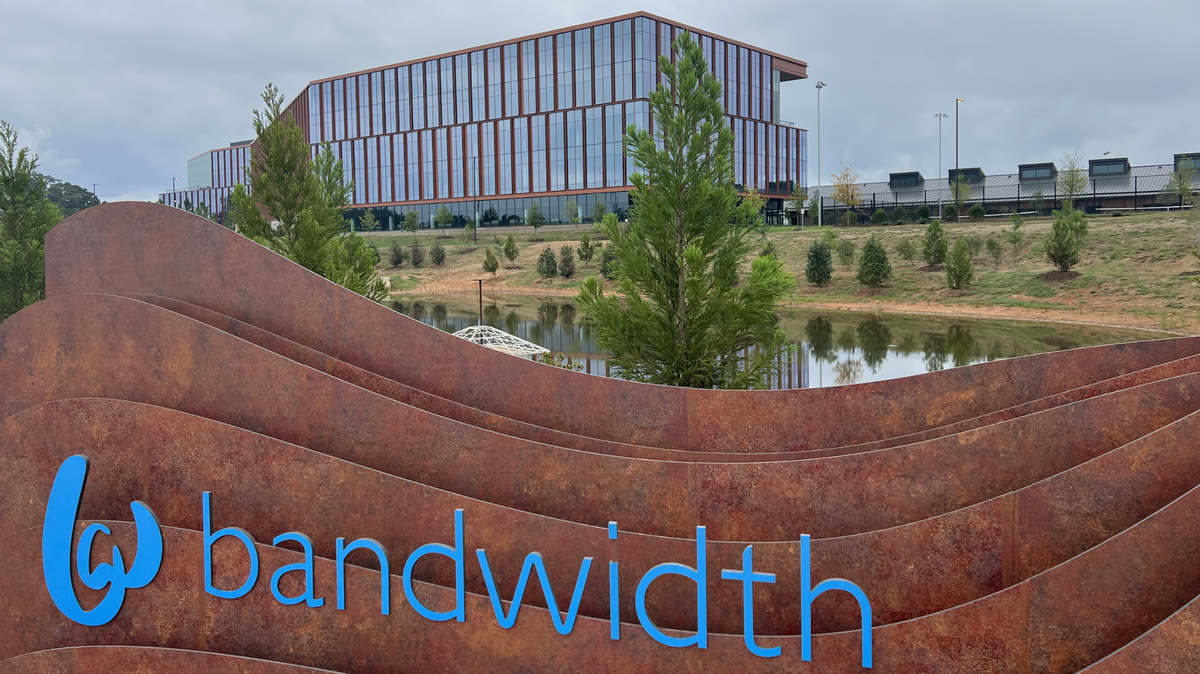
For two-plus years, Bandwidth has been funneling tens of millions of dollars into constructing a sprawling new 533,000-square-foot campus off Edward Mills Road in west Raleigh.
This week, the company offered up a first glimpse.
Hundreds of “bandmates,” as the local tech company likes to call its employees, headed to 2230 Bandmate Way on Friday afternoon, getting a sneak peek at their new home ahead of the company’s official moving day in two weeks’ time.
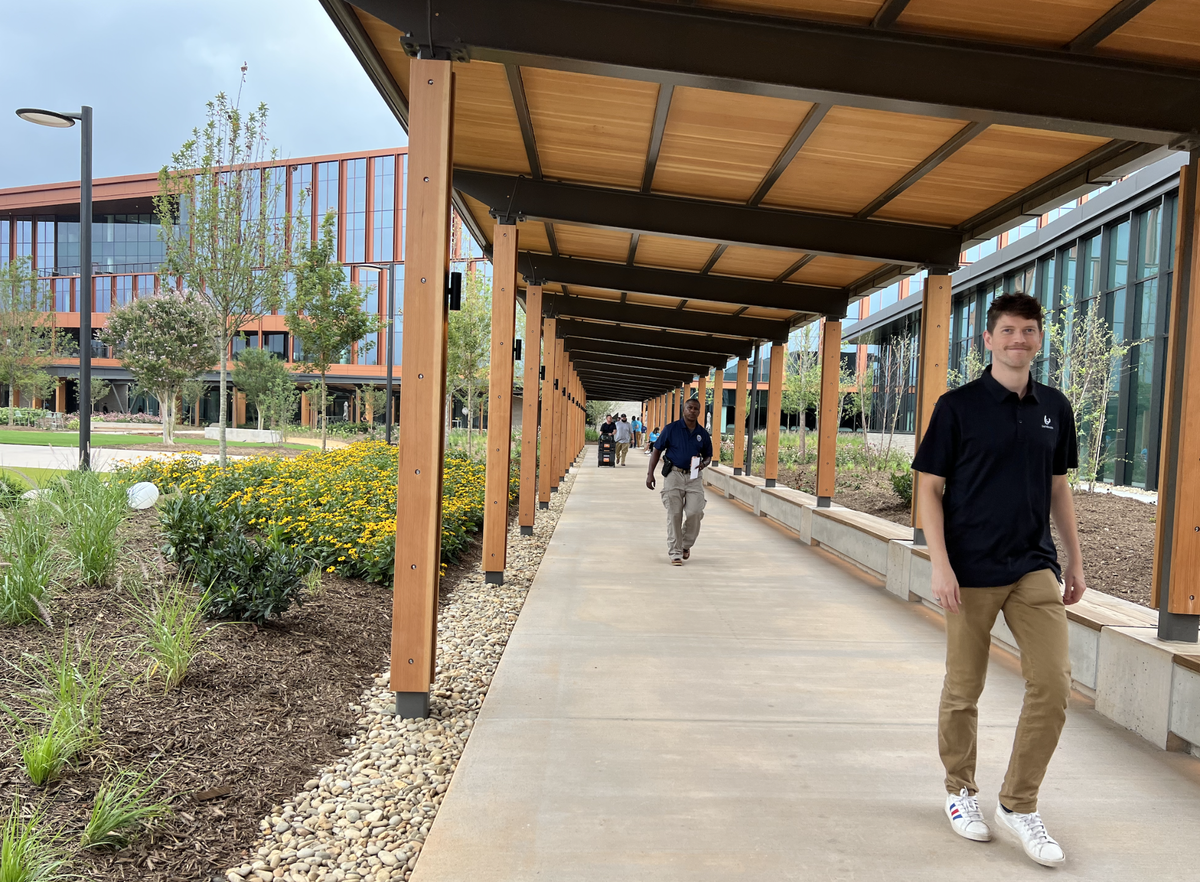
Nestled amidst farmland in the city’s fast-growing Blue Ridge corridor, they found a five-story office tower fabricated from red steel and glass, rising from the earth like a mountain. Incorporating elements of nature, it’s surrounded by native plantings, walking trails, a pond. It even has its own apiary.
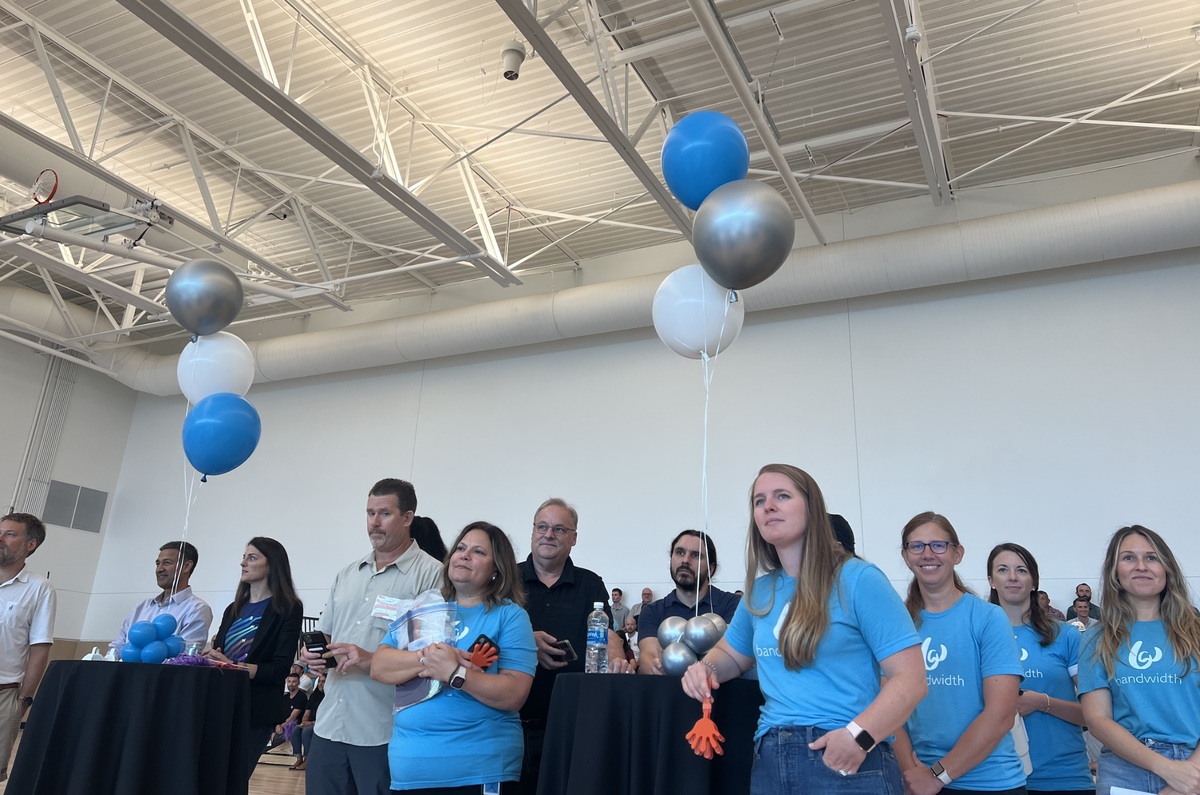
“Bandwidth has raised the bar of what it means to be together, physically, in the workplace,” its founder and CEO David Morken, told the 300-strong crowd gathered in the company’s sparkling white 30,000-square-foot gymnasium for the long-awaited unveiling.
Since the pandemic, perhaps no local tech company has promoted in-person work as strongly as Bandwidth. Starting October 2022, it announced employees would have to return full time — or find new jobs.
Now, as most other tech companies, like IBM, Pendo and SAS, embrace hybrid work, Bandwidth is betting its new digs will continue to attract talent while keeping its workers coming into the office five days a week.
Is it worth the $100 million price tag? “Well worth it,” Morken told The N&O, shortly after coming off stage. “Being together is meaningful. This campus supports that philosophy. It’s not for everybody, but it’s right for us.”
Amenity-rich Class A
The 40-acre complex, resembling a private college campus more than corporate headquarters, triples the company’s former office space on North Carolina State University’s Centennial Campus.
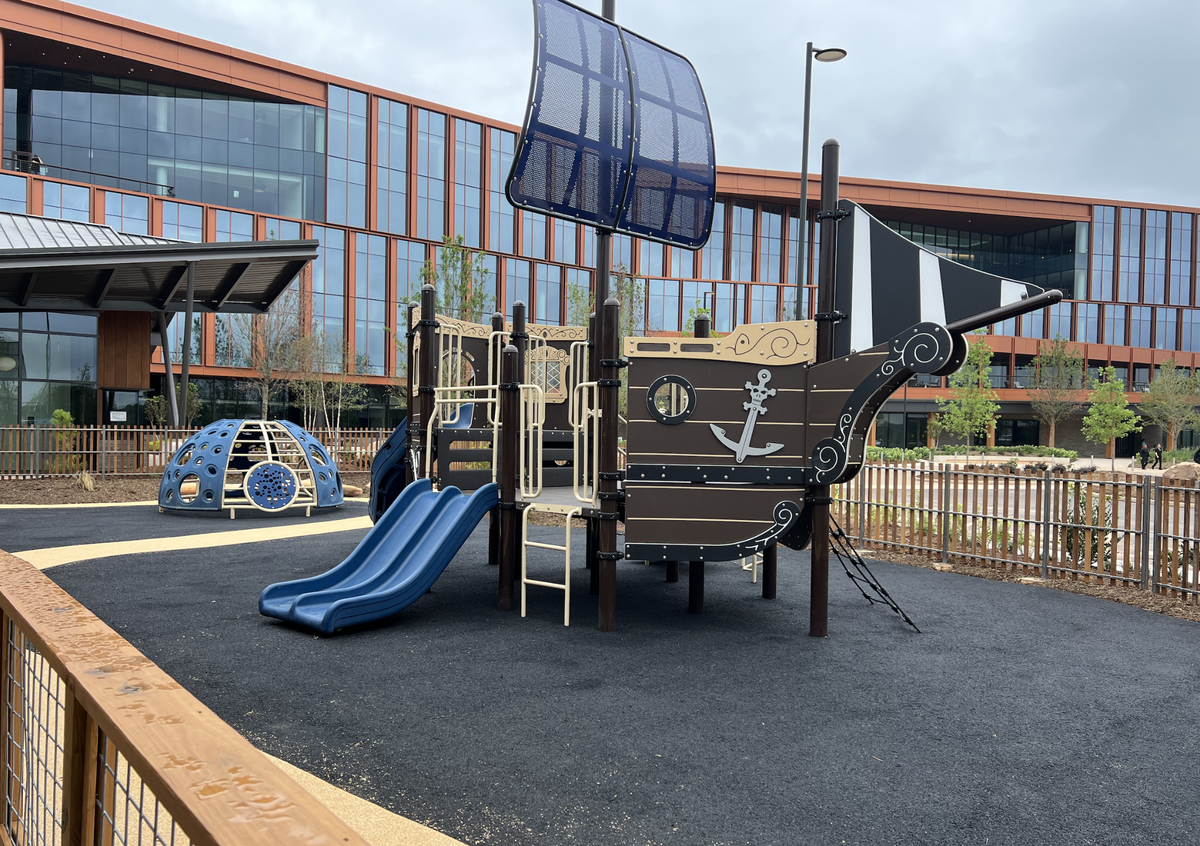
It includes soccer fields, tennis courts, indoor basketball courts and an on-site Montessori-inspired school — called “Ohana” (Hawaiian for family) — just for workers’ families on campus. There’s also a “barn” space for events built from 200-year-old Rocky Mount Mill lumber.
In addition to such amenities, the company offers 90-minute workout lunches, a no-email policy on vacations, and a paid-leave day to support social causes of their choice.
For some, like Amanda Gissel, 45, who lives in Apex and has worked in the company’s people services division for over a year, it’s an attractive package.
She strolled the grounds with the scent of freshly laid mulch hanging in the air. “It exceeds the hype,” she said. “I feel so lucky to work here.”
Hannah Prengle, 33, North Raleigh, said she feels the same after working in the company’s marketing department for almost seven years. She doesn’t have a family yet, but she said she’s already looking forward to sending her future children to the Montessori school.
“Having it where you can wake up in the morning, go to work, work out, have lunch with your kid, go back to work, then play pickleball with your coworkers — that complete-day experience is why I’m here.”
Homegrown company
Bandwidth — which makes voice and text communication software – is one of the Triangle’s biggest homegrown success stories.
Morken, a former Marine, started the company with his partner, Henry Kaestner, in a spare bedroom in Raleigh more than 20 years ago.
Today, the publicly traded company has roughly 1,200 employees worldwide with an estimated net worth north of $375 million and a network extending to more than 60 countries.
In 2020, it purchased the 40-acre plot of land from the state of North Carolina. In exchange, the state offered the company an incentive package worth up to $32.2 million to create 1,165 jobs, with an average salary of $96,832.
Bandwidth has faced some headwinds in recent years. Its stock price has been on a downward trajectory since the first year of the COVID-19 pandemic.
On Feb. 15, 2021, a share of Bandwidth stock sold for $188.83, a record for the company, which went public in 2017. Today, it hovers around $15 a share.
Before Bandwidth broke ground, it had planned to hire more than 1,000 workers in the coming years. Morken said that’s still his goal.
“Time will tell,” he said. “The plan is still there, but the dates may have changed a little. I started in a spare bedroom, so I feel good [about getting there].”
This story was originally published August 6, 2023 at 6:00 AM.