Open Source: How is quantum computing going? In the Triangle, depends on who you ask.
I’m Brian Gordon, tech reporter for The News & Observer, and this is Open Source, a weekly newsletter on business, labor and technology in North Carolina.
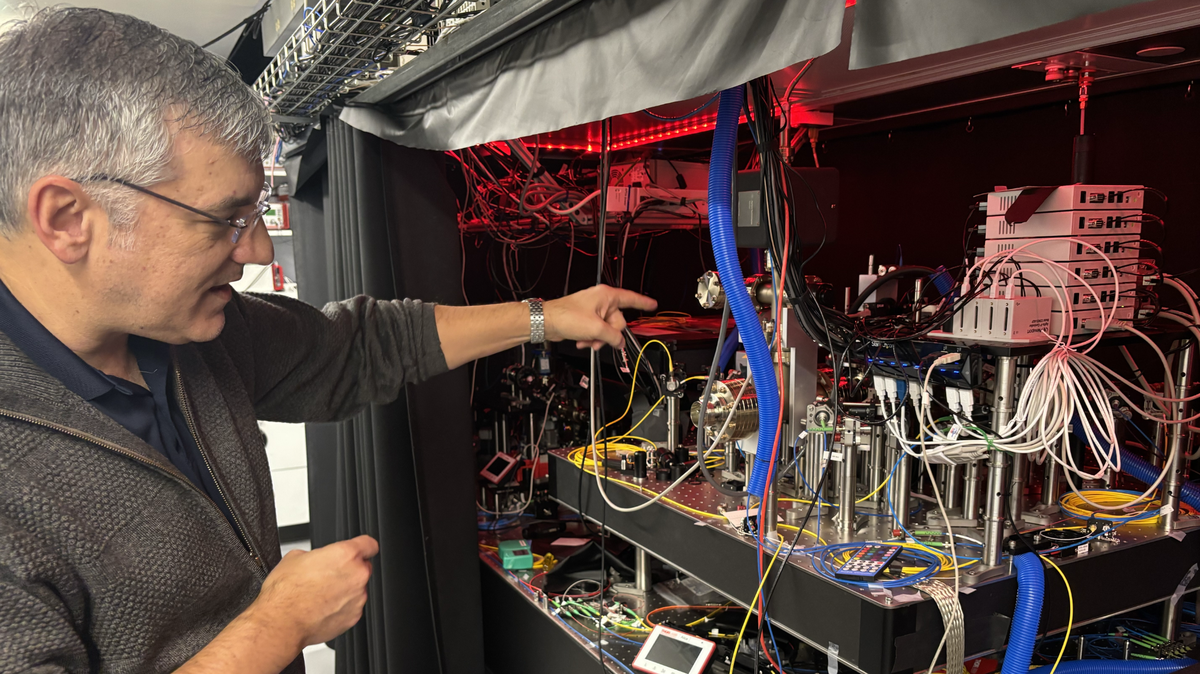
Chris Monroe tore open an adhesive curtain to reveal one of the few quantum computers in the Triangle. This was the green system, named for the color laser used to poke barium atoms suspended inside a cryogenic chamber kept at four degrees above absolute zero.
Through crisscrossing wires, Monroe identifies the components within this still unfinished apparatus. “It should be a pretty powerful system,” he said.
Monroe is the director of Duke Quantum Center in downtown Durham. He is also the cofounder of IonQ, a publicly traded quantum computing company whose stock is near an all-time high (up 200% on the year). This is good news for Duke, which gets equity in IonQ when the Maryland company licenses the quantum center’s intellectual property.
After closing the green system curtain, Monroe moves on to display the red system — which is actually three separate quantum computers linked by fiber optic cables. It looks like a large cityscape basking under red light.
Quantum computers aren’t science fiction. They function and are being sold. This year, IonQ announced a $54 million contract with the U.S. Air Force to deploy these systems.
Yet in an interview this week, Monroe admitted he can sound cynical when discussing recent quantum computing developments. “The progress, even in two years, has been super slow,” he said. “I would say even disappointing.”
Not every quantum researcher in the Triangle agrees. Some speak more bullishly of recent advancements in error mitigation and hardware. But the Duke Quantum Center director isn’t alone. Despite lots of money and a recent “breakthrough” error correction achievement from Google, no quantum computer can perform a real-life task better than a classical computer. And there’s no sense when that might change.

The potential, however, is tantalizing enough to justify researchers’ continued efforts. In North Carolina, this work is concentrated at Duke and NC State. The former specializes in trapped-ion quantum computers; the latter partners with IBM on a type of quantum machine called superconductors.
Each system could one day revolutionize chemistry, operations, finance and encryption by bringing exponentially stronger calculating might to crack today’s unsolvable problems. Quantum computing goes beyond the binary 1s and 0s bytes of classical computers to produce nearly endless, entangled possible outcomes represented by quantum bits, or qubits.
It’s hard to get one’s head around.
“You need to park everything you’ve seen, felt, heard and experienced in the real world at the door because there is no analog to your daily experiences that you can take into quantum computing,” said Patrick Dreher, the former chief scientist at N.C. State’s IBM Quantum Hub.
What limits quantum computing is that subatomic materials are fragile. Ion traps control atoms in airless vacuums while IBM’s superconductors maintain chips in extremely cold temperatures. Still, the integrity of quantum calculations erodes over time as more qubits are added.
This month, Google unveiled a quantum computer chip called Willow that exponentially lessened errors as more qubits were added. It was an achievement decades in the making, the company said.
Reactions to Google’s announcement varied within the Triangle quantum community.
“It’s a step that everybody’s working toward,” said Greg Byrd of NC State’s quantum department. “(Google has) been able to demonstrate one flavor of this error correction. So, it’s a significant step. I would consider it a breakthrough.”
Others at the Raleigh university emphasized this was a specific step that won’t immediately ripple across the industry.
“To tell you that Google has really solved a real-life problem, I would say no,” said Demitry Farfurnik, an assistant professor at NC State. “I would say they found or defined a tailored problem that highlights the advantages of their methods.”
Infosys exits 2,000-job Raleigh deal
After seven years, Infosys’ promised hub in Raleigh hasn’t met expectations.
In July 2017, the India-based IT consulting and staffing firm announced plans for a 2,000-worker center in Raleigh. While the company ranked among the top recipients of high-skilled H-1B temporary work visas, this North Carolina center marked its “commitment to hire American workers.”
This week, North Carolina canceled Infosys’ incentive grant after the company said it would not meet its hiring requirements. Infosys cited the pandemic and shifts from in-office work for why fewer of its employees needed to physically be in North Carolina.
Infosys did hire locally; state records show it created 562 jobs and invested $8.1 million in Wake County through its grant. And North Carolina didn’t pay out any direct incentives to Infosys because the company didn’t comply with its original agreement. The company added it remains committed to the state.
Is this an example of corporate incentives working with proper safeguards as intended or a sign they’re misguided? Readers should be cautious when they see big job creation headlines; most North Carolina-backed projects never reach their milestones. Is adding some jobs through these grants — if not the initial expected total — worth it?
Does North Carolina have an alternative if rival states offer incentives too?
Clearing my cache
- Greensboro-bound Boom Supersonic raised $100 million from several very famous tech investors to pay for its future engine prototype. The startup did so through a down round, meaning its market value has dipped. That won’t matter if Boom delivers on its ambitious dream of revitalizing supersonic passenger travel. The company plans to hit supersonic Mach 1 speed in its test jet early next year.
- General Motors nixed its Cruise robotaxi service, which has previously tested vehicles (with human drivers) in Charlotte and Raleigh.
- Lithuanian furniture maker SBA Home promises to build its first North American factory in the Davie County town of Mocksville. At 500,000 square feet, the plant would employ 250 workers and cost $70 million.
- Houston-based MetOx committed to create 333 jobs and invest nearly $194 million at a future facility in Chatham County. The company specializes in manufacturing high temperature superconductor wires, used in wind turbines, power grid appliances and data centers.
- With weeks left in office, Gov. Roy Cooper championed his green economic record last Friday in Durham at the electric vehicle charger manufacturer Kempower. While he hasn’t driven much as governor, Cooper told the crowd he wants his next car to be electric.
- Gov.-elect Josh Stein picked Cooper economic adviser Lee Lilley to head the state Commerce Department and Google executive Teena Piccione to lead the state’s IT department.
MetLife named Nick Nadgauda as its next chief information officer. The company employs 2,600 at its tech campus in Cary.
The Canadian government signed a seven-year, $134 million agreement with the Cary analytics giant SAS to provide data-based solutions to 26 government departments. SAS has an office in Canada — and in more than 100 other countries.
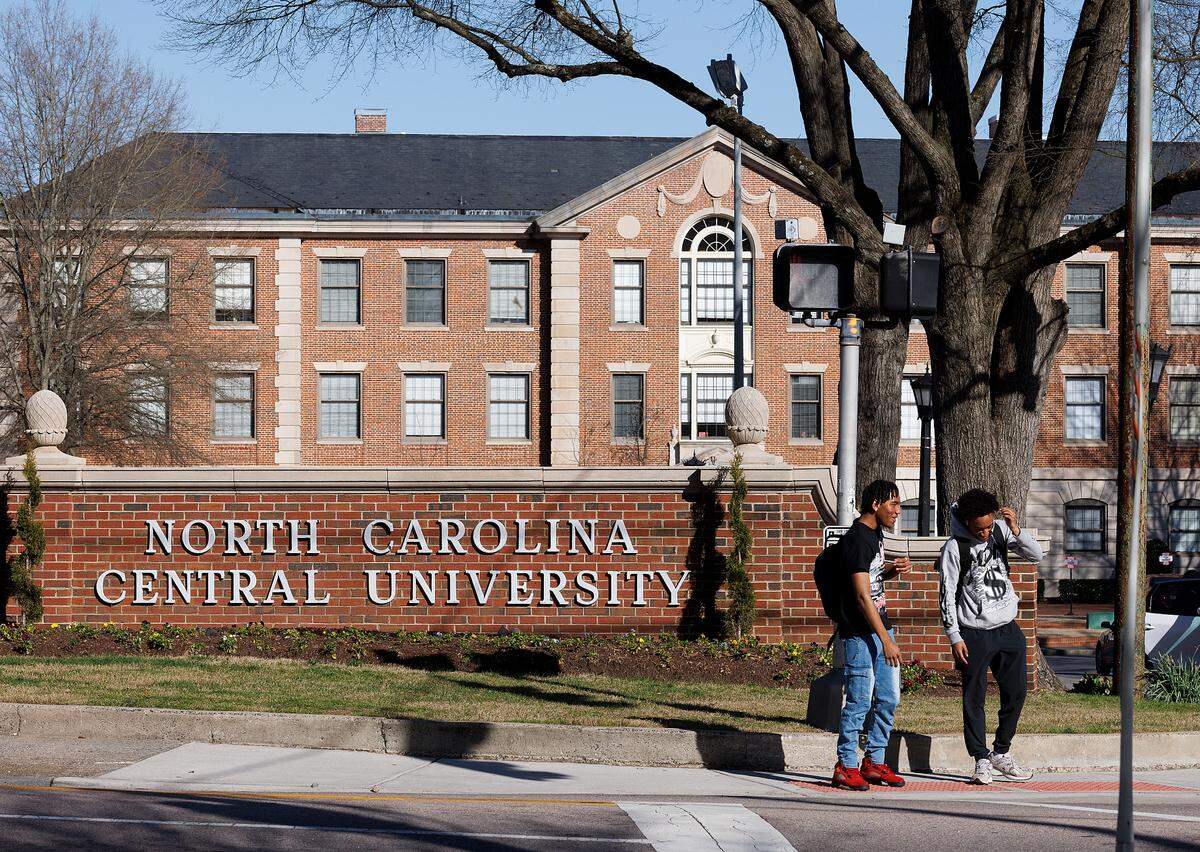
- Google’s philanthropic division is giving North Carolina Central University $1 million to establish the Institute for Artificial Intelligence and Equity Research. The Durham HBCU plans to open this institute next year to advance “diversity, inclusion, and equitable representation of AI-related industries.”
National Tech Happenings
- The Supreme Court next month will hear TikTok’s challenge to its looming ban.
- The newest U.S. tech company to reach a $1 trillion valuation is the semiconductor chipmaker Broadcom. AI demand has fueled its thriving stock.
- The U.S. plans to cap sales of advanced artificial intelligence chips to certain countries in an effort to curtail China’s access to buying them from these third-party nations, multiple news outlets report. Such rules, enacted in the name of national security, could impact the finances of Triangle-based chipmakers like Lenovo.
- It’s all AI all the time. The data and AI software provider Databricks is now one of the most valuable private companies in America after raising $10 billion at a staggering $62 billion valuation. Databricks was worth $43 billion last year.
Thanks for reading this newsletter this year. Open Source will be taking a holiday break and will return in the new year. Have a nice holiday season.
This story was originally published December 20, 2024 at 9:04 AM.