Open Source: How NIH under Trump has ‘stopped the wheels from turning’ at Duke, UNC
I’m Brian Gordon, tech reporter for The News & Observer, and this is Open Source, a weekly newsletter on business, labor and technology in North Carolina.
In 30-plus years as a researcher, Greg Matera has never seen this. There have been lean times, yes, but the UNC-Chapel Hill biologist says now is different.
While universities like his own worry over the Trump administration’s cut to “indirect” National Institutes of Health funding, Matera and his colleagues face a more immediate challenge: The government is holding up the entire NIH grant review process.
“I’ve never been in a situation where NIH just stopped all the wheels from turning,” he said.
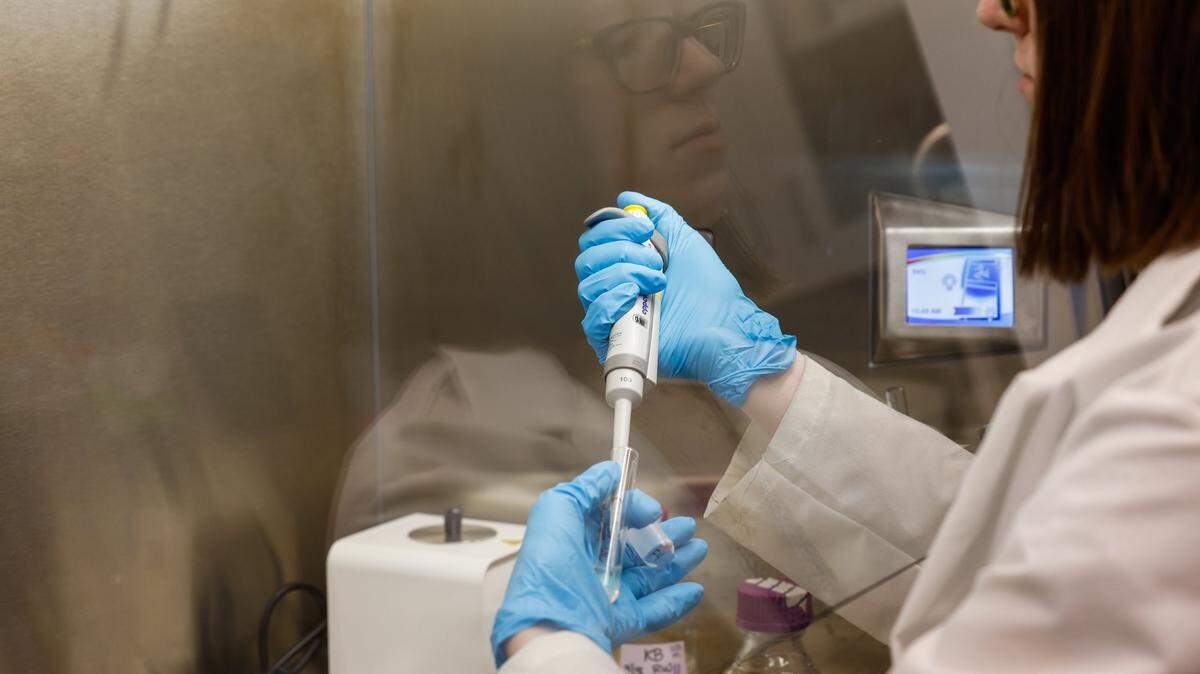
Matera’s lab studies cellular memory and the regulation of gene expression. The work, he says, broadens our understanding of cancers and why they form. Over the past five years, the lab and its three main employees have relied on a $500,000 direct grant from the NIH, the nation’s largest public funder of scientific research.
UNC received 1,053 grants from the NIH last year, combining for more than $531 million. Duke University got $580 million in agency grants in 2024. Together, the two schools accounted for over half the state’s entire NIH funding. Each rank among the top 15 NIH recipients in the country.
Matera’s grant will expire at the end of this month, with no foreseeable way to pay the lab staff.
He took typical steps to get it renewed, a process that involves two key stages. First, applicants have their projects reviewed by a panel of scientists called a study section. Matera’s proposal was graded in October and received strong marks.
But under President Donald Trump, the NIH has canceled many scheduled study sections and for weeks prevented any new ones from being held through a freeze on public meeting notices. The same way Wake County commissioners must announce meetings ahead of time, NIH study sections can’t occur unless they’re first posted on what’s called the Federal Register.
“None of us knew that there was this thing called the Federal Register,” said UNC cell biologist Mark Peifer. “But now we all know.”
From Jan. 21, to March 4, the Federal Register announced no study sections. In an email this week to The N&O, the NIH said it has restarted posting notices “incrementally,” for the next 50 meetings.
But study sections are just one part of grant process. Second, proposals advance to NIH advisory councils for another review and final approval. These are held three times a year within individual NIH institutes.
Matera was scheduled to have his grant heard by the General Medical Sciences Council on Feb. 6. This and all other advisory councils have been postponed.
“Other parts of peer review on new grant applications are still on hold, namely Advisory Councils,” the NIH emailed this week.
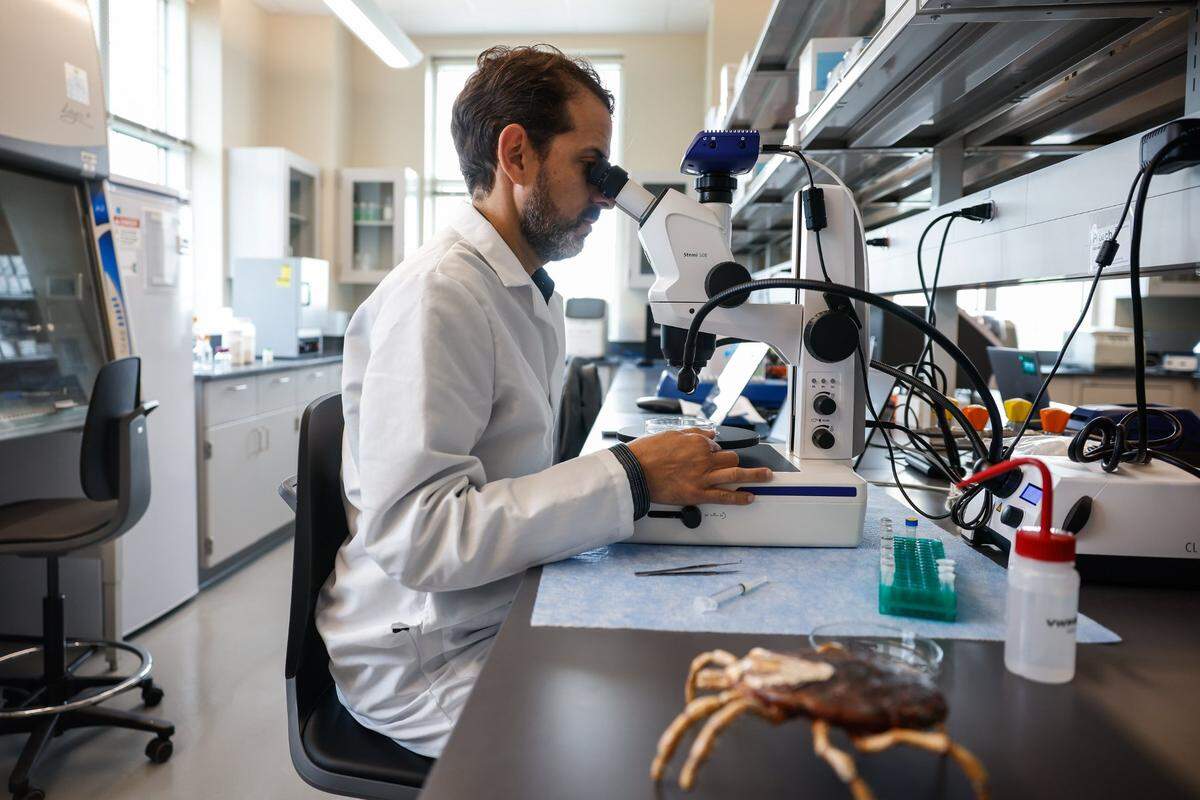
Until these resume, no grants can be awarded. Local research jobs are therefore poised to be lost, said Dr. Colin Duckett, vice dean for basic and preclinical science at the Duke University School of Medicine.
“We’re not bringing in enough money,” he said. “To the point where something will have to give very soon.”
For Duckett, the cost of losing these grants goes beyond local jobs. It’s about America’s status as a science leader. He said the university, like others, was shrinking the size of its PhD programs in response to lower funding. “Destroying the infrastructure of biomedical research is not good for the country,” he said. “It’s very difficult to build things. It’s very easy to break them down.”
NC Bitcoin bill moves forward
A bill permitting the state treasurer to invest public funds in cryptocurrency, primarily Bitcoin, passed the House Commerce and Economic Development Committee on Wednesday. The NC Digital Assets Investments Act, which has Republican House Speaker Destin Hall as a primary sponsor, would need buy-in from the Senate if it passes the House.
And it looks like there might be support.
Senate leader Phil Berger told reporters he spoke with Hall Tuesday about the bill. “It’s basically another option that the treasurer would have. It doesn’t require the treasurer to invest in any particular cryptocurrency,” he said.
While the bill never mentions Bitcoin, its investment eligibility requirements currently preclude all other cryptocurrencies.
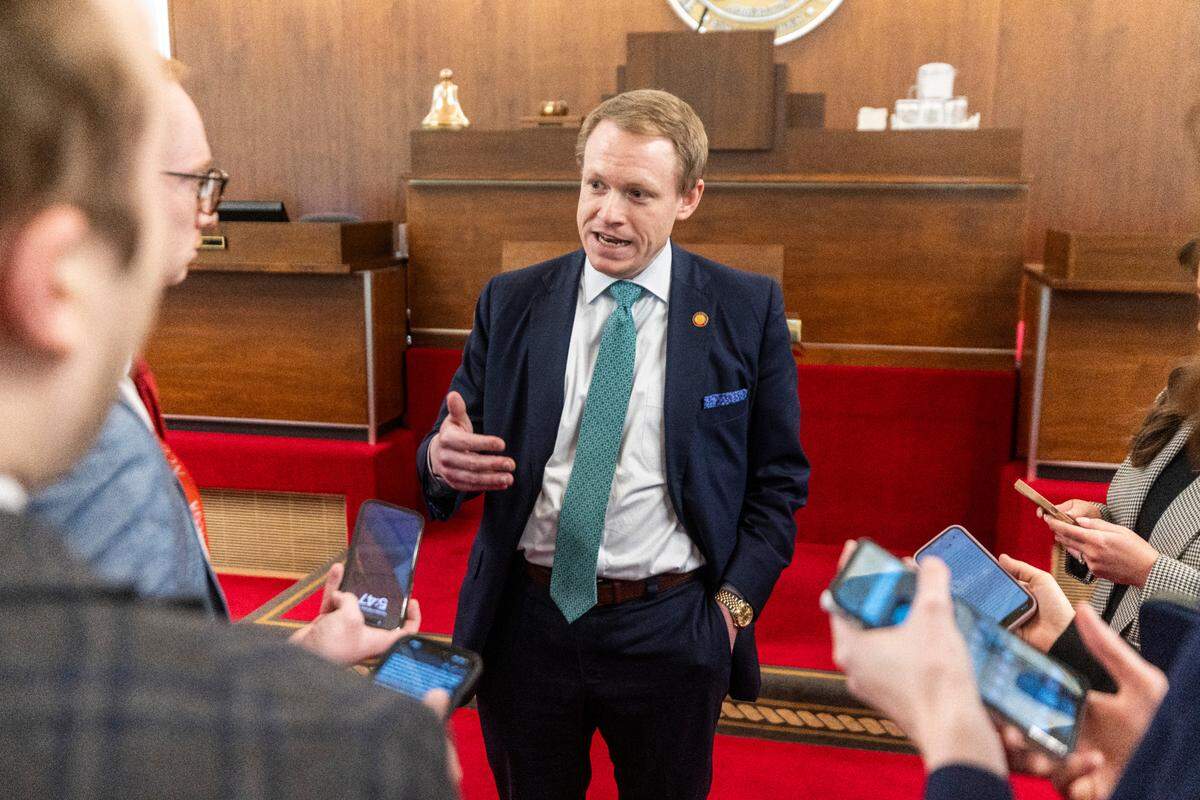
“I leave it up to the folks who are experts in handling the state’s money to make decisions as to whether or not it’s appropriate. And I would be supportive — if he can get it over here — I would be supportive,” Berger said.
Some politicians did raise concerns over adding digital currency to public pension funds.
“We’ve seen major exchanges collapse and just disappear,” Rep. Bryan Cohn, a Democrat from Granville County, said during the House committee. “So again, I think it warrants caution.”
N&O state politics reporters Luciana Perez Uribe Guinassi and Kyle Ingram contributed to this report.
Clearing my cache
- Early-career workers at the National Institutes of Health, including some at the agency’s unique Research Triangle Park campus, were fired last month amid broader federal layoffs. The email notifying impacted NIH employees referenced their ability, knowledge, skills, fit and performance.
- On Thursday, the Research Triangle Park-based global research nonprofit RTI International laid off another 150 workers, including 80 in North Carolina, due to “continued federal funding cuts.”
- President Trump calling the CHIPS Act “a horrible, horrible thing” during his address to Congress got the attention of executives at the Durham semiconductor chipmaker Wolfspeed, which is waiting to receive a much-needed $750 million CHIPS grant from the federal government. What more must the company do to get this money? And how much trouble does Trump’s blunt message spell?
- Back to National Institutes of Health funding. A federal judge extended her pause on the Trump administration’s cuts to indirect NIH funding until a final ruling is made.
- What is a data center? Where in North Carolina are they? How are they cooled, why are they getting so much attention, and how exactly does Duke Energy plan to power these energy-devouring facilities? N&O environmental reporter Adam Wagner and I answered these questions in a series on North Carolina data centers.
One thing that stood out in Adam’s reporting: The contrast in mindsets between data center/tech operators and Duke Energy. The former have a “move fast, break things” approach; the latter is very deliberate about long-term planning. They’ll have to coordinate data centers together.
National Tech Happenings
- U.S. tariff policy may change by the time you finish this sentence. The Trump administration on Thursday said it would postpone tariffs on most Mexican and Canadian goods for a month. It would be the second one-month pause to the new administration’s North American tariff plans.
- The federal government has identified more than 440 “non-core” buildings it seeks to sell. The U.S. General Services Administration posted the properties online, and then removed them, now saying the list is “coming soon.”
- Popular GLP-1 weight loss drugs are getting cheaper for some. The Danish drugmaker Novo Nordisk will lower the cost of Wegovy, which it produces in Johnston County, by 23% (to $499 a month) for those not using insurance, while Eli Lilly, which also has North Carolina facilities, recently cut the price of its weight loss treatment Zepbound.
Thanks for reading!
This story was originally published March 7, 2025 at 9:37 AM.