Open Source: For more NC startups, a winning sales pitch centers the threat of China
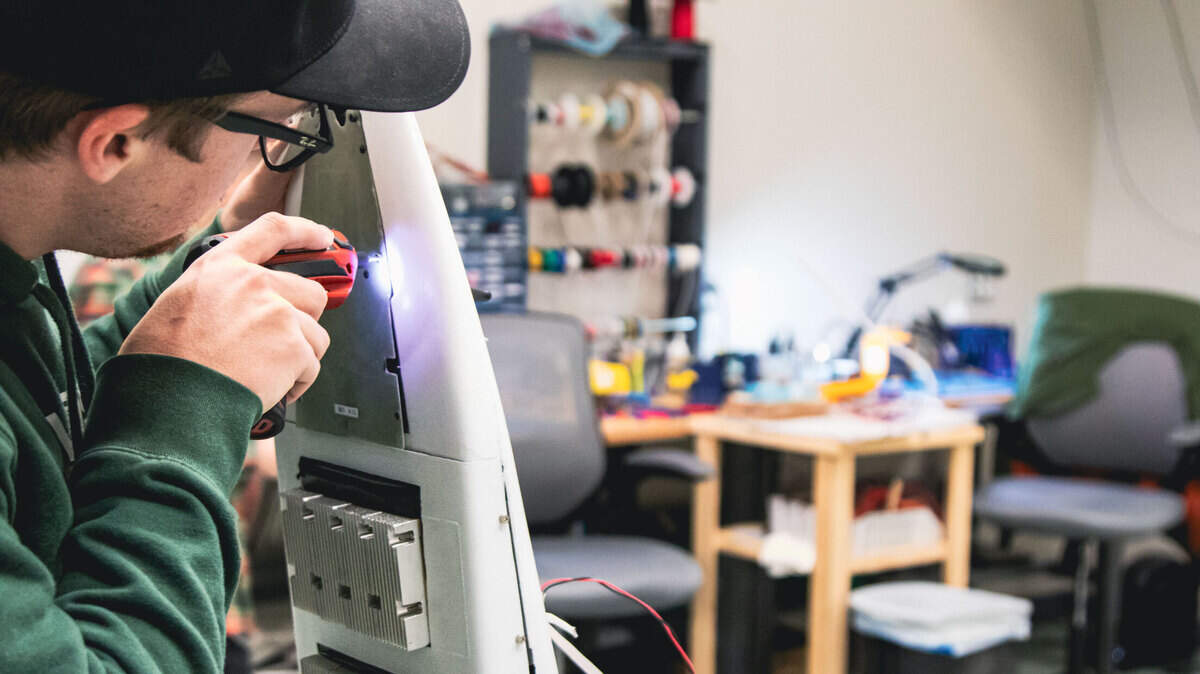
I’m Brian Gordon, tech reporter for The News & Observer, and this is Open Source, a weekly newsletter on business, labor and technology in North Carolina.
“I think Marco Rubio actually nailed it in his confirmation hearing when he said, if we don’t start building the critical components we need in this country, in 10 years, we’re going to have to ask China what we’re allowed to build, and what we’re allowed to buy.” — Vulcan Elements CEO John Maslin to The N&O, paraphrasing Secretary of State Rubio’s confirmation hearing response.
“China wants to surpass America as the leader in technology. So of course they’re pursuing supersonic. It is the next step in aviation.” — Boom Supersonic CEO Blake Scholl to Fox Business host Maria Bartiromo.
China is catching up. Or China is too far ahead. China is a threat to our national security and pride. Or, security concerns aside, importing from China is simply too financially fraught given the hazy future (and arguably present) of U.S. tariff policy.
Tech startups in North Carolina frame China differently, but many highlight America’s chief economic rival with investors, government officials and the press. For some, doing so has become more advantageous since Donald Trump regained power.
“Pre-election, it was not really a conversation point whether or not China was in our supply chain,” said Sean Meyer, chief operating officer at Windlift, a Durham startup developing wind power-generating drones. “Now people kind of perk up when you say, ‘Well, we build everything here.’”
Meyer said Windlift’s private investors enjoy hearing that the drones are American-made for economic reasons while its military backers like it for national security. “Ideologically, we get a bit more of that when we’re speaking with government rather than private capital,” he explained.
That evoking “China” is useful for striving startups doesn’t mean it isn’t justified.
China’s control of global rare earth magnet production was front and center on March 31 when the Durham company Vulcan Elements held a grand opening for its first facility. “The Chinese Communist Party could cut us off at any moment,” first-term Republican U.S. Rep. Pat Harrigan of Hickory said during the event.
The next day, Vulcan’s 30-year-old CEO, John Maslin, walked me through the Research Triangle Park building where his company intends to make rare earth magnets for defense and deep-tech applications. “What we’re doing here doesn’t exist outside of China right now,” he said. “That’s where the opportunity lies.”
By week’s end, China had retaliated against President Trump’s rising tariffs with export controls covering materials containing seven rare earth elements.
“Decoupling” from China has become a common term in startup pitches says Scot Wingo, a local serial entrepreneur and investor in early-stage startups. “Sometimes China’s in there, sometimes it just kind of supply chain,” he said. “And sometimes people will say decoupling. There’s a lot of vocabulary around it that kind of gets to the point.”
Boom Supersonic CEO Blake Scholl has talked explicitly about a U.S.-China aviation rivalry in the weeks since a Chinese aerospace giant introduced a quieter, long-range supersonic jet. Though based in Colorado, Boom hopes to assembly and test supersonic passenger jets at its factory in Greensboro. The company’s test jet broke the sound barrier in January, and Boom has attracted well-known investors to fund its engine.
“The most important thing here is that this shows supersonic is a race — and China’s interested,” Scholl told Fast Company this month. “Advanced airplanes symbolize technological superiority, and it’s no accident that China wants that crown.”
Perhaps Scholl was fundraising. Perhaps America should pay attention to China’s aerospace advancements. Perhaps both.
Get your Fortnite movie tickets ... never?
“A Minecraft Movie” continues to dominate at the box office, racking in more than $550 million in its first two weeks. Could this entice Epic Games, the Cary-based creator of the popular title Fortnite, to facilitate its own video game-inspired feature film?
“False,” Epic CEO Tim Sweeney wrote in a blunt online response to an X post claiming Fortnite would be the next game to hit the big screen. The initial poster, a film industry influencer, added that some studios once passed on a Fortnite movie idea, so it isn’t clear which part of the statement — the upcoming movie, the studios previously passing, or both — Sweeney said was incorrect.
Epic Games did not have additional comment to add.
Canceled NIH grants reinstated, for now
The National Institutes of Health has reinstated billions in pandemic-related research following a district judge’s temporary restraining order against the Trump administration’s sweeping cuts. UNC and Duke researchers told The N&O this week they have regained access to funding through their previously terminated awards, allowing them to resume incurring science-related expenses.
How long they’ll have this access remains unknown. On Thursday, District Court Judge Mary McElroy heard oral arguments from both sides — the federal government and the plaintiff coalition of states suing over the cuts. McElroy extended the restraining order until she issues a final ruling. I’m not a lawyer, but McElroy’s April 3 injunction order seemed to favor the plaintiffs, one of whom is North Carolina Attorney General Jeff Jackson.
Among Triangle researchers to have had their grants resumed is Dr. Ralph Baric, a longtime UNC coronavirus expert who has been criticized by conservative leaders over his past virology work and its ties to how the COVID-19 pandemic may have begun. Last month, NIH sent Baric and other coronavirus researchers award termination letters that stated, “These grant funds were issued for a limited purpose: to ameliorate the effects of the pandemic. Now that the pandemic is over, the grant funds are no longer necessary.”
Pandemic research grants are one of several potential lost funding sources Duke and UNC face under the Trump administration.

Clearing my cache
- Jobs in. Canadian solar panel components manufacturer Opsun Corp. expects to hire 20 people and invest more than $9 million at a first U.S. factory in High Point.
- Jobs out. After 62 years, a textile mill west of Charlotte is closing, affecting 173 workers. The Patrick Yarn Mill specializes in cut-resistant and flame-retardant yarns.
- North Carolina settled a lawsuit with one of six landlords it has accused of using artificial intelligence software to “sidestep” market competition and illegally set rents. Attorney General Jeff Jackson announced Tuesday his office reached a deal with Atlanta-based Cortland, which manages over 5,000 units across dozens of apartment communities in North Carolina.
- Foreign students who have had their visas revoked by the federal government since late March include six at UNC-Chapel Hill, two at NC State, two at Duke, two at UNC-Greensboro, six at UNC-Charlotte, and one at App State, multiple outlets report.
National Tech Happenings
- The Department of Government Efficiency may have removed information on union organizing and unfair labor complaints from the National Labor Relations Board, according to an official whistleblower. NPR first reported the story.
- Speaking of NPR, both it and PBS — the two largest U.S. public broadcasters — face government defunding as the Trump administration intends to ask Congress to pullback around $1.1 billion from the Corporation for Public Broadcasting.
“Taxpayer funding of NPR’s and PBS’s biased content is a waste,” the White House said in a statement.
- The Federal Trade Commission questioned Meta CEO Mark Zuckerberg over Facebook’s motivations for buying Instagram and WhatsApp, part of a major antitrust case that could force Meta to divest its popular platforms.
- U.S. Customs and Board Protection announced on Friday, April 11, that Chinese smartphones and computers were excluded from the latest Trump administration tariffs against the country. Then on Sunday, President Trump appeared to deny the reality of this policy, posting on his platform Truth Social “there was no Tariff ‘exception’ announced on Friday.”
- Google has an unlawful ad tech monopoly, a federal judge ruled Thursday. It is the second time this year courts found the search engine giant to be a monopolist.
Thanks for reading!
This story was originally published April 18, 2025 at 8:15 AM.