EPA workers at RTP campus lose union, firing protections under Trump order
AI-generated summary reviewed by our newsroom.
- EPA voided union contracts for 900 RTP workers after appellate court ruling.
- Staff grievances now bypass union channels, use internal agency procedures.
- Trump order cut union rights for 445,000 federal workers, citing security needs.
The Trump administration last month ended union rights for hundreds of thousands of federal employees, including around 900 at the large Environmental Protection Agency campus in Research Triangle Park.
On Aug. 8, the EPA terminated nearly all collective bargaining agreements, voiding contracts that defined telework and remote work schedules, discipline procedures and grievance filings.
“None of the procedures prescribed by the collective bargaining agreements are in effect,” the EPA’s Office of Mission Support told agency managers in an Aug. 20 email obtained by The News and Observer.
This sweeping action stemmed from an executive order President Donald Trump signed in March that allowed 22 federal agencies to strip employees of the right to collectively bargain union contracts. The administration cited national security, arguing these agencies’ primary job functions related to “intelligence, counterintelligence, investigative or national security work.”
A federal judge blocked the order from taking effect, but on Aug. 1, an appellate court in California permitted the administration to proceed. The American Federation of Government Employees, which represents EPA employees in Research Triangle Park, filed an appeal.
The union and EPA signed their existing contract last summer; it was supposed to be in effect through June 2028.
Losing employment protections
Without a recognized contract, EPA union representatives are no longer entitled to attend formal meetings or sit with staff during disciplinary hearings. All grievances filed under the 2024 union contract are dismissed, and going forward, staff complaints against management will go through an “internal administrative grievance procedure.” Union officials can also no longer use agency time to conduct representational duties.
“The contract put guardrails for management and for staff conduct,” said Holly Wilson, president of the AFGE Local 3347, which represents RTP employees. “For management, you can’t just fire this person. These are the things that I have to do first.”
Wilson said dismissal procedures are important, noting that around 140 EPA staff members were placed on paid administrative leave in July for signing a petition critical of EPA Administrator Lee Zeldin, including around 16 RTP-based employees. Most of these workers remain on leave as the agency conducts an investigation, though the EPA fired some of these workers last week.
“Following a thorough internal investigation, EPA supervisors made decisions on an individualized basis,” the agency said in a statement to The News and Observer. “EPA does not comment on individual personnel matters. The petition — signed by employees using a combination of their titles and offices — contains inaccurate information designed to mislead the public about agency business.” The agency did not detail what information in the petition was false.
Local EPA workers are now coded as 8888 employees, a federal distinction that precludes them from joining unions. The agency also cautioned employees about “performing union activities on non-duty time,” saying staff need prior approval from an ethics official to do so.
“I think that is literally unprecedented,” said Eric Fink, a labor law professor at Elon University. “Because up to now, the assumption has been opposite. That off-duty you normally would have the right.”
Retirements and resignations at EPA’s RTP campus
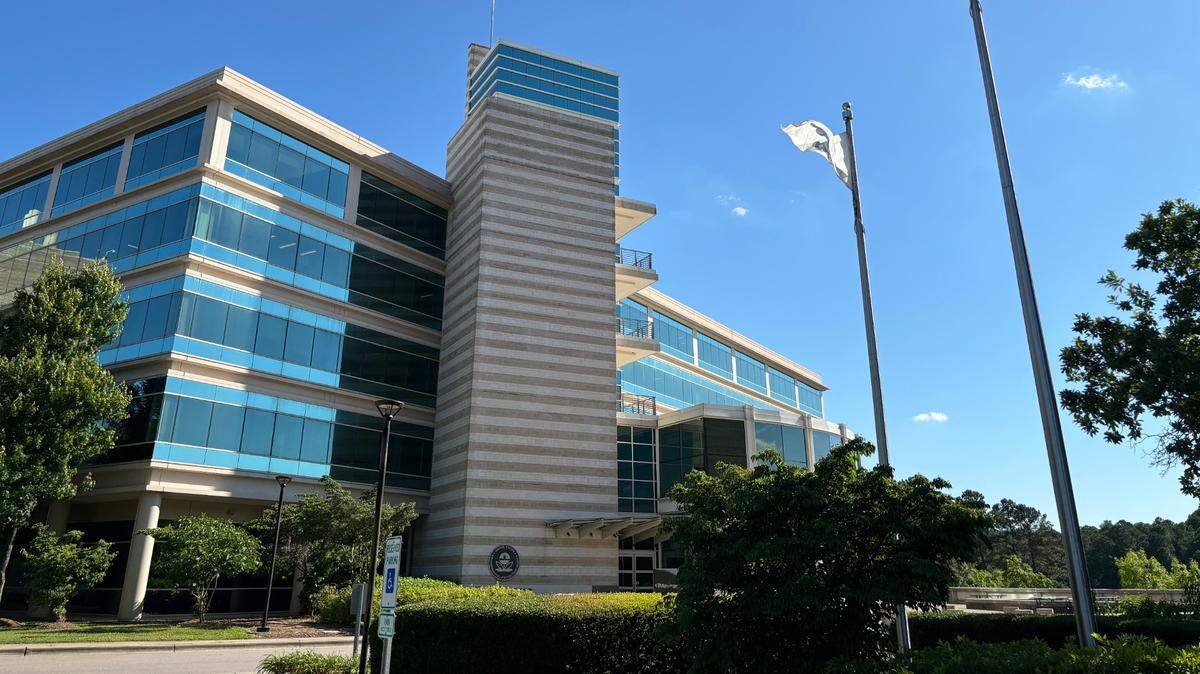
The EPA office in Research Triangle Park focuses on air-quality regulations and is the agency’s biggest physical campus. It housed a significant portion of the EPA’s scientific research division, called the Office of Research and Development, which the Trump administration is in the process of dissolving into other offices with fewer positions.
“We are confident EPA has the resources needed to accomplish the agency’s core mission of protecting human health and the environment,” the agency’s press office wrote in a statement to The News and Observer.
Through voluntary buyouts and layoffs, the agency expects its total headcount will go from 16,155 at the start of this year to approximately 12,450, a 23% staff reduction. “Many staff have been reassigned, taken the (Deferred Resignation Program) or retired,” Wilson said.
.jpg "IMG_5455 (1).jpg")
The EPA is one of nine federal agencies to have canceled union contracts since the appellate court ruling, The New York Times reported, with other departments including the U.S. Coast Guard, Veterans Affairs, Federal Emergency Management Agency, and the Department of Health and Human Services. Overall, more than 445,000 federal workers lost union protections in August.
And on Thursday, Trump signed a new executive order removing union protections from more agencies, including NASA and the Patent and Trademark Office, again citing national security interests.
This marks a major defeat for organized labor in the country’s least unionized state. North Carolina last year recorded the nation’s lowest union membership rate (2.4%) and the lowest percentage of workers covered by unions (3.1%).
While private sector unionization has trended downwards for decades, the public sector had seen smaller declines. In 2024, the national public-sector unionized rate was 32%, more than five times the rate in the private sector.
NC Reality Check is an N&O series holding those in power accountable and shining a light on public issues that affect the Triangle or North Carolina. Have a suggestion for a future story? Email realitycheck@newsobserver.com.
This story was originally published September 4, 2025 at 11:07 AM.