Inside the Triangle’s illegal gaming cafés — where the internet rarely works
AI-generated summary reviewed by our newsroom.
- Illegal gaming cafes operate as cash-only sweepstakes halls with tight security.
- Operators tweak games and exploit zoning gaps to evade gambling regulations.
- Municipal enforcement yields fines and zoning actions but prosecutions remain limited.
READ MORE
Inside the Triangle’s illegal gaming cafés
The News & Observer visited a dozen area electronic gaming businesses and found their continued, unregulated existence is due less to any legal loopholes and more to authorities in Raleigh, Durham and Cary choosing not to close them.
Expand All
.jpg)
.jpg)
The internet doesn’t work at the internet cafés.
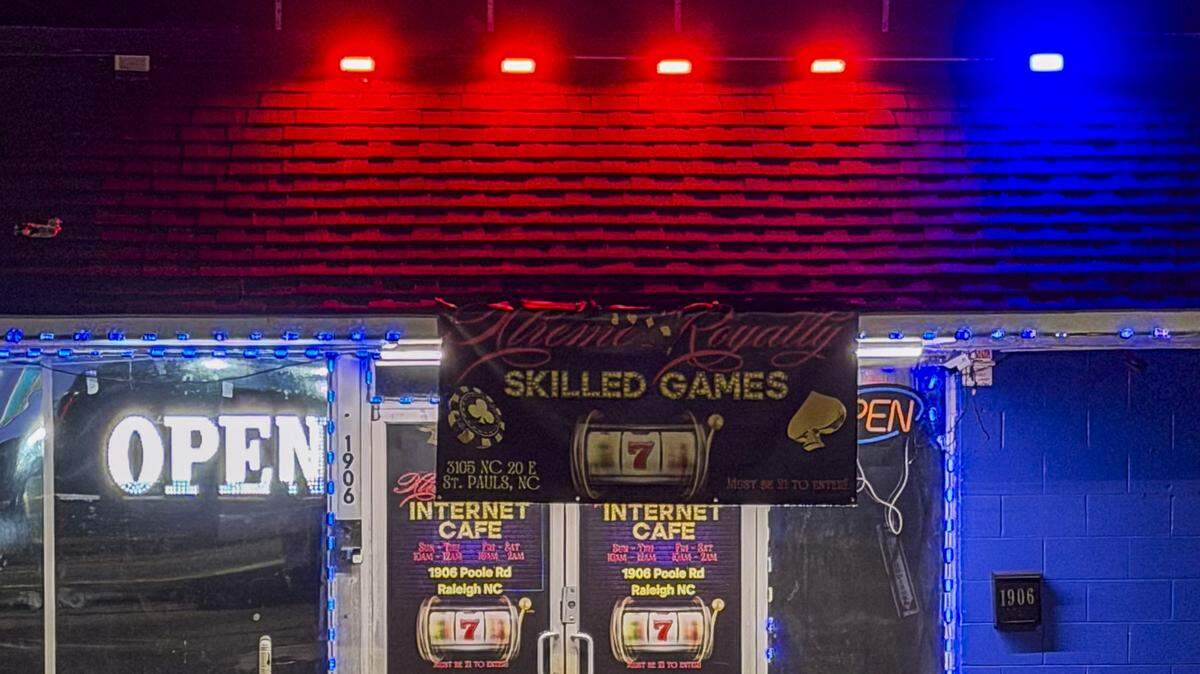
Patrons don’t mind, as few enter seeking to browse the web. These cafés are instead electronic gaming rooms, with the look and sound of small casinos. Behind blacked-out windows, visitors are buzzed in and greeted by arrays of colorful digital games.
Security guards man the front doors at many, their guns visible as they wand customers with metal detectors or pat them down. Smoking is permitted in backrooms, and some businesses offer complimentary snacks and raffles. Music is a constant. Managers transact from behind counters and plexiglass barriers, collecting cash (no cards) and disbursing payouts as security monitors capture scenes from connecting rooms.
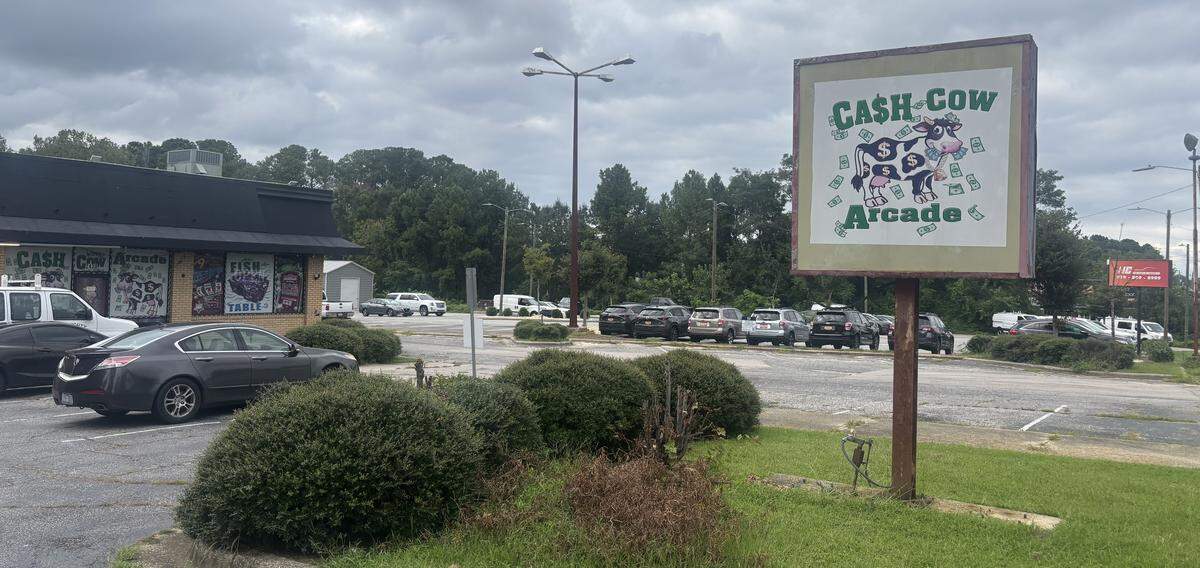
These establishments open early and close late. Cary Bingo, a gaming hall in Cary, never closes. Neither do 36 Center Internet Cafe and 64 Business Center, which operate about a mile from each other in east Raleigh. Other local “internet cafés” include Fun Zone, Miami Arcade, SouthBeach Sweeps, Blue Dragon Sweepstakes, The Phoenix, Cash Cow, Lucky Ace and Lucky 7 Sweepstakes. SpinCity had its grand opening over the summer in Raleigh.
They tend to set up in poorer neighborhoods, tucking machines into strip malls alongside vape shops, prepaid wireless stores and takeout Chinese restaurants.
“It’s probably going to be your lower middle-class customers,” said Scott Beatty, who owned a gaming hall called Barracuda Ventures northwest of Charlotte in Catawba County before his local city government shut it down. “People are gambling and hope to do better.”
This gaming is not regulated. Daily payouts may be capped; daily losses can be unlimited. IDs aren’t routinely checked at the door for age verification, and revenues are not uniquely taxed to fund public schools as they are at North Carolina’s three legal casinos on Indian tribal land.
The Eastern Band of Cherokee Indians must, under its state compact, display gambling addiction hotline numbers at its two Western North Carolina casinos, and an independent commission tests all of its gaming machines to ensure minimum payout rates.
In contrast, unregulated operators get gaming cabinets from distributors without necessarily knowing the odds themselves. Beatty admitted he would reset his machines “on a somewhat regular basis” to suppress payouts, explaining “it was beneficial to the house.”
“There’s no standard,” said Sheriff Christopher Thomas of coastal Onslow County. “There’s no way to know if it’s being operated in a fair manner.”
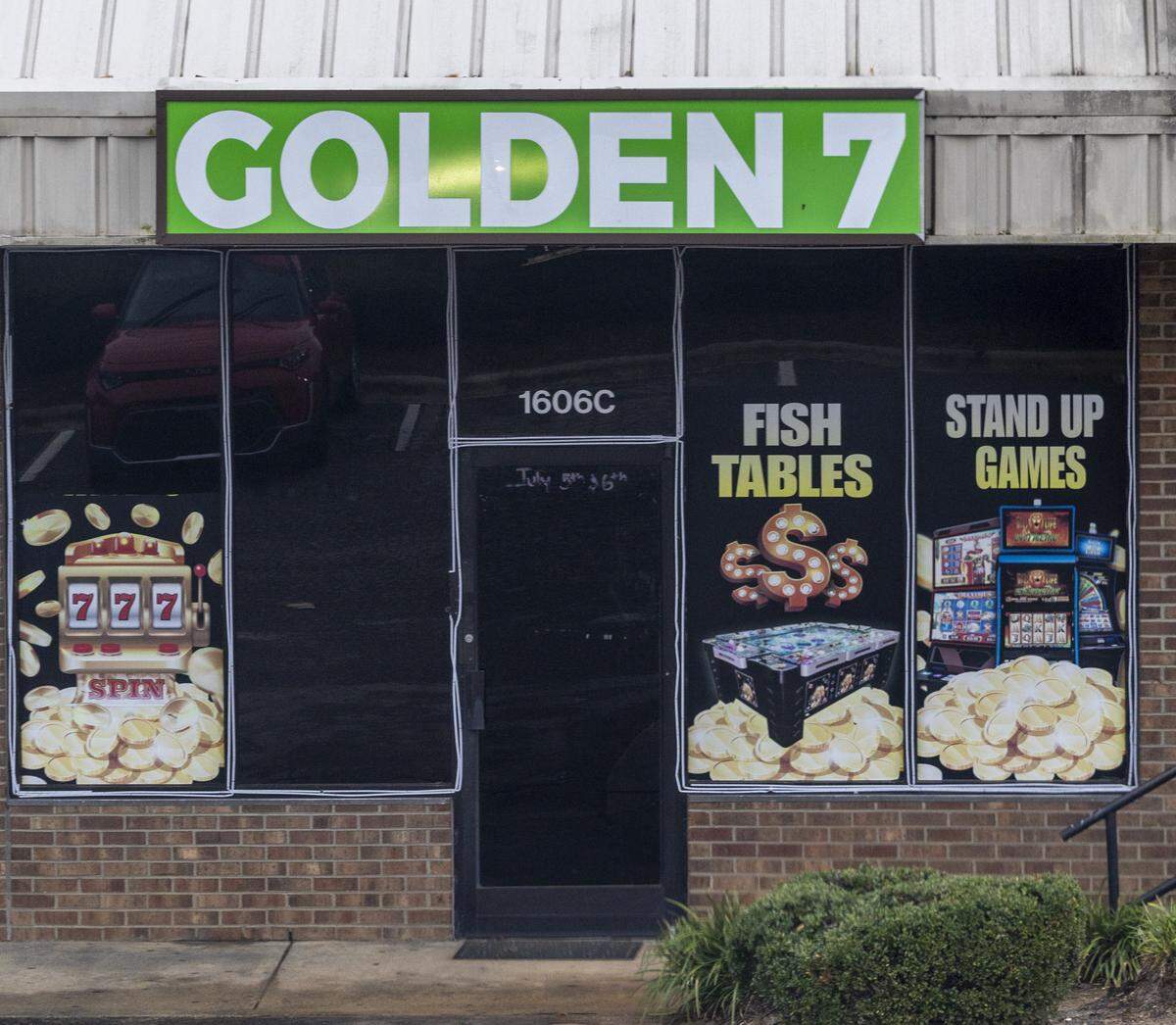
Inside Triangle gaming rooms, people play one of three types of machines: vertical “stand-up” slot machines, rectangular “fish” tables or sweepstakes computers. The objective of each is to spend money to win back more. Their operations are illegal; North Carolina courts have explicitly defined stand-ups, fish machines and many sweepstakes as unlawful games of chance.
The News & Observer visited a dozen area electronic gaming businesses in recent months and saw prohibited machines and managers ignoring the “no purchase necessary” clause that makes sweepstakes legal. At least one Durham gaming room violates its neighborhood zoning ordinance merely by existing.
.jpg "IMG_7719 (2).jpg")
While there is more complexity to the legality of individual sweepstakes contests, rows of slot machines and fish tables are less ambiguous; their continued existence is due less to any legal loopholes and more to authorities in Raleigh, Durham and Cary choosing not to prosecute them.
“I have never encountered a case where we’ve taken enforcement action in that capacity,” Raleigh Police Department spokesperson Lt. David Davis wrote in an email about electronic gaming businesses.
These parlors aren’t difficult to spot; while some facades reveal little about the machines inside — advertising instead as places to fax, copy and go online — others eschew subtlety. The street sign outside Cash Cow Arcade on South Wilmington Street near downtown Raleigh displays a dairy cow with dollar bills stuffed in its mouth. Dollar signs are also painted on its body and another on the golden cowbell it wears. More bills float in the background.
Municipalities elsewhere in North Carolina have cracked down on unregulated gaming operators in recent years, and even months — conducting raids, making arrests and confiscating machines and cash.
Why then do Triangle authorities give them a pass?
‘What is the law saying?’
The most popular “stand up” game at internet cafés — like Lucky 7 Sweepstakes in Raleigh or The Phoenix in Durham — is called Ultimate Fire Link. Common at regulated casinos, Ultimate Fire Link cabinets are made by the Las Vegas-based manufacturer Light & Wonder, which advertises the game as “a heart-pounding slot experience.”
Players feed bills into machines and press a button, then watch as animated icons scroll across five reels. Some tap the screen out of superstition, but outcomes are predetermined by algorithms. If the icons align right, the machine prints receipts that players redeem at the counter for cash — with winnings ranging from $1 to “mega” payouts displayed at north of $10,000.
According to North Carolina’s Alcohol Law Enforcement division, which regulates gambling, these slot machine games are illegal outside of federally recognized Indian tribal land under four state statutes. Light & Wonder concurred, telling The N&O, “the company does not manufacture or distribute skill games in North Carolina.”
What distinguishes legal from illegal competition in the state is whether games with money prizes hinge on skill or chance.
It is a line local operators insist they walk: A sign inside Lucky 7 proclaims in all caps, “ALL GAMES ARE SKILL BASED PER NC LAW N.C.G.S.A.14-306.4,” referring to the state statute that prohibits electronic machines and devices for sweepstakes. At Cary’s H&P Business Center, a sticker above one slot-like machine similarly states, “This skill based game complies with NCGS 14-306.4.”
Some disagree. “There is no skill,” Sheriff Thomas said of stand-up machines. “You put the money in. You mash the button until it either takes your money or gives you a quote-unquote ‘win.’”
In North Carolina, operating five or more electronic gaming machines is a felony, but many local gaming halls contain dozens. Miami Arcade in east Durham had upward of 30 Ultimate Fire Link machines alone.
Another way to spend money in local electronic gaming rooms is the arcade-like “fish” table game, where players put money into large machines and aim joysticks at passing cartoon sea creatures for the chance to win cash.
In 2023, a North Carolina Appeals Court ruled fish table games were illegal and not based on skill. ALE spokesperson Special Agent William Happoldt confirmed in an email that fish table games, like the Ocean Fish King brand available to play at Blue Dragon Sweepstakes in Raleigh and Durham’s Fun Arcade, violate NCGS 14-306d, which prohibits video gaming machines that pay out money.
“What is the law saying?” Blue Dragon manager Donnie Williams asked during a phone interview this summer. When told that ALE said fish tables are illegal, he said, without elaborating, “Well, I think we meet all our requirements for that.”
BEHIND THE STORY
MOREHow this story came about
In May, I met two friends for dinner at Himalayan Nepali Cuisine in Cary. Afterwards, we walked around the surrounding strip mall and saw a business with blacked out windows and single-word signage that simply read “Bingo.” Inside, it looked like a mini, 24-hours-a-day casino.
In an adjacent row of shops, we saw H&P Business Center which, despite its name, was clearly geared for gaming with slot machines and rows of sweepstakes computer terminals.
Knowing that gambling is illegal in North Carolina, my curiosity was piqued. I began researching the laws governing these establishments, spoke to law enforcement and visited a dozen area businesses. I played games in each of the storefronts I visited.
I didn’t identify myself as a reporter upfront. But after I began to form experiences that went into this package of stories, I called or revisited stores, identifying myself as a reporter, and asking for on-the-record interviews.
—Brian Gordon
If you or someone you know has a gambling problem, call the North Carolina Problem Gambling Helpline: 877-718-5543.
The twisted world of sweepstakes
In contrast to “stand up” slots and fish tables, a third way to spend money in Triangle gaming rooms — called internet sweepstakes — features byzantine, ever-evolving rules to justify themselves as legal skill-based contests. Rather than put money directly into machines, sweepstakes players technically purchase “internet time” that comes with a corresponding number of sweepstakes points, or “entries.”
A defining trait of gambling is “consideration,” or the cost one must pay to play. To stay within the law, sweepstakes operators have to offer a free play option. They can meet this requirement by providing customers who ask for a small number of free entries, or by allowing them to mail in requests for free entries. But managers at multiple “internet cafés” in Raleigh, Cary and Durham denied the ability to enter sweepstakes without paying.
“Don’t pay attention to that,” said a Blue Dragon employee when asked about the “No purchase necessary” disclaimer on the computer screen. At H&P Business Center in Cary, an employee said there was a $10 minimum to play sweepstakes.
With their sweepstakes points, players log onto desktop computers and learn if they’ve won by either clicking a reveal button or (more often) playing “free” animated slot-like games. There is then another step before winners can collect money: To be seen as legal games of skill, sweepstakes add on short payout challenges.
One local operator asked customers to click the largest of three boxes to get a full payout. Miami Arcade directed winners to move an icon over the bigger of two numbers — with one number always being zero. A third common “skills” challenge evoked the memory game Simon, where players repeat a sequence of colors that light up on the screen. At H&P Business Center, three sections slowly appeared on the screen for players to match.
“It’s stupid,” Beatty said of these tests. “Which is bigger: the mouse or the rhinoceros? It’s something a 5-year-old could do.”
When contested in court, North Carolina judges have ruled in multiple recent cases that operators’ payout challenges failed to demand enough skill to count the contests as anything but chance-based. But several cases have dragged out over years, with some lower courts initially siding with operators.
And sweepstakes operators keep tweaking the details. “There’s a tremendous amount of money in this arena,” Wake County District Attorney Lorrin Freeman said. “And so they are constantly changing their games.”
.jpg "IMG_7742 (1).jpg")
On Dec. 31, 2024, the North Carolina Court of Appeals issued its most recent sweepstakes ruling, concluding a payout test presented by an operator called No Limit Games in Robeson County didn’t present enough skill to override chance as the determinative factor. The “skills” challenge gave players five seconds to nudge a symbol to a middle row.
Muddying the legal waters is that at least one Triangle municipality permits chance-based, cash-prize electronic gaming under its zoning code. In 2015, Cary updated its land development ordinance to allow unlimited gaming machines in certain zoning districts. Chance-based games violate state statute, however, and another part of Cary’s code says no provision within is meant “to revoke or repeal any other public law, ordinance, regulation, or permit.”
Durham’s Unified Development Ordinance allows sweepstakes operators, though at least one area gaming hall has still violated its zoning rules: On April 15, the Durham City-County Planning Department issued notices to The Phoenix and its property owner that electronic gaming operations weren’t zoned for its shopping plaza on University Drive. Neither The Phoenix nor the property owner responded to this notice.
On Aug. 22, an N&O reporter entered The Phoenix and saw it contained dozens of slot-machines, fish tables and sweepstakes computer terminals, with several customers at the glowing machines, much as the business had looked during a previous visit in June. The only visible difference was on the exterior: Where The Phoenix once had a mural of Las Vegas landmarks next to the entrance, it now had a blank white wall.
Six days later, Durham issued The Phoenix a $500 civil citation. The business owner then met with planning officials on Sept. 24, where the two sides agreed The Phoenix would bring its business into zoning compliance within one month or face further fines of up to $500 a day.
Next: Gambling halls get raided across North Carolina. Then why not in Raleigh or Durham?
This story was originally published October 15, 2025 at 5:00 AM.