Why Amazon drivers can face mass layoffs without the required 60 days’ notice
I’m Brian Gordon, tech reporter for The News & Observer, and this is Open Source, a weekly newsletter on business, labor and technology in North Carolina.
While they may wear Amazon vests and drive Amazon-branded vans, the people who deliver Amazon packages to our doorsteps aren’t Amazon employees. They are contract workers, hired by one of thousands of Amazon Delivery Service Partners (DSPs) to complete last-mile deliveries. Others are independent contractors — think Uber for packages — who drive their own vehicles under a program called Amazon Flex.
“With transportation being often outsourced, drivers enjoy far fewer protections currently,” said Craig Austin, a logistics and supply chain management professor at Florida International University.
One protection drivers can lack came into focus last week, when Amazon terminated the Durham contract of a delivery partner named CNC Logistics, affecting all 75 of its Triangle employees. Amazon routinely ends delivery partnerships, canceling at least a handful of deals in recent months across multiple states. “We may never know why Amazon voids some contracts,” Austin said. “But we can safely deduce it is because of increasing costs of some of these DSP entities along with worsening on-time deliveries and customer service.”
Given the size of the Durham closure, had these drivers been formal Amazon employees, the company would have been required under federal law to give them at least two months’ notice through a WARN letter. This buffer affords workers time to find new opportunities, and in North Carolina, each WARN notice prompts a rapid response team to assist with this transition.
But because these local drivers were employed by CNC, an Illinois-based contractor that solely defines itself as “An Amazon Last Mile Provider,” they got less notification. In a WARN letter North Carolina received on Sept. 30, CNC’s president said the company couldn’t give 60 days’ notice because its primary client, Amazon, had “suddenly and unexpectedly” terminated its Durham contract the previous month. Employers may be exempted from giving 60 days’ notice if a mass closure is due to “unforeseeable business circumstances.”
“For contract workers, it can make it really difficult to exercise employment rights,” said Jeff Hirsch, a professor of labor law at UNC-Chapel Hill. “To sort of know who’s actually pulling the string.”
Last month, for example, the delivery partner Chase Smiles Logistics cited “Amazon’s abrupt termination” as the reason it laid off 77 workers without notice at a facility outside of St. Louis. According to its WARN letter, Chase Smiles was told by Amazon on Sept. 15 that that day would be its last under contract. Chase Smiles immediately closed the facility.
“You could argue that when 99% of your effort is for one company, effectively, you’re an employee of the company,” said Michael Kay, an industrial engineering professor at N.C. State who teaches transportation logistics. “So it’s like a legal fiction. But that’s pervasive throughout the supply chain.”
In a statement to The N&O, Amazon spokesperson Dannea DeLisser wrote, “The success of Delivery Service Partners is important to Amazon and our customers. While we can’t comment on the specifics of individual business relationships, in situations where a DSP exits the program, we work to help the affected delivery associates find opportunities with others in the area.”
Getting hired by another DSP is often easy, drivers and industry experts say. Each warehouse usually houses many contractor firms. Amazon confirmed that “multiple” DSPs work inside its large DRT8 delivery station in Durham, where CNC had operated.
“We interviewed a bunch of workers who said, ‘Yeah, my DSP shut down, but I just rolled over to the next guy the next day,’” said Diane Buton, a professor at Cornell University’s School of Industrial and Labor Relations who is leading a study on last-mile deliverers. “(They) literally don’t have to go to a different workplace.”
But job transitions aren’t always that seamless, and neighboring DSPs don’t always hire all the laid off personnel. It can also take time to complete background checks and drug screenings. “I would say it is quite disruptive for a lot of the drivers in that situation,” one current Amazon contract driver told me, noting that any time without work can make it difficult for drivers to pay bills and rent.
And having two months’ warning can never hurt.
One severed leg, many 3D printers
3D-printer lasers etch intricate patterns into titanium and cobalt, while in another room, a sales manager directs a trainee on how to hammer an implant into a hairy, severed leg. (Yes, it’s artificial.)
Vivid scenes at the headquarters of restor3D, a growing Research Triangle Park startup (400+ employees, near $90 million annual revenue) that 3D-prints ankles, knees, hips and shoulders. The company started with niche surgeries and aims to go mainstream after a summer funding haul.

Clearing my cache
- How to make $30,000? Step 1: Be on UNC’s campus. Step 2: Have MrBeast randomly approach you. Step 3: Be subscribed to MrBeast’s channel. Step 4: Say your tuition costs $30,000 a year.
- Jewelers Mutual Insurance Company opened its new office in Raleigh’s North Hills business park Wednesday, a little over a year after the company received state and local incentives to add 200 jobs in the city. The Wisconsin company told me its local site already has around 50 employees and will grow to meet demand.
- Stop me if you’ve heard this one before: Another pharmaceutical manufacturer says its coming to Holly Springs. Ypsomed, a Swiss maker of pens and auto-injectors, committed to hiring 62 workers at its first North American site in the fast-growing Wake County community.
- Charlotte-based book distributor Baker & Taylor will close at the end of this year, ending a once-prominent business that was founded in 1828.
- Biogen celebrated its 30th anniversary in Research Triangle Park with speeches from Gov. Josh Stein, Lt. Gov Rachel Hunt (who shared a message from her father, former Gov. Jim Hunt), and Biogen CEO Chris Viehbacher. The biopharma company is among Durham County’s 25 largest employers, with more than 1,000 local workers.
- Trucking logistics company Billor, which “empowers drivers to become entrepreneurs through a Lease to Own program,” has moved its headquarters from Orlando to Raleigh.
- Another legal win for Cary’s Epic Games: The Supreme Court denied Google’s request to keep developers from directing app users to payment systems outside Google’s platform. Of course, Epic Games CEO Tim Sweeney gleefully tweeted the news.
- Georgia plywood supplier Southern Veneer Specialty Products will close its Chatham County facility and lay off 130 workers in the community of Moncure, citing “shifts in the industry landscape.”
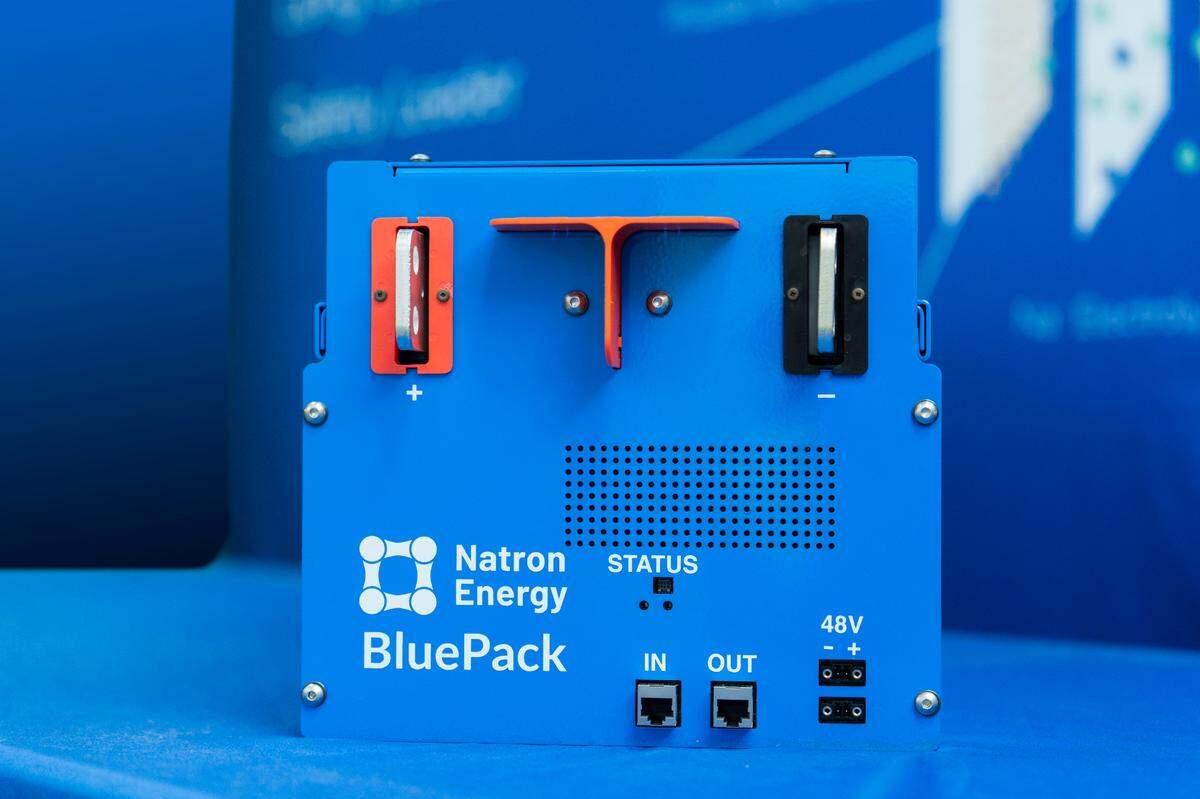
- Compared to state politics, North Carolina economic development is pretty harmonious; Democratic and Republican leaders each cheer our notable economic growth and support giving employers incentives to get there. But the downfall of Natron Energy could cause a divide: A national clean energy group, Protect Our Jobs, says it’s launching a billboard and radio campaign to blame Natron’s failed sodium-ion battery plant in Edgecombe County on the energy policies of President Donald Trump.
I’ve been told Natron’s problems went beyond the current administration’s support of fossil fuels, but that won’t fit as well on a billboard.
National Tech Happenings
- Bitcoin reached an all-time high price above $125,000 this week, driven in part by more exchange-traded funds selling cryptocurrencies and long-term concerns over the U.S. dollar during the government shutdown. Gold set a record too.
- Every news outlet seems to be discussing low-effort AI slop filling our social media feeds. AI video generation is here; telling deepfakes from reality is getting harder.
- This week’s big chips news: Nvidia rival Advanced Micro Devices inked a GPU deal with OpenAI that could give the latter a 10% stake in AMD. Some worry about a circular AI deal bubble.
Thanks for reading!
This story was originally published October 10, 2025 at 9:22 AM.