Gov. Stein talks Japanese companies, Trump tariffs and NC’s edge after Asia trip
AI-generated summary reviewed by our newsroom.
- North Carolina recruited life sciences, EV battery and food processors from Japan.
- Japanese executives raised 15% U.S. tariffs and supply-chain uncertainty with Stein.
- North Carolina asserts biotech leadership as Fujifilm and Kyowa Kirin expand here.
After Charlotte hosted the Southeast U.S./Japan Conference last year, top North Carolina officials were in Tokyo last week for the latest edition of the annual business event. Their goal was to recruit more Japanese companies to a state where Japan is already the top source of direct foreign investment, both in dollars and jobs.
Toyota, Fujifilm and the HI-CHEW candy maker Morinaga are among 74 Japanese companies to have opened or expanded North Carolina sites since 2014. Going back further, Tokyo is where the state opened one of its first overseas economic development offices in 1978.
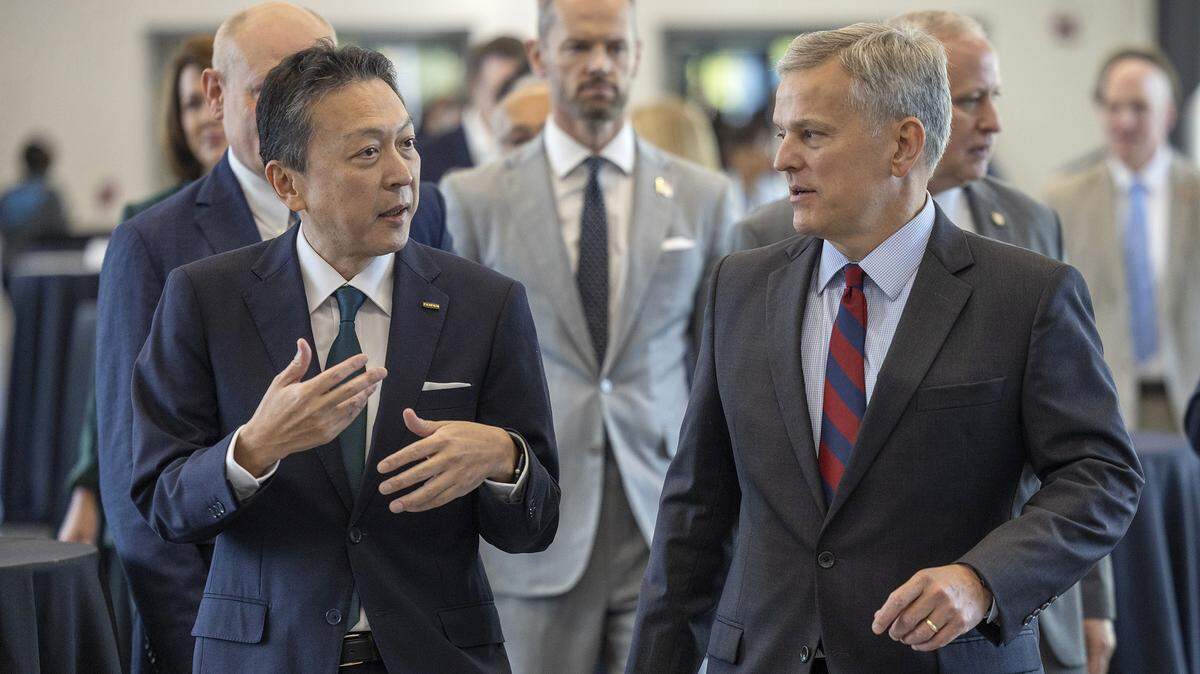
Less than two days after returning from his Asia trip — which included meeting executives in Taiwan — an admittedly tired Gov. Josh Stein spoke to The News & Observer about which types of businesses are eyeing the Tar Heel State. The top sector was no surprise.
“I would say that the majority of companies we met with were life sciences,” Stein said. “At least half. We also met with a handful of electric vehicle battery manufacturers, because I think it’s now understood with Toyota’s presence here that we are developing our own hub when it comes to EV battery manufacturing. And food processing, agriculture remains the number one industry in North Carolina and talked to a handful of food processors.”
This was Stein’s second foreign business trip as governor. In June, he led a state delegation to the Paris Air Show. North Carolina brought a 51-member group to this year’s SEUS/Japan Conference, and it had competition as the governors of Tennessee and Georgia also attended. With its growing population, the Southeastern United States has been a target for Japanese companies whose home country is experiencing record low birthrates.
In September, the contract drug manufacturer Fujifilm Biotechnologies opened a projected $3.2 billion facility in the Wake County town of Holly Springs. And in nearby Sanford, the Tokyo-based pharmaceutical company Kyowa Kirin aims to launch its first foreign manufacturing site in 2027.
“It’s well known that North Carolina is one of the top three leading pharmaceutical life sciences states in the country,” Stein said. “Really there’s no other Southern state that can compete in biotech.”
This year’s SEUS/Japan Conference came at a time of unique U.S.-Japanese economic relations. In July, the two countries reached a tariff deal that levies 15% tariffs on Japanese exports to the United States. Referring to President Donald Trump as “the dealmaker in chief,” the White House announced on Oct. 28, during the conference, a list of investments Japan had committed to make in the U.S. as part of the trade agreement.
Stein, a Democrat, said tariffs dominated conversations with executives last week.
“I had 30-plus individual meetings with businesses in Japan and Taiwan, and I would say at nearly all of them, the issue of tariffs and the uncertainty they create came up,” he said. “A lot of these companies have existing locations in the United States, and so they feel like they’ve done what the president wants them to do, but it’s a global supply chain, and a lot of their inputs come from abroad, and they’re getting hit in that regard, too.”
This story was originally published November 7, 2025 at 5:30 AM.