Should the government take ownership in an NC magnet (or any) company?
I’m Brian Gordon, tech reporter for The News & Observer, and this is Open Source, a weekly newsletter on business, labor and technology in North Carolina.
Democratic Gov. Josh Stein is in agreement with the CEO of North Carolina’s leading conservative think tank. On the opposing side are the Trump administration, U.S. Sen. Bernie Sanders and a 2-year-old Triangle startup that just promised to build the biggest rare earth magnets factory outside of China, in rural Johnston County.
The issue pairing these strange bedfellows is whether the federal government should take equity in companies it funds with taxpayer dollars. Past administrations have done this during wartime, and, most recently, following the 2008 financial crisis when the U.S. under President Barack Obama took temporary ownership stakes in General Motors, Chrysler, Ally Financial and the insurance giant AIG.
But since this summer, the Trump administration has exchanged loans and CHIPS Act grants for significant equity shares in businesses it deems crucial for national security: MP Materials (15%), Intel (10%), Lithium Americas (5%, plus 5% in a mining project), and Trilogy Metals (10%).
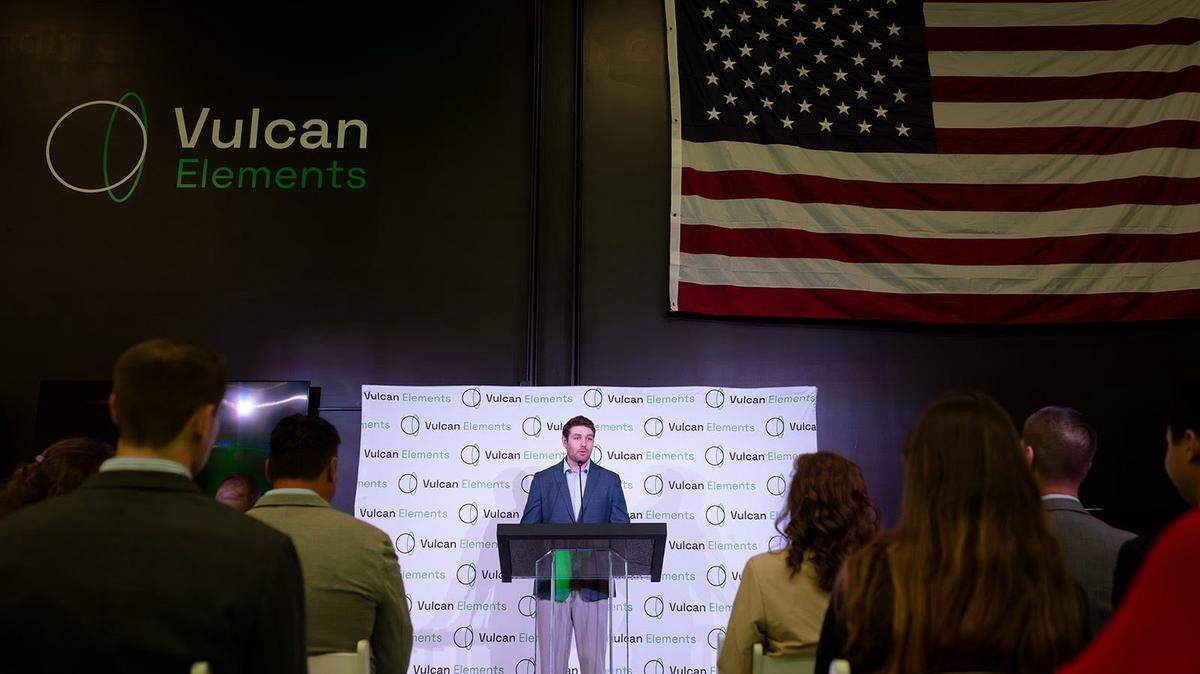
Earlier this month, a young Research Triangle Park company joined this list. Under a conditional agreement with the Department of Defense (which the White House calls the Department of War), Vulcan Elements will receive a $620 million loan to help build its first major rare earth magnets facility. In return, the government will receive “warrants” — the ability to buy Vulcan shares in the future.
Vulcan also entered a preliminary deal to receive $50 million in incentives through the federal CHIPS and Science Act, a potential contract that would give the U.S. Department of Commerce a $50 million equity stake in the company. The two sides are still negotiating final terms, a Commerce spokesperson told The N&O in an email.
Rare earth magnets are essential components in a wide range of commercial and military applications. China currently dominates their supply chain, a control Vulcan’s 31-year-old CEO John Maslin set out to weaken when he cofounded the company in 2023.
On Tuesday, Vulcan announced it will construct a 1,000-worker magnet factory in the small town of Benson, about a 40-minute drive south of Raleigh. Part of its manufacturing space already exists:

On a call after the announcement event, Maslin told me he would be happy to have the federal government as a minority owner. “Mechanically, it’s not super different than private investors,” he said. “All it means is, if we’re successful and this becomes the company that I believe it will, the taxpayers get to have a piece of that success.”
It’s not necessarily a right-wing notion. Liberal U.S. Sens. Bernie Sanders and Elizabeth Warren sponsored an amendment to the 2022 CHIPS Act that would give the government equity in businesses that receive CHIPS grants. Their provision ultimately wasn’t included, but Sanders this summer supported the Trump administration taking shares in Intel.
Others see dangers in this level of government involvement. “It edges on the border of socialism, to be honest with you,” said Donald Bryson, head of the Raleigh-based conservative think tank John Locke Foundation.
Asked at the Vulcan event about the government’s equity stakes, Gov. Stein voiced caution.
“I am comforted by the fact that it’s not voting stock,” he said. “But I do worry that it might distort government policy going forward when the government will favor companies in which it holds equity. I think that’s not how the government should operate.”
Where Bryson and Stein differ is on how the North Carolina government should be involved with companies. On Tuesday, the N.C. Department of Commerce awarded Vulcan a job development investment grant, the state’s main incentive tool (more on that below), which could yield the company $17.6 million in payroll tax benefits if it creates at least 1,000 jobs and invests nearly $920 million in Benson by the end of the decade.
Bryson sees this incentive as another government picking winners and losers in the private sector. The state defends its JDIG program as an essential tool for winning jobs projects over rival states while protecting taxpayers by only doling out dollars after recipients hit hiring and investment benchmarks.
North Carolina doesn’t take equity in the companies it backs. And it can’t steer markets the way the White House can.
“When the federal government puts its thumb on the scale compared to an individual state, it clearly can influence outcomes in a way that states can’t,” said Andrew Taylor, a political science professor at N.C. State University. “The magnitude of the support can be so much greater.”
Two days, five projects, 3,300 *promised* jobs
Vulcan Elements was one of five projects North Carolina supported with job development investment grants. It was one of two to promise 1,000 new jobs.
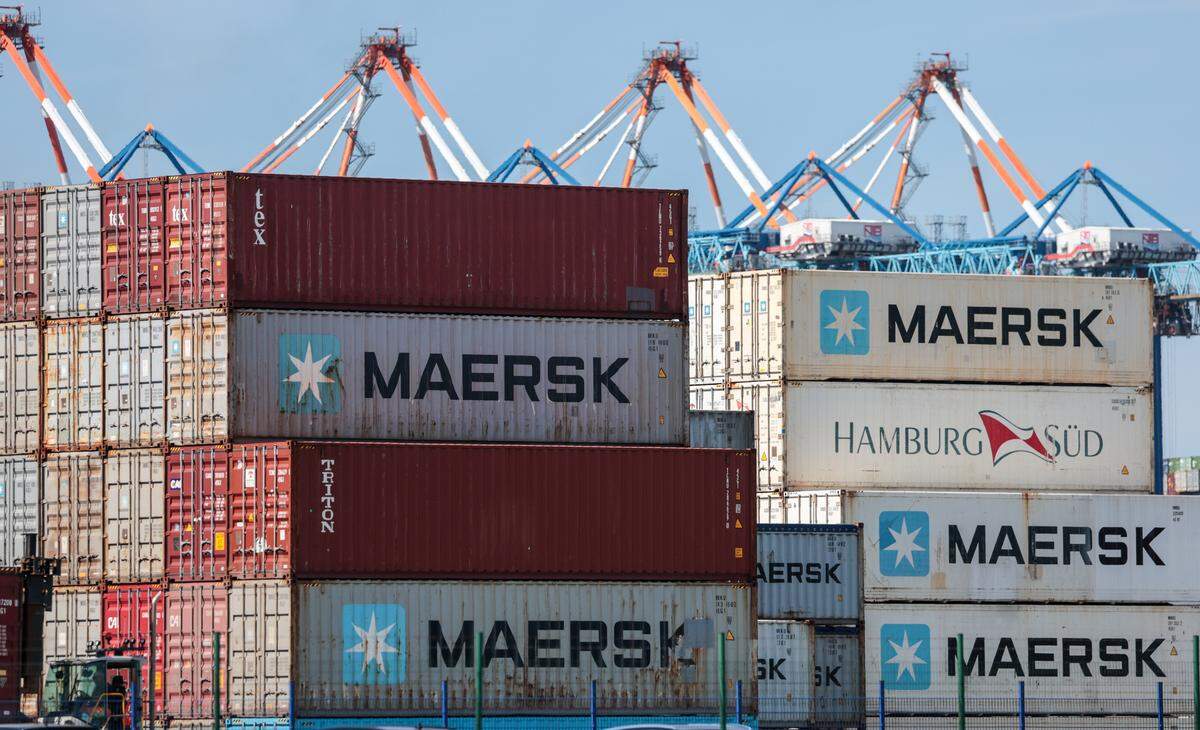
On Tuesday, the state stole a headquarters from New Jersey as the U.S. subsidiary of the logistics and shipping firm Maersk committed to expanding in Charlotte. The next day delivered a pair of even bigger job commitments as the Swiss pharma company Novartis pledged to hire 700 more workers across three Triangle sites and the Durham insurance provider Aspida said it would add 1,000 employees in Durham County between 2028 and 2032.
Now, no company’s seven-year projection should be taken as gospel. Most JDIG recipients historically don’t meet their original hiring targets. Many never hire at all. The business behind North Carolina’s largest jobs headline of last year is no longer a business.
The state has a “shots on goal” economic development philosophy. In rare earth magnets, shipping, insurance, pharma and concrete, North Carolina hopes it has multiple ways to score.
Clearing my cache
- A developer has appealed the town of Tarboro’s decision to block his $6 billion data center project. The case is moving on to the Edgecombe County Superior Court. “It’s out of our hands,” Tarboro Mayor Tate Mayo told me.
- N.C. State plans to start a degree in wide-bandgap semiconductors, materials that can operate at higher temperatures than standard silicon.
- North Carolina’s public pension fund ended September with $139.1 billion, up $12.6 billion from the start of the year. The Department of the State Treasurer attributed this increase to “a mixture of a robust market and strategic decisions.”
- The U.S. spokesperson for VinFast has parted ways with the Vietnamese carmaker that had promised a multibillion-dollar factory in North Carolina. “I truly wish we could have realized the full scope of the ambitious plans we initially set out to accomplish,” he wrote on LinkedIn.
- As part of its broader Triangle expansion, Novartis plans to occupy more than 200,000 square feet of Morrisville’s massive Pathway Triangle biomedical facility. The site’s developer, King Street Properties, called it one of the largest local leases of the year.
National Tech Happenings
- The U.S. has stopped minting pennies. From 3.2 billion produced last year to zero.
- Meta won’t be forced to spin off Instagram and WhatsApp after the company won an antitrust case brought by the Federal Trade Commission.
- Verizon has begun laying off 13,000 workers, more than 13% of its workforce. CEO Dan Schulman said Verizon looks to “evolve as a company”.
- The White House is preparing an order to stop states from enacting their own artificial intelligence regulations.
Thanks for reading! Open Source will be back in two weeks — enjoy the holiday!
This story was originally published November 21, 2025 at 7:56 AM.