NC rare earth magnet maker picks Johnston County for $918 million, 1,000-job plant
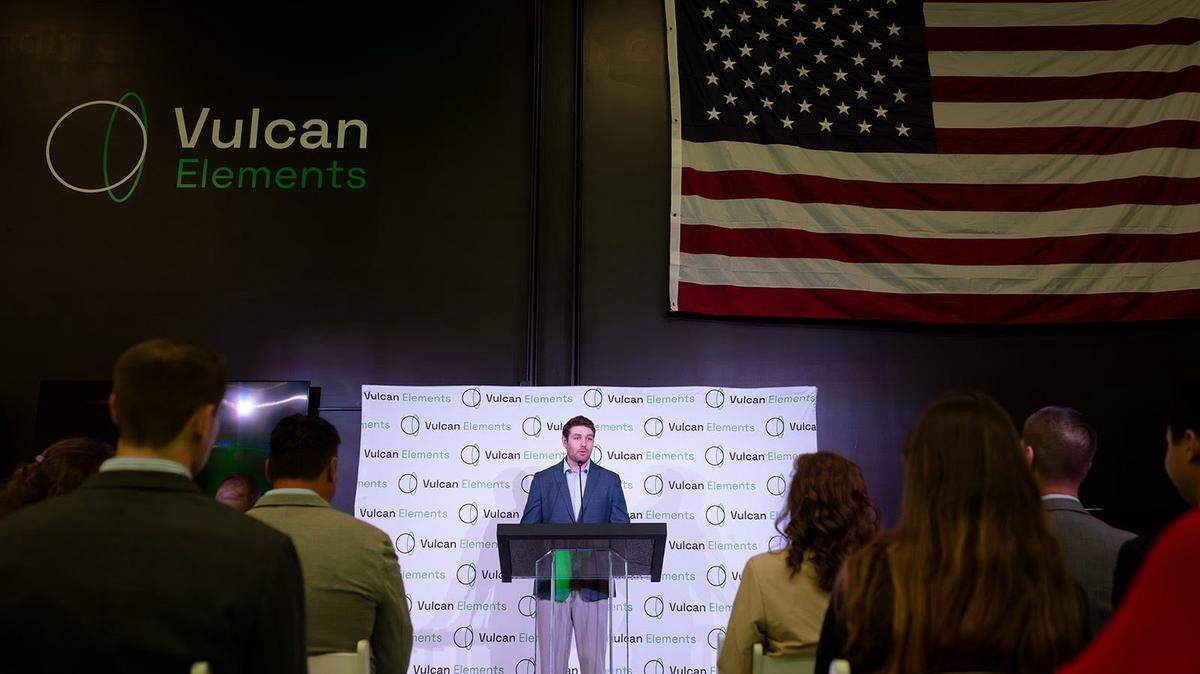
Vulcan Elements, a North Carolina startup determined to revitalize U.S. production of rare earth magnets, has chosen Johnston County as the site of its first major factory.
The N.C. Department of Commerce on Tuesday awarded Vulcan an economic incentive to build a 10,000-metric-ton magnet facility about halfway between Raleigh and Fayetteville in the small town of Benson. There, the Research Triangle Park company has committed to invest $918.1 million and create 1,000 jobs over the next five years.
If realized, this facility will be one of the largest rare earth magnet plants outside of China. “Rare earth magnets are essential components in almost every motor, sensor, generator and actuator, which makes them essential to the technologies that drive America’s economic competitiveness and national security,” Mark Poole of the NC Commerce Department said Tuesday during an Economic Investment Committee meeting.
Since forming in 2023, Vulcan Elements has quickly raised its profile by pledging to lessen U.S. reliance on Chinese manufacturers for a class of magnets used in a wide range of civilian and military applications. Rare earth metals produce permanent magnets that keep their magnetic properties without an electrical current.
China today controls roughly 90% of global rare earth magnet production, a dominance recent U.S. presidential administrations have aimed to reduce amid ongoing trade tensions between the two nations. Earlier this month, Vulcan announced it had secured more than $1 billion to pay for its first large-scale commercial plant, including a $620 million loan from the Department of Defense and a $50 million federal grant through the CHIPS and Science Act.
“We’re rebuilding this muscle in this industry here in the United States,” Vulcan CEO John Maslin told The News & Observer in an interview Tuesday.
As part of its deals, the U.S. government will take equity in Vulcan, with the U.S. Department of Commerce getting a $50 million stake and the Pentagon receiving “warrants” — or the ability to buy future company stock.
On Tuesday, North Carolina offered its own financial support. Under a state job development investment grant, Vulcan could receive close to $17.6 million in future payroll tax breaks if it creates at least 1,000 jobs in Benson by 2029 at an average minimum salary of $81,932 or higher. Maslin said his company plans to have 50 employees by the end of the year.
Local incentives to the project between Johnson County and the town of Benson could total up to $94.9 million combined. Benson is a town of 4,500 near the border of Johnston and Harnett counties. It is 30 miles south of Raleigh and a similar distance northeast of Fort Bragg, the U.S. Army base near the city of Fayetteville. State commerce officials said Johnston County beat out a finalist location in Ohio for the Vulcan project.
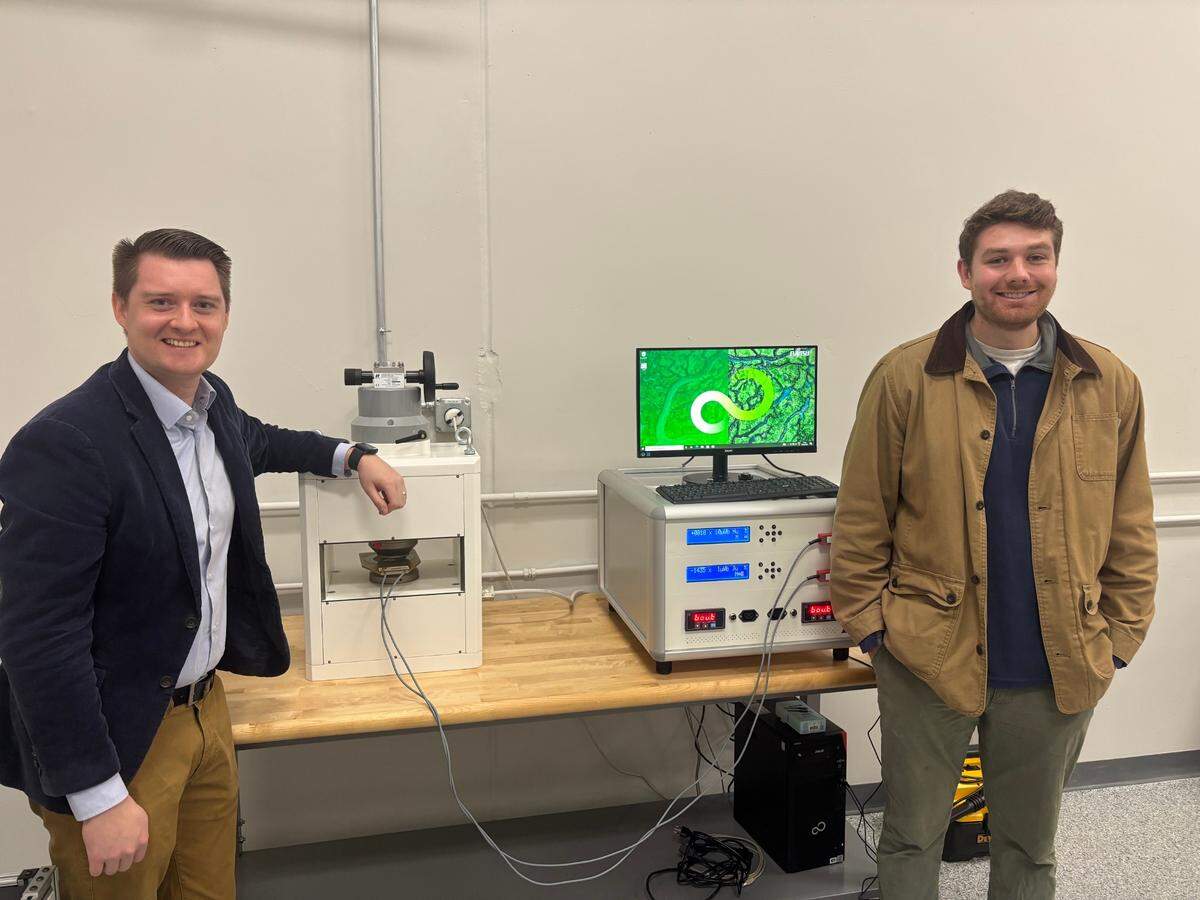
North Carolina’s military presence is one reason Maslin, 31, says his company is headquartered in the state. He co-founded Vulcan less than three years ago with electrical engineer Piotr Kulik while studying at Harvard Business School. In late March, they opened Vulcan’s initial manufacturing site, a small 10-metric-ton facility on the Durham side of Research Triangle Park.
Its next, more significant factory will be located outside downtown Benson at the Crosspoint Logistics Center near where Interstate 95 hits I-40. “A lot of this will be under construction over the next 12 months,” Maslin told reporters Tuesday during an event marking the expansion.
Gov. Josh Stein and U.S. Senator Ted Budd were among the officials who traveled to Johnston County to give remarks. “This is what got my attention in Washington is that Vulcan is fully decoupled from China,” Budd told the crowd.
Asked about the Trump administration’s unprecedented role in taking ownership in companies it financially supports, Stein said “it is certainly abnormal.”
“I am comforted by the fact it’s not voting stock,” he told reporters after the event. “But I do worry that it might distort government policy going forward when the government will favor companies in which it holds equity.”
Taking on China from North Carolina
There are two common types of rare earth magnets, neodymium and samarium cobalt, and Vulcan Elements focuses on the former through a process known as the powder metallurgy method.
“(Neodymium magnets) cut across virtually every system or platform with a motor sensor, an actuator or a generator,” Maslin, a Navy veteran, told The N&O in the spring. “We haven’t done a good job of, in this specific industry, building in the United States with urgency and seriousness.”
The United States once led global rare earth magnet manufacturing, yet over decades, it ceded this position to China. “The Chinese Communist Party could cut us off at any moment,” U.S. Rep. Pat Harrigan, a first-term Republican from Hickory, said during Vulcan’s facility opening event in March.
Soon after, China retaliated against President Donald Trump’s rising tariffs with export controls covering materials containing seven rare earth elements: samarium, gadolinium, terbium, dysprosium, yttrium, scandium and lutetium.
Wresting back market control from the Chinese is not without challenges. Rare earth elements are actually quite abundant, yet single elements aren’t often concentrated. This makes them less efficient to mine commercially. And rare earths are usually clumped with radioactive elements like uranium and thorium, which increases the complexity of extracting them.
“It’s far from a slam dunk,” said John Ormerod, a rare earths magnet consultant based in Tennessee. “It’s going to take a considerable amount of time.”
Ormerod said a particular obstacle U.S. rare earth magnet producers face isn’t equipment as much as worker expertise. Some domestic mining and processing companies are working in the sector already, like Las Vegas-based MP Materials, which last year received a $58 million tax credit through the Inflation Reduction Act to build a permanent magnet plant in Fort Worth, Texas.
Then this summer, the Department of Defense (which the White House refers to as the Department of War) gave MP Materials a $150 million loan and agreed to pay above-market prices for the company’s magnets. The federal government took equity in MP Materials as part of this deal.
This story was originally published November 18, 2025 at 10:18 AM.