Panthers, smanthers: The Triangle is home for Western NY food and football
.jpg "A photo of Buffalo Bills running back James Cooks on sale at the Wegmans on Davis Drive in Morrisville, N.C.")
I’m Brian Gordon, tech reporter for The News & Observer, and this is Open Source, a weekly newsletter on business, labor and technology in North Carolina.
The joke goes that the town of Cary stands for “Containment Area of Relocated Yankees,” but live around the Triangle, and you’ll spot signs of a particular type of Northern.
These are people who know the ingredients in a Garbage Plate and have had friends jump through tables at football games. Or, perhaps, at weddings.
They are why the Triangle’s four Wegmans grocery stores sell an array of Buffalo Bills-branded apparel — footballs, polos, plates, shopping bags, cozy slippers, tumblers, framed photos of slot receiver Khalil Shakir bounding into the end zone — and few if any items from the NFL team, also playing in this weekend's playoffs, that actually has Carolina in its name. The size of the Bills sections behind the checkouts rivals the displays for UNC, Duke and NC State clothing combined.
“Typically, when we open new stores, we start with just hometown or local apparel that resonates with the customers of that particular location,” Wegmans spokesperson Mandee Puleo wrote in an email. “Bills fans are known for being very vocal and aware of the quality products we offer in some of our other stores. Sometimes, we even get requests for Bills merchandise before a new store opens, as was the case with our Lake Grove location.”
.jpg "IMG_9595 (1).jpg")
The first Wegmans opened 110 years ago in Rochester, New York, and the chain has since stretched down the East Coast, as far south as North Carolina. The chain is developing sites in Holly Springs and Charlotte, to bring its statewide total to six. Beyond Bills garb, the North Carolina stores also stock a special display of Western New York sauces from the likes of Zweigle’s, Chiavetta’s and Bill Gray’s.
More customers keep arriving. Historically, New York is “by far” the top sending state for new North Carolina residents says Nathan Dollar, director of Carolina Demography at UNC Chapel Hill. And since 2021, around 75,000 people have migrated to our state from New York, with about 16,000 residing in Wake, Durham or Orange counties.
A number of New Yorkers began moving to the area about 60 years ago when IBM opened a campus in Research Triangle Park. In 1966, the N&O described local first-graders learning about the existence of downhill skiing from their new classmates whose parents had relocated from IBM’s headquarters near New York City. IBM also solidified RTP as an economic magnet, ushering in other corporations that attract northern tech workers to this day.
“People move primarily for purposes of work, and then they also move for family reunification,” Dollar said. “It could be younger working-age people have moved here. Maybe their parents are following them. I can certainly tell you, anecdotally, you certainly see lots more Bills fans than you used to.”
Familiar food options for these fans extend beyond Wegmans. Upper Deck in Cary serves Buffalo Wings and its version of a Garbage Plate, a Rochester culinary, uh, delicacy consisting of a bed of macaroni salad or home fries, topped with burgers or hot dogs, onions, mustard, and meat sauce. Then there is Trash Talk, a food truck that makes “Trash Plates” in order to sidestep the trademark a Rochester restaurant has on the “Garbage Plate” name.
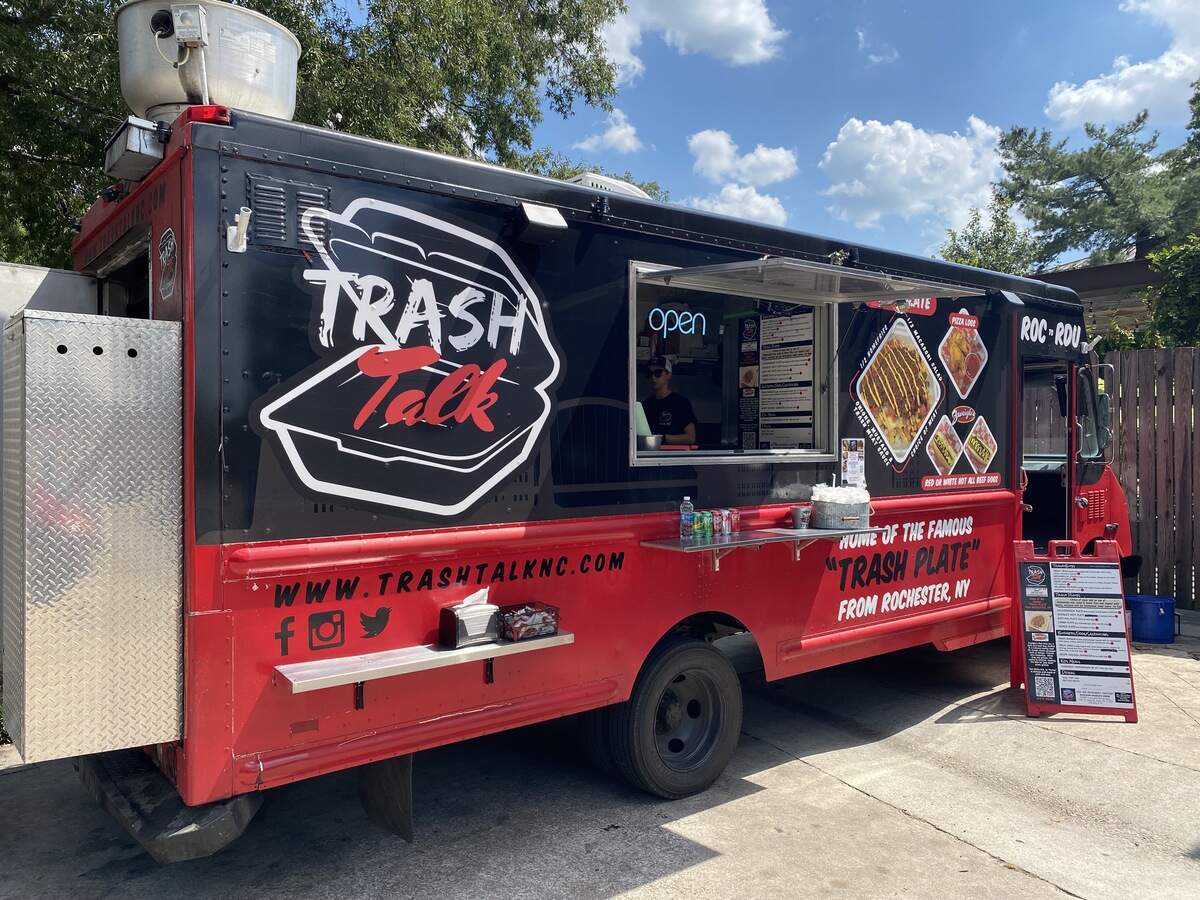
“I didn’t want to take the risk,” the truck’s operator, Lori Herndon of Fuquay-Varina, said. “But when I did, it was like, ‘Holy cow, there’s a lot of people from Rochester down here.’”
Given its booming population, North Carolina is home to many raised elsewhere. Nearly half (47%) of its residents were born outside the state, Dollar said. Western New York is just one of many places to have exported its culture to Raleigh, Durham and Cary. But it isn’t subtle about it, which as a Rochester native, I love.
“There’s some sort of density here amongst that population that is unique,” said Matthew Boyd, a native of Batavia, New York, and the owner of Buffalo Brothers, which serves WNY-inspired fare at its five restaurants across the Triangle. “I guess in my head, it reminds me of where I’m from, and I feel less alone.”
Boyd says his restaurant hasn’t yet mastered a beef on wick. But it’s working on it.
Go Bills! And why not, Go Panthers!
NC’s battery belt blues
On the first weekday of the new year, three UPS package delivery notices were taped to the front door of Forge Nano’s empty facility in Morrisville. “Sorry we missed you,” each read.
Forge, a Colorado company, has previously said it would open this “gigafactory” battery plant in 2026, and under its North Carolina incentive deal, it has until the end of next year to hire 208 local workers. But the facility, for now, appears idle. The parking lot is vacant — and I’ve tried for weeks to get someone from the company to provide an update on its operation timeline.
“Our North Carolina gigafactory integrates Atomic Armor™ directly into battery materials and components,” Forge states on its website. This present-tense verb choice seems incorrect. Will integrate, perhaps.
Announced in November 2023, Forge Nano’s prospective Wake County plant was one of a half-dozen lithium-ion battery projects North Carolina welcomed earlier this decade as it sought its place in a so-called “battery belt” spanning the southeastern United States. There were three- and four-figure jobs announcements from Toyota, VinFast and a slew of smaller battery component makers, none of whom have ever built a U.S. battery site.
In later 2024, the U.S. Department of Energy awarded Forge Nano $100 million to expand its Morrisville factory, where the company aims to manufacture niche EV batteries for aerospace and defense applications.
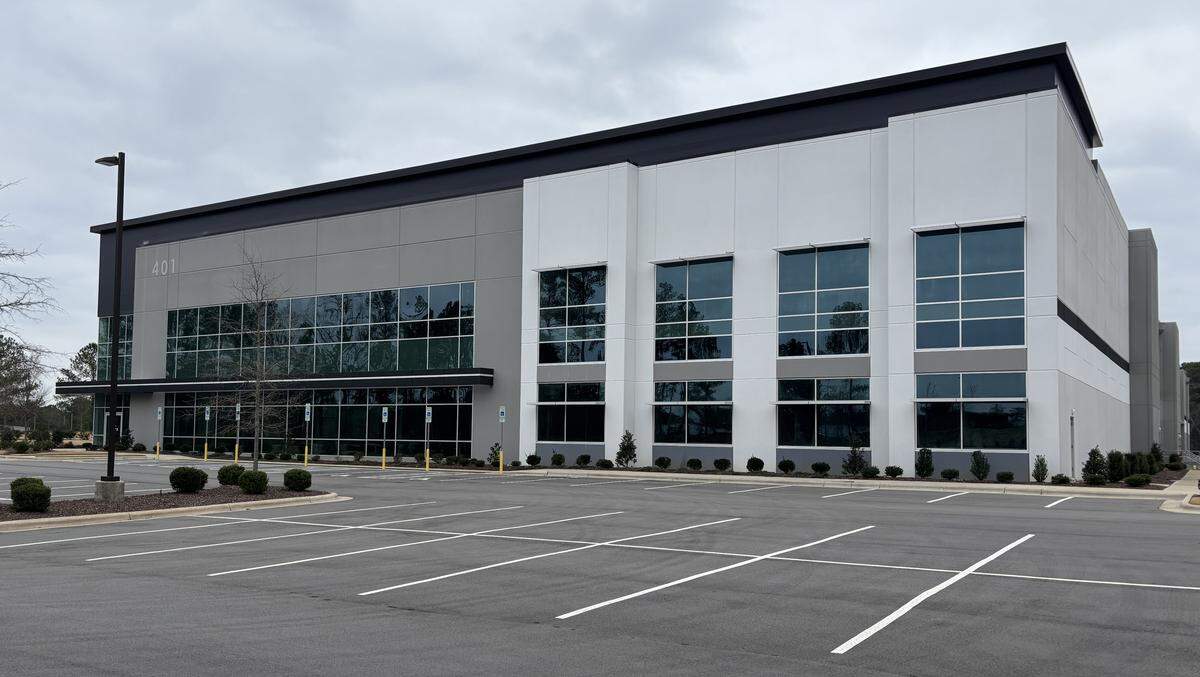
Today, many of North Carolina’s notches on the “battery belt” have yet to open. A graphite anode material plant near Wilmington is delayed. A lithium-ion battery pouch producer north of Charlotte is “monitoring trends in the EV market and will move forward at an appropriate time.”
North Carolina had a lot of jobs and investments riding on electric vehicle adoption, something Americans are doing but at a slower-than-expected pace. This has contributed to a glut of lithium-ion batteries that has complicated plans and even helped torpedo a sodium-ion battery project in Edgecombe County.
There’s time for the sector to recapture its early 2020s magic. There’s also time for Forge to open its gigafactory (or at least respond to questions).
Clearing my cache
- Shop Local Raleigh executive director Jennifer Martin apologized last Friday for her anonymous Facebook comment denying that a transgender child’s identity was real.
“I’ve heard my actions have caused division among people and that breaks me,” read part of Martin’s apology post on the Shop Local Raleigh Facebook and Instagram pages. “Speaking for me and me only, not my employer, I believe we are all called to love one another just as Christ has loved and forgiven us. My hope and my prayer are that we can move forward together with humility, compassion, forgiveness and renewed commitment to care for one another.”
- Be mindful of QR codes slapped on a downtown Raleigh street parking meters.
- Site Selection named North Carolina the best state for workforce development in its 2026 rankings. “Despite the lack of a state budget, something must be working … or rather, a whole lot of someones must be working: Economic development wins in 2025 brought more than 33,000 jobs to the state,” the magazine wrote. That line should read economic development brought *the promise of* more than 33,000 jobs to the state.
- Kroehler Furniture Co. immediately laid off 208 workers in late December as it closed its factory in Conover. The company told state officials it couldn’t give customary 60 days’ layoff notice as this would have hindered its (ultimately failed) attempts to raise capital or sell the business. Founded in 1983, Kroehler was owned by American Signature, which filed for bankruptcy in the fall.
- Before the holidays, I rode in two of North Carolina A&T’s self-driving vehicles, which university researchers are testing ahead of future pilot programs on the streets of Greensboro. The program has put autonomous vehicles on public roads before.
.jpg "IMG_9450 (1).jpg")
National Tech Happenings
- “Get ready for the golden age of insider trading,” The Atlantic writes after an unidentified, infrequent bettor created a new account on the predicative market platform Polymarket and made north of $400,000 waging that Venezuela President Nicolás Maduro would be ousted by the end of January.
- The U.S. Department of Energy has awarded $2.7 billion to a trio of companies that enrich uranium for nuclear energy. Overall investments in nuclear energy, especially small modular reactors, has swelled.
- xAI, billionaire Elon Musk’s artificial intelligence platform, raised $20 billion in Series E funding. The company said this money will help it toward its chief goal of “understanding the universe.”
Thanks for reading and supporting local journalism.
- Enjoying this newsletter? Share it with a friend. If it was forwarded to you, sign up here.
- No longer want to receive this newsletter? Hit the unsubscribe link near the bottom of this email.
This story was originally published January 9, 2026 at 6:15 AM.