NC aspires to lead ‘green energy economy,’ but EV troubles create setbacks
AI-generated summary reviewed by our newsroom.
- Toyota’s $14 billion battery plant anchors North Carolina’s clean energy economy.
- Wolfspeed’s Chatham plant sits underused after bankruptcy and major layoffs.
- VinFast delays and uneven EV sales threaten a promised 7,500‑job Moncure plant.
The nearly $14 billion Toyota expects to spend on its sprawling lithium-ion battery factory in Randolph County represents the largest single investment the company has ever made in North America.
About 2,500 workers at the plant make batteries for Camrys and Corolla Cross SUVs and soon the RAV4. Toyota expects to double its payroll there in the coming decade, as the company shifts away from strictly gas-powered vehicles to more hybrid and fully electric models.
“Around the country, there’s going to be a very good chance that your new Toyota hybrid, plug-in hybrid or electric vehicle will be powered by a battery that comes off the line in this facility,” Gov. Josh Stein said at a grand opening event in November. “We’re seeing our state becoming a national leader in the clean energy economy with Toyota leading the way.”
But the clean energy economy has also faced setbacks in North Carolina. About 16 miles from Toyota, in neighboring Chatham County, the multibillion-dollar plant Wolfspeed built to make materials for its silicon carbide chips used in electric vehicles remains quiet, with fewer than 100 workers.

And the $4 billion factory that Vietnamese carmaker VinFast said would assemble electric SUVs near Moncure remains unbuilt.
The Toyota, VinFast and Wolfspeed factories were announced within a year of each other, when government and company leaders said North Carolina was poised to cash in on the shift to electric vehicles. With EV sales falling far short of expectations, the results have been mixed so far, with some notable successes among high-profile failures.

Wolfspeed bet on EVs hasn’t paid off
Wolfspeed built the John Palmour Manufacturing Center for Silicon Carbide with one product top of mind.
“The electric vehicle has been and will continue to be the driving force behind the broad adoption of silicon carbide,” then-Wolfspeed CEO Gregg Lowe told investors in October 2022, a month after his Durham semiconductor company announced one of the biggest economic projects in North Carolina history: a $5 billion, 1,802-worker materials plant near Siler City.
After five years pivoting his Durham company away from its legacy name (Cree) and legacy business (LED lighting), Lowe was betting Wolfspeed’s unique silicon carbide semiconductor would power widespread EV adoption. “So this past quarter, 90% of the design-ins came from automotive,” he said during that fall 2022 earnings call. “And we’re seeing a tremendous positive adoption of silicon carbide in electric vehicles and a significantly steepening adoption of electric vehicles in the overall automotive market.”
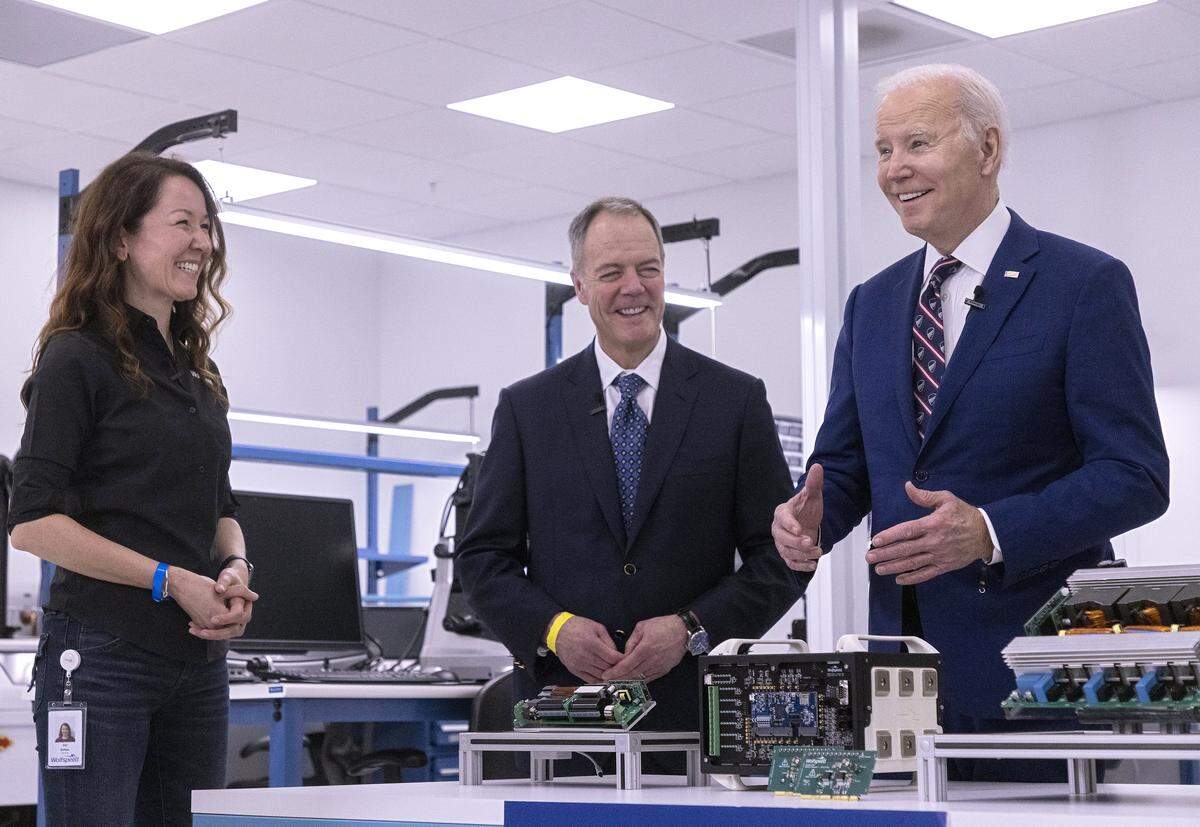
The company used debt to pay for its Chatham campus, which Wolfspeed completed in March 2024 and named after its late cofounder John Palmour. But the money Wolfspeed spent constructing both “The JP” and a chip fabrication site in New York State’s Mohawk Valley contributed to its mounting debt, which exceeded $6 billion by the time Wolfspeed’s board voted to fire Lowe in late 2024.
Last summer, Wolfspeed ended months of speculation and filed for bankruptcy.
In September, the chipmaker emerged from Chapter 11 with new shareholders and a new direction. The word new CEO Robert Fuerle has emphasized is “diversification.”
“In aerospace and defense, Wolfspeed’s high voltage devices are enabling mission-critical systems where performance and reliability matters most,” Fuerle told investors in October. “These programs can diversify our revenue base and highlight the strategic importance of U.S.-based semiconductor manufacturing.”
Then, after receiving nearly $700 million through a federal CHIPS Act tax credit this fall, Wolfspeed again underlined its desire to find more uses for its silicon carbide chips. “The company continues to focus on diversifying its power device revenue into key growing segments, including AI data centers, aerospace and defense, and industrial and energy,” Wolfspeed wrote in a Dec. 1 statement, “in addition to continuing to support the electric vehicle (EV) market.”
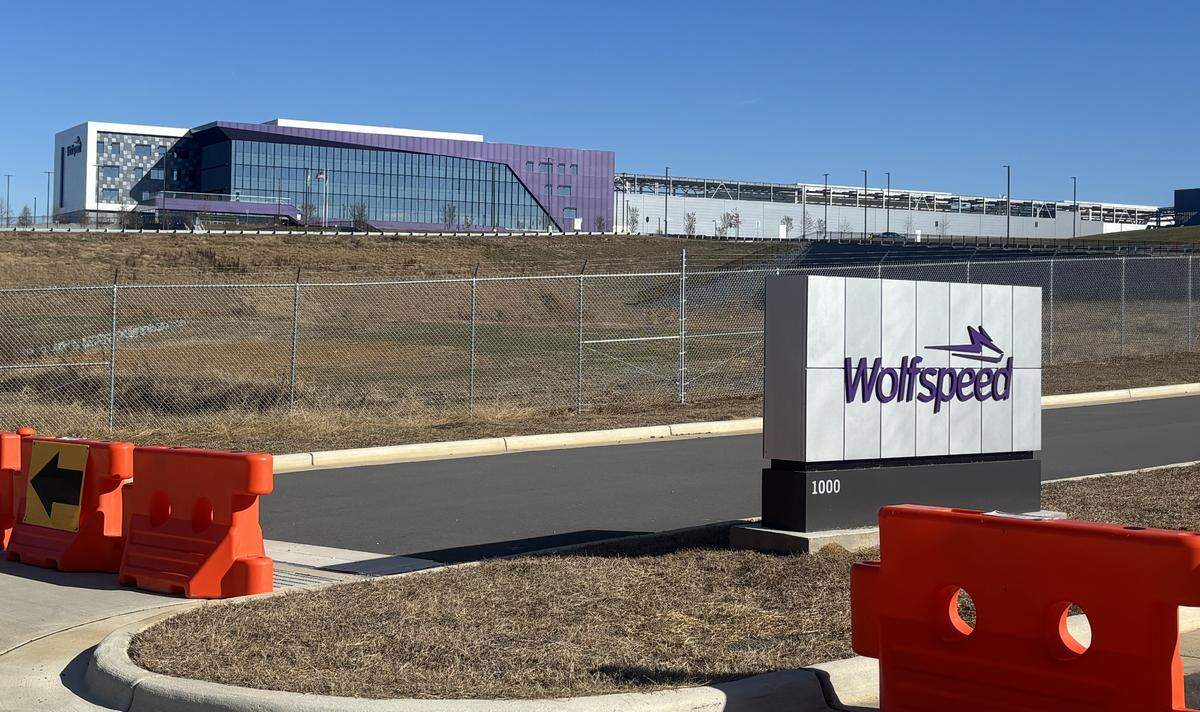
Wolfspeed’s dreams of hiring 1,800 workers in Chatham County are, for now, distant. As it careened toward bankruptcy, the company reduced its total headcount by almost a third — from more than 5,000 to 3,400, with layoffs impacting both its main Durham campus and the JP site.
The Siler City site isn’t running close to capacity, with Wolfspeed telling investors this fall that “underutilization” between the JP and Mohawk Valley plants cost the company around $47 million. “It’s built for high demand,” said one former Wolfspeed employee at the Siler City campus, who was laid off from the company in 2025. “A lot of the demand is still going through Durham (facilities).”
This former employee, who requested anonymity when discussing their work experience, estimated fewer than 100 people report to the Chatham County facility. During a weekday in late December, a News & Observer reporter drove by the plant, a stretching gray complex accented with Wolfspeed’s signature purple.
From the highway below, the factory parking lot looked empty.
A nascent EV industry begins to take hold
The electric vehicle business has paid off for North Carolina in other ways, however.
Two years ago, Kempower shipped its first EV charging system from a new factory in Durham, where the Finnish company established its North American headquarters. A few miles away, IONNA, a start-up created by eight of the world’s largest car companies, is working to build a national network of charging stations with 30,000 plugs by the end of 2030.
Both companies received state incentive packages worth up to $3 million for locating in North Carolina.
More recently, Scout Motors, a new subsidiary of Volkswagen, announced it would establish its corporate headquarters in Charlotte. The company, which is reviving an American brand that disappeared in 1980, will make electric trucks and SUVs at a plant in South Carolina and says it plans to create 1,200 jobs at its headquarters in Mecklenburg County.
If it meets its jobs and investment goals, Scout stands to receive $46.5 million in state tax rebates over 12 years.
Electric vehicles have also positioned North Carolina at the center of a potential “battery belt” spanning the Southeastern United States.
Between 2021 and 2024, the state landed Toyota and a slew of smaller battery component makers. While some of these projects have stalled amid a global glut of lithium-ion batteries, last year saw Toyota launch four production lines in Randolph County and the China-backed Green New Energy Materials move machinery into its battery component separator factory north of Charlotte.
Still waiting on VinFast assembly plant
VinFast is selling cars. On Tuesday, the young electric vehicle maker announced it had doubled its deliveries in 2025, to nearly 200,000.
But 85% of those deliveries took place in its home nation of Vietnam, where the company’s billionaire CEO is the country’s wealthiest person.
At least some of the remaining sales occurred in the Triangle, where a VinFast franchise dealership has operated for more than two years. Temporary signs still hang about the doorway of Leith VinFast, the only dealership in the Cary Auto Park to not have permanent signs. About 20 electric SUVs with dealer plates were in the parking lot recently.
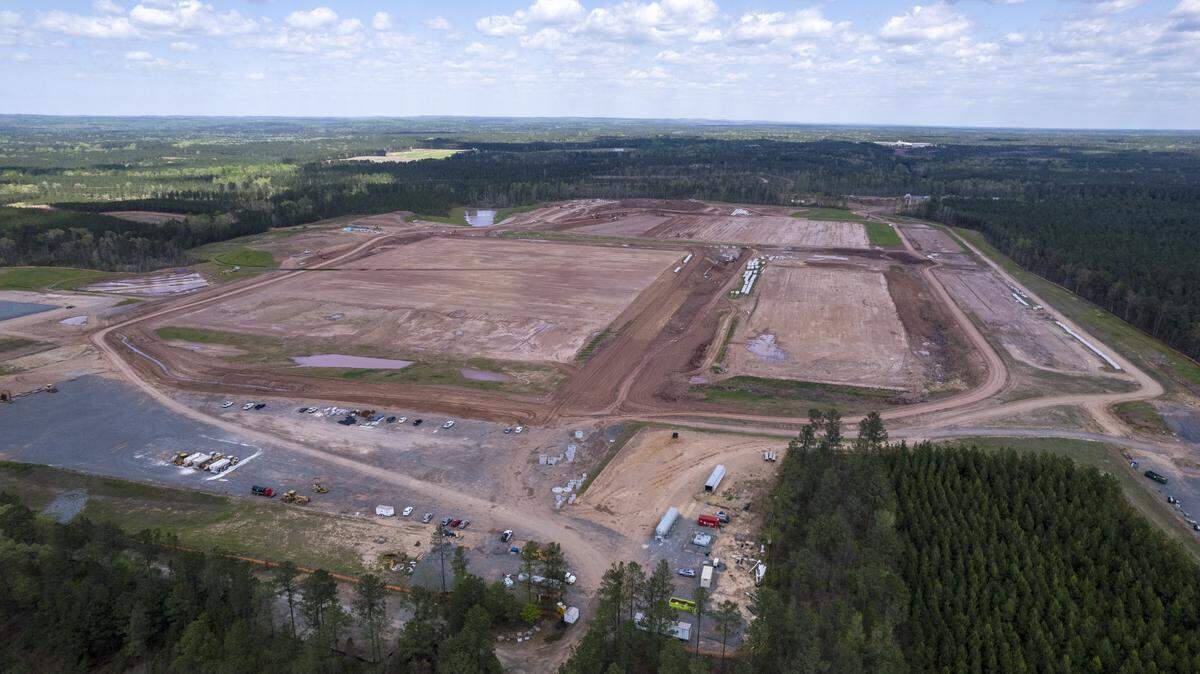
Many more would need to be sold across the U.S. to justify VinFast’s initial plans to build a 7,500-worker vehicle and battery plant nearby in southeastern Chatham County. Founded in 2017 as a gas-powered carmaker, VinFast moved four years later toward exclusively producing fully electric SUVs as it sought land for a massive North American factory.
The speed of this search surprised North Carolina officials, but few raised concerns publicly when, in March 2022, VinFast announced it would open a plant near Moncure.
VinFast’s North American headaches began about a year later when reviewers slammed its inaugural VF8 model, which some within the company acknowledged was rushed. Robust sales never arrived. The company has reportedly lost more than $10 billion since pivoting toward electric vehicles, and by 2025, it had shifted resources away from the U.S. and toward new Asian factories.
“I truly wish we could have realized the full scope of the ambitious plans we initially set out to accomplish,” VinFast’s U.S. spokesperson wrote in a LinkedIn post announcing he had left the company in November.
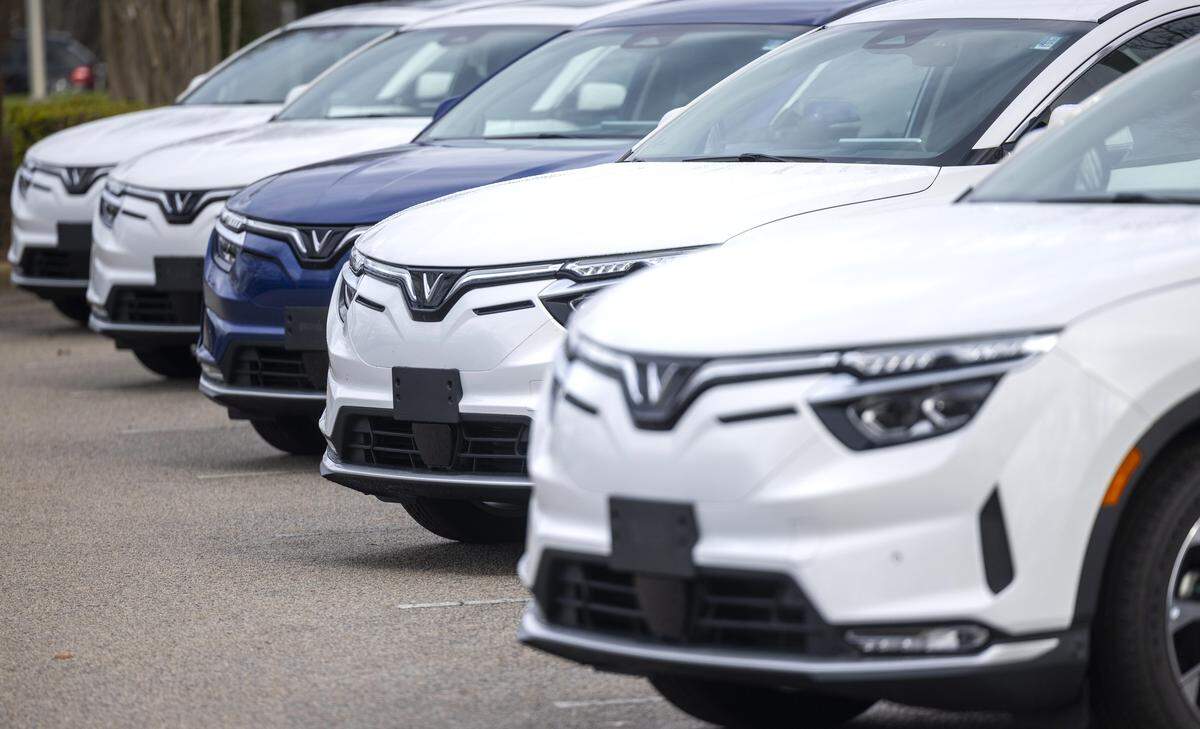
VinFast has postponed opening the North Carolina factory until at least 2028, four years later than the initial target. But even this appears uncertain, as no construction has begun. The carmaker hasn’t publicly withdrawn from the project, but North Carolina may not wait to find out if it will.
In November 2022, the N.C. Department of Commerce entered an agreement with VinFast that gave the state the right to buy all or part of the company’s 1,765-acre site should it miss hiring and construction deadlines. Under the schedule, obtained by The N&O, VinFast must start making cars by July 1, 2026, to avoid a potential buyback, something it can’t do.
“My team in the Department of Commerce is in regular talks with VinFast to understand what its plans are and what that means for that site,” Gov. Stein told The N&O during a phone interview in November.
To attract VinFast in 2022, North Carolina and Chatham County combined to offer the EV maker more than $750 million in economic incentives, to be realized through tax rebates only if VinFast achieved its goals. The General Assembly also included $450 million in the incentive package for upfront site improvements, which state leaders frame as a worthy land investment regardless of which manufacturer ultimately builds there.
State and local governments offered similar incentives to Toyota worth $438.7 million. The package included a grant for creating jobs and money to prepare the site for construction and build roads and two highway interchanges off U.S. 421, the second of which opened this week.
Toyota popularized battery-powered cars in the United States with the Prius. But it has taken a more cautious approach to EVs than other companies, putting more emphasis on hybrids that combine internal combustion engines with electric motors. While Toyota’s North Carolina factory will likely someday make batteries for pure EVs, every one coming off the line now are being used in hybrid vehicles.
This story was originally published January 8, 2026 at 5:30 AM.