How a blog post about a 67-year-old programming language rattled IBM
AI-generated summary reviewed by our newsroom.
- Anthropic’s Claude Code post wiped about $30B off IBM’s market cap in one day.
- Boom Supersonic still aims for supersonic service, but its Greensboro hiring is in doubt.
- Senate passed a bipartisan bill to restart SBIR and STTR programs.
I’m Brian Gordon, tech reporter for The News & Observer, and this is Open Source, a weekly newsletter on business, labor and technology in North Carolina.
The last Monday in February was the worst day IBM had on Wall Street in 25 years. Its stock fell 13%, with the cause coming from one of the leading artificial intelligence companies.
In a Feb. 23 blog post, Anthropic explained that organizations could use its Claude Code platform to modernize a programming language created during the Eisenhower administration, one that still underpins the worlds of government, finance, insurance, airlines and most Fortune 500 businesses. It is called the Common Business-Oriented Language, or COBOL.
“A blog post just wiped $30 billion off IBM’s market cap,” one business consultant wrote on LinkedIn.
Hundreds of billions of lines of COBOL code are believed to be active today. At least nine out of 10 ATM transactions in the U.S. run through it, to highlight one of its ubiquitous uses.
Companies routinely update this decades-old language to integrate new technologies, comply with new regulations, meet new security standards, and eliminate obsolete code. COBOL modernization is key to IBM’s business consultancy division; Morgan Stanley last month estimated that Mainframe and Transaction Processing made up almost one-fifth of the company’s total revenue.
The prospect of a cheaper alternative drove IBM’s steepest one-day market dive since the dot-com bubble burst. “Modernizing a COBOL system once required armies of consultants spending years mapping workflows,” Anthropic wrote last week. “This resulted in large timelines and high costs that few were willing to take on. AI changes this.”
So, is Claude Code a legit body blow to IBM, one of the Research Triangle’s largest tech employers? As with a lot of AI approaches, COBOL modernization choices may still depend on client size. Smaller organizations with fewer “mission-critical workloads” could embrace external AI options faster, Morgan Stanley analysts wrote in a Feb. 25 note.
But for major government and corporate clients? IBM’s mainframe should still win out, UBS analyst David Vogt wrote the day after Anthropic’s announcement. “We do not expect mainframe disintermediation over the next several years given strong customer stickiness, customer data sovereignty and complex vertically integrated stack that provides quantum-safe encryption.”
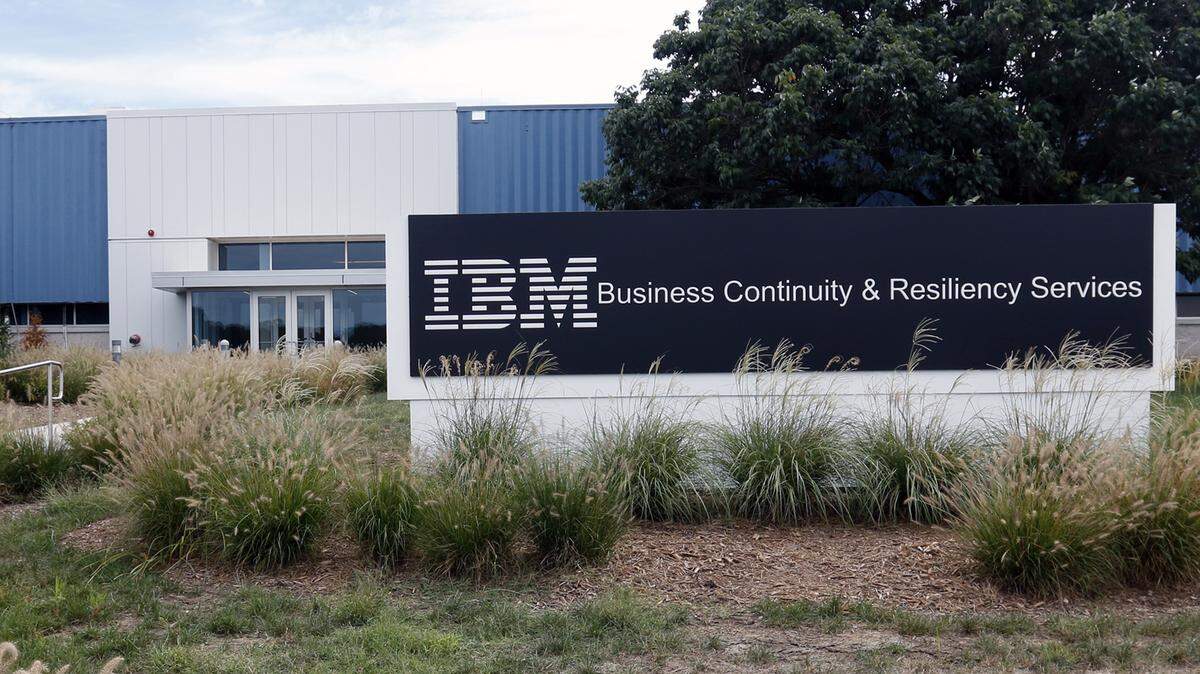
IBM, for its part, says clients can choose AI by sticking with the company. “New AI tools emerge every week, including our own,” it wrote in a statement to The N&O. The company also stressed a distinction between merely translating COBOL and truly modernizing it, with the latter requiring technical expertise (like data architecture redesigns, runtime replacements) that IBM said it has spent decades fostering. But Anthropic certainly got the company’s attention, as two IBM executives posted their own blogs on COBOL modernization within days.
Entering Friday, IBM had made up most of its Feb. 23 market loss. Yet the company’s stock is still down 14% on the year amid a broader AI-fueled software sector sell-off. “Sell first and ask questions later” is how Morgan Stanley labeled investors’ attitudes to the company nicknamed Big Blue.
But with the pace of artificial intelligence advancements, it’s no guarantee IBM — or any software provider — will always have the best answers to those questions.
.jpg "IMG_4198 (1).jpg")
Boom Supersonic leaves NC factory status unanswered
I asked Boom Supersonic five questions this week about the status of its promised North Carolina jet factory … and got three answers back. The Colorado company, which envisions resurrecting supersonic commercial travel, said it still aims to get passengers into planes by 2030. And those planes will be made in Greensboro.
A company spokesperson said Boom’s new initiative to power data centers, called Superpower, won’t disrupt this timeline. “We expect Superpower to accelerate the path to supersonic passenger flight,” the spokesperson wrote in an email, “by providing a key source of engine reliability data and by accelerating Boom’s path to profitability.”
Boom built its first facility at the Piedmont Triad International Airport in June 2024. But the company has yet to build or test any aircraft at the site. Boom finished testing its X-B1 demonstrator jet in California early last year, and its main aircraft, named Overture, remains under development. “We look forward to beginning Overture test production in North Carolina as soon as possible,” the company spokesperson wrote.
So, what information didn’t Boom share? When it plans to install testing equipment at its Greensboro facility and how many employees currently work there.
Given the above information, it’s safe to assume this North Carolina factory doesn’t yet support a sizable workforce. That’s understandable for a startup taking on the ambitious task of pulling off what the Concorde couldn’t sustain. In late 2024, The Wall Street Journal reported Boom laid off about half of its 260 employees.
And Boom intends to build its data center engine Superpower in Colorado, not North Carolina.
When Boom hires locally matters to its 2022 state incentive agreement. Under this job development investment grant, or JDIG, Boom must create at least 561 jobs in Guilford County by the end of this year to be eligible for payroll tax benefits. JDIG recipients can ask the state to push back hiring requirements by up to two years, which the N.C. Department of Commerce told me Boom has not yet requested.
Even with a two-year extension, though, achieving 561 North Carolina jobs would mean Boom has made a significant breakthrough toward its sky-high dreams.
.jpg "IMG_5657 (1).jpg")
Clearing my cache
- A development firm has halted its plan to build a western Wake County data center campus following local pushback.
- With bipartisan support, the U.S. Senate passed a bill to restart SBIR and STTR programs, which startup leaders say provide essential research and development funding. The two federal programs lapsed last fall. “This is the closest we’ve come to the reauthorization,” Eva Garland, a Raleigh consultant, said. “And so we remain hopeful that it will cross the finish line in the next several days.”
- Duke University, the second-largest private employer in North Carolina (and the Triangle’s biggest), has raised its minimum wage to $20 an hour across its school and affiliated health care system. This increase from $18 an hour will elevate pay for more than 4,000 local employees, Duke said, with another 9,000 workers earning near the wage floor to see a bump as well.
- Gas prices rose across North Carolina after the U.S.-Israeli attack on Iran.
- The MrBeast video editor accused of trading insider information on the prediction market Kalshi has been fired from the Greenville company, a source familiar with the situation told me.
- Former Gov. Roy Cooper continued to ditch a necktie Tuesday night when he accepted the Democratic nomination for U.S. Senate. His Republican counterpart, Michael Whatley, did too. While the tie may be going out of style in business and politics, either Cooper or Whatley must wear one on the Senate floor if elected.
- Wake Tech President Dr. Scott Ralls testified before a U.S. House committee on how to prepare an “AI-ready workforce.” “While AI is raising questions for some students about returns from traditional higher ed pathways,” he said, “it’s also increasing demand for programs in energy-related fields, such as electrical systems and HVAC.”
- It’s been a minute since we had an Epic Games vs. Google/Apple update: Epic CEO Tim Sweeney this week celebrated Google “opening up Android all the way” after his North Carolina company resolved its multi-year legal fight with Google. “So, we’ve settled all of our disputes worldwide,” he wrote on X, before (100% sarcastically) adding “THANKS GOOGLE!”
National Tech Happenings
- The U.S.-Iran war has prompted new speculation of insider trading on prediction markets. The analytics firm Bubblemaps determined that six newly created Polymarket accounts made profits of $1.2 million by betting the U.S. would strike Iran on Saturday — hours before the strikes began.
- American banks brace for new cyberattacks from Iran, which security experts warn could increase during the conflict.
- OpenAI CEO Sam Altman acknowledged the deal his company entered last Friday with the Department of Defense “looked opportunistic and sloppy” coming on the heels of President Donald Trump banning federal agencies from using OpenAI’s chief rival, Anthropic. This week, Altman said OpenAI would amend its Pentagon contract to outline limits on domestic surveillance, a safeguard Anthropic had refused to relinquish in its government negotiations.
Thank you for reading this newsletter and for supporting local journalism. If you liked it, consider sharing it with a friend. If it was forwarded to you, sign up here to subscribe.
This story was originally published March 6, 2026 at 6:45 AM.