NC town, environmental groups urge Gov. Stein to push Duke on renewable energy
AI-generated summary reviewed by our newsroom.
- Carrboro, environmental groups urge governor to stop Duke’s planned power expansion.
- Duke seeks 15–18% residential hikes for grid upgrades and resilience.
- Advocates press immediate shift to solar and storage after suit dismissal.
N.C. Gov. Josh Stein must push Duke Energy to abandon its plans for a “huge expansion of dirty and dangerous power” in favor of cleaner, safer options, the Town of Carrboro and environmental groups in the state say.
Carrboro sued Duke Energy in December 2024, claiming the regulated monopoly deceived the public for decades about the dangers of climate change. As a result, the town said, Duke customers didn’t change their habits to reduce energy use and the burning of fossil fuels, contributing to the acceleration of climate change and requiring Carrboro to pay millions of dollars over the years for energy costs and repairs to roads and other infrastructure for damage caused by global warming.
A judge dismissed the case in February, saying there was no way to say how consumers’ behavior might have changed had Duke put out a different message. And anyway, Special Superior Court Judge Mark A. Davis said, the town’s claim was a matter for policymakers and regulators, not the court.
At the time of the dismissal, the town said it was considering whether to appeal.
Carrboro and NC WARN, a clean-energy advocacy group that helped the town bring the suit along with the Center for Biological Diversity, have since decided not to pursue the case and instead to push the governor to do what they say regulators and the N.C. General Assembly have not.
In a news release, Durham-based NC WARN said, “Duke Energy’s influence over both political parties over many decades has caused regulators, past governors and legislators to repeatedly fail to rein in the massive corporate polluter. No branch of government is allowed to let Duke Energy deceive the public about the facts of climate change and fossil fuel use.
“That’s why Carrboro is now urging Governor Josh Stein to finally break through Duke Energy’s deception and stop its huge expansion of dirty and dangerous power.”
NC WARN’s campaign
NC Warn is soliciting the public’s help in pressing Stein to take the lead against Duke Energy. The group has launched a 30-second video ad and similar online and print versions calling on state residents and elected officials to push Stein “to act on behalf of people already suffering from past weather disasters and ongoing hikes to their power bills,” according to Jim Warren, the group’s executive director.
Duke Energy has asked the North Carolina Utilities Commission to approve two rate hikes that would increase electricity rates for residential customers by 15% to 18% over two years, less for commercial and industrial users, starting in 2027. The company says the increases are needed to pay for grid modernization, storm resilience and infrastructure to support rising energy demand.
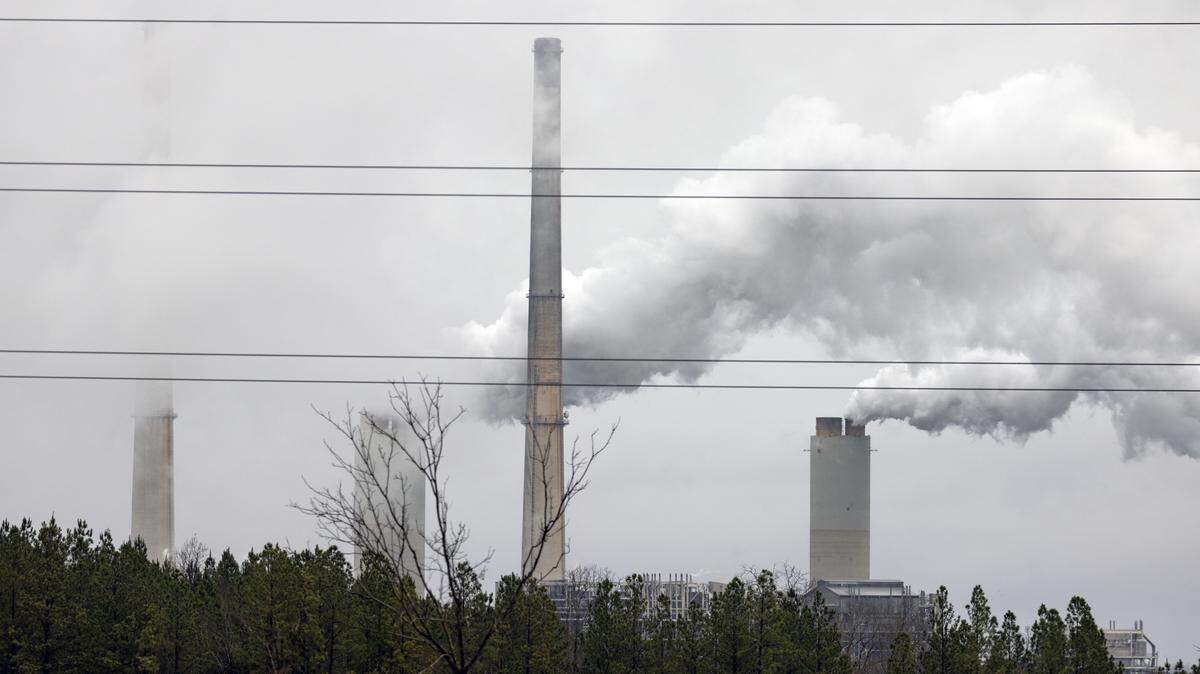
The utility updated its resource plan in October 2025 saying it wants to add nuclear power generation at either Belews Creek, N.C., or a site in South Carolina that could be online by 2037; extend rather than phase out coal-powered plants operating in the state; and expand the use of natural gas to generate power.
Though Duke’s resource plan includes some expansion of solar power and battery storage capacity, watchdog groups say the company must transition to solar and other cleaner energy sources immediately to try to slow global warming.
The Environmental Protection Agency under President Barack Obama found in 2009 that emissions of six greenhouse gases endangered the public health and welfare of current and future generations. The “Endangerment Finding” became the foundation for the EPA’s rules on those emissions, including from cars and power plants, aimed at slowing climate change and reducing air pollution.
President Donald Trump’s EPA administrator, Lee Zeldin, announced the repeal of the Endangerment Finding in February 2026, saying the EPA in 2009 had overstepped its reach and that only Congress had the authority to make such a sweeping policy decision. Trump and Zeldin say repealing the finding — and easing emission standards — will save Americans money on the price of new cars.
Gov. Stein’s response
A spokesperson for Stein said the governor has been challenging Duke Energy’s policies and practices, noting his opposition to SB 266, which lawmakers passed in 2025 over Stein’s veto. The bill eliminated a 2030 interim carbon reduction goal for electric utilities, allowing for faster deployment of natural gas and nuclear power generation while shifting some industrial costs to residential customers and allowing Duke and other utilities to bill customers for new power plant projects before they are built.
Stein also launched the Energy Policy Task Force to look for ways to ensure North Carolinians have affordable, reliable and clean energy to meet growing demand.
The task force’s suggestions include: developing options for large-load tariffs, so that residential customers don’t bear the brunt of impacts from high-energy-use data centers; and exploring energy-efficiency incentives for residential and small-business customers.
The N.C. Utilities Commission has scheduled public hearings on Duke’s rate hike request beginning March 30 in Raleigh.
This story is available free to all readers thanks to financial support from the Hartfield Foundation and Green South Foundation, in partnership with Journalism Funding Partners, as part of an independent journalism fellowship program. The N&O maintains full editorial control of the work. If you would like to help support local journalism, please consider a digital subscription, which you can get here.
This story was originally published March 25, 2026 at 6:45 AM.