Inside an NC tobacco factory, where everything looks normal but the rotten foot

I’m Brian Gordon, tech reporter for The News & Observer, and this is Open Source, a weekly newsletter on business, labor and technology in North Carolina.
Last Friday, Reynolds American guided economic officials and a few journalists through its 2 million-square-foot facility in the aptly named village of Tobaccoville. It was the first stop on the NC Chamber’s “2026 Manufacturing Tour,” and the factory looked in many ways like any number of large, busy manufacturing sites statewide.
Assembly lines made and packaged products at a fascinating pace. Containers of oral pouches slid along a metal belt with the force of hockey shots. In another room, a machine folded 12,000 cigarettes per minute. Reynolds American said the campus produces between 45 billion and 47 billion cigarettes annually. Headquartered in nearby Winston-Salem, its brands include Camel, Lucky Strike, Newport, American Spirit and Pall Mall.
The company emphasized its investment in non-combustible smoking like vaping, a less harmful though still addictive nicotine alternative to traditional cigarettes that accounts for a growing minority of the company’s sales. Reynolds American has recently added nicotine pouch production lines in a room redolent with flavored scents of wild berry and wintergreen.
“Cigarettes were the past, (and) are the present today,” Tyler Burr, Reynolds American vice president of state government relations, told the audience before the tour. “But we see a vision where cigarettes are no longer in the marketplace.”

But only 20% of the company’s global revenue comes from smokeless products. This is where the campus tour, for a moment, became atypical.
Our guide stopped at a hallway display promoting Reynolds American’s international reach. It showcased cigarette packs from countries like Colombia, Mauritius, Japan and Panama. Their respective national public health laws required several of these packages to feature graphic health warnings, including before-and-after photos of a person’s face getting more leathery and gaunt from smoking. Another pack showed the gangrenous foot of someone suffering from peripheral vascular disease.
There was dissonance in being on a company’s campus, viewing a display that celebrated its work, and seeing a foot rotting away. Another reporter asked about one of the warning labels. Our guide cited the foreign law and noted the U.S. Food and Drug Administration didn’t require such images. All matter of fact. It’s a dynamic North Carolina’s tobacco industry has lived with for a long time.
Though far diminished from its 1950s peak, tobacco is still a significant economic driver statewide. R.J. Reynolds Tobacco Company is the 15th-largest employer in Forsyth County and reports having more than 2,500 workers in the Triad region. Reynolds plans to hire 200 local workers this year and spend $3.2 billion across U.S. operations this decade. The company was acquired in 2017 by British American Tobacco, one of the sector’s “Big Four” producers.
Then there are the growers. “Tobacco remains hugely important to farmers in North Carolina,” Jeffrey Dorfman, an agricultural and resource economist at NC State, said in a phone interview. Dorfman estimated about 800 of the state’s roughly 4,000 large-scale commercial farmers still grow the crop. No state produces more. North Carolina soil is famed for yielding some of the finest flue-cured tobacco on earth.
And this isn’t even getting into the historical significance of the state’s “golden leaf.” Seemingly every brick building in downtown Durham has a bygone link to the industry. The crop shaped smaller tobacco towns like Henderson, Roxboro and Oxford, too.
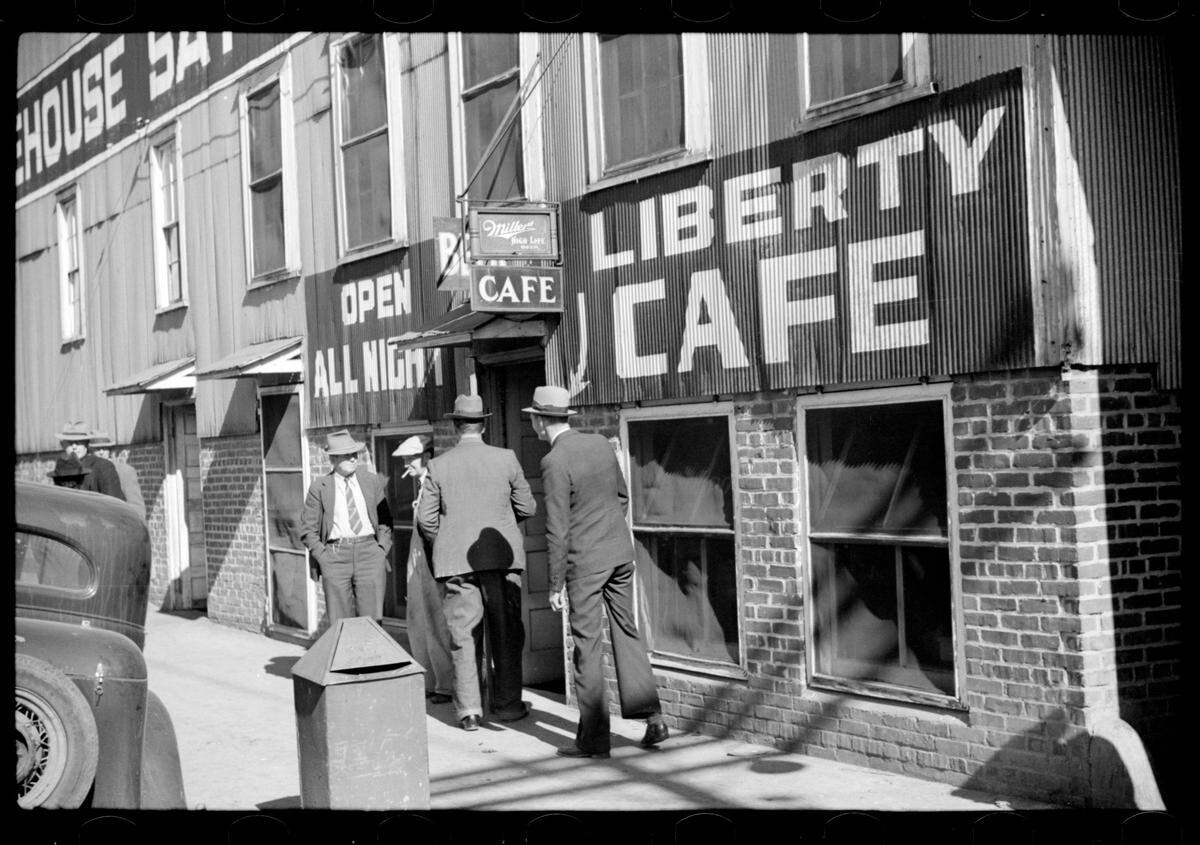
On my drive back from Tobaccoville, I spoke to 86-year-old North Carolina tobacco historian Billy Yeargin, who shared a childhood anecdote that underscored the economic-health duality. He told me about the last time his father spanked him.
At 13, Yeargin was caught smoking a cigarette behind a tobacco barn. But it wasn’t a random barn. Yeargin grew up on his family’s tobacco farm in Granville County. His father harvested the crop, owned a tobacco warehouse and sold cigarettes, chewing tobacco and snuff at his local country store.
Yet he knew the economic lifeblood of the community wasn’t something his son should get into. “He was trying, I think, as a parent, to keep me from engaging in the habit that was not healthy for you,” Yeargin said.
The younger Yeargin eventually did take up smoking before quitting on a date he still remembers: Feb. 10, 1991.

SAS’ fortuitous start and forgotten founder
The Cary analytics provider SAS Institute spun out of NC State 50 years ago with an impressive roster of clients (including Coca-Cola), some cash, and instant profits. The university didn’t ask for equity in return. It’s not clear whether the two parties even wrote down a contract. To be fair to NC State, few schools in the 1970s thought about financial returns on their research. That has certainly changed.
SAS’ origins explain a lot about what the company would become. Which was, for a time, the world’s most valuable private software company. And it remains a force in software and Cary. Why has SAS never gone public, been in debt, or taken outside investment? Well, it was uniquely profitable from Day 1.
How did SAS, early on, afford unique workplace perks like on-site childcare and exquisite cafeteria meals that would be the foundation of its sterling work-life balance reputation? Having no external investors to satisfy helped. And how is a multibillion-dollar business still owned by two people? Jim Goodnight and John Sall are now the two wealthiest people in North Carolina. Goodnight, the majority owner and CEO, has arguably shaped Cary more than anyone. And he holds the keys to what SAS will do next.
The NC State spinout started it all. But Goodnight and Sall weren’t the only founders. There was the late Jane Helwig. And a fourth cofounder named Tony Barr who created the SAS programming language but departed the company early on. I spoke to Barr extensively over the past year about this period. He is proud of his contributions, regretful about leaving before the company really took off, and still frustrated at Goodnight, the cofounder he felt “wanted to be king”.
The history of SAS isn’t without drama. And its next phase is full of succession and AI-laden questions. But its start 50 years ago was all any business could hope for.

No county pays private workers like Durham
Tech over finance. North Carolina commerce data shows private sector workers in Durham County earn the highest average annual salary in the state at $102,817. Banking-rich Mecklenburg County is second at $90,706. Eastern North Carolina’s Pamlico County has the lowest average private sector wages out of all 100 counties at just over $33,000.
Not all economic news on the Bull City side of the Triangle is good. Recent figures from the U.S. Department of Labor show the joint Durham-Chapel Hill metro lost a net of 3,800 jobs between February of last year and this year. That period saw mass staff reductions at several local institutions that relied on federal funding: Duke University, RTI International, FHI 360 and the U.S. Environmental Protection Agency. Raleigh and Cary’s combined metro, on the other hand, added 13,300 jobs. Shoutout to Axios Raleigh for highlighting the Labor Department numbers.
As for a broader jobs outlook, the federal government this week shared unemployment rates are up year-over-year in 236 of the country’s 387 metros. That’s 61%.
Political lines form around NC data centers
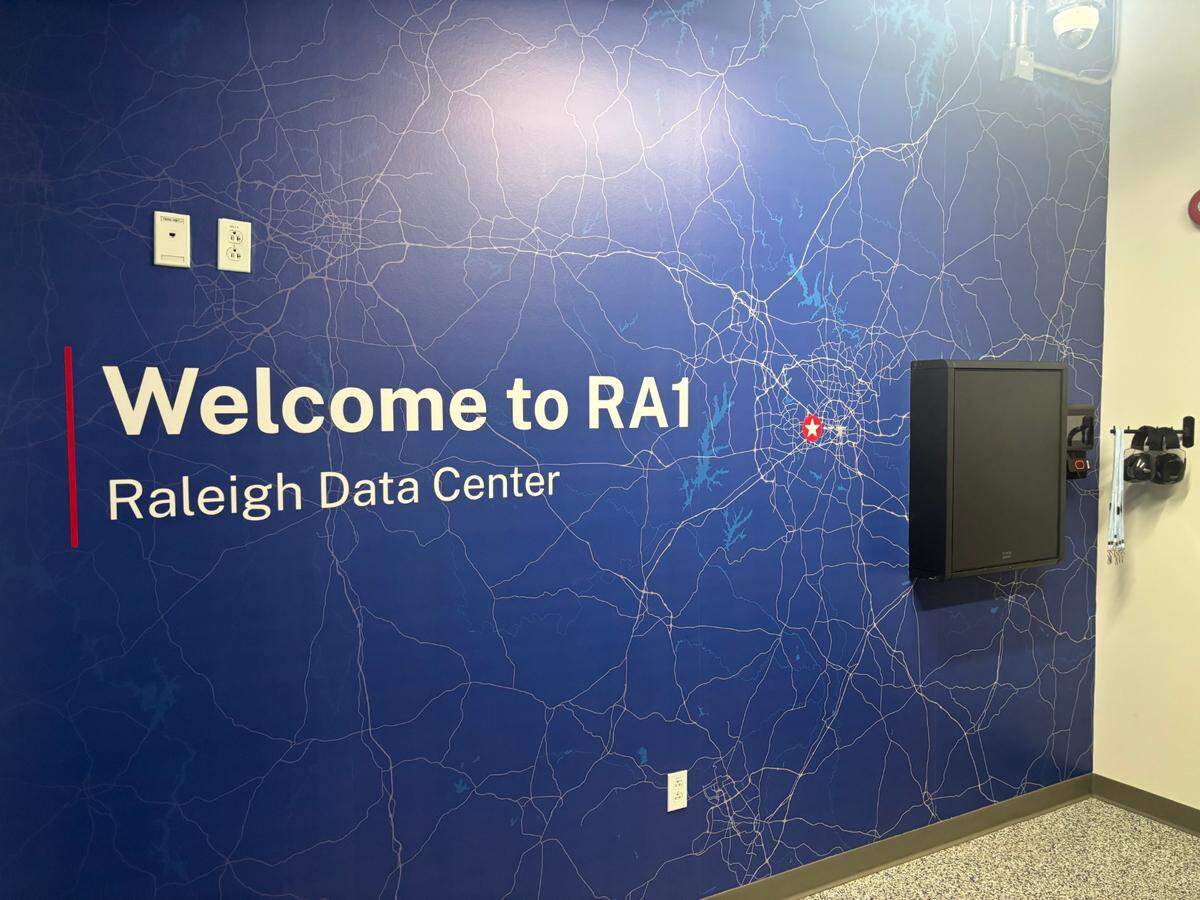
N.C. House Democrats this week filed legislation to regulate data centers statewide, including reporting mandates on how much electricity and water large facilities use. The bill would also prevent the state from offering economic incentives to data center operators. Its chances of getting through the GOP-controlled General Assembly appear slim.
Speaking of those odds, Republican state Reps. Jeffrey McNeely and David Willis coauthored an opinion piece in The N&O this week urging more local governments to embrace data centers as “property tax engines” and construction job creators that don’t actually strain the electrical grid. “If we don’t build this infrastructure here, it gets built somewhere else,” they wrote, warning one of those other places could be China.
One local government unlikely to be completely swayed by that argument is Chatham County. In February, it’s all-Democrat board of commissioners approved a 12-month moratorium on data center permits. It was the second North Carolina county to do so, after small Gates County (which has a politically mixed board). A developer is now suing Chatham over its moratorium, arguing the local permitting pause is either illegal — or, even if not, that its proposed 750-megawatt data center should be exempt.
Clearing my cache
- Sen. Thom Tillis of North Carolina says he’ll advance President Donald Trump’s Federal Reserve chair nominee after the Department of Justice dropped its questionable criminal inquiry into current Fed Chair Jerome Powell.
- Forge Nano, a Colorado maker of lithium-ion cells, told me it plans to jumpstart its dormant Morrisville site at a forthcoming groundbreaking. The company is also in the process of going public through a SPAC.
- SVB rebrand: Raleigh’s First Citizens Bank will stop using the Silicon Valley Bank name for the early-stage startup division it scooped up from a collapse in March 2023. First Citizens’ share price has about doubled since.
- The Federal Communications Commission is ordering several Disney-owned television stations, including ABC11 in Durham, to file early license renewals in an irregular move first amendment advocates have condemned. The News & Observer and ABC11 are newsgathering partners.
- North Carolina looks to ban children under 14 from social media platforms through a Meta-supported bill. State senators this week debated how to effectively enforce the age verification.
- Raleigh telecommunications company Bandwidth saw its stock soar 50% on Thursday after beating market expectations. Bandwidth shares are now at their highest point since 2022.
National Tech Happenings
- General Motors, FedEx and Home Depot are among the corporations receiving hundreds of millions back in tariff refunds, following a Supreme Court ruling in February. Will the money pass down to customers who paid higher costs?
- Elon Musk testified this week at the start of his case against OpenAI and its CEO Sam Altman. Musk, who cofounded OpenAI with Altman, says the company has strayed from its original charitable mission. Altman contends Musk, who has since started his own AI company, simply looks to crush a rival.
- Sticking with OpenAI, downloads for its ChatGPT platform have slowed — especially compared to Anthropic’s rival platform Claude — according to a market research report cited by The Verge.
Thanks for reading!
Thank you for supporting local journalism. If you liked it, consider sharing it with a friend. If it was forwarded to you, sign up here to subscribe.
This story was originally published May 1, 2026 at 6:30 AM.