Why this battery startup says its delayed Triangle plant is now a sure bet
AI-generated summary reviewed by our newsroom.
- Forge Nano aims to begin manufacturing in 2028.
- Forge Nano announced a Samsung partnership to produce cylindrical cells in Morrisville.
- Forge Nano aims to start on-site preparations this summer ahead of a public listing.
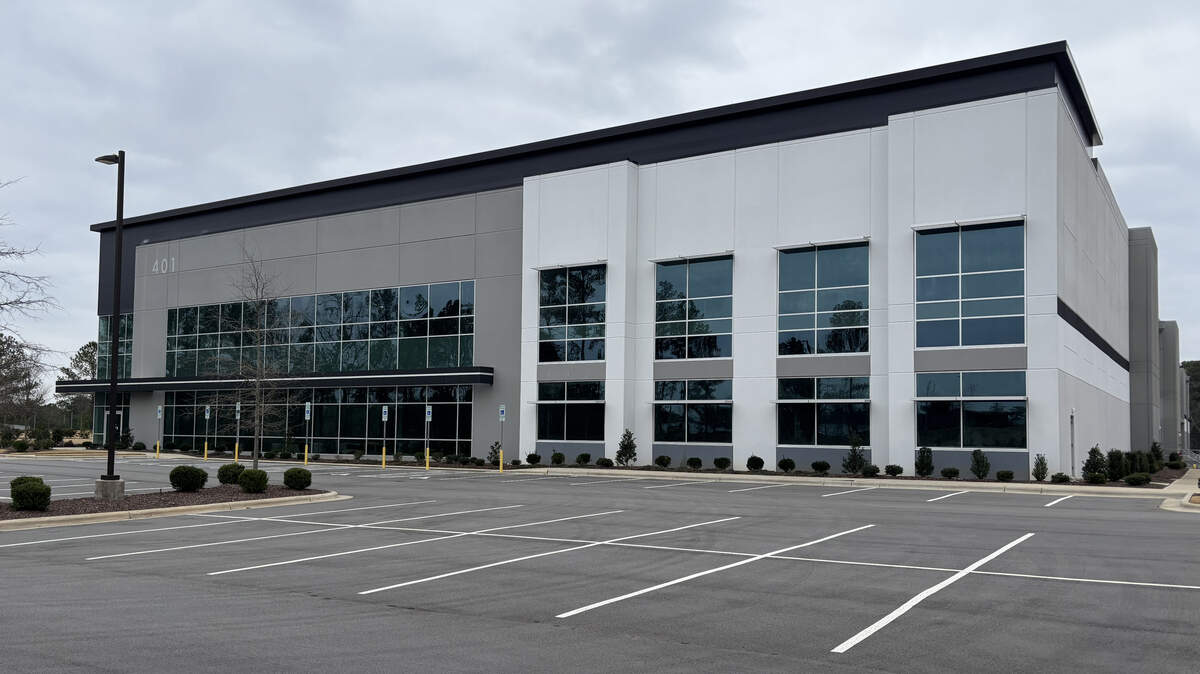
The building in Morrisville remains dark and dormant, with gravel covering part of its floor. On Wednesday morning, there was no staff, no cars in the parking lot, and no equipment inside.
It’s approaching three years since North Carolina awarded an economic incentive for Colorado battery startup Forge Nano to launch a lithium-ion battery plant at this Triangle site. The company was scheduled to start production in 2026 and hire more than 200 workers by the end of 2027.
As recently as January, Forge Nano didn’t answer News & Observer questions about its delayed project. It wasn’t the only notch on North Carolina’s promised “battery belt” to not open on time as lithium prices plunged from oversupply and federal funding shifted away from the clean energy sector.
But now, Forge has new momentum to achieve its North Carolina factory — and it’s happy to talk about it. Last month, the company announced a partnership with the South Korean tech giant Samsung to produce cylindrical battery cells in Morrisville. Ahead of an expected public listing, Forge Nano now aims to start on-site preparations this summer and begin manufacturing in 2028.
What makes Forge CEO Paul Lichty so confident this time? And what does Samsung get out of the deal? The N&O recently spoke with him over video to find out.
The conversation with Lichty below has been lightly edited for clarity and length.
N&O: The initial goal was to open in 2026. Why should people in North Carolina believe in the company’s new goal of 2028?
Lichty: I think the original announcement was tied to our $100 million (Department of Energy) award, and while that’s a significant benefit to help move things along, the funding of the facility takes time and takes resources. We hit a funding cycle that wasn’t as excited about bridging this missing middle piece for building out actual manufacturing.
So we had to go through quite a bit of fundraising activities and project finance activities. And that’s also culminated with a partnership with Samsung that we announced recently that just put us on this low execution risk footing that’s allowed us to go forward with the whole thing.
N&O: What does a strategic partnership with Samsung mean in this case?
Lichty: They’ve invested. They’re an equity holder in the company. They are contracted to help us with installing equipment, getting our factory up and running and hitting our yield and throughput requirements. They’re going to be training our staff and getting operations going, and then they give us access to their formulations, their (supply chain). So we get kind of big company pricing at small company throughputs, which makes us very competitive.
N&O: What does Samsung get from the partnership?
Lichty: The economic benefits of selling batteries to the (U.S.) defense industry. They get large access to it through their funding, through their supply chain, and us buying from them. And they don’t have to put down the investment for building out more production capacity. So this eliminates that risk on their end and helps us get up and operational.
Samsung’s buying batteries off of this facility to sell to their customers who want their products made in the U.S. Nothing like that’s ever existed in the battery space. It’s usually startups have to do it all on their own, or large battery companies maybe license some technology.
N&O: Will the initial batteries Forge makes in Morrisville have the company’s nanocoating technology?
Lichty: The first ones that we make out of this facility won’t have Atomic Armor. Yeah, it’ll be a very similar product to something that Samsung already makes, because we’ll use their recipe in their supply chain. Longer term, we have the ability to kind of fold in our Atomic Armored product into this line.
It allows us to get a factory up and running, get credibility, get customers without also hoping that customers are going to get on board with the technology at the same time.
Administration change brings review, delay
N&O: What federal policy changes from 2023 to 2025 affected your timeline?
Lichty: With the administration change, we had to go have our project go through review to ensure that it was aligned with the new administration policies. That took about six months, and that left uncertainty because a number of projects were canceled. Ours passed with through the review and was approved to go on, but that creates uncertainty in the market, creates delays, especially for capital investment.
N&O: What did that review entail?
Lichty: Just kind of rejustification on what the project was and what the strategic initiatives or really strategic resources that we’d be providing at the end of it.
N&O: How precarious was the business at times over the past few years?
Lichty: I think it was all a function of timing. We have been targeting the high-performance defense and aerospace market for over a decade as our key customers, and it’s been obvious for many, many years before this that we were hitting a breaking point in terms of our supply chain reliability. COVID really highlighted that, and that started getting policymakers moving.
And you know the wheels take a while to turn, but we’ve had kind of unwavered confidence that what we’re doing is needed and important, and there’s a market there.