Chapel Hill’s new ‘missing middle’ housing comes with $600K-plus price tags
AI-generated summary reviewed by our newsroom.
- Coker Place adds 107 townhomes and condos yet many units list above $600,000.
- Developer reserved 14 income-restricted homes; most units remain market-rate and costly.
- Affordability gap persists: $600K homes require incomes near $151,000 to qualify.
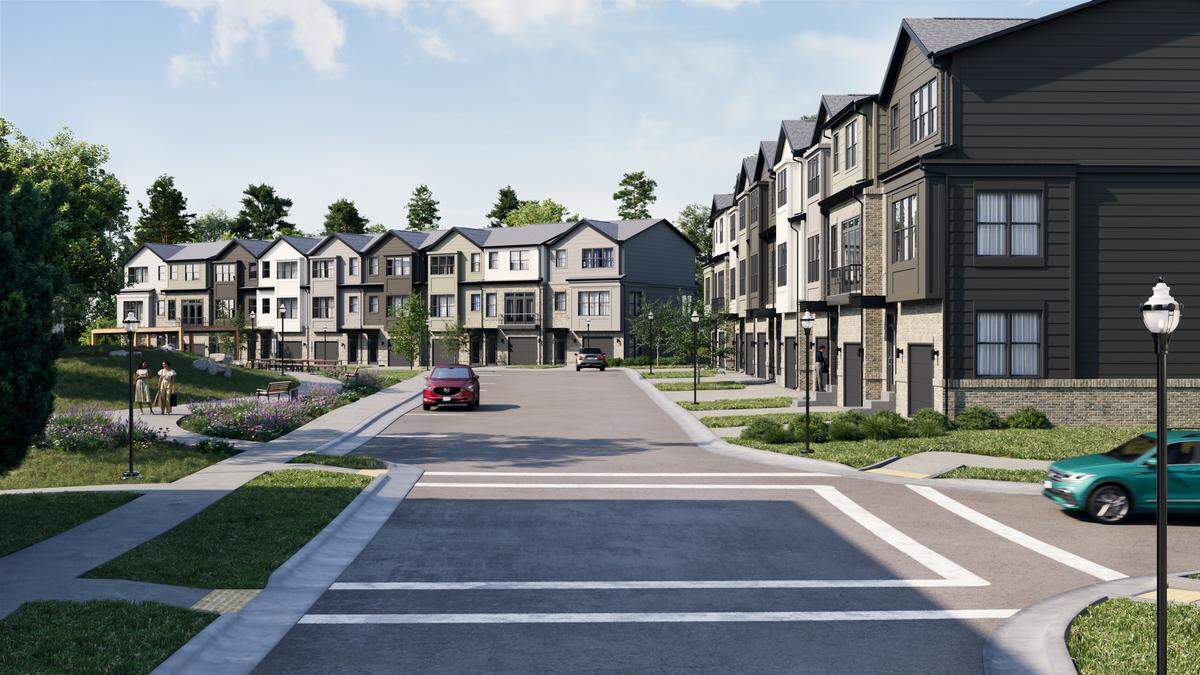
Chapel Hill’s newest townhome and condo community at 710 N. Estes Drive is being touted as the town’s answer to so-called “missing middle” and workforce housing.
Approved in 2022, the 107-unit subdivision is under construction along North Estes Drive between Somerset Drive and Martin Luther King Jr. Boulevard.
Named Coker Place after a beloved UNC professor, it’s part of a hub of new projects spurred by the town’s “missing middle” housing reforms aimed at increasing density in single-family neighborhoods and busy corridors like North Estes Drive. The aim, officials say, is to create much-needed “affordable housing” for UNC and town employees, teachers and other low- to middle-income earners.
But with townhomes starting in the high $600,000s and most of the condos climbing into the high $700,000s, critics say the project highlights how elusive true affordability remains in Orange County.
“These are still [mostly] market-rate homes sold at market prices,” said Stephanie Watkins-Cruz, director of housing policy at NC Housing Coalition (NCHC) on Tuesday.
As part of the property’s rezoning, the developer agreed to reserve 14 homes for affordable housing, including seven units offered at 65% of the area median income (AMI). That’s around $27,000 to $60,000 per year, depending on household size, according to the latest Census data.
The remaining seven will be offered at 80% AMI. That’s around $73,600 year for a four-person household.
But even with these allowances, the remainder are “out of reach” for teachers, nurses and public servants “based on starting and average salaries,” Watkins-Cruz said.
A median-income family in Chapel Hill could afford a $300,000 home, she said. They’d need $71,400 to $76,500, based on NCHC’s data.
But to buy a $400,000 home, they’d need between $101,000 and $108,000. For a $600,000 home, they’d need at least $151,000. At $700,000, they’d need more than double the median.
“This is why we need both supply and subsidy,” Watkins-Cruz said. “Without intentional subsidies, it cannot and won’t deliver immediate affordability.”
Chapel Hill planners estimate the town must build 485 new units per year to meet demand. That’s a 35% jump over the town’s annual housing production during the 2010s, a 2021 report showed.
In June 2023, Chapel Hill legalized “missing middle” housing through amendments to its Land Use Management Ordinance (LUMO). This means duplexes, triplexes, quadplexes, cottage courts, and accessory apartments are now permitted in many areas that were previously limited to single-family homes. But it has sparked a public outcry and thousands of emails to the mayor and council.
Chapel Hill is currently rewriting its LUMO, which regulates how and where the town grows. It was last revised in 2003.
Officials say they’re exploring new ways to streamline the town’s development process and attract more builders and developers interested in low- and middle-income housing projects. Chapel Hill’s controversial Housing Choices strategy isn’t working, staff said.
“Considering Chapel Hill’s chronically high land costs coupled with today’s high material costs and labor shortages, it is extremely difficult for homebuilders to generate a reasonable return on their investment” under the current rules, they reported in October.
Chapel Hill’s ‘missing middle’
Situated on a 7.3-acre lot along a busy corridor, Coker Place is sandwiched between Aura Booth Park, currently preleasing for January, and Azalea Estates senior living complex, which opened in 2020.
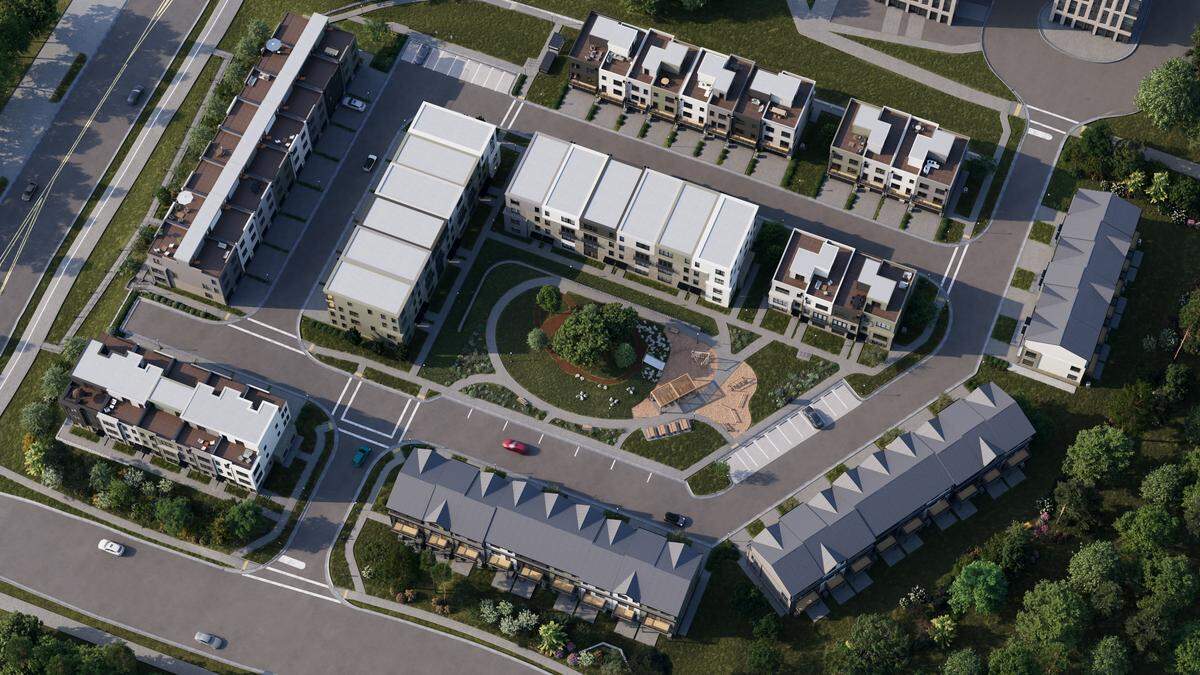
The first phase is expected to deliver by the end of this month. It will bring 40 townhomes ranging from 1,700 to 2,200 square feet, with two to four bedrooms and a parking garage.
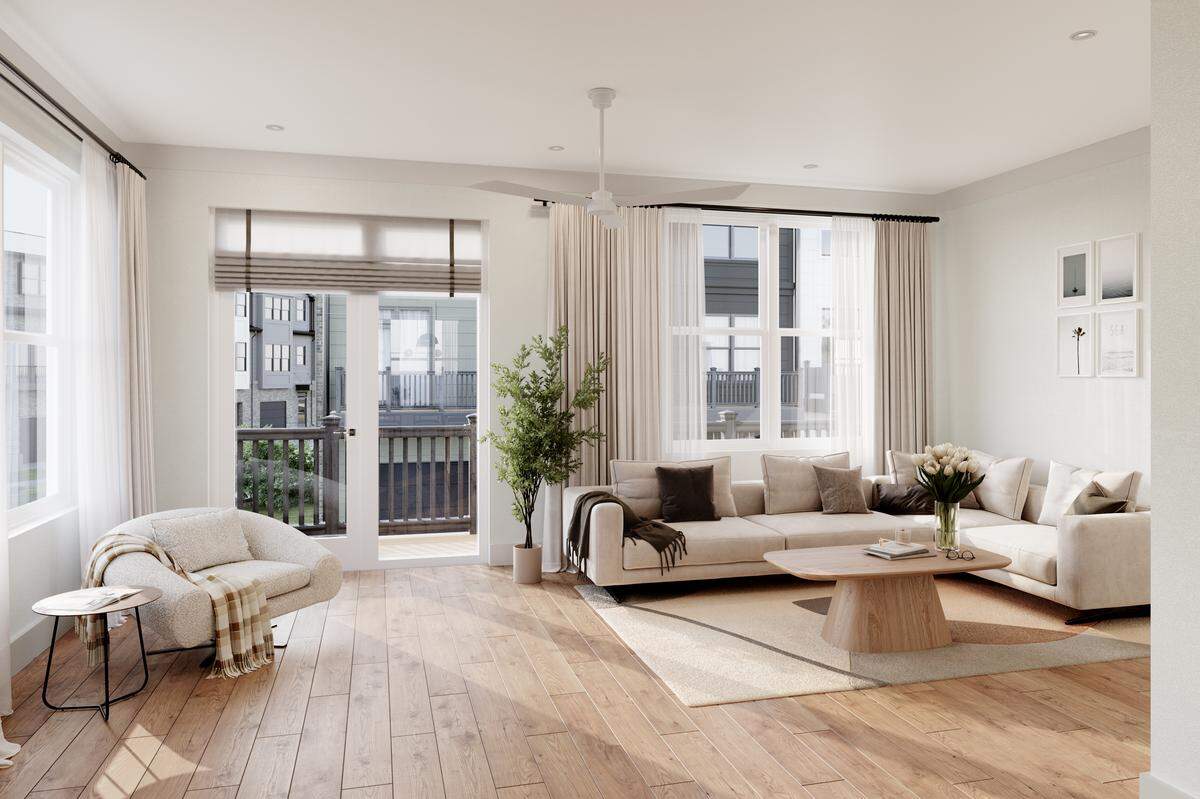
Select plans feature bonus rooms, private elevators and rooftop terraces with “treetop views.”
Prices start from the high $600,000s to the mid-$900,000s.
The second phase will launch this spring. It will offer 67 new condominiums, ranging from 600 to 2,300 square feet, with one- to three-bedroom floor plans.
Prices start in the mid $300,000s and go up to the high $700,000s, with the first condo expected by late 2026.
“Coker Place reinforces our commitment to bringing missing middle housing opportunities to market,” said Johnny Chappell, founder of Raleigh-based Chappell, which is working in partnership with Lock 7 Development and DevPointe.
The project delivers a range of floor plans and price points, he added, calling it “modern, connected and priced within reach.”
Over 220 parking spaces would be provided in surface lots and garages.
Dave Gorman, principal at Lock 7 Development, said the firms worked closely with the community to reflect the town’s “character and rhythm.”
From architectural style to floor plan flexibility to how the site connects to nearby schools, trails and shopping, “we saw an opportunity to create something lasting,” he said.
Coker Place is one of several projects recently delivered by Chappell and Lock7 Development in the Triangle. Others include Durant Towns in North Raleigh, North & Broadway in Downtown Durham, The Stephenson in Raleigh’s Village District, and 615 Peace in Glenwood South, where two-bedroom condos are priced between $524,900 and $549,900.
This story was originally published December 3, 2025 at 6:30 AM.