Chapel Hill has new zoning that may bring more housing to town. Here’s what’s in it.
A zoning change that sparked name-calling online and in public meetings will provide more options for living in Chapel Hill, but probably won’t lower housing costs or lead to widespread demolition of existing homes.
“This policy, this zoning, is gradual, and it’s not going to make a dramatic change anywhere in town,” Mayor Pro Tem Karen Stegman said before the Town Council voted 6-3 Wednesday to approve the Housing Choices zoning changes.
Other North Carolina communities that have adopted similar rules have seen incremental change, “so that provides us the opportunity for learning and for adapting as we go,” she said.
Council member Amy Ryan, who voted “no” with members Adam Searing and Camille Berry, said there are good things about it, but also problems. She worries about “student stuffers” and said she was “dismayed” that town staff needs more time and money to study the effects of student housing demand.
“There are huge market incentives for building student housing in town,” she said. “We need housing where everyone can live … and to get it we need to provide incentives to make that at least as attractive as what brings maximum profits to investors.”
Encouraging ‘gentle density’
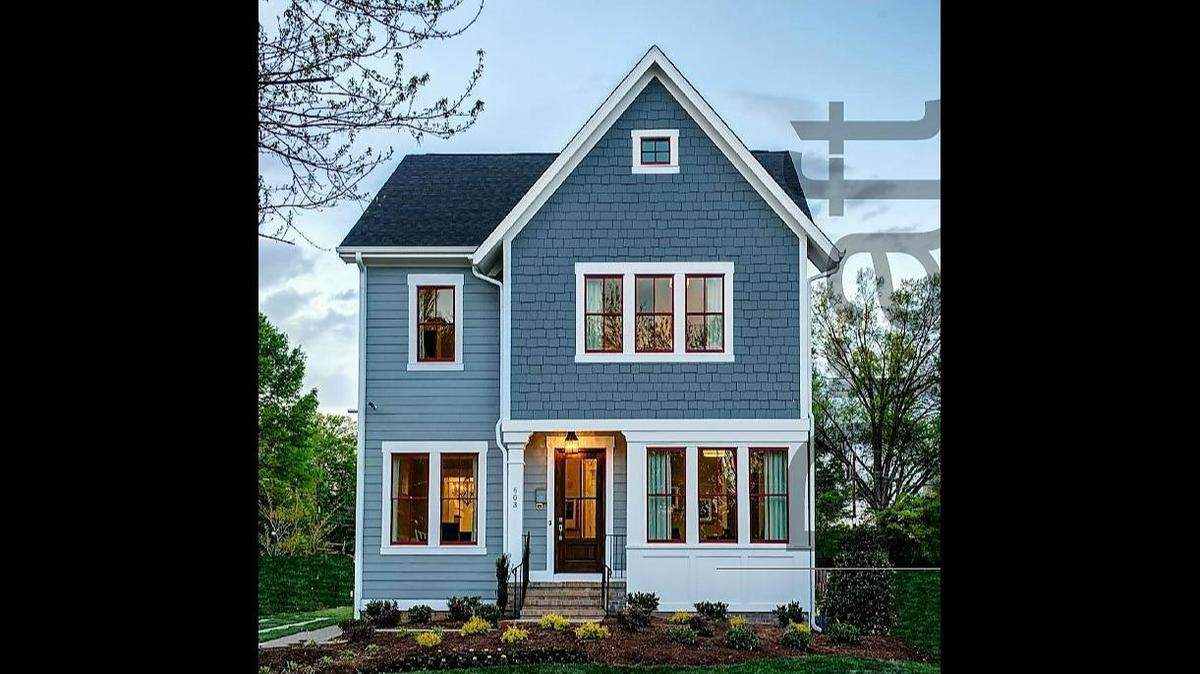
Housing Choices rezones the town’s single-family residential neighborhoods to create “gentle density” by allowing property owners to build a duplex or a second, smaller home on their land.
It also increases the size of accessory apartments, which are allowed, to 1,000 square feet.
Raleigh and Durham also have sought to attract “missing middle” housing and combat higher housing costs.
Chapel Hill started talking about its Housing Choices for a Complete Community initiative in 2021, led by The Keesmaat Group, a Canadian consulting team. It spawned distinct camps in social media channels and public hearings.
The first draft, earlier this year, allowed up to four apartments or cottage court housing on single-family lots, sparking a strong outcry. Town staff made changes approved Wednesday.
“This is not something that we’re trying to ram down people’s throats by any stretch of the imagination, but really, I think it’s a well thought-out set of proposals,” Council member Michael Parker said.
Systemic barriers, access vs. fears
The town wants to address a housing shortage and racist zoning from the last century that kept Black and brown families out of certain neighborhoods.
A zoning amendment “cannot fix the systemic nature of economic and racial segregation,” Council member Paris Miller-Foushee said. But it’s a tool, along with the town’s affordable housing strategy, that she said will help enable young workers to live in Chapel Hill.
“Our community should not give in to fear or perceived threats to our lifestyle dream,” Miller-Foushee said. “We need to reflect on how much of our attachment to preserving neighborhood character is driven by animosity toward or fear of low-income households and people of color.”
Searing, who launched a mayoral campaign last week, defended neighbors’ concerns, saying the change will only produce more expensive housing and affect neighborhoods without a homeowners association, restrictive covenants or local conservation district. It could also create more investor-owned and student rental units, and higher property values that displace families, he said.
It’s “a waste of time and effort” when the council has already approved over 1,000 new apartments, townhouses and condos this year, and spent $9 million on affordable housing, Searing said.
“If we could just take that effort and attack some of the other problems that we face, if we could just take that effort and build the splash pads we’ve been talking about for years and years, we’d have like 10 splash pads,” he said.
Berry voted no after a last-minute change that would let property owners to build an extra house or apartment without additional parking.
“If someone doesn’t have parking, they are going to park on the street or somewhere nearby,” Berry said. “We’re not where we wish to be, which is a non-car reliant (community).”
The council directed staff to keep looking at the effect of students on town housing demand and to report back about projects submitted under the new zoning and possible protections for the town’s historic districts.
Town staff will also work with architects this year as part of a National League of Cities Capstone Challenge Series Project to draft a pattern book with pre-designed home plans, reducing construction-related costs.
What the new zoning does
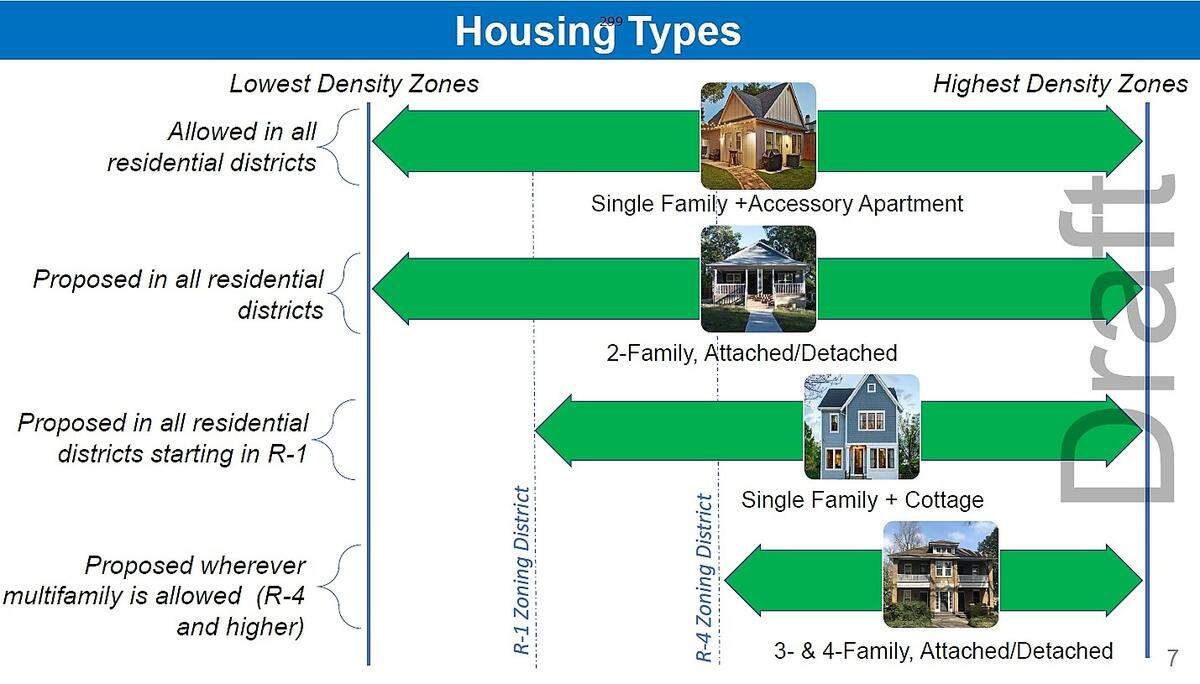
▪ Accessory apartments: Allowed in all residential districts, attached as part of a home or garage, or detached as a separate small house. The maximum size is 1,000 square feet, or no more than 75% of the main home’s size, and up to 29 feet tall.
▪ Duplexes: Allowed in all residential districts, and can be attached or detached. Up to 3,000 square feet, with up to eight unrelated people living on a residential lot.
▪ Cottages: Up to 1,000 square feet and up to 29 feet tall in R-1 or denser zoning districts.
▪ Multifamily housing: Projects with more than two units per lot are only allowed in multifamily zoning districts.
▪ Parking: One space for an accessory dwelling unit, and up to four spaces per duplex
▪ Tree canopy: At least 40% of the land must have trees. There is no requirement for single-family homes.
▪ Approvals: Town staff can approve projects with three to 10 units in areas zoned for multifamily development. More than 10 units will need a conditional zoning permit from the council..
What the zoning change doesn’t do
▪ Apply to neighborhoods with a homeowners association, restrictive covenant or Neighborhood Conservation District zoning overlay.
▪ Provide affordable housing, although supporters say more housing will free up older housing for families seeking more affordable options. Building multiple units on a lot instead of one home also reduces the cost of land per homeowner, making smaller homes more affordable, they said.
▪ Let developers to build apartment buildings, more than two housing units, or more square footage on a lot than is already allowed.
Chapel Hill housing needs
▪ About 70% of the town is zoned for single-family homes, leading to inefficient land use and higher housing costs, according to town reports. About 46,330 people commute into town for work, and only about 30% of Chapel Hill residents work in town.
▪ About 58% of the town’s renters and 19% of the homeowners — many lower-income and Black — pay more than 30% of their income for housing.
▪ Chapel Hill needs about 3,280 housing units to serve those earning less than 60% of the area median income — $40,100 a year for an individual or $51,600 for a family of three. UNC student households only make up about a third of the need.
▪ A 2021 report recommended the town increase its housing production by 35% over the next 20 years, adding about 485 homes a year, only 10% of which should serve UNC students.
The town has used every tool available to increase the housing supply, HR&A Advisors consultant Phillip Kash recently told the council. That includes a penny on the property tax rate and the town’s inclusionary zoning ordinance, which requires for-sale projects to sell 10% to 15% of homes at an affordable price, depending on the area of town.
The council typically encourages developers to provide up to 15% rental housing in their projects, but can’t require it under state law.
This story was originally published June 22, 2023 at 3:22 PM.