Without government aid, undocumented immigrants are turning to local help for COVID-19
Read this story in Spanish at Enlace Latino. Lea este artículo en español en Enlacelatino.org.
Domestic work cleaning the homes of American families is a typical and, relatively speaking, stable job for Latina immigrants like Mayra Pérez of Durham.
But now, Pérez has gone without work for weeks since the coronavirus pandemic started in North Carolina.
Her husband, who is a landscaper, is rarely getting work now. Her teenage son is enrolled in a community college and — as in many other North Carolina families right now — bills are piling up while the kids stay home from school.
The difference between Perez’s family and many other North Carolina families is that she can’t rely on governmental and federal help, such as a $1,200 check as part of the federal stimulus package.
Pérez and her husband, who have no legal status, are among the undocumented workers who can’t receive this aid, despite paying taxes.
“We don’t qualify for any aid and can’t apply for anything,” said Pérez, 37, speaking in Spanish to The News & Observer. “We live day-to-day and we count on the money from our jobs to pay the rent, bills, and food. We’re in a difficult situation.”
Though unauthorized immigrants, people like Mr. and Mrs. Pérez are a backbone of the service industry that has been crucial to American life in this pandemic — preparing meals for North Carolina restaurants, driving taxis, seeing to the landscaping and house and office cleaning, and many other services relied on daily by citizens.
Pérez finally found limited work this week, but she’s unsure she’ll continue to find it during the pandemic. The family has to pay expenses and, as many immigrants do, send money to family members back home — in this case, Mexico.
“We’re worried about work, but also about health,” she said. “If we get sick, what are we going to do?”
In the meantime, she applied to an assistance program from the National Domestic Workers Alliance and receives weekly meals for her children who attend Durham Public Schools.
Being undocumented compounds these families’ issues because they cannot get services like health insurance or unemployment benefits. Some families are “mixed-status,” meaning some family members are U.S. citizens while others aren’t.
An estimated 325,000 undocumented immigrants in North Carolina who can’t get help from the government are turning to grassroots and nonprofit groups for aid.
Communities aiding their own
La Semilla, a small faith-based grassroots coalition among members of the Triangle’s Latino activist community, quickly scrambled to provide aid as the pandemic spread.
“These are communities that are already vulnerable and when a natural disaster hits or a health crisis like this pandemic hits, that vulnerability deepens,” said Edgar Millán, a United Methodist Church-affiliated pastor who founded the group, in an interview with The News & Observer.
To date, the group has distributed baskets of Hispanic food staples like tortillas, corn flour and rice and beans, along with hygienic items, to about 30 local families that are experiencing challenges like chronic illness, supporting several young children and severe financial trouble.
“What we’ve done in the last couple of weeks is serving these families through our team members who represent the community themselves because they are the community,” Millán said. “They are aware of the real situations that Latino families are facing.”
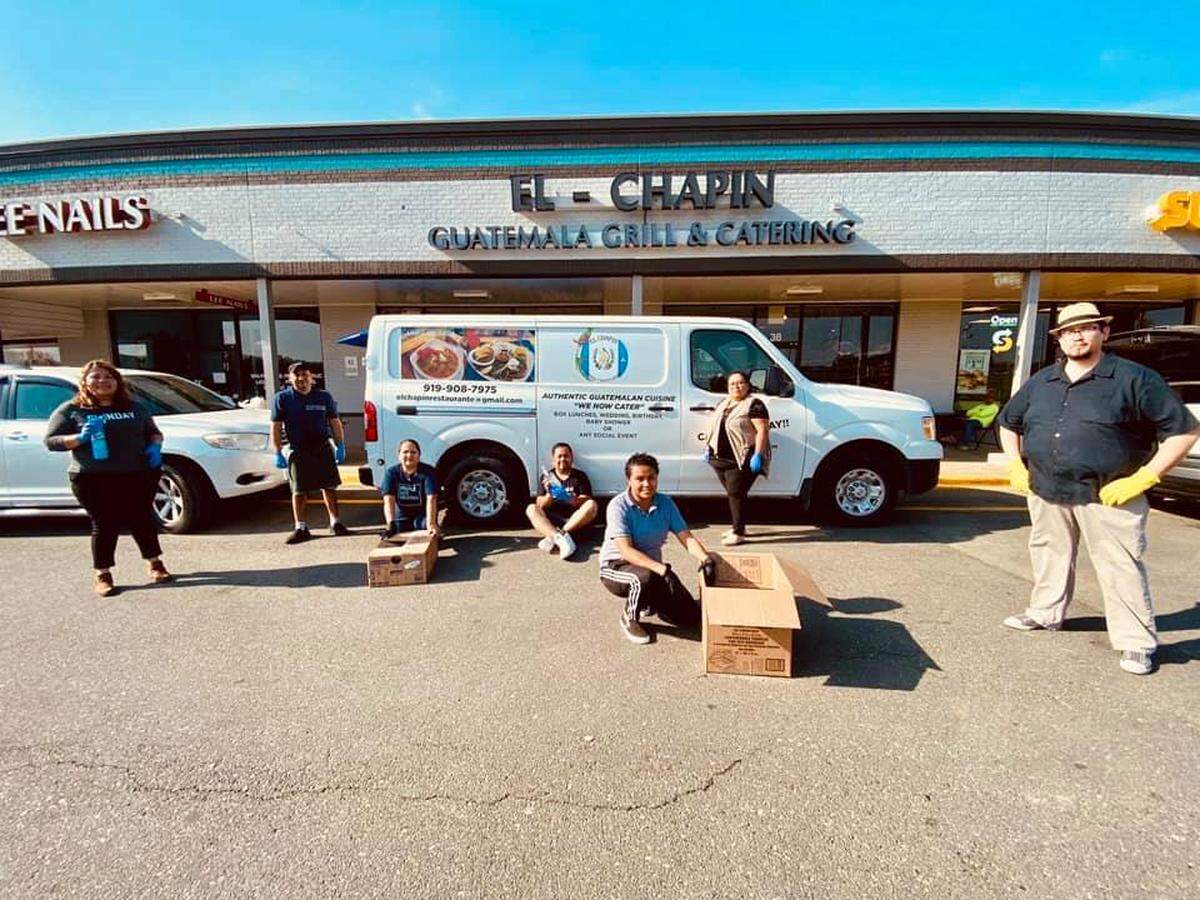
Through local networks, La Semilla coordinated funding from BB&T to the Durham Guatemalan restaurant El Chapín. The effort helped serve nearly 400 plates of hot food to affected families on two occasions, with more planned.
“This virus isn’t asking for your immigration status. It’s attacking all of us,” said Julián Abreu, the founder of the Association of Dominicans in Raleigh North Carolina, or ADORA.NC. “This isn’t the moment to figure out who has or doesn’t have papers.”
ADORA.NC, operated by some of the Triangle’s Dominican immigrants, is also receiving donations of food, gift cards and needed toiletries for disenfranchised undocumented families.
“[This pandemic] limits the resources we can get,” said Abreu in Spanish. “Our families back in our countries depend on us. If we don’t produce enough to send money back, our families suffer the consequences directly.”
The rural areas of Zebulon, Bailey and Rocky Mount — towns where help can be scarce — are the places that Abreu has focused on helping.
Nonprofits provide relief
Through formal, systemic relief efforts, larger Triangle nonprofit organizations have responded.
“So many people were asking us about information on a fund to help them and people had been donating to us for this effort,” said Kattia Blanco, the community health manager at El Centro Hispano, a local Latino advocacy group.
Under their crisis response program, families have received donated groceries. Those who meet specific criteria for necessity are eligible to receive free groceries from local Latino supermarkets in partnership with El Centro across the Triangle’s main counties.
So far, they’ve connected 20 families to help and are reviewing cases for around 30 more.
Church World Service, an international immigrant and refugee organization with a Durham office, has redirected the funds originally designated for immigration detention or deportation expenses, according to Ellen Andrews, the office’s director.
Through a donation-funded emergency cash assistance program for eligible undocumented families, they’ve helped around 20 families though more have requested help.
Although the demand on the fund has “dramatically exceeded the resources,” Andrews said, they are still receiving donations, with a strong community response aimed at helping vulnerable immigrants affected by COVID-19.
Andrews said she hopes that Americans can be generous with the federal stimulus checks they receive to support nonprofits’ efforts.
“We’re looking to push the message out, warm people up to the idea that if you don’t need your stimulus check, don’t hold on to it,” said Andrews.
This story was originally published April 8, 2020 at 3:08 PM.