
Despite COVID-19 outbreak at Neuse, many NC prisons aren’t testing inmates
When Barbara Glover’s husband got sick last month, she had reason to worry.
Her husband, an inmate at Alexander Correctional Institution, was coughing, sweating and struggling for breath. And for two weeks, he said, it felt like he was running a fever.
“If this was the flu, it was the worst flu I’ve ever had,” said Glover’s husband, who asked not to be named because he was concerned about retaliation.
He said he repeatedly asked to see the prison nurse, but was told she was too busy. After he’d been sick for over a week, he finally got to see the nurse, who he said gave him ibuprofen. But she didn’t test him for COVID-19.
Located in Taylorsville, 60 miles north of Charlotte, Alexander Correctional has more than 1,200 inmates. Only one of them had been tested as of Wednesday, state data show.
In the North Carolina prisons, that’s not unusual. Only about two percent of the state’s inmates have been tested for COVID-19, according to state data. And more than a third of the state’s prisons have yet to test a single inmate.
One exception to the pattern: Neuse Correctional Institution, in Goldsboro, the site of one of the worst COVID-19 outbreaks of any prison in the nation.
There, state officials have mandated that all 770 inmates be tested. More than 460 of the prisoners have tested positive so far, according to the Wayne County Health Department. State prisons commissioner Todd Ishee said Wednesday that about 98 percent of those inmates have shown no symptoms so far.
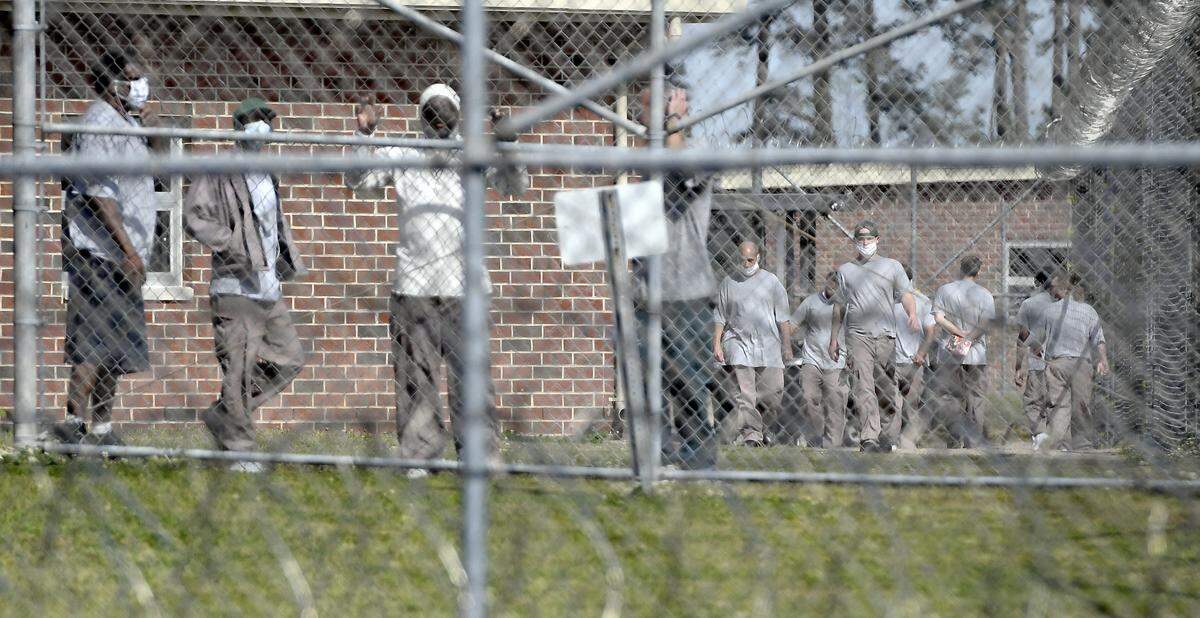
Other North Carolina prisons have had much smaller outbreaks. The N.C. Correctional Institution for Women in Raleigh has 12 inmates who have tested positive, a number that jumped from two on Sunday, officials say. Earlier this week the state reported an inmate at Pender Correctional Institution died after contracting the disease. He had other health complications that contributed.
Pamela Humphrey, 58, an inmate at the minimum-security camp on the women’s prison campus, said all 12 of those who tested positive came from those quarters. She said some have come from her 44-bed dormitory in the camp, which has a capacity for roughly 180 inmates.
But she said there has been no mass or sample testing of the remaining inmates in her dorm, some of whom have been showing symptoms such as coughing, sneezing or losing their sense of taste. Only those with a fever of 101 or more are tested, she said.
“We feel like targets and shots have been fired and we’re just waiting to see what targets get hit,” she said.

Experts say the lack of testing in many North Carolina prisons may allow the sometimes deadly virus to spread even faster.
Without testing, it’s difficult to know whether inmates or staff members have been exposed — and whether they and their contacts need to be quarantined, said Dr. Tyler Winkelman, a researcher who has focused on health care and criminal justice.
“It makes containment much more difficult,” said Winkelman, who works as a physician in the Hennepin County jail in Minneapolis. “You really need testing to contain the spread in a facility.”
Dr. Gavin Yamey, director of the Center for Policy Impact in Global Health at Duke University’s Global Health Institute, said testing in closely confined settings with vulnerable populations is critical.
“If we don’t do the basics of identifying who is infected and isolating them, and quarantining those who are exposed, then it is going to be very difficult to get on top of outbreaks in these settings,” said Yamey, who has provided an expert report in a lawsuit by public advocacy groups seeking the release of vulnerable inmates.
That lawsuit in state Superior Court is scheduled for a hearing in Wake County on Tuesday.
Prisons and jails are especially vulnerable to infectious diseases, experts say, because inmates live so closely together. Outbreaks inside prisons also pose a danger to surrounding communities, because staff members are likely to become infected and carry the virus to others on the outside.
North Carolina prison officials said they have generally confined their testing to inmates who show symptoms, in accordance with Centers for Disease Control and Prevention guidelines.
Ishee, the state prisons commissioner, said the prisons’ Incident Command Team isn’t currently recommending further mass testing. But prison officials say they are consulting with officials from the state Department of Health and Human Services about whether to adjust their testing regimen.
Virtually all of North Carolina’s 16,000 prison employees will soon have a chance to get tested, under a plan announced Wednesday by the State Health Plan and state Treasurer Dale Folwell. The costs associated with that testing will be covered by the State Health Plan.
“The testing will be voluntary, but highly encouraged, and will be performed within federal and state guidelines,” said Folwell, who himself was recently hospitalized for COVID-19.
Inmates don’t have the same opportunity to find out whether they are infected. So far, only about 700 of the state’s 35,000 inmates have been tested, according to state prison data.
‘He sounded so bad’
Glover, the wife of the inmate at Alexander Correctional, said she believes her husband had COVID-19. She recalls one telephone conversation in March, when he told her he could barely stand.
“He asked to have someone bring him a chair so he wouldn’t fall out,” Glover said. “I was worried. I lost sleep because he sounded so bad.”
Glover said she’s not surprised that no inmates have tested positive at Alexander Correctional because only one inmate there has been tested. And she’s worried more will become infected if the prisons don’t start testing many more inmates.
“It’s not going to affect just the inmates,” she said. “Guards are going to get it. They’re going to bring it home to their families … It’s going to affect entire communities.”
At least one other state — Ohio — has tested far more inmates than North Carolina. There, more than 5,000 inmates have been tested - and more than 3,700 of them have tested positive, according to the Ohio Department of Rehabilitation and Correction.
The large majority of the inmates who’ve been tested in Ohio — and who tested positive — have been confined at two prisons with massive outbreaks.
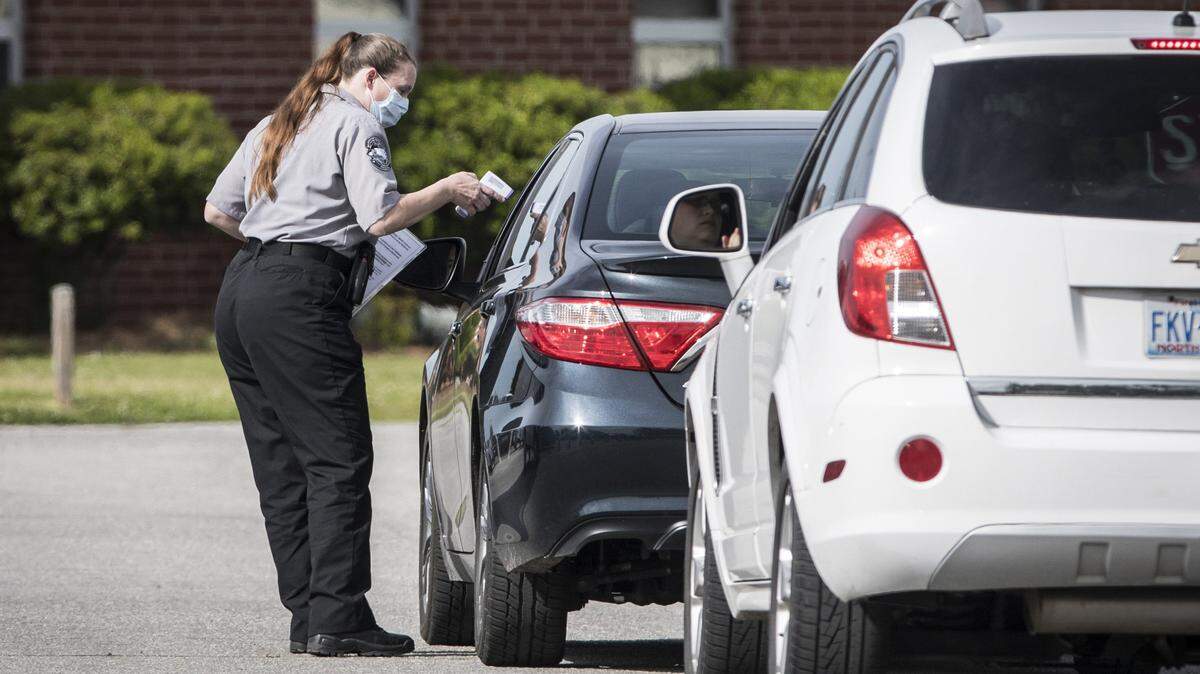
In North Carolina, it won’t be easy to keep the virus from spreading inside prisons that do no testing, Yamey said.
“If it is the case that the environmental hygiene in a jail or prison is of extreme quality, if the inmates have been able to socially distance, if they’ve been given access to soap and water, if they have face masks, if (the facilities) have been screening people coming in and out — if all of those things are in place these settings might be less likely to have infections,” he said. “But my concern is you don’t have these conditions in all the jails and prisons across the state.”
Humphrey said officials at the minimum-security women’s camp are making sure inmates have soap and masks, and that their temperatures are taken twice a day. All the inmates are quarantined in the dorms. She said the inmates have been busy scrubbing down surfaces to keep the virus off of them.
But they can’t practice social distancing, she said. The two-person bunk beds are spaced two feet apart, and the top bunk is less than six feet above the lower.
“It’s like a sardine can,” she said.
There are two types of testing — one to determine whether someone has contracted the disease and another to show whether someone has been exposed by identifying antibodies.
Yamey said the first kind of testing is a must for anyone showing symptoms, and would be appropriate for all inmates and staff where an outbreak has happened. The second could be used where it’s unclear if the virus has gotten in.
While the state and federal governments have been posting testing data for prisons, very little is known about testing in county jails. So far, only Mecklenburg and Durham counties have reported jail employees who have tested positive for COVID-19.
At the Mecklenburg jails, 19 inmates and 14 employees have been tested, a sheriff’s spokesperson said. One detention officer and one contractor nurse have tested positive. But no inmates have been diagnosed so far, the sheriff’s spokesperson said.
Durham officials said tests of inmates were negative for the virus.
The Wake County sheriff at one point sent home staff to quarantine last month who were suspected of having the virus or were known to be in close proximity with family who worked around people showing symptoms. But a sheriff’s spokesman said none tested positive, and there is no evidence the virus has shown up at the jail.
This story was originally published April 23, 2020 at 1:20 PM with the headline "Despite COVID-19 outbreak at Neuse, many NC prisons aren’t testing inmates."