Families say they can’t see children with disabilities as hospitals battle coronavirus
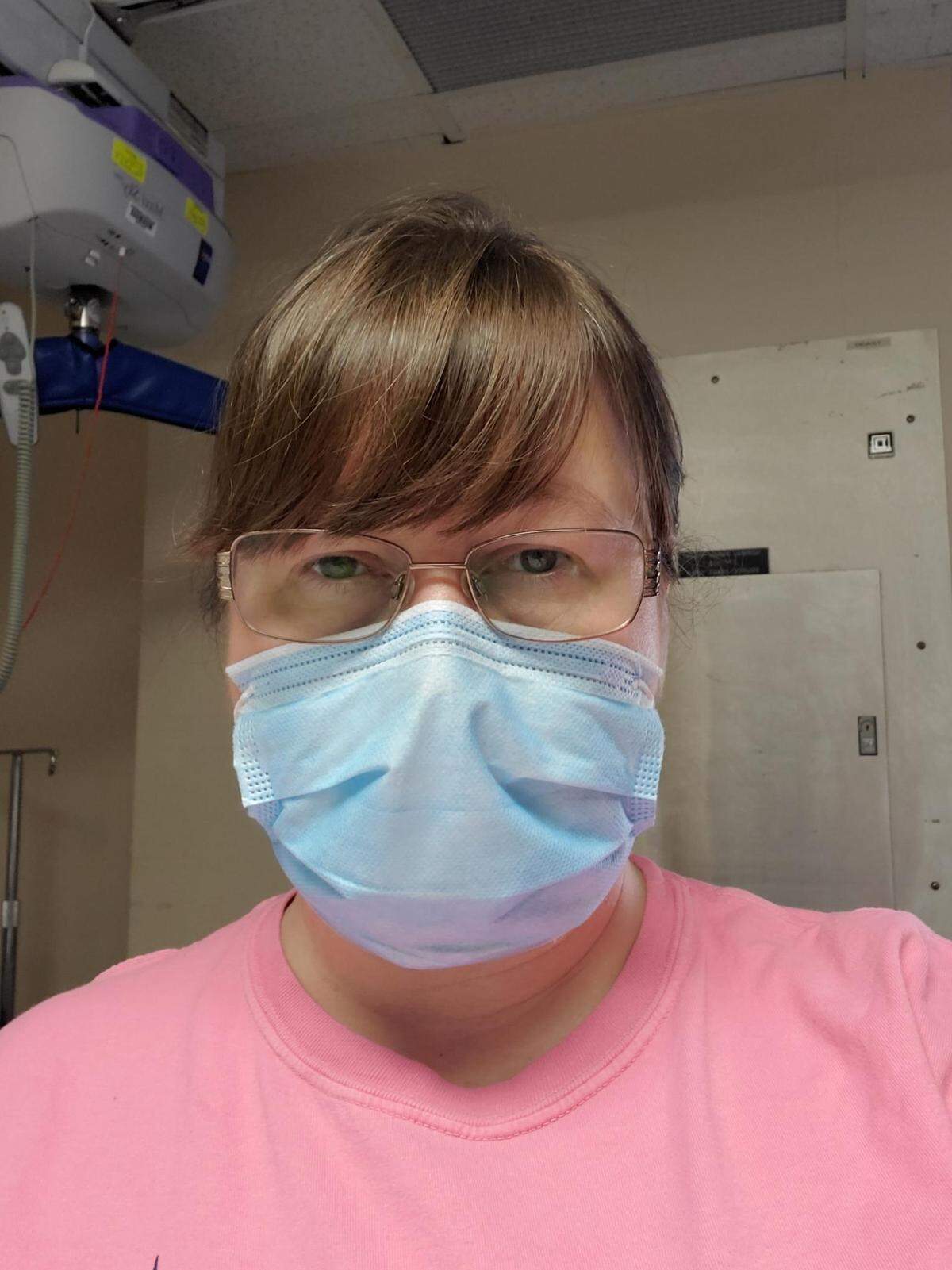
Kimberly Crews is with her son, Lane Pegram, in his room in the UNC Medical Center Neuroscience ICU. She’s been there since April 20 and doesn’t plan to leave.
She says she’s thankful that she can be there.
She wasn’t allowed in his room the first night he was there, and it was one of the longest nights of her life.
In his 21 years, Pegram had never spent a night away from his mother.
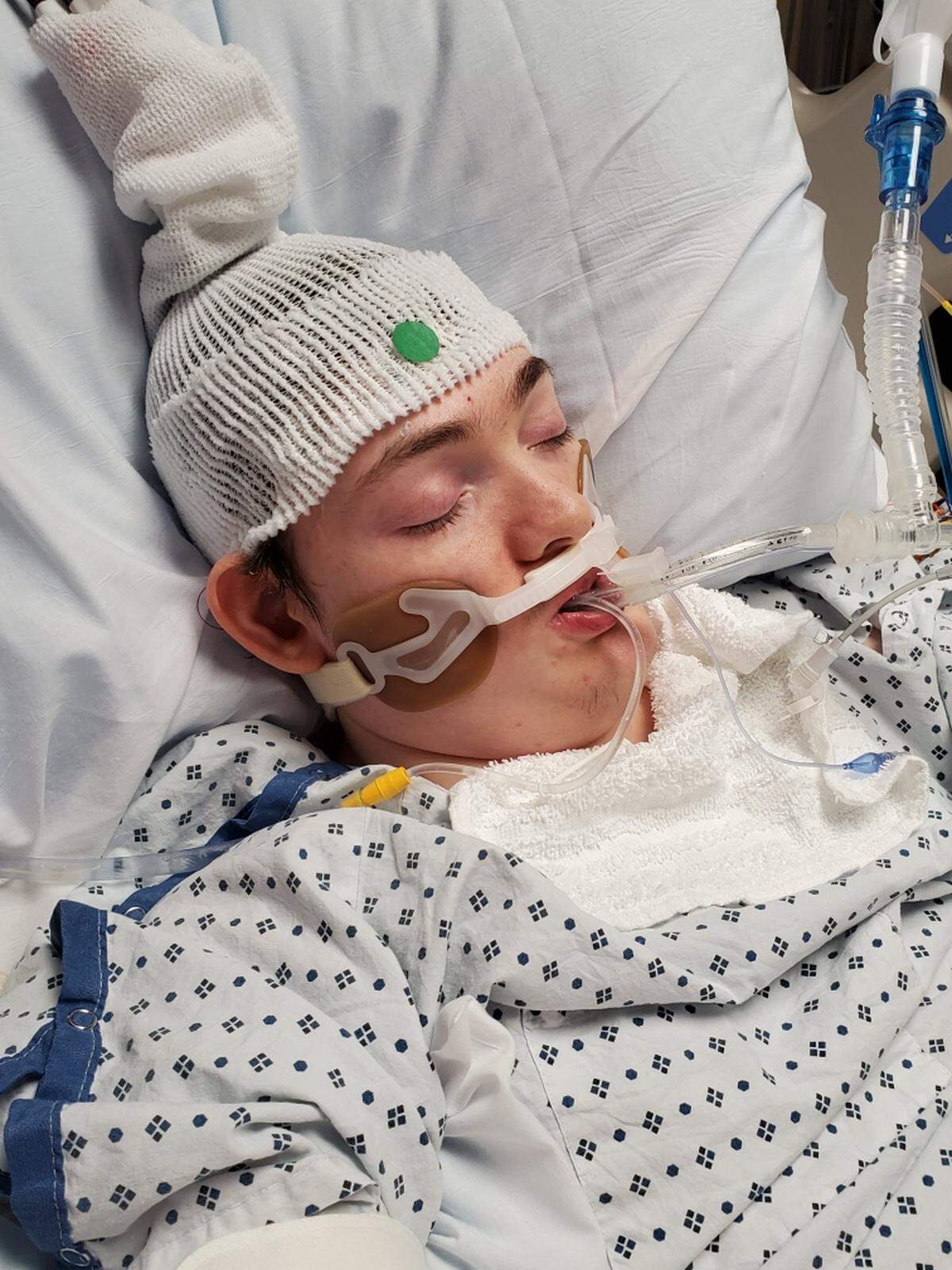
Pegram has a rare neurological condition called FoxG1 syndrome that causes intellectual disability, involuntary movements and seizures. He has limited communication skills and spends most of his time in a wheelchair or a mechanical bed.
When he started having seizures on Sunday, April 19, Crews took him to Maria Parham Health, their local hospital in Henderson, N.C. He was flown by helicopter to UNC Medical Center in Chapel Hill when the anti-seizure medicine didn’t work well enough.
At the suggestion of the transport medic, Crews called ahead to make sure that she could enter the hospital to be with her son. She said she was told they didn’t need her there, because the hospital had begun limiting visitors due to the coronavirus pandemic.
But she went anyway. She’s his sole caregiver. She’s never not been with him.
When she arrived at the medical center in Chapel Hill, Crews said, a nurse again told her there was no reason for her to be there. She asked for a supervisor, who gave her 15 minutes in the room with him. After her time was up, she left and drove the hour north home.
“It was hard. I’ve never been away from him,” she said, choking up on a phone call with The News & Observer. “But I had to travel back knowing he was by himself.”
She said she called back the next day and a doctor told her their medical team had decided she was allowed to be there. She quickly packed and drove back to Chapel Hill, so tired she had to keep waking herself up.
Restrictions are necessary, hospital says
Alan Wolf, a UNC Health spokesman told The N&O in an email: “Like every other hospital in the state, UNC Medical Center has imposed significant visitor restrictions to protect our patients and our staff during this pandemic. We recognize that this can cause anxiety for some patients and their loved ones, but we believe it is necessary at this time.”
“We do not know everything about this specific situation... However, we can say that – even with the visitor restrictions currently in place – our policy explicitly permits a parent to stay with a minor patient at all times. We also allow caregivers to remain with a patient when essential to patient care.”
While Crews is his legal guardian, Pegram is 21, technically not a minor.
Their situation is one that advocates have been worried about since the coronavirus pandemic began closing hospital doors to visitors and many non-critical operations. What happens to people with disabilities when their caregivers and support workers aren’t allowed to be with them?
Lisa Poteat, deputy executive director of The Arc of North Carolina, said the organization has heard from four families who’ve had to face this issue.
She said one family that reached out to The Arc, which provides advocacy and services to people with intellectual and developmental disabilities, couldn’t be with their 5-year-old son who was in the hospital for seizures.
“If we know about four, there’s a lot more out there we don’t know of,” she said.
Crews contacted The Arc when she wasn’t sure if she’d get to be with Pegram yet. She called to ask if they had contacts with the governor’s office she could talk to.
“No family in this situation should have to go to the governor’s office to be with their child,” Poteat said. “I can’t tell you how relieved we were when we found out” that Crews was allowed in.
No state guidelines yet
The Arc and other disability advocacy groups want the state to issue guidance for hospitals, so this doesn’t happen to families again.
Disability Rights NC, which provides legal and advocacy services for people with disabilities, has also heard from families in Crews’ situation and is working with the state to prevent more cases from occurring.
Corye Dunn, director of public policy at Disability Rights NC, said the nonprofit has been advocating for the NC Department of Health and Human Services to release guidelines similar to an executive order issued by the governor of New Jersey.
She said they’re looking for guidance from the department on how hospitals can comply with safe policies during the pandemic without violating the Americans with Disabilities Act.
When The N&O asked DHHS if there were plans to release such guidance, spokesperson Kelly Haight Connor responded with an email pointing to guidance from the CDC.
Connor wrote: “For individuals with a cognitive impairment, their caregiver is an extension of the individual with the impairment, and should be treated as such. Unless it negatively impacts a facility’s ability to ensure the safety of other patients or visitors, anyone with a cognitive impairment should be allowed to have their caregiver with them either in the ambulance or in the hospital.”
The CDC’s guidance was last updated on April 13, six days before Crews said she was denied entry to the UNC Medical Center.
When The N&O asked if DHHS would be issuing its own guidance, Connor replied, “NCDHHS is referring to the CDC guidance.”
In New Jersey, Gov. Philip Murphy signed an executive order that went into effect April 25, stating that designated support people for patients with disabilities are essential to patient care. The order requires hospitals to allow the support person to be with the disabled person during hospitalization.
The New Jersey order later clarified that the support person must be asymptomatic for COVID-19 and must be screened for symptoms. Crews said Pegram has tested negative for the virus and she had been screened.
The N&O has called and emailed the governor’s office to ask if Cooper was considering issuing a similar executive order, but has not received a response.
Four families gain admission
Dunn said, so far, all of the families that have reached out to Disability Rights NC with this issue have successfully gained admission to the hospital after getting help for self-advocacy.
“I suspect it’s not a large number of people, but for the people it affects it’s really significant,” she said.
Dr. Crystal Bowe, vice chairwoman of the Disability Rights NC board of directors and a physician with CaroMont Health in Gastonia, said walking the line between keeping patients safe and making sure people with disabilities have the support they need is a challenge at times.
But Bowe said it’s a challenge that hospital staff should be working out, not patients’ families.
“If we’re not going to allow family members in,” she said, “then we in the health care system are going to have to take additional steps to work around their disability.”
Families ‘are the experts’
When Kimberly Crews finally got back to her son, she said she found out he’d had more seizures since she last saw him. He’s been intubated three times since arriving at the hospital in Henderson, she said.
“I’m not saying the doctors and nurses don’t know how to care for him, they just don’t know him,” Crews said. “And that’s what they need me here for.”
Crews said she doesn’t want to criticize hospitals — she just knows nurses can’t stay in her son’s room all the time. She said UNC was the first to correctly diagnose him and they’ve treated him many times.
“We have great hospitals in this state,” Poteat said. “We just need to get guidance out there of the critical need and right to have a caregiver with them.”
Poteat said Crews and Pegram are a success story but she worries about the families who haven’t reached that point yet. Poteat said families must be in the hospital room because “they are the experts.”
“There’s a lot of legal support for this,” she said. “We just need folks to understand it.”
This story was originally published May 5, 2020 at 5:45 AM.