
All NC adults will be eligible for COVID vaccine by early April. Here’s what we know.
Essential workers who haven’t received the COVID vaccine yet — and soon all adults — will be eligible to get their shots earlier than planned.
Gov. Roy Cooper announced Thursday that he is moving up the eligibility dates for North Carolina’s remaining COVID-19 vaccine groups.
The second part of Group 4, people who are classified as essential workers, will become eligible on March 31, while all people 16 years and older, Group 5, will be able to sign up for a shot on April 7.
The announcement means that all North Carolinians will become eligible for the shot nearly a month before the May 1 target President Joe Biden has set for all adults. Before Cooper’s press conference, Biden said he wants to raise the vaccine goal to 200 million shots by the end of his 100 days in office, The Associated Press reports, which is on track with the country’s current pace.
Group 4’s essential workers include people in hospitality and retail, chemical and pharmaceutical facilities, communications, defense industries, construction, financial services, public works, housing and real estate and other essential sectors, Cooper said.
“Getting a vaccine is our way out of this pandemic, and so we want to make sure everyone is getting vaccinated as quickly as possible,” said Dr. Mandy Cohen, the secretary of the N.C. Department of Health and Human Services.
As of Thursday, North Carolina has given about 4.3 million doses of the vaccine, Cooper said. One in five people are fully vaccinated, he said.
Several providers in North Carolina already have opened up vaccinations to any adult, including Cape Fear Valley Health System in Cumberland County and health departments in several rural counties.
As of April 7, 16- and 17-year-olds will be eligible to take the Pfizer vaccine, the only shot that was tested on people in that age group. Cohen said the state will soon update its vaccine finder tool to make it easier for teenagers to find the Pfizer shot.
Easing COVID restrictions
With many COVID-19 metrics improving, Cooper said Tuesday he would loosen several public health restrictions. The new executive order includes increasing indoor gathering limits to 50 people and outdoor gathering limits to 100 people and allowing retail stores and tourist attractions to open at 100% capacity.
Breweries, gyms and restaurants can open at 75% capacity indoors and 100% capacity outdoors, while bars, conference centers and sports arenas can open at 50% capacity.
The executive order starts Friday at 5 p.m. and will expire April 30.
In response to multiple questions Thursday, Cooper and Cohen didn’t provide specific answers about what percentage of North Carolinians need to be vaccinated for leaders to fully lift restrictions. Cooper said the state will look to the Centers for Disease Control and Prevention for more guidance.
In addition to tracking metrics like cases and hospitalizations, Cohen said, the state wants more people to receive the vaccine and is also monitoring how the coronavirus that causes COVID-19 is changing.
As of Tuesday, the CDC reported that the variant first discovered in the United Kingdom has been found in 160 samples from North Carolina, while the variant that was first discovered in South Africa has been found in 26 North Carolina samples.
“Those are the kinds of things that we need to take into consideration as we think about what the future holds,” Cohen said.
Asked about more transparency in the decision-making process, Cooper said he and Cohen have discussions with health care professionals, affected businesses and state legislators.
“But we mostly are looking at the data and looking at decisions on advice of health professionals,” he said.
Cohen has noted the improvements in fewer cases and hospitalizations. But she has repeatedly warned that North Carolinians should not become complacent about the coronavirus, particularly as more contagious variants of the virus that causes COVID-19 are circulating in the state.
Health officials have consistently maintained that many cases caused by the variants in North Carolina are going unreported because only a small percentage of samples are being genetically sequenced, the process that is used to find a virus’ structure.
Increasing vaccine access
There is “some concern” that many people in North Carolina will not want to receive the COVID-19 vaccine, Cooper said Thursday, as he urged those who have received the shot to tout its benefits.
“We’re going to depend on doctors and ministers and family members and friends to push and cajole those who may be hesitant about getting the vaccine,” Cooper said.
Cohen announced Thursday that North Carolina has formed a new public-private partnership with the N.C. Counts Coalition, a nonprofit most commonly known for its work in ensuring an accurate U.S. Census count in North Carolina. The partnership, known as Healthier Together, is designed to help increase COVID-19 vaccine access for Black, Indigenous and people of color (BIPOC) communities in North Carolina.
“For the past year, COVID-19 has exposed and exacerbated racial and ethnic health disparities stemming from a history of exploitation, disinvestment, disenfranchisement and marginalization of BIPOC communities,” Stacey Carless, the coalition’s executive director, said Thursday. “Health inequities have plagued BIPOC communities for centuries, and we cannot afford to wait another moment to address these inequities as precious lives continue to be on the line.”
Healthier Together is being funded via federal COVID-19 relief money, but the amount of the investment hasn’t been provided.
Part of Healthier Together’s efforts will include giving grants to community-based organizations to help support their vaccine outreach and education efforts. It also means hiring regional health equity teams to boost those efforts and ensure that communities are receiving adequate vaccine supply and transportation to vaccination events.
DHHS is already funding similar efforts, with 429 community health workers who were originally funded via federal relief funds and who are now being funded by state Medicaid funds. The workers are active in 55 of North Carolina’s 100 counties.
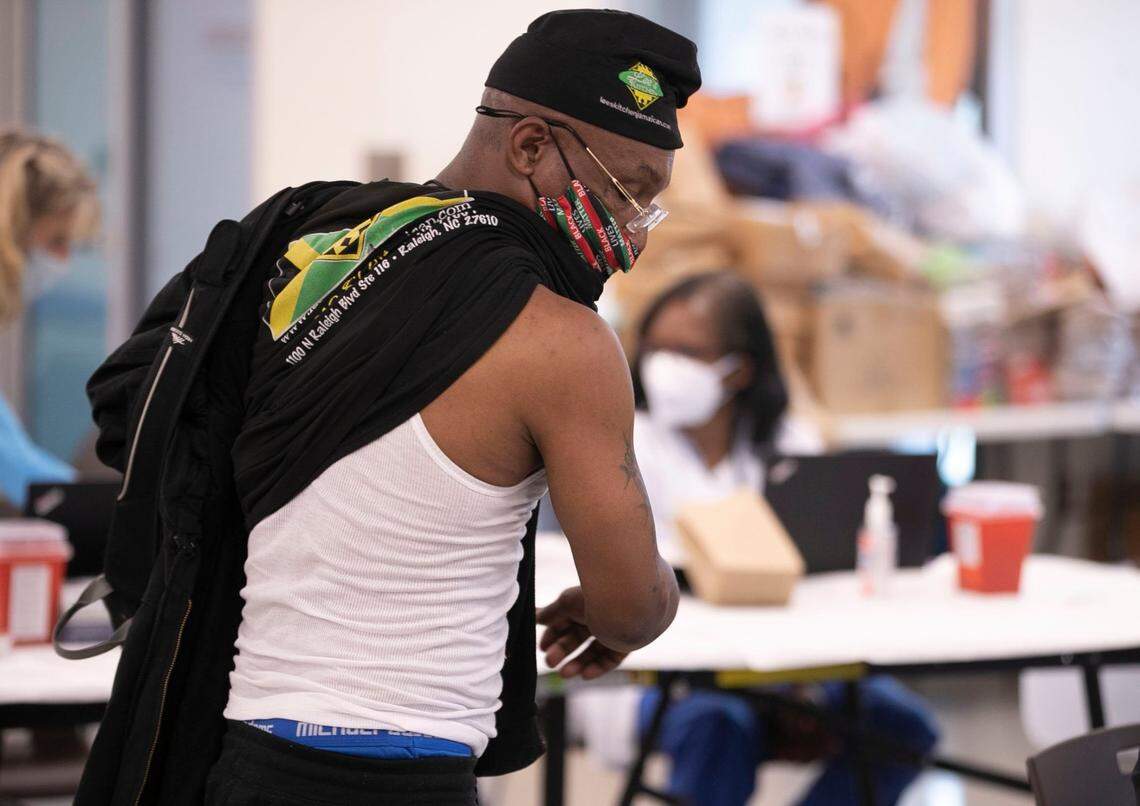
“We see that when we bring vaccine to folks and we really simplify the process, they know where to access it, that folks are getting vaccinated,” Cohen said. “So we’re looking forward to continuing that work, but we know we have our work cut out for us.”
The Biden Administration announced Thursday that the recently passed American Rescue Plan will provide nearly $162 million to community health centers in North Carolina.
The funds can be used to support COVID-19 vaccination testing and vaccination efforts, a U.S. Health and Human Services release said, but also can be used on infrastructure projects or to add mobile units.
Health centers in the Triangle receiving awards included Chapel Hill-based Piedmont Health Services ($13.16 million), Durham’s Lincoln Community Health Center ($10.2 million), and Raleigh-based Advance Community Health ($4.47 million).
This story was originally published March 25, 2021 at 2:07 PM.
.jpg)