
NC rolls out ambitious, but coordinated push to vaccinate thousands of farmworkers
After North Carolina’s agricultural workforce was hit hard by the pandemic last year, health leaders have been working for months to prepare for the daunting task of vaccinating tens of thousands of agricultural workers in an effort to battle potential outbreaks this season.
That includes those who live here and thousands of seasonal immigrant workers with H-2A work visas coming from Mexico to work on the state’s key crops. Many workers live in congregate housing and work in close quarters with others living at home with their families.
“Access to vaccines is at the top of the list of everybody’s efforts right now, because we want to vaccinate the workers as quickly as possible,” Elizabeth Freeman, the director of the N.C. Farmworker Health Program, said in an interview with The News & Observer.
Since vaccines are scarce throughout Mexico and most of Latin America, coming to the United States will be the only chance many workers have to get vaccinated.
The N.C. Department of Health and Human Services has helped establish vaccine teams in all 100 counties to connect with and educate farmworkers, farmers, contractors and crew leaders about the vaccine and how to get it. As of Thursday, at least half of the teams told the state they have connected with growers to plan vaccinations for workers, NCDHHS told The News & Observer.
Agricultural workers became eligible to get the vaccine March 3. As of April 7, everyone in the state 16 and older is eligible for the vaccine.
So far, 3,784 total doses have been administered to farmworkers, NCDHHS said. The farmworker vaccine teams said about 98% of farmworkers and growers accepted vaccine offered to them.
NCDHHS is including vaccine education in farmworker health sessions that typically take place at the beginning of each growing season, Freeman said. Outreach workers can answer questions or address any hesitancy workers may have about the shot.
Many workers are the first people from their towns or cities to receive a COVID-19 vaccine.
“It feels good to be able to come here to work and get the vaccine here, honestly,” said Leo Jasso, a farmworker from a rural town in the Mexican state of Jalisco, in Spanish in an interview with The N&O.
Jasso, 23, signed up to get a shot just a day after arriving from Mexico to his Johnston County labor camp. Outreach staff from the N.C. Farmworkers’ Project, a Benson-based nonprofit, were visiting the camp to educate workers about the vaccine and to help them make appointments. He will join about 20 other workers he lives with for a vaccination event organized by the Farmworkers’ Project.
“My mom and dad back home have been trying to look for the vaccine, but they haven’t been able to,” Jasso said.
A staggered vaccination rollout
Crowded housing conditions in labor camps have left farmworkers vulnerable to a virus that thrives when people are close together for long periods of time. Thousands of farmworkers contracted COVID-19 cases, with conditions worsened by a lack of preparation and regulation from the state health, labor and agricultural departments, The N&O previously reported.
As of April 9, DHHS has reported 4,336 COVID-19 cases and 18 COVID-related deaths attributed to certain congregate living facilities since last year. But the exact number of affected workers is unknown. Farmworker housing falls into a category labeled “other,” which also includes homeless shelters.
Freeman said the department began working on farmworker vaccination plans around December.
NCDHHS estimates that there will be about 72,000 farmworkers in North Carolina this year, including about 33,000 migrant seasonal workers; 22,500 migrant workers with work visas; and about 16,000 who live in the state year-round, who will work the peak season in the summer and fall. Growers who employ H-2A workers are legally required to provide housing for them.
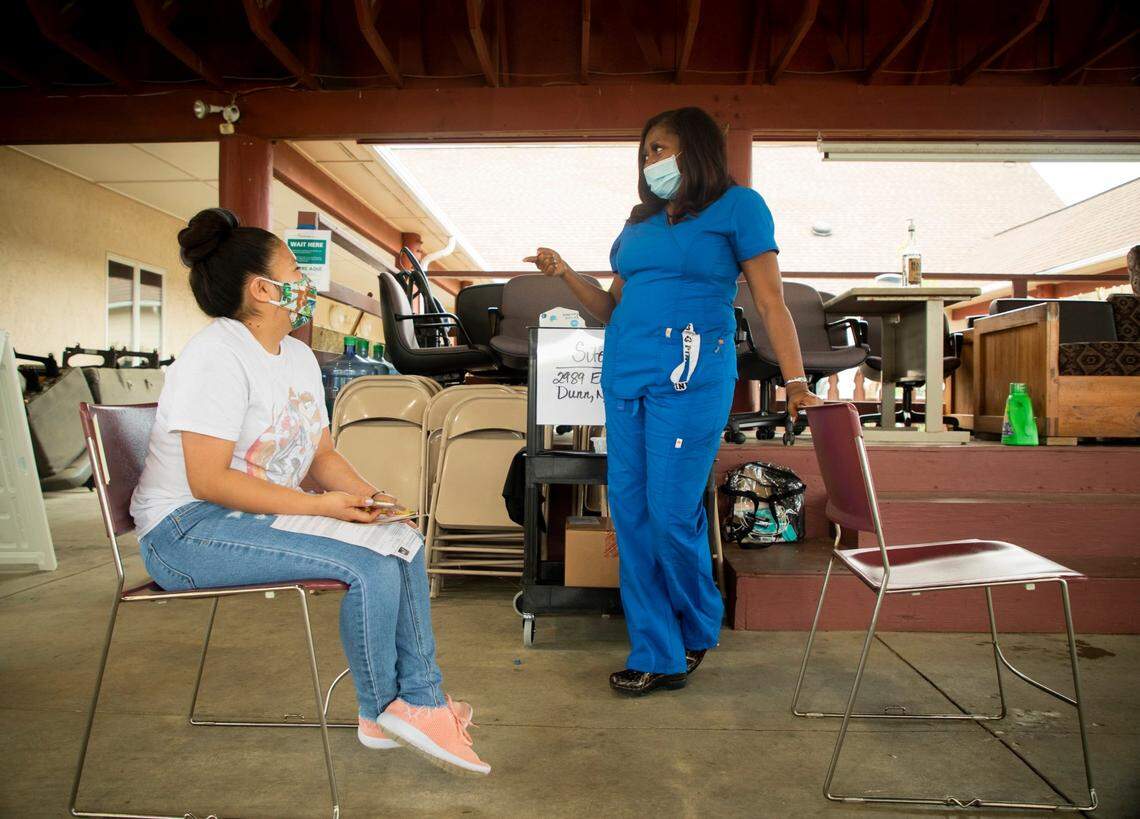
Once workers become eligible, they are receiving the vaccine in a few different ways. Some workers are visiting federally qualified or rural health clinics, while others are attending events set up exclusively for farmworkers. Some are receiving their shots where they live or work.
Farmworkers don’t all arrive at one time, though, which Freeman said could complicate the vaccination effort. For example, a grower might have four farmworkers at the beginning of the year, expect 15 more later on and then a few additional workers even later in the season. Advocates, growers and outreach workers need to ensure that all workers know how to find a shot, no matter when they arrive.
“It’s not just that outreach is done that one time to a farm,” Freeman said. “There’s got to be a follow-up plan, and then thinking of those vaccines, it’s just double dose logistics.”
The N.C. Growers Association, the largest user of H-2A farmworkers in the state, will play a role in helping growers to vaccinate their workforce this agricultural season.
“I’ve been on dozens of conference calls with different stakeholders and government people,” said Lee Wicker, deputy director of the association. “Everybody is working together in a cooperative manner to try to come up with the very best, most efficient way to make vaccines available.”
Wicker says growers are eager about these plans as they seek to avoid additional economic strain from last season’s COVID-19 outbreaks.
“The scarcity of the vaccine in Mexico is making workers open to receiving the vaccine while they are here,” Wicker said.
A network of outreach
Outreach groups are moving to disseminate as much information as possible about the vaccine to workers and growers alike.
The N.C. Farmworkers’ Project has spent the past month making appointments for H-2A farmworkers as they arrive, as well as local Latino residents in and around Johnston County.
Before Tuesday, when the Centers for Disease Control and Prevention recommended stopping the use of the Johnson & Johnson vaccine as it investigates rare blood clots, the one-dose vaccine was preferred among outreach workers.
“A lot of the growers and workers like (this vaccine) because it’s a one-time thing,” said José Ibarra, an outreach worker at the organization who has been sharing information about the vaccine since January.
Janeth Tapia, the outreach director of the NCFWP, says “the dynamic has changed a lot” in terms of growers being eager to cooperate with them, in contrast to them being reluctant to get workers tested or quarantined for COVID-19 in the past.
“Growers have called me asking about the vaccine for their workers, and I sense a better reception and openness about workers getting vaccinated,” Tapia said in Spanish.
“I think many reluctant workers will get with the program, because it rests on educating them about what the vaccine is and how it protects them,” Tapia said. “They rely a lot on influence, and if they see leaders on the job getting the shot, they will follow.”
Other outreach organizations are doing similar work to sign up workers for upcoming inoculation events. That includes the Episcopal Farmworker Ministry, NC FIELD and the Farm Labor Organizing Committee labor union.
Teams with the N.C. Cooperative Extension, a program of N.C. State University, are conducting education outreach across eastern North Carolina counties and contacting growers directly to ask when workers will arrive, according to Roberto Rosales, a farmworker health and safety educator at the Cooperative Extension.
Team members pass the information along to farmworker health outreach staff and vaccine providers, which leads to an educational event and then to scheduled appointments.
“I’m struck by how important collaboration, communication and relationships have been,” Freeman said. “It’s such a huge task.”
This story was originally published April 13, 2021 at 12:21 PM.
