As visitors return to Ocracoke, they’ll see changes to the island — and its residents
Some of the 75 or so Ocracokers who made it to church the Sunday morning before Thanksgiving carried worries as heavy as boat anchors.
Hurricane Dorian, which swamped Ocracoke on Sept. 6 with up to 7 feet of water, had upended island life. The water displaced nearly half the permanent population, sending residents scrambling for places to live. And it damaged more than three-fourths of the businesses, leaving owners and workers with no reliable source of income once temporary unemployment benefits run out.
And now, after nearly three months of crying, cleaning and calculating how they might recover, they were up against a deadline, with the island slated to reopen to tourists — Ocracoke’s financial lifeline — on Dec. 2.
Will people come? What if they don’t? And even more frightening to some: What if they do?
Pastor Susie Fitch-Slater knew their worries. She had just been hired to lead Ocracoke United Methodist Church in July before the storm hit in September, flooding the sanctuary, including the church organs.
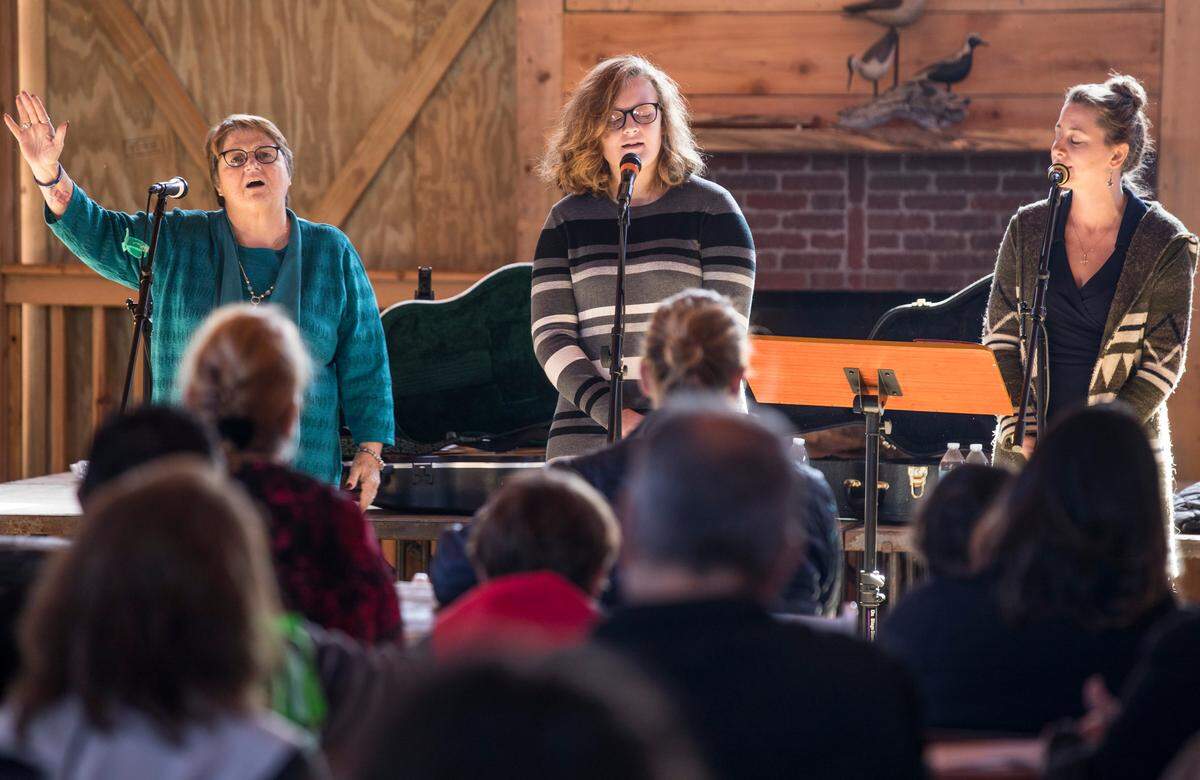
Like many of her congregants, Fitch-Slater has been preoccupied with the logistics of rebuilding, the challenges of which are multiplied in a place where every fresh two-by-four, every sheet of plywood, every roofing nail has to be delivered by boat. Also like them, she had learned to improvise, merging her weekly worship service with those led by Pastor Ivey Belch at the island’s other active church, the Ocracoke Assembly of God, which was spared the deluge.
On the Sunday before Thanksgiving, the two congregations had moved their morning service into the Berkley Barn, a privately owned wedding and event venue with soaring ceilings and string lights, where a Virginia-based charity caterer could serve islanders a meal.
‘Thanksgiving is not a day, it’s a lifestyle.’
While a team from Mercy Chefs set up steam tables and stirred trays of beef Stroganoff in the back of the room, Fitch-Slater and Belch stood at the front and challenged the faithful to embrace a new season in their lives and in the life of their community.
“What has God done for you?” she asked, knowing that many were still focused more on what they had lost, which for some was nearly every material thing they possessed. What mercies had he shown? What grace?
“Thanksgiving,” she told them, “is not a day, it’s a lifestyle.”
Islanders had much to grieve. At least 410 homes and other structures were damaged by the rushing waters of the Pamlico Sound that Hurricane Dorian swept across the island on its way up the coast. Tom Pahl, who represents the island on the Hyde County Board of Commissioners, said dozens of property owners are expected to demolish their homes and rebuild rather than try to repair. Many of those that will come down are the older homes on the island, he said, some of which date to the 1800s.
The county has no plans to condemn houses, Pahl said.
Pahl, a general contractor and native New Englander who has lived on the island for 15 years, is as frustrated as any of his neighbors that the Federal Emergency Management Agency has said it will not provide financial aid to individual property owners on Ocracoke. FEMA will help only through its public assistance program that pays for such things as infrastructure repair and debris removal.
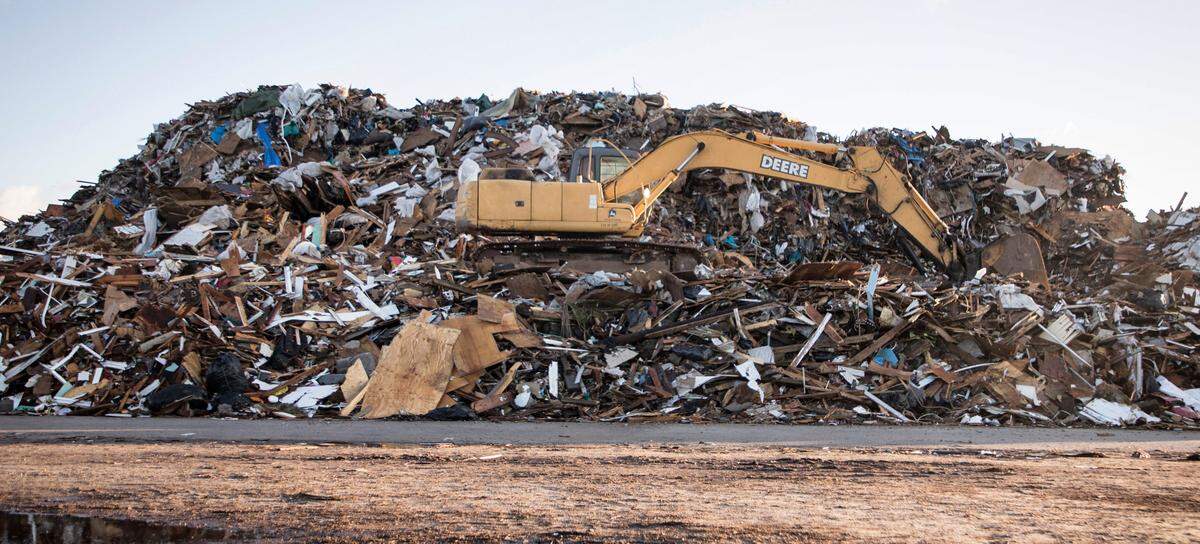
The latter is a constant process, with oversized dump trucks constantly coming and going. Residents and business owners pile their warped floorboards and broken windows and doors curbside. Cars that were caught in the flood, then rolled or crushed against buildings or trees, have been set bumper-to-bent-bumper along Irvin Garrish Highway, awaiting removal.
The top of a deconstruction debris pile at a temporarily converted beach access area within the Cape Hatteras National Seashore, just north of Ocracoke Village, may be the highest point above sea level on the island. Shovel trucks scoop matter from it and tamp it into the dump trucks from first light to last.
“Dorian really changed the face of the island,” said Pastor Belch, who grew up on Ocracoke, left and came back. “Fortunately, it’s the people who make the community.”
Some have relocated to the mainland
A few of the people have left, though it’s unclear exactly how many. Much of the most affordable housing on the island was damaged by the storm, and those who could not find alternative places to live relocated to the mainland.
“Some of my employees are gone,” said Jason Wells. “They say they’ll come back, and I hope they do. But when? And where are they going to live?”
Wells’ business, Jason’s Restaurant, got enough water inside to damage the building and ruin much of his equipment. He’s hiring a contractor to rebuild, but in the meantime, has been a leading force for island meal-planning in the wake of the storm. Volunteers from the N.C. Baptists on Mission set up a mobile kitchen on Ocracoke that operated for about a month, and other charities have provided food.
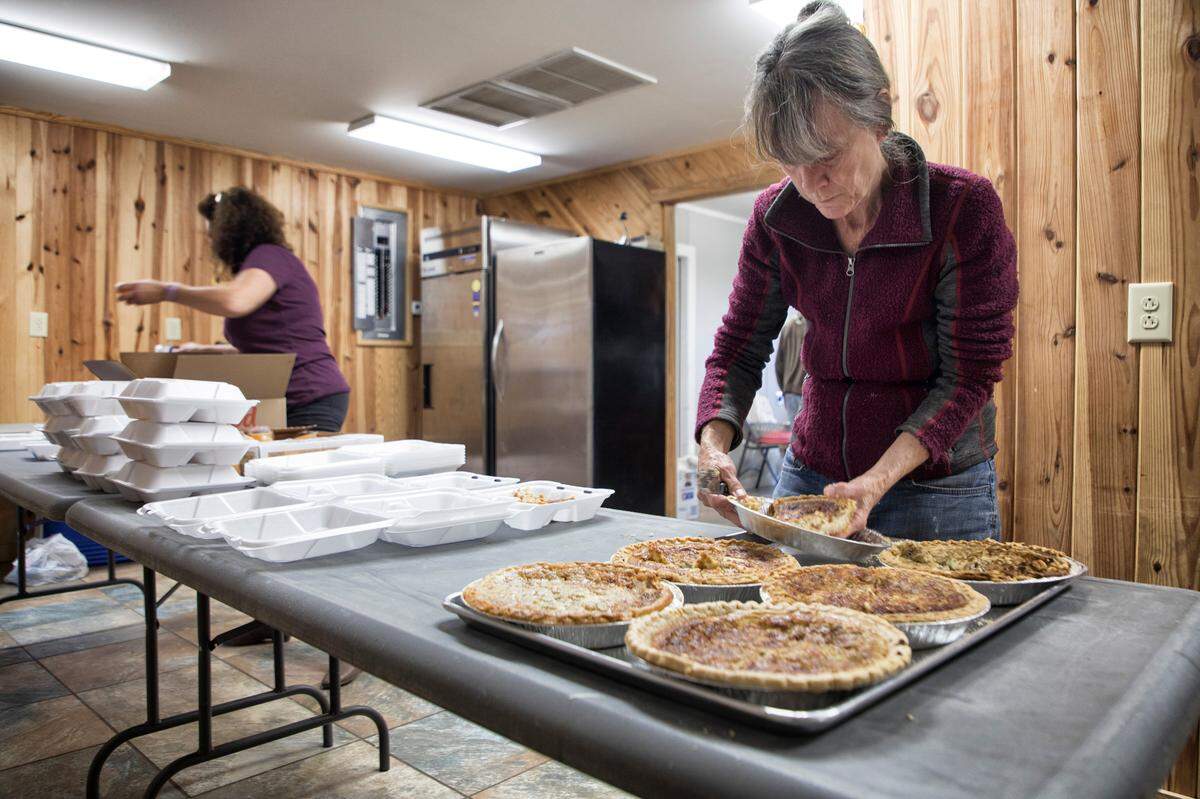
But when they’re not available, Wells has mustered friends and neighbors to cook and prep thousands of lunches each week at the Ocracoke Community Center, giving islanders and volunteers a place to come, commiserate with their neighbors and get a quick meal before heading back to labor on their houses or businesses.
As they work, residents are considering their rebuilding options with an eye on the long term. While Dorian has been called the worst storm to hit Ocracoke since at least the Hurricane of 1944, it has been only one of many. Since the 1990s, storms have been more frequent, more powerful and more devastating, causing property owners to consider whether they can afford to elevate their houses to get them above predicted floodwaters.
Pahl, the county commissioner and builder, is also a historic preservation specialist. When he and his wife bought their century-old house on the island and renovated it more than a decade ago, he raised the structure several feet to try to keep it dry during storm surges. It worked even in Dorian, he said, but barely. Water came all the way up the porch and lapped at the threshold of the front door.
Houses could be built much higher, Pahl said, making them more resistant to flooding. But the higher the house, the more removed it is from the island itself, and from neighbors passing on bikes or on foot. That closeness is part of the island’s charm, he said, and it’s one of the reasons a quarter of a million tourists visit Ocracoke each year.
November nor’easter added to the damage
It’s not just tropical storms that wreak havoc. On Nov. 17, days before the island was first slated to reopen to visitors, a nor’easter raked the Outer Banks with heavy rain, near-hurricane-force winds and excessive tides, undoing repairs that N.C. Department of Transportation workers had made to N.C. Highway 12 on the island. The route provides a connection between Ocracoke and Hatteras islands via ferries that run between the northern tip of Ocracoke and the southern tip of Hatteras.
The highway remains closed, and N.C.DOT spokesman Jamie Kritzer said workers hope to announce an opening date next week.
Ferries continue to run between Hatteras and Ocracoke, but with the highway closure leaving the northern end of Ocracoke inaccessible, ferries from Hatteras have to travel all the way to the ferry landing at Silver Lake in the village, doubling the length of the ride.
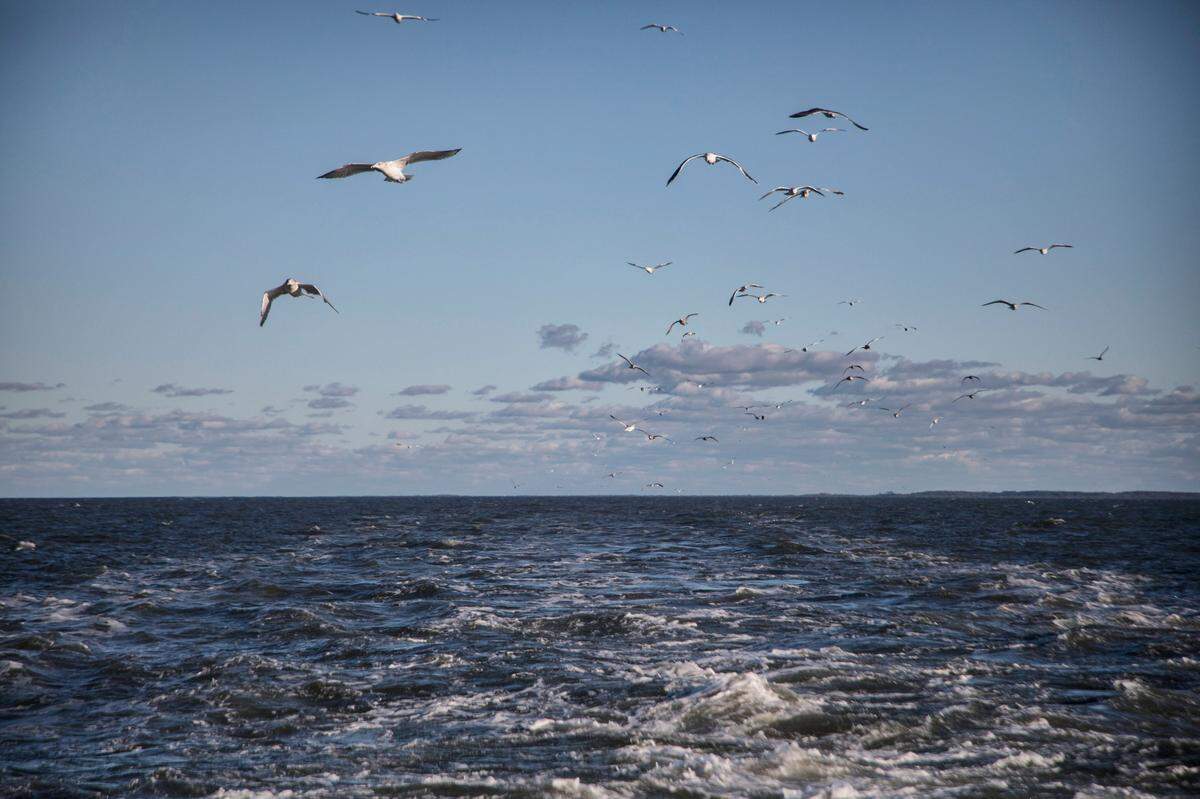
With the island reopening on Dec. 2, state-run ferries are expected to add routes between Cedar Island and Swan Quarter to accommodate more people and supplies.
Islanders have argued over when to reopen to visitors, with some saying businesses that are open needed the revenue weeks ago and others saying it would be better to wait until spring, when more of the refuse will be gone and more restaurants, hotels and rental properties will be available.
The Ocracoke Observer, an online news source, is keeping a running list of what’s open on the island at ocracokeobserver.com.
Leslie Lanier, who fell in love with Ocracoke when she failed to get a reservation on the ferry off the island after a day trip here, plans to open as much of her bookstore as she can get ready in time for the first wave of visitors.
“I’m excited. I’m ready,” she said, though she’s still painting and assembling new shelves at Books to Be Red.
The shop she has had now for 25 years won’t be exactly the same since the storm, Lanier said. Like others, she found problems that needed to be fixed after flooding forced her to cut into walls and look under floors. For instance, Lanier said, her wiring was a fire hazard.
Lanier said she’s not quite the same since the storm, either.
“I appreciate the little things more,” she said. “Like my family and my friends and the community I live in.”
Fitch-Slater, known to her congregation as Pastor Susie, has seen a lot of that. Visitors who have been coming to the island for years are likely to see it too, when they’re allowed back in, even if they’re just coming to see the damage for themselves.
More islanders have been coming to church since the storm, she said, and the two congregations have formed bonds she believes will last long past when the Methodists are able to worship in their own sanctuary again.
“People are looking for answers,” she said. “They’re looking for hope. They’re looking for something that a storm can’t destroy.”
This story was originally published November 26, 2019 at 4:18 PM.