Minorities and poor bear brunt of COVID-19. NC advocates say that’s everybody’s concern.
The shapeshifting coronavirus that causes COVID-19 is a dumb molecule that can’t differentiate the skin tone or economic status of a potential host.
It doesn’t need to.
Advocates for those marginalized populations say the virus is thriving among people of color in the U.S. and North Carolina because poverty and systemic discrimination make them more likely than their white counterparts to get sick from the virus, and less likely to receive public aid to recover from its financial effects.
“Pandemics exploit the fissures and wounds in a society,” said the Rev. William Barber II of Goldsboro, president of Repairers of the Breach and co-founder of the national Poor People’s Campaign. “And you cannot deal with a pandemic unless you close those fissures.”
The prevalence of COVID-19 among minorities and the poor is a public health threat not just for those communities, advocates and epidemiologists say, because the illness will spread beyond them.
As of May 15, the N.C. Department of Health and Human Services reported 17,129 cases of COVID-19 in the state, with 641 deaths attributed to the illness. In a fourth of the cases, the state doesn’t know patients’ race. It doesn’t know patients’ ethnicity in nearly a third of the cases.
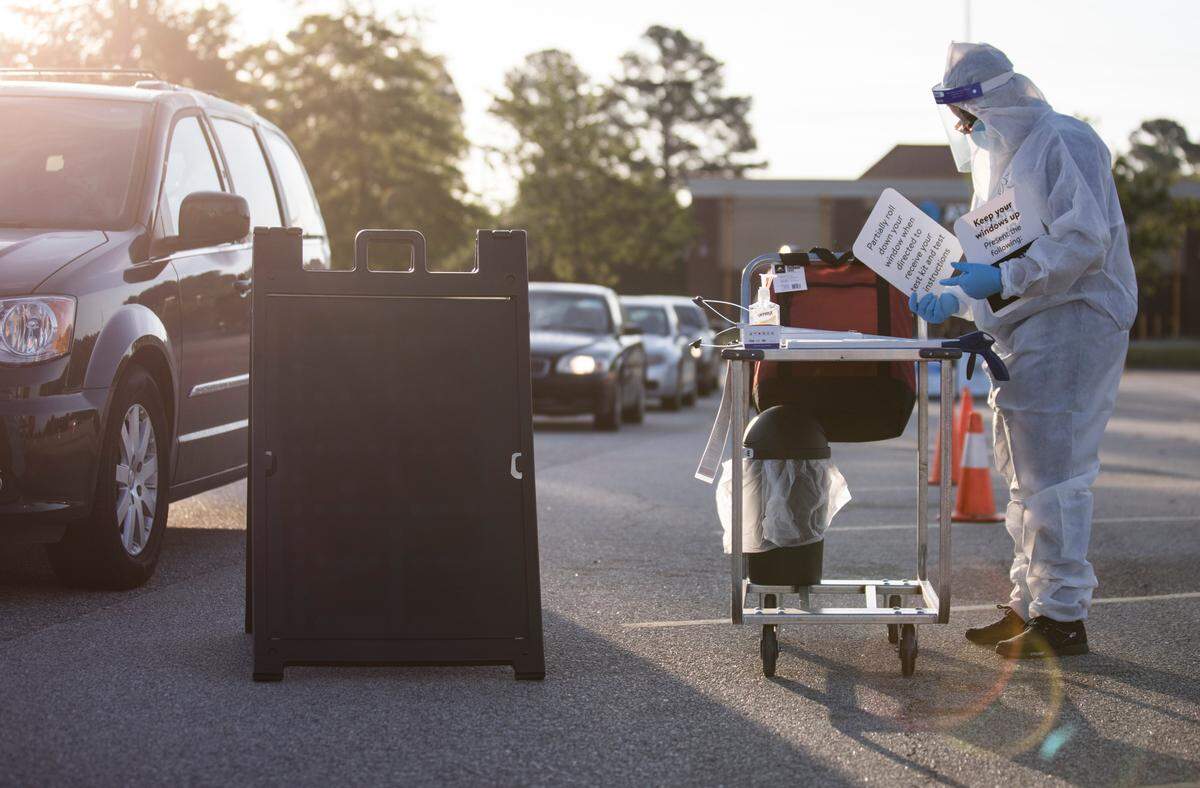
Blacks and Hispanics overrepresented in deaths
Where the state does know race and ethnicity, DHHS reports that 33% of confirmed cases are among African Americans and 29% are among Hispanics.
Of N.C. deaths, 36% have been among African Americans, and 5% among Hispanics.
According to U.S. Census estimates for July 2019, blacks make up 22% of the state’s population. Hispanics account for less than 10%.
The incidence of COVID-19 in North Carolina tracks with national trends. A report by the U.S. Centers for Disease Control and Prevention in April found that blacks and Hispanics are overrepresented among hospitalizations and deaths resulting from the new coronavirus.
National numbers from May show that where race and ethnicity are known, black Americans are 2.6 times more likely to die of COVID-19 than white Americansa and 2.2 times more likely than Latinos.
The CDC sites several factors that help explain why:
Racial and ethnic minorities are more likely to be poor and to live in densely populated areas, and it’s more difficult to practice social-distancing under crowded conditions.
Minorities tend to live further from grocery stores and medical facilities, making it more difficult to receive care when sick and to stock up on supplies that would allow them to stay home.
Minority groups are overrepresented in jails, prisons and detention centers, which have been the sites of COVID-19 outbreaks.
Racial segregation is linked with underlying health conditions that increase the risk for severe illness as a result of COVID-19, including hypertension, chronic lung disease, diabetes and heart disease;
Minorities are more likely than whites to work in jobs defined during the pandemic as “essential,” meaning they continue to go to work where they may be exposed to infection.
Minorities are more likely to work at jobs that don’t offer paid sick leave and may continue to work when they’re sick, increasing the risk of spreading illness.
Compared to whites, African Americans are almost twice as likely to be uninsured, and Hispanics are almost three times as likely;
Minority groups are less likely to receive regular health care than their white counterparts.
Minorities have been noticeably absent from protests in Raleigh and in cities around the country where groups have pushed for a more hurried reopening of the economy.
A handful of ‘Reopen” protesters have carried Confederate flags, and the events have drawn some people affiliated with the Blue Igloo group. The Anti-Defamation League and Network Contagion Research Institute said earlier this year said Blue Igloo is likely a reference to the word “Boogaloo,” used by white supremacists as shorthand for a future civil war or militia violence against the government by militia groups.
But protesters mostly have emphasized far-right ideologies about government interference in their lives — including advice to physically distance from other people and to wear masks to prevent disease spread — and the need for people to get back to work.
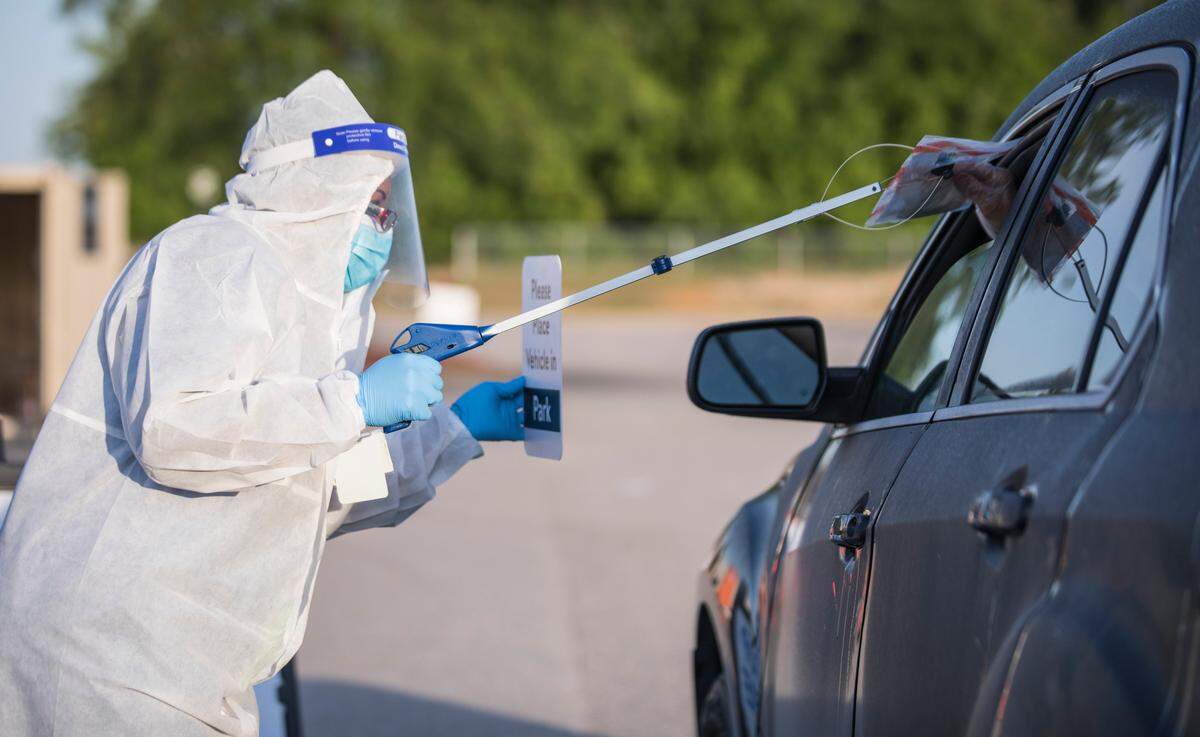
‘Stay in Place! Stay Alive!’
Epidemiologists say reopening the economy before it’s safe to do so will cause illness rates to spike, and advocacy groups say it’s America’s poor whites and minorities who will be hit hardest and first.
This week, the Poor People’s Campaign launched a new effort called “Stay in Place! Stay Alive!” encouraging poor people — whether black, Hispanic or white — to follow the CDC’s guidance on a gradual reopening based on increased testing, reduced spread and improved access to protective gear.
“People are dying because they’re working,” Barber said. “We should be disturbed by this, and we should also be disturbed because if they’re put at risk, we’re all put at risk.
“These are the orderlies and janitors and nurses and cooks and grocers and truck drivers,” Barber said in a phone interview. “Forty-five days ago, these were just ‘service workers.’ Now they’re ‘essential.’
“They make the country run.”
The Poor People’s Campaign has connected its efforts on the pandemic to the work it has done since it relaunched Dr. Martin Luther King’s original 1968 movement of the same name: mobilizing people to push for policy changes to ameliorate “systemic racism, poverty, ecological devastation, the war economy/militarism and the distorted moral narrative of religious nationalism.”
Protecting the poor who are required to keep working despite the risks to their health is good for the whole country, Barber argues.
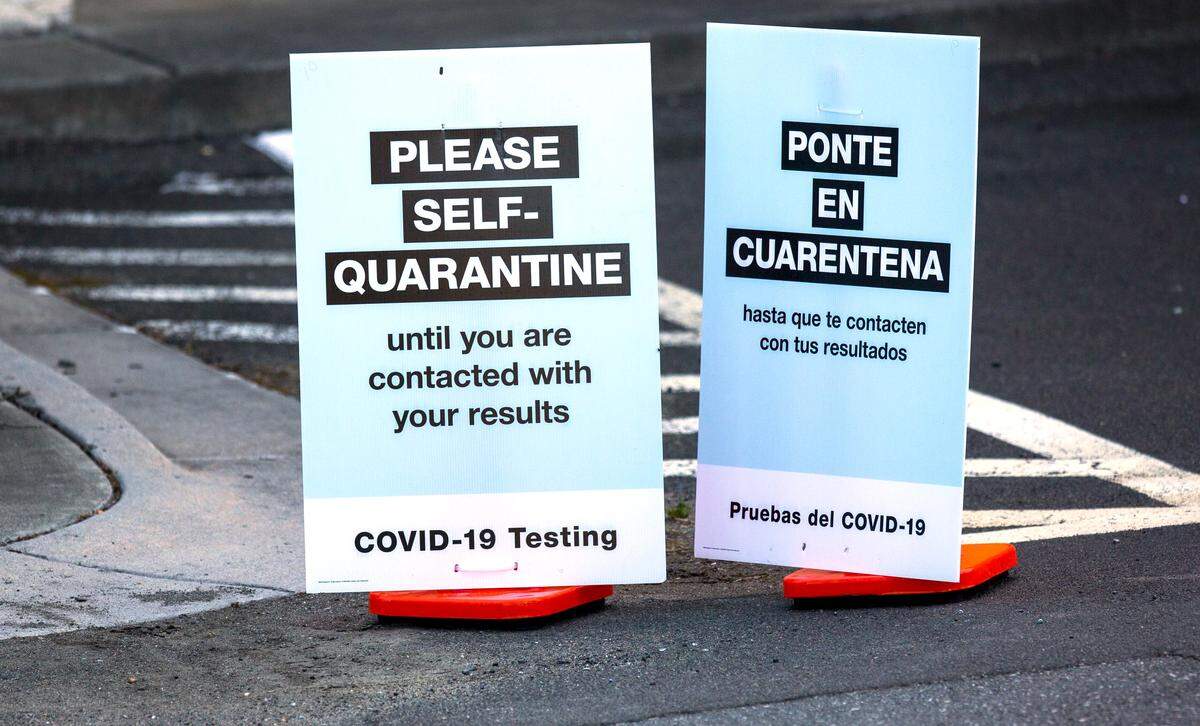
Economic impacts on Latinos
While Hispanics in North Carolina so far have not been as likely as those in New York, Oregon and some other states to become severely ill or die from COVID-19 compared to whites, advocacy groups say they have suffered far worse economic impacts and have been nearly completely blocked from receiving financial aid available to others.
Daniel Valdez, director of North Carolina and mid-South operations for the Hispanic Federation, who works in the organization’s Charlotte office, said the shutdown that began in March has been especially hard on N.C. industries that employ the most immigrants: hotels, motels, restaurants, manufacturing and meat processing. Thousands of workers have lost jobs or had their wages cut.
Hispanic farmworkers may have continued working, Valdez said, but few protections have been put in place to keep them from getting sick.
While farmworkers, most of whom come to North Carolina from Mexico, are here legally on work visas, Valdez said many other Hispanics in the state are undocumented and therefore don’t qualify for most government assistance. No SNAP benefits to help them get groceries, no unemployment benefits, no $1,200 stimulus checks.
“I think this virus has exposed who are the folks who are really keeping the community going, and they are in large part Latinos and others of color, folks who are making minimum wage are really the backbone of our community,” Valdez said. “To the point that we continue to recognize that beyond this pandemic when we get back up and running, it’s important for us to keep that in mind.”
Even Hispanics who are here legally and operate small businesses have been effectively shut out of government aid, Valdez said. They could try to navigate complicated applications for grants or low-interest loans from the Small Business Administration, but language barriers make the process extra challenging and, if they don’t have a longstanding business relationship with an SBA-qualified bank, they aren’t likely to be approved.
In lieu of government aid, Hispanic chambers of commerce are trying to develop some grant programs for Hispanic business owners, Valdez said.
Churches and nonprofits try to help
Churches and other nonprofits across the state — whose employees also were sent home to work during the shutdown — have been looking for ways to help individuals and families struggling because of pandemic-related financial problems.
Tho Nguyen, marketing director for Asian Focus, a nonprofit based in Research Triangle Park, said his group has been partnering with the Salvation Army and others to distribute masks and fliers with CDC advice on how to use them and practice other safety measures, translated to Spanish and Chinese.
Andrew Willis Garces, director of Siembra NC, based in Greensboro, said his organization has switched its pre-pandemic focus on wage theft and immigration law to COVID-19 relief.
Its hotline is now dedicated to helping people find food pantries in their communities, medical care for the uninsured and legal aid for tenants who are threatened with eviction because they can’t pay the rent since they lost their job.
Siembra NC has established a Covid Relief Solidarity Fund to raise money to provide emergency cash assistance to people who need help.
“The virus is technically what’s making people sick and killing them,” Garces said, “but our inability to help people economically is actually what’s causing this pandemic to spread.”
Garces and others worry that minorities and the poor will suffer more long-term effects of the pandemic as well. Some will have to exhaust their savings to buy food and pay bills, wiping out whatever wealth they were trying to accumulate.
Children of low-income families who don’t have reliable access to the internet at home and those whose parents are not able to help them with lessons may be set back in their education, Garces said.
Garces said it’s unconscionable to push people back to work without making sure they’re as safe as possible and that they have a safety net if they do get sick.
“Poor people are dying, and we’re still reopening even though more and more data is saying that the situation is not getting better for them,” Garces said. “That seems to be the unspoken choice we’re making as a society.
“But I think there is a still a chance for the rest of us to right ship, and make sure we are prioritizing the people who are disproportionately impacted by this virus, and start saving their lives and saving them from the parallel consequences that happen to the people who are the most vulnerable.
“We can do that,” Garces said. “We can decide as a society to right the ship.”