
Coronavirus cases in North Carolina surpass 20,000 with over 700 deaths
North Carolina’s tally of reported coronavirus cases passed 20,000 Wednesday, eleven weeks after the pandemic first appeared in the state.
The milestone in the COVID-19 pandemic comes as Gov. Roy Cooper announced the end of his stay-at-home order Friday after seven weeks, moving into modified version of Phase Two of his reopening plan.
NC DHHS reported 20,122 confirmed cases Wednesday, up 422 from Tuesday’s total. The state has seen larger daily increases recently, including 853 as recently as Saturday.
Mecklenburg County, the state’s most populous, has the most confirmed cases with 2,780 while Wake and Durham counties have also crossed 1,000 cases each.
COVID-19 has hit all of the state’s 100 counties after a case was reported in Avery County Monday.
As of Tuesday, the state listed 11,637 people as “presumed to be recovered.” This number is based on an estimated recovery time of 14 days for patients who test positive and are not hospitalized and an estimated recovery time of 28 days for people who test positive and are hospitalized.
The number of coronavirus-related deaths in the state has also crossed 700, reaching 702 Wednesday, according to DHHS. The highest death count is in Mecklenburg County, with 67 deaths.
Most of the state’s deaths have been at nursing homes.
The News & Observer is keeping a separate tally of coronavirus cases using data from the state and county health departments. As of Thursday, coronavirus cases in the state reached 20,511 with 728 deaths.
Moving to Phase Two
Cooper announced Wednesday the state will move into Phase Two of his reopening plan Friday. The new phase marks the end of his stay-at-home order, allowing places like restaurants, hair salons and barber shops to reopen with limited capacity. Swimming pools can also open at 50% capacity, and mass gathering restrictions will be no more than 10 people indoors and no more than 25 outdoors.
But bars, nightclubs, indoor fitness facilities, public playgrounds and indoor entertainment facilities like movie theaters and bowling alleys will remain closed.
Vulnerable people who are older or have pre-existing health conditions are still encouraged to stay home and restrictions remain for people in congregate living settings. Under Phase One, the current phase, people are still encouraged to stay home but can leave for more reasons. Some businesses previously closed may open at 50% of fire-code capacity. Customers are encouraged to wear masks and maintain social distancing. Gatherings are limited to 10 people, except for funerals or religious services.
Outbreaks at nursing homes and prisons
There are 77 ongoing coronavirus outbreaks at nursing homes, 33 ongoing outbreaks at residential care facilities and 18 outbreaks at prisons, according to N.C. Department of Health and Human Services.
At least 2,718 confirmed cases have been reported at nursing homes. There have been at least 375 COVID-19-related deaths.
As of Tuesday night, the nursing homes with the most deaths are Laurels of Chatham in Chatham County, with 21 deaths and 109 confirmed cases and Pruitt Health-Carolina Point in Orange County, with 20 deaths and 112 cases. The Citadel at Salisbury in Rowan County has the highest number of cases, with 157, and 18 deaths.
In three facilities at Butner Federal Prison, 358 confirmed coronavirus cases and eight deaths had been reported Tuesday, according to the Bureau of Prisons.
In the state prison system, 1,326 tests had been performed by Tuesday and 644 people have tested positive. The most heavily impacted prisons are Neuse Correctional Institution in Goldsboro, with 467 confirmed cases and the N.C. Correctional Institution for Women in Raleigh, where there are 91 confirmed cases.
Coronavirus testing in NC
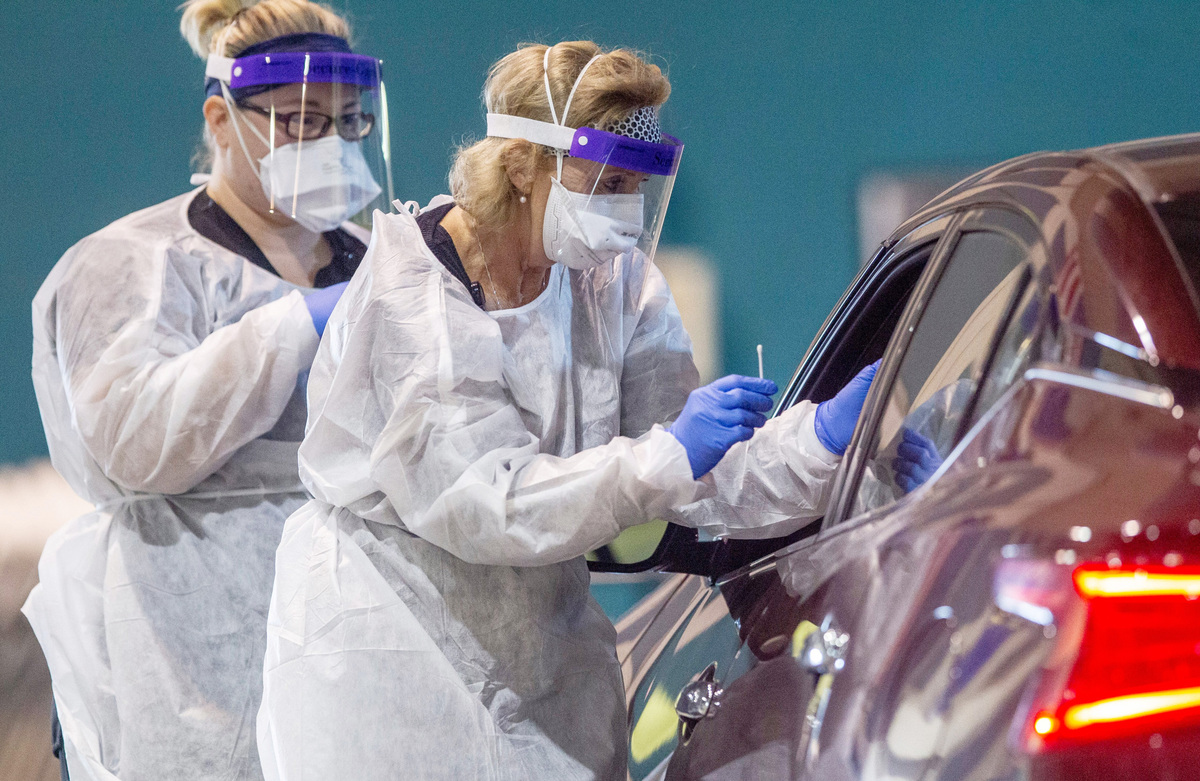
While 17 states have more cases than North Carolina and 20 states have more reported deaths, it is difficult to compare the impact of the virus because of varying levels of testing. N.C. DHHS reported 277,603 tests have been conducted. That is roughly 2.5% of the state’s population.
Across the state, more tests are being conducted and more cases are being identified.
The criteria for who qualifies to be tested is being expanded, said Dr. Mandy Cohen, DHHS secretary.
The list now includes people who may have had close contact with an infected person, people with underlying health conditions, members of “historically marginalized populations,” people who live or have contact in “high-risk settings” (such as homeless shelters, correctional facilities, long-term care facilities), health-care workers and first responders, and employees who work in places like grocery stores and gas stations, The News & Observer previously reported.
This story was originally published May 20, 2020 at 12:32 PM.