Black pastors say the shattered glass after protests reflects a broken, unjust system
The morning after demonstrators and police took to the streets of cities across North Carolina — with some on both sides resorting to physical force — black pastors rose to their pulpits calling for the nation to address the grievances behind the protests.
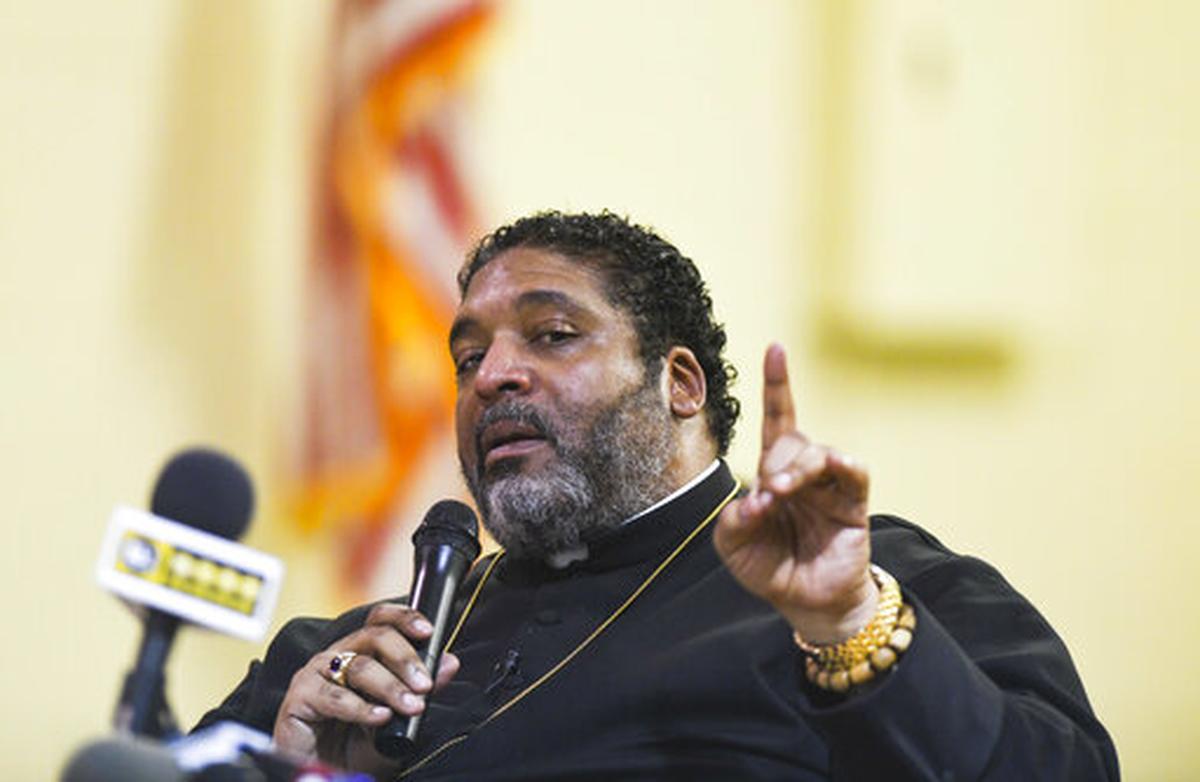
“Like many of you, I have heard George Floyd cry, ‘I can’t breathe,’ and, ‘Momma, I love you,’ on the recording of his lynching in the streets of Minneapolis,” the Rev. William Barber II said in a “letter to America” he read during a Sunday morning Facebook Live broadcast from Greenleaf Christian Church in Goldsboro.
“I have watched as crowds of people ... have taken to those same streets to cry out against systemic racism. The image of a white officer choking the life out of a black man while fellow officers looked on is viscerally reminiscent of the lynching photographs that were used to terrorize African Americans for decades in this nation.
“Protesters are right to decry such brutal and inhumane treatment as racism.
“Thank God people are in the streets, refusing to accept what has been seen as normal for far too long,” Barber said. “What a shame it would be if this nation could watch a policeman murder another human being, then pose like a hunter with his prey while his colleagues looked on, and there not be protest, anguish, anger, outrage and moral disruption.”
Speaking about systemic racism
Barber, pastor of Greenleaf, president of Repairers of the Breach and co-founder of the national Poor People’s Campaign, has long preached that individual acts of racism are disgraceful but that systemic racism is a bigger threat to people of color and to American society as a whole.
George Floyd, 46, whose family has said was born in Fayetteville, died Monday after being handcuffed and pinned to the ground by white police officer Derek Chauvin of the Minneapolis Police. Witnesses recorded the officer using his knee to hold Floyd down even after Floyd said he couldn’t breathe.
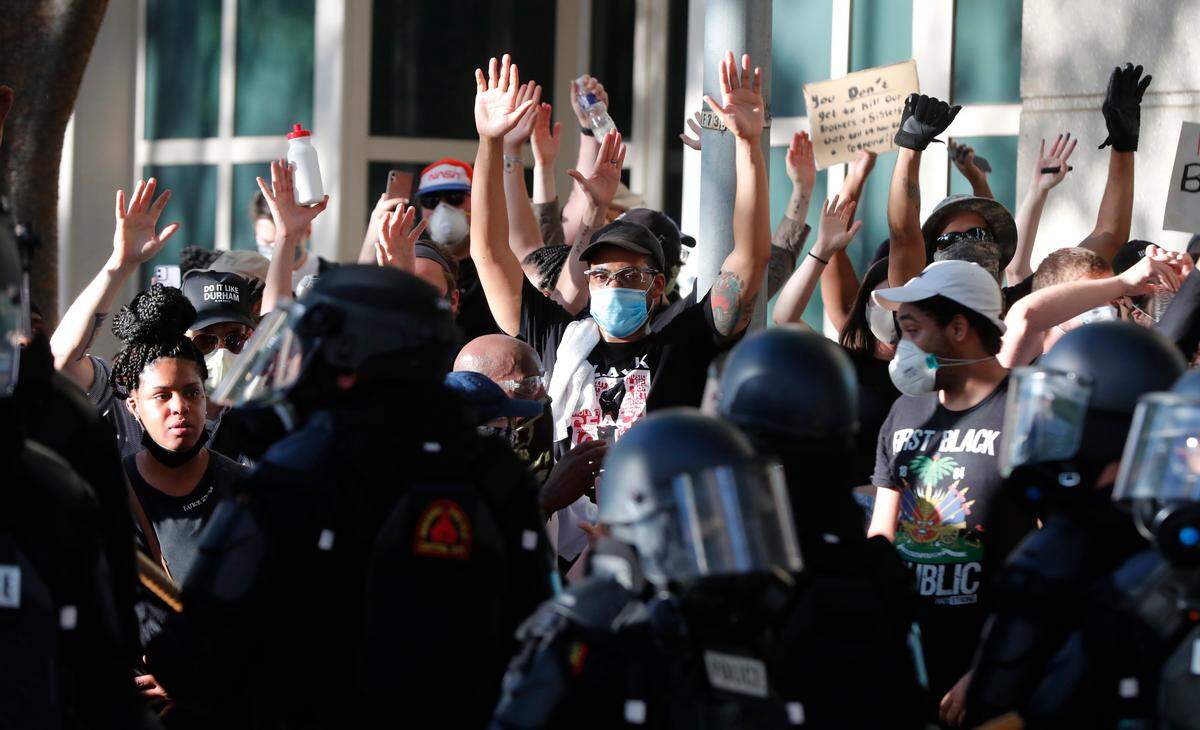
Protesters decrying police brutality against people of color demonstrated Saturday in Raleigh, Durham, Charlotte, Greensboro, New Bern, Fayetteville, Winston-Salem and Wilmington. Events started out peacefully but several — including Raleigh and Fayetteville — ended with police firing tear gas and rubber bullets and protesters smashing storefront windows and looting merchandise.
Barber called on listeners to look beyond the shattered glass that littered the streets and sidewalks when the sun rose Sunday morning, and to see the way blacks, Hispanics, poor whites and others are marginalized by government policies.
“Hear me, America,” Barber said. “The lethal violence of these racist officers is only one manifestation of the systemic racism that is choking the life out of American democracy.”
Barber also criticized President Donald Trump for a remark he made about mob violence while in Florida on Saturday. Trump called the rule of law the crown jewel of the country and said his administration would stop mob violence cold.
Barber said the president’s remark was a misstatement, and that America’s crown jewels are named in the U.S. Constitution: the establishment of justice; providing for the common defense; promoting the general welfare; ensuring domestic tranquility; and equal protection under the law.
‘I can’t breathe’ a rallying cry
The Rev. Earl C. Johnson, pastor and founder of The Dream Center in Raleigh, also preached on Facebook on Sunday morning about Floyd’s case and his cry for help.
Floyd’s words, “I can’t breathe,” also uttered by Eric Garner who died in 2014 while being held down on the sidewalk by police New York, have become a rallying cry, Johnson said.
The phrase “has become a metaphor for life, a metaphor for the things that have stymied us, that have hindered us and kept us apart, and kept us from reaching the place that we want to be today.
“I can’t breathe has become a kind of of symbolism for the lack of growth around Afro-Americans and other people of color in this nation.
“Floyd called out for help,” Johnson said, “and could not get it.”
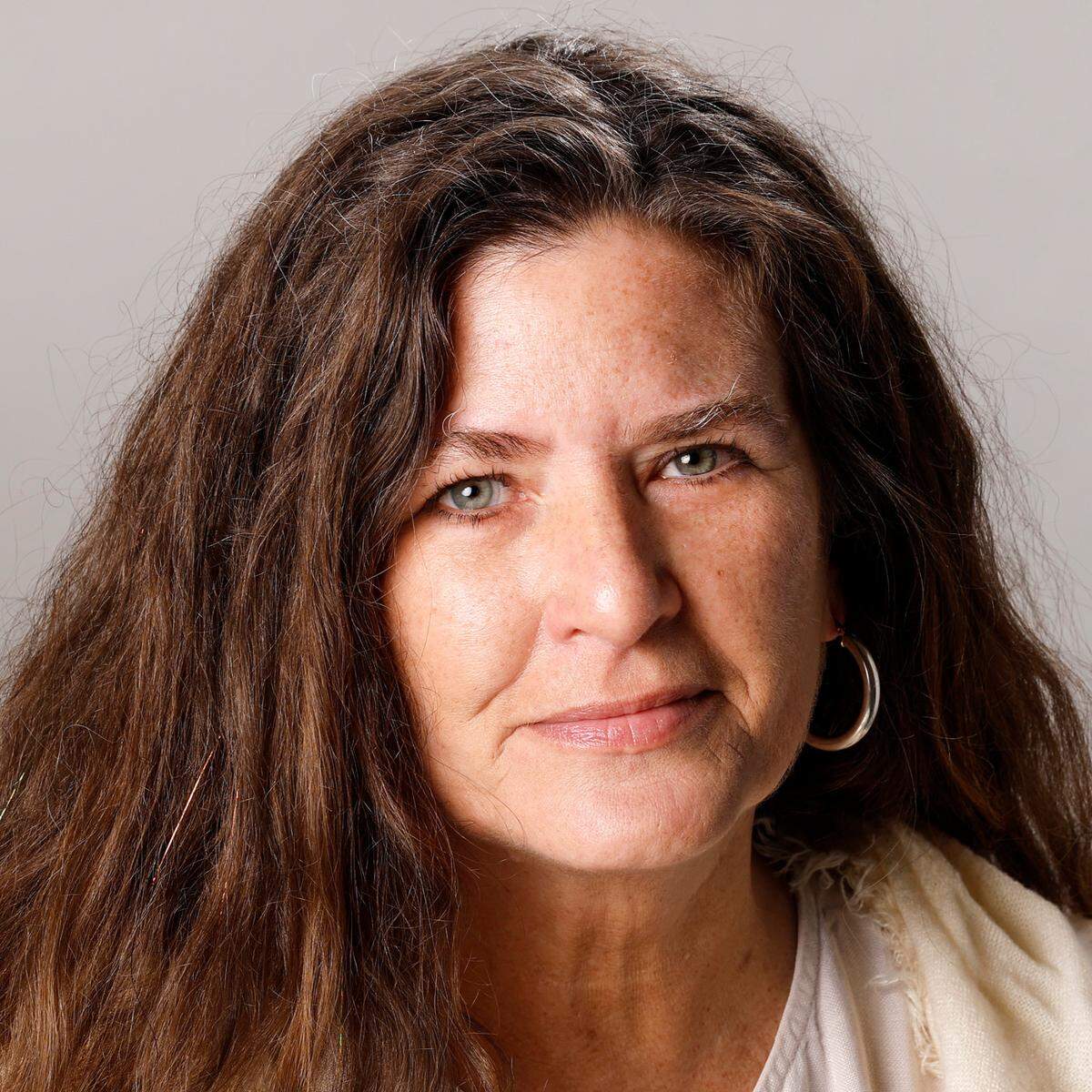
Dr. Dawn Baldwin Gibson, executive pastor at Peletah Ministries in New Bern, preached to her followers Sunday morning via Zoom, using a passage from Esther, described in the Bible as a Jewish queen who spoke up to save her people.
Gibson noted that her own grandfather was born in 1891, the son of slaves.
“I understand their stories because it is my story,” Gibson said. “They stood at the time of great opposition and overwhelming systems of oppression and racism. They did their part. Now it is our time.
“We cannot give up. We cannot give in. We cannot despair. We cannot become hopeless. We are called to stand and write this next chapter of history.”
Raleigh faith leaders
Local African American ministers and leaders gathered Sunday evening to respond to Saturday night’s protests and let the community know that the “faith community is not asleep.”
Faith leaders also emphasized the need for a strategy and announced a walk that will take place in Raleigh on Saturday, June 6.
“Our people are acting out because they feel they have been in bondage. Economically, physically, legally,” said Pastor Stanley Byrd of Kingdom Harvest Church. “I don’t condone it in any kind of way. We don’t tear up our house. It was not reflective of the type of action that needs to occur to bring about the results that we need.”
This story was originally published May 31, 2020 at 3:11 PM.