
When NC’s new COVID curfew starts Friday night, heavy-handed enforcement isn’t likely
On Friday, North Carolina falls under Gov. Roy Cooper’s 10 p.m. curfew — the state’s latest strike at soaring COVID-19 case numbers and hospital beds filling with patients.
But across the Triangle, police and city officials say curfews are not as oppressive as they might sound. Officers say they will not go specifically looking for violators and people likely will not be stopped for walking down late-night streets.
Instead, officers will treat the curfew as a chance to educate about the dangers of congregating in high numbers or in close quarters. They will respond to complaints about flagrant violators.
“We’re not stopping someone past 10 o’clock just because it’s past 10 o’clock,” said Eric Curry, spokesman for the Wake County Sheriff’s Office. “If we get calls, then we’ll go.”
Cooper’s latest order comes as the state regularly sets a new high mark for daily cases: 6,495 on Wednesday. At this rate, researchers report, North Carolina’s hospitals could reach capacity in six weeks.
‘Most people want to do their part’
The curfew offers many exceptions: traveling to work, buying food, gas or medical supplies.
Raleigh, Durham and Cary all report their officers will serve as educators rather than enforcers, not actively seeking out people violating curfew hours.
If Cary police see anything problematic, such as a group of people gathered in a park after curfew, they will likely stop to offer pandemic advice, said Susan Moran, town spokeswoman.
“Our experience has been that once people are reminded, they cooperate and are willing to comply,” said Raleigh police spokeswoman Donna-Maria Harris. “We recognize that this is a hardship on businesses and has been difficult on all of us. We believe that most people want to do their part to help slow the spread of the virus, and we understand that not everyone is versed in the language and rules of the (governor’s) order.”
Raleigh Mayor Mary-Ann Baldwin said police will not fuss with people cleaning their plates at 10 p.m. Rather, she said, they want to stop events like those held at a Raleigh bar last week off Capital Boulevard, which held more than 200 people.
“We’re talking about people who are openly defiant,” she said. “Nobody’s going to tell you you can’t walk your dog.”
A restaurant ‘reprieve’
On Tuesday, when Cooper didn’t shut down dining rooms in North Carolina for a second time, Plates Kitchen co-owner Justin Gallus breathed a sigh of relief.
“We all expected that announcement would close dining rooms,” Gallus said. “It felt like a huge reprieve.”
Instead, the state will enter a modified stay-at-home order Friday, restricting most activities from 10 p.m. to 5 a.m. That means restaurant dining rooms will close at 10 p.m., though takeout can continue after. Last call at bars and restaurants has also been moved up to 9 p.m.
Fast food restaurants with drive-thrus, restaurants offering to-go and curbside pickup service can all continue after 10 p.m.
For Plates, a restaurant situated in the heart of Raleigh’s Glenwood South nightlife district, though not necessarily part of it, Gallus doesn’t expect much impact from the order. He said the restaurant’s last seating will move from 9:30 to 8:30 p.m. Except on the best nights in the summer, Gallus said Plates didn’t do much business after 9 p.m. More concerning, he said, would be losing the dine-in service heading into its biggest day of the year, which is typically Christmas.
“We have more outdoor seats than we do indoors, that’s allowed us to survive,” Gallus said. “But it’s not a business model for anyone, to close your indoor dining. We’re just trying to get through Chrismas, which is our busiest day of the year, and reassess.”
For a dive bar like the Cardinal, which is known for drinks and hot dogs, owner Jason Howard believes the new order will bring people out earlier for drinks, but have little impact on North Carolina’s climbing case counts.
“We’re going to sell alcohol until 9, and then we’re going to sell hot dogs until 10,” Howard said. “I don’t think COVID cares what time it is.”
On Wednesday, it was business as usual at Raleigh restaurant St. Roch, which has stayed open in some form since the beginning of the pandemic. Chef Sunny Gerhart doesn’t expect the new dining restrictions to hurt the restaurant any more than the climbing case counts already have.
“There are a lot more people getting sick right now; we’ve seen a significant decrease in the last three weeks,” Gerhart said. “We’re just trying to get through March, then I think we’ll be doing pretty good.”
Lack of federal help
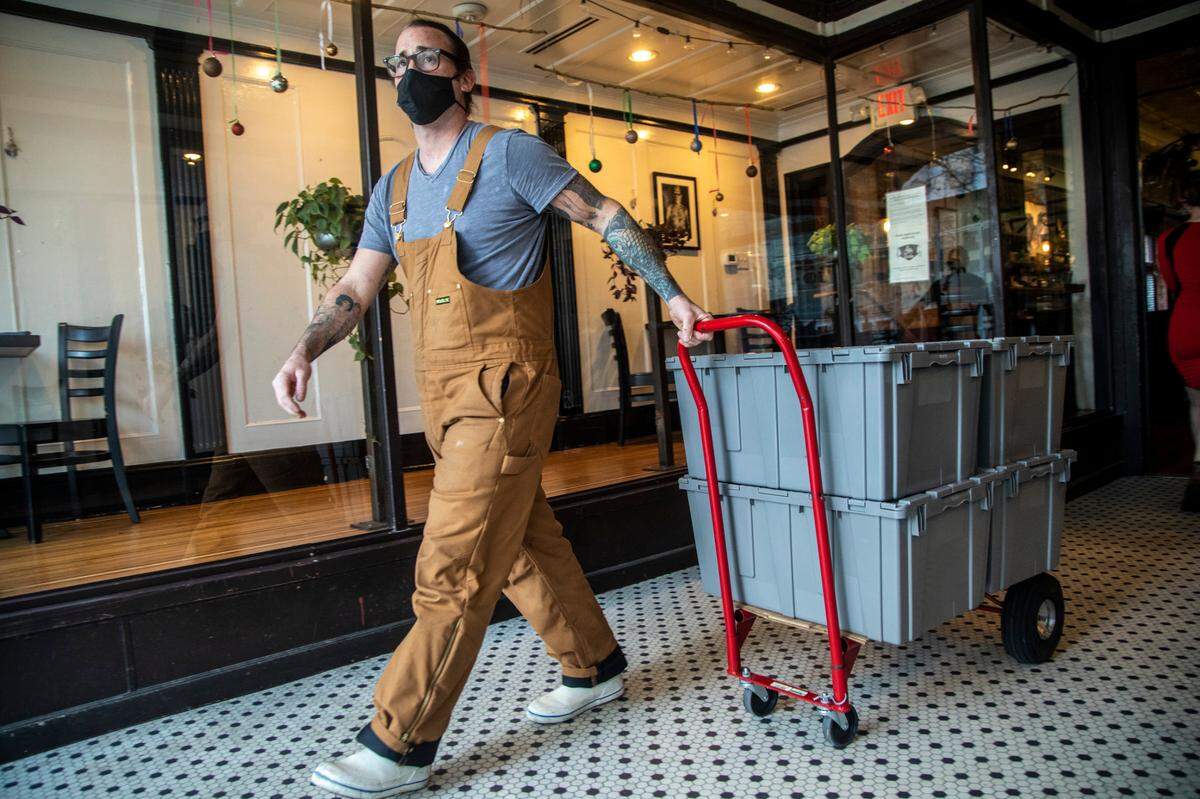
Downtown Raleigh restaurant Garland waited for months before starting dine-in service, opening up its patio for the first time in September. Chef and owner Cheetie Kumar said the restaurant managed a couple months of nearly breaking even, before cold weather and rising case counts cut into sales. She said the 9 p.m. last call will cut further.
“We had dreams of opening our dining room, but with the numbers continually terrifying, it doesn’t make sense to put our staff and guests at risk and encourage problematic behavior,” Kumar said. “This makes a bad situation worse, because for whatever reason people come to Garland on the later side, 8:30, 8:45 and people who eat late like to have a couple drinks with their meal.”
Kumar said she hasn’t disagreed with any measure North Carolina has taken to slow COVID spread, though it has cost her businesses money. Only large-scale federal assistance, she said, will stave off widespread restaurant closings.
“Unfortunately, there’s nothing that will help short of a federal emergency aid package for restaurants,” Kumar said. “This industry is always taking the hit; this is another nail in the coffin. ... The inability of the federal government to offer assistance is criminal.”
Should dining rooms close, Cara Hylton, who owns ORO Restaurant with her husband, Chris, said their menu doesn’t work well for takeout. But until then, Hylton doesn’t believe the downtown Raleigh restaurant will feel much impact by the new operating hours.
The restaurant had its windows smashed during the summer, as protests against police brutality escalated into civil unrest.
Hylton said ORO continues to serve meals and meet safety guidelines, representing, she said, a moment of normalcy for diners having a meal. But through the pandemic, she said the restaurant industry has been a target for restrictions.
“Restaurants have been open since early in Phase 2 and we didn’t see these spikes,” Hylton said. “These spikes in the last 30 to 45 days are not synonymous with dining rooms. ... Restaurants are not the cause of the problem. I don’t know why we take the brunt of this. We become the scapegoat.”
This story was originally published December 9, 2020 at 3:27 PM.