You can be among the first to see GoRaleigh’s new electric buses. Here’s when and where
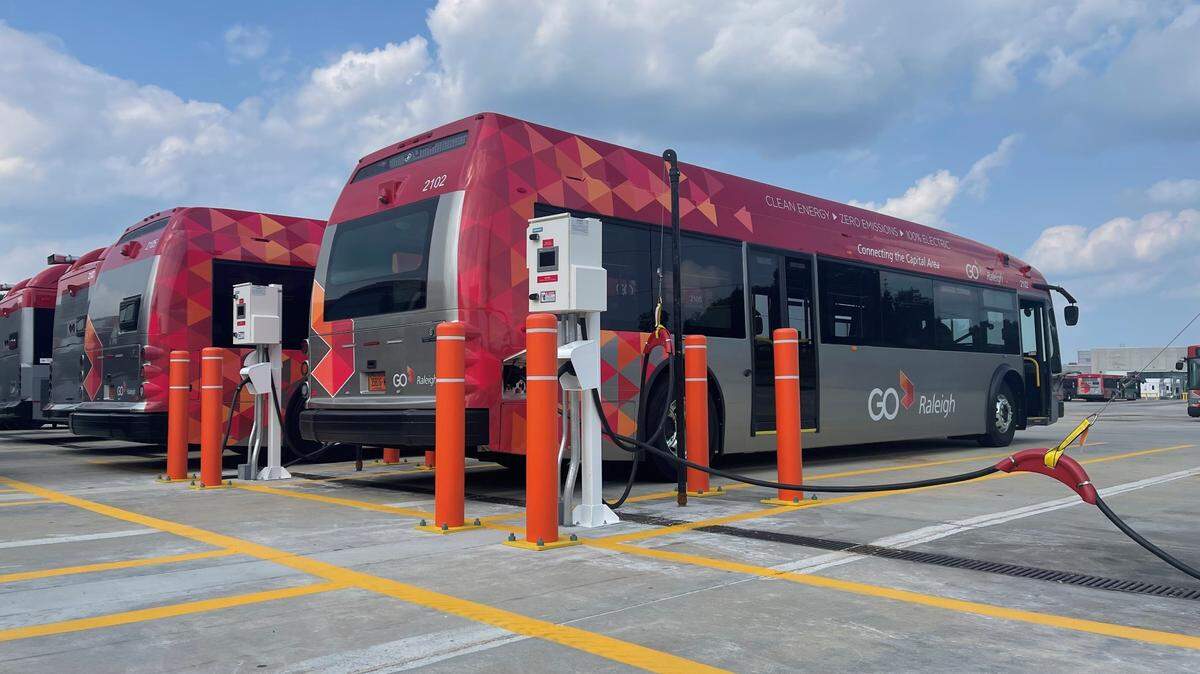
The city will unveil one of its first electric GoRaleigh buses this weekend at an event designed to showcase the city’s efforts to reduce emissions of carbon and other greenhouse gases.
Two years ago, the City Council set a communitywide goal of reducing greenhouse gas emissions by 80% by 2050. In March, the council approved the 100-page Raleigh Community Climate Action Plan that outlines strategies for meeting the goal.
Saturday’s GoGreen event will highlight some of the efforts that involve transportation, including GoRaleigh buses, Citrix Cycle bicycles and electric scooters. It will take place from 10 a.m. to noon in Dorothea Dix Park, at Greg Poole Jr. All Faiths Chapel, 1030 Richardson Drive.
The event will feature one of five electric buses that GoRaleigh is adding to its fleet of 100 buses. The electrics will go into service in mid-September, after drivers and mechanics are trained and the charging stations readied, said spokeswoman Andrea Epstein.
The Raleigh Transit Authority decided four years ago to wean GoRaleigh off diesel and chose a different alternative fuel: compressed natural gas or CNG.
The transit board set a goal of replacing 75% of its diesel buses with ones powered by CNG, which is cheaper and burns cleaner than diesel. The city is overhauling its sewage treatment plant to use a process that will allow it to capture enough waste CNG a day to power up to 50 GoRaleigh buses.
GoRaleigh now has 48 CNG buses, with plans to acquire more in the next two years. So far, the CNG buses have allowed the city to avoid buying 1,112,778 gallons of diesel fuel, Epstein said, reducing greenhouse gas emissions by more than 10,700 tons and saving more than $1 million in operating costs.
More money up front
The five electric buses and their charging stations cost $4.4 million — about $903,000 each for two 40-foot buses and $861,000 each for three 35-foot ones. That’s over $300,000 more than a typical diesel bus.
But electric buses cost significantly less to operate and maintain than ones that run on diesel or compressed natural gas, in large part because of savings on fuel, and GoRaleigh expects to come out ahead financially during the typical 12-year lifespan of each bus.
The federal government helped cover the higher up-front costs with a $1.65 million grant. Another $2.6 million for the buses and the equipment needed to keep them charged came from the Wake County sales tax for transit approved by voters in 2016.
Despite the savings, GoRaleigh wants to take its time with electric buses.
“Our plans are to test these first five buses over the next year and continually monitor their performance,” Epstein wrote in an email. “This is a fast-changing technology with major improvements year over year. We want to ensure we get the latest technologies and ensure that what we are procuring matches our needs.”
GoRaleigh becomes the fourth public bus system in the Triangle to put electric buses on the road. The first was Raleigh-Durham International Airport, which purchased four of the buses using a grant from the Federal Aviation Administration and began using them to carry passengers between the terminals and remote parking lots in May 2019.
Since then, GoTriangle and GoDurham have begun operating two electric buses each, as has Duke University. Chapel Hill Transit expects to receive its first three electric buses this fall and has money to buy eight more.
As part of Raleigh’s GoGreen event, the city’s Office of Sustainability will host a panel discussion on transportation strategies for reducing greenhouse gas emissions, starting at 10:45 a.m. For more information about the event, go to raleighnc.gov/events/gogreen-city-raleigh-sustainability-event.
Because the chapel at Dorothea Dix Park is not on a regular bus route, GoRaleigh will run buses every 15 minutes between the GoGreen event and GoRaleigh Station downtown, from 9:30 a.m. to 1:30 p.m.