
Judge rules on charges against Black Lives Matter pastor from Alamance march to polls
Almost a year after a march to the polls in Alamance County disbanded in a haze of pepper spray, a judge delivered a verdict Wednesday on the criminal charges levied against the march’s leader.
The Rev. Greg Drumwright was found guilty of failing to disperse at law enforcement’s command and resisting, delaying or obstructing an officer, but he did not riot, Judge Lunsford Long said at the end of a two-day trial. All of the charges are misdemeanors.
Elizabeth Haddix of the Lawyers’ Committee for Civil Rights Under Law, one of Drumwright’s attorneys, said Drumwright intended to appeal.
Drumwright’s legal team highlighted confusion and miscommunication before and during the Oct. 31 event. But in the end, they sought to make the trial about fundamental American rights.
“This isn’t just a dispute about a generator at a courthouse,” attorney Christopher Knight said in his concluding statement. “This is about the First Amendment.”
Kevin Harrison, the prosecutor, said the case was simply about following rules.
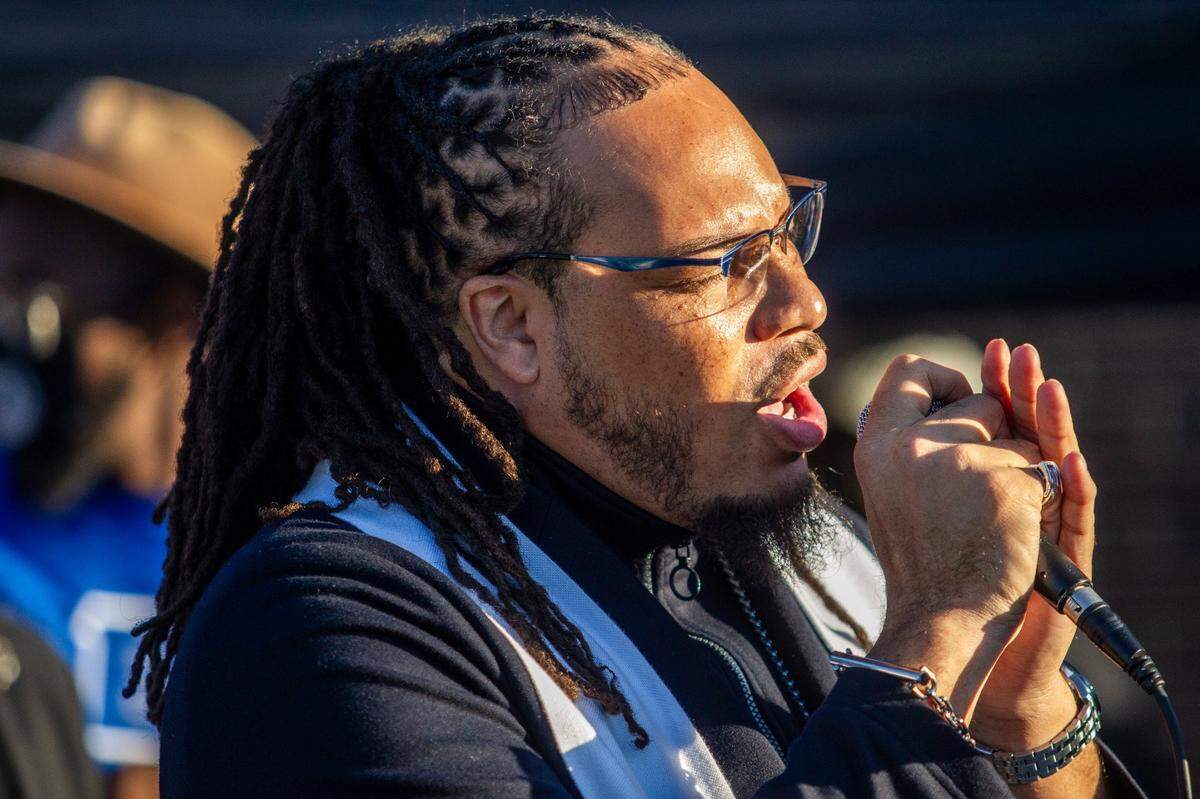
Leader of protests
The Greensboro-based pastor, who spent much of the past year-and-a-half traveling from one Black Lives Matter protest to another, has been the talk of the town for months in Graham, the seat of Alamance County.
The politically conservative area sandwiched between the Triangle and the Triad has a long dark history of racial violence that local Black activists sought to bring wider attention to after a Minneapolis police officer murdered George Floyd, setting off a vigorous national debate about race and policing.
As The News & Observer and ProPublica detailed in a joint investigation in May, an aggressive response by local law enforcement and self-appointed defenders of the local Confederate monument helped spawn one of the most persistent protest movements in the country.
Drumwright, who grew up in Alamance, led some of its most high-profile events. He organized the march to the polls on Oct. 31, to coincide with the last day that North Carolinians could register to vote in the 2020 election.
But few of the 200 or so participants made it to the polling station that was their intended destination. Graham police and sheriff’s deputies repeatedly deployed pepper spray on the crowd, which included octogenarians as well as toddlers.
Law enforcement officials have said their use of pepper spray and pepper fog was prompted by unpermitted loitering in the street and Drumwright’s use of a gas-powered generator on the grounds of the historic courthouse. A move by sheriff’s deputies to seize the generator set off a confrontation that left one deputy injured.
Much of the testimony in Drumwright’s trial centered on the county’s facility use rules, the permit process and haggling among the pastor, his attorneys, city police and the sheriff’s department.
On the stand, Drumwright said he did not make the mark on the paperwork that seemed to signal he agreed to the sound amplification terms set by the county.
His legal team for the trial included defense attorneys from Greensboro and Chicago as well as legal celebrity Ben Crump.
Harrison, the prosecutor, said Drumwright had been given numerous warnings during the protest on Oct. 31.
“I don’t want to go too much into the weeds about the generator, the permit, the facility use policy,” Harrison said, “but I will say the defendant was given multiple warnings, multiple copies in multiple ways of what he was allowed to do and what he was not allowed to do.”
In the months between Oct. 31 and Drumwright’s trial, authorities branded him an “outside agitator” and “danger to the community.” Prosecutors tacked on felony charges that they later decided against pursuing.
Drumwright’s attorneys said the charges were retaliation for a federal civil rights lawsuit that also stemmed from the day’s events.
Several other activists arrested on Oct. 31 were tried, and some have appealed their convictions.
A second civil rights lawsuit was settled.