Don’t try to deal with mental health issues alone. Here’s where you can get help in NC
READ MORE
Confronting a campus crisis
The deaths of five NC State students sound the alarm for mental health care and suicide prevention. Is the university doing enough?
Expand All
Mental health resources — especially amid the pandemic, and even more so on college campuses — have been limited.
Here’s a list for anyone who needs help.
Find resources for immediate help below, and scroll down to find resources for specific people groups in and around the Triangle.
For immediate help during a mental health crisis
Mental Health America compiled a list of resources for immediate help:
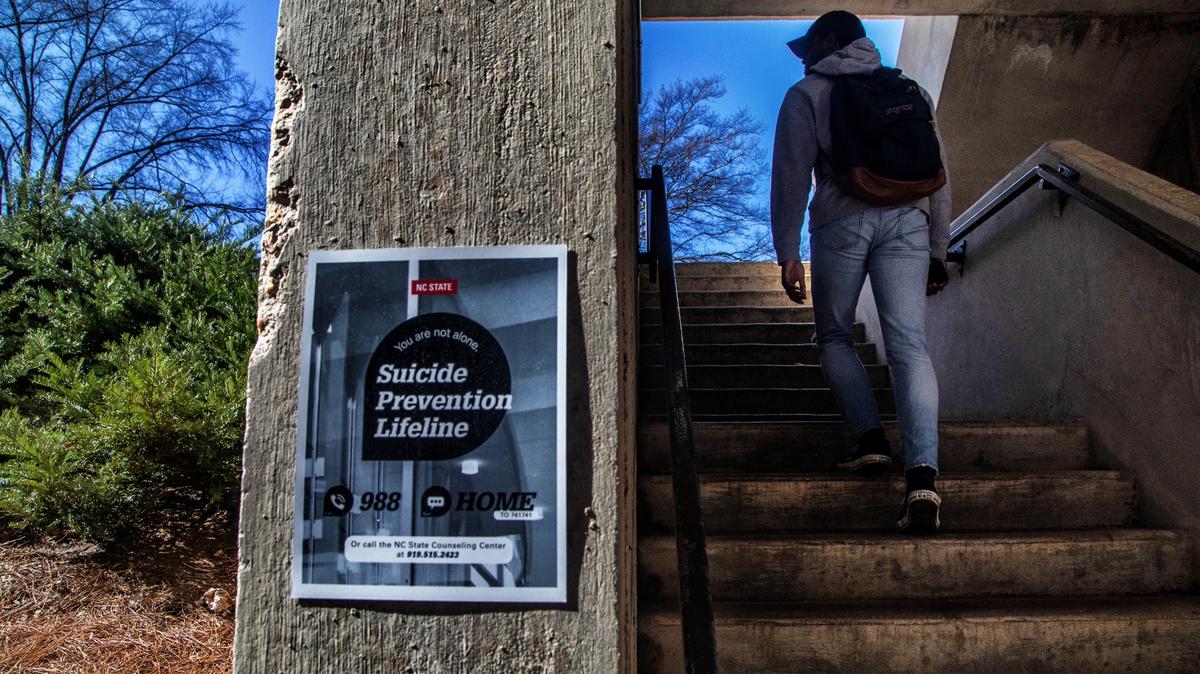
National Suicide Prevention Lifeline: Call 988. As of July 16, the new three-digit number will be available for calls and texting for those in distress. The old number, 800-273-8255, still works. The National Suicide Prevention Lifeline is a national network of local crisis centers that provides free and confidential emotional support to people in suicidal crisis or emotional distress 24/7. (More: suicidepreventionlifeline.org)
Disaster Distress Helpline: The national Disaster Distress Helpline is available for anyone experiencing emotional distress related to natural or human-caused disasters. Call or text 800-985-5990 to be connected to a trained, caring counselor 24/7. (More: samhsa.gov/find-help/disaster-distress-helpline)
Crisis Text Line: Text “MHA” to 741741 and you’ll be connected to a trained Crisis Counselor. Crisis Text Line provides free, text-based support 24/7. (More: crisistextline.org)
The Trevor Project: Call 866-488-7386 or text “START” to 678678. A national 24/7, toll-free confidential suicide hotline for LGBTQ youth. (More: thetrevorproject.org)
Trans Lifeline: 877-565-8860. Trans Lifeline’s Hotline is a peer support service run by trans people, for trans and questioning callers. (More: translifeline.org/hotline)
Dial 2-1-1: If you need assistance finding food, paying for housing bills, accessing free childcare or other essential services, visit 211.org or dial 211 to speak to someone who can help. Run by the United Way. (More: www.211.org)
National Domestic Violence Hotline: For any victims and survivors who need support, call 800-799-7233. If you’re unable to speak safely, you can log onto thehotline.org or text “LOVEIS” to 22522. (More: www.thehotline.org)
StrongHearts Native Helpline: Call 844-762-8483. The StrongHearts Native Helpline is a confidential and anonymous culturally appropriate domestic violence and dating violence helpline for Native Americans, available every day from 8 a.m. to 11 p.m. EST. (More: strongheartshelpline.org)
The National Sexual Assault Telephone Hotline: Call 800-656-HOPE (4673) to be connected with a trained staff member from a sexual assault service provider in your area. (More: rainn.org/about-national-sexual-assault-telephone-hotline)
Caregiver Help Desk: Contact Caregiver Action Network’s Care Support Team by dialing 855-227-3640. Staffed by caregiving experts, the Help Desk helps you find the right information you need to help you navigate your complex caregiving challenges. Caregiving experts are available 8 a.m. to 7 p.m. EST. (More: caregiveraction.org)
The Partnership for Drug-free Kids Helpline: Call 855-378-4373 if you are having difficulty accessing support for your family, or if a loved one struggling with addiction faces care or treatment challenges resulting from COVID-19 circumstances. Support is available in English and Spanish from 9 a.m. to midnight EST on weekdays and from noon to 5 p.m. on weekends. (More: drugfree.org/get-support)
Physician Support Line: The Physician Support Line is available at 888-409-0141 every day from 8 a.m. to 1 p.m. EST. (More: physiciansupportline.com)(Source:
(Source: mhanational.org/crisisresources)
Get help for anyone in need
Alliance Health: 800-510-9132. Alliance Health is for North Carolinians who have Medicaid or are uninsured. (More: alliancehealthplan.org)
Cardinal Innovations Healthcare: 800-939-5911 (More: cardinalinnovations.org)
Daymark Recovery: 919-663-2955 (More: daymarkrecovery.org)
Duke Hospice Unicorn Bereavement Center: 919-620-3853 (More: dukehealth.org)
Faith Connections on Mental Illness: This interfaith, Triangle-based group offers mental health services. (More: faithconnectionsonmentalillness.org)
Holly Hill Hospital: 919-250-7000 (More: hollyhillhospital.com)
MindPath Care Centers: 877-876-3783 (More: mindpathcare.com/north-carolina)
NAMI NC: 800-451-9682. NAMI NC provides free support groups and educational classes for those living with mental health issues and/or has a loved one that is. (More: naminc.org)
Peak Professional Group: Call or text 984-208-2565. Spanish speakers can call (919) 412-5685. (More: peakprofessionalgroup.com)
Resiliency Collaborative: 919-307-6183 (More: resiliencycollaborative.org)
SouthLight: 919-787-6131. SouthLight offers mental health services to those who have Medicaid, Medicare or are uninsured. (More: southlight.org)
The ART Counseling: 919-741-3160. This group offers therapy through art, dance, meditation/yoga and music, among other therapeutic services. (More: theartcounseling.com)
Triangle Counseling Agency: 919-277-0253 (More: trianglecounselingagency.org)
Triangle SOS: 919-946-0112. This organization supports those who’ve experienced the loss of a loved one by suicide. Support groups are offered in Raleigh, Wake Forest and Chapel Hill. (More: www.trianglesos.org)
Triangle Springs: 919-372-4408 (More: trianglesprings.com)
And Open Counseling has a long list of mental health service providers in North Carolina on its website. (More: opencounseling.com/public-mental-health-nc)
Help for LGBTQ+ people
LGBTQ Center of Durham: 919-827-1436. This group has a list of mental health resources on its website. (More: lgbtqcenterofdurham.org)
LGBT Center of Raleigh: 919-832-4484. This group has a list of LGBT-affirming therapists in the Triangle on its website. (More: lgbtcenterofraleigh.com)
Project Uplift. This group serves LGBTQ+ and gender non-conforming people between the ages of 18 and 35. (More: sites.duke.edu/projectuplift)
Help for people of color
El Futuro: 919-688-7101 ext. 600. This nonprofit outpatient clinic provides mental health services for Latino families in a bilingual environment. (More: elfuturo-nc.org)
Kiran Inc.: 877-625-4726. This group helps South Asian victims of domestic violence. (More: kiraninc.org)
NAMI Wake County has a list of resources for specific communities on its website. (More: nami-wake.org)
Radical Healing: 919-238-1120. The healing and wellness campus is in Durham. (More: radicalhealing.us)
Help for children, teens and families
A New Life Service: 919-877-6101 (More: anlstherapy.com)
HopeLine: 919-231-4525. The crisis line is available 24/7. (More: hopeline-nc.org)
KidSCope Outreach Services: 919-358-3585. This service is available for children between 0 and 5 years old, and there are bilingual offerings. (More: fcrinc.org/portfolio-items/kidscope-early-intervention)
Pinnacle Family Services: 919-790-8580 (More: pinnaclefamilyservices.com)
SAFEchild: 919-743-6140 (More: safechildnc.org)
Help for people with disabilities
Monarch: 866-272-7826. Monarch provides support for North Carolinians with developmental and intellectual disabilities, mental illness and substance abuse disorders. (More: monarchnc.org)
NC Start: 800-662-1779 ext. 8730. This program provides service to North Carolinians with intellectual and developmental disabilities. (More: rhahealthservices.org/nc-start)
Help for people experiencing homelessness
CAARE: The Healing Center: 919-683-5300 (More: durham.nc.networkofcare.org)
Healing Transitions: 919-838-9800. Healing Transitions has separate campuses for men and women, and there is a list of housing and mutual aid resources on its website. (More: healing-transitions.org)
Oak City Cares: 984-344-9599 (More: oakcitycares.org)
The Women’s Center: 919-829-3711. This is a crisis and assessment center for women experiencing homelessness in and around the Triangle. (More: wcwc.org)
This story was originally published October 11, 2021 at 3:15 PM.