Hundreds at Raleigh pow wow honor ‘living and thriving’ Native American culture in NC
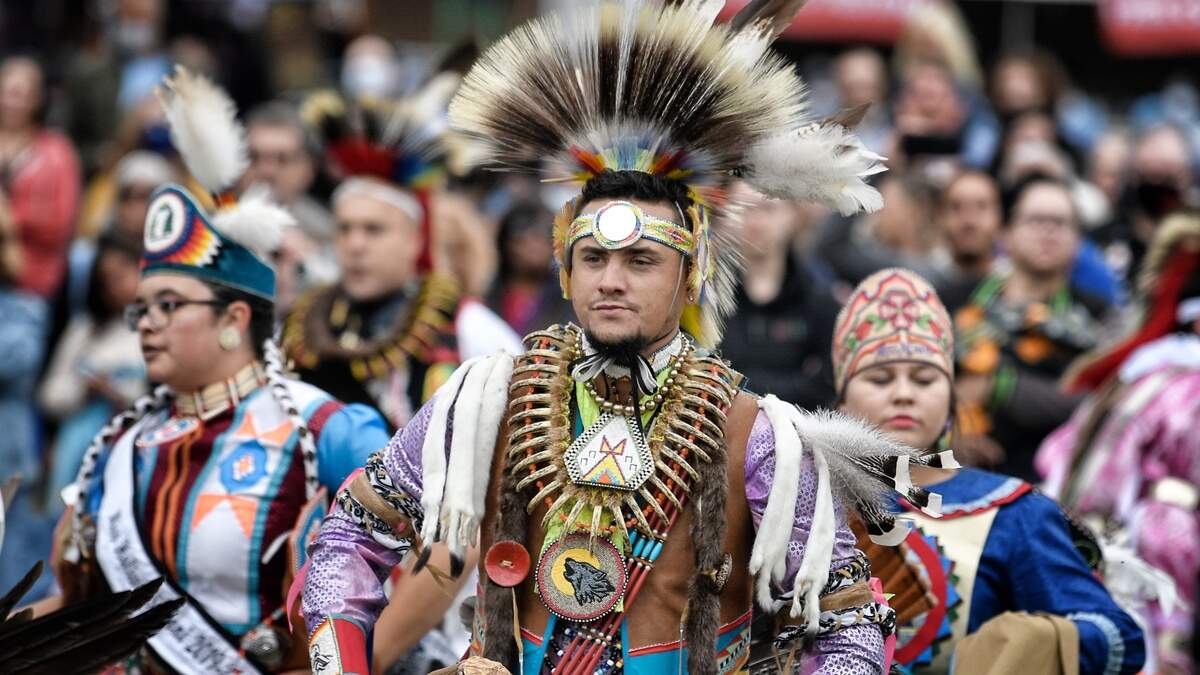
Drums, chants and songs with Native Americans wearing their full pow wow dancing regalia sent the loud message Saturday that the community is alive and well in Raleigh and North Carolina.
Hundreds of people gathered at the Dix Park Inter-Tribal Pow Wow for a daylong series of dance competitions, music, food and vendors. It was the first pow wow sponsored by the city of Raleigh.
“I hope that every Native person, young and old, walks away today feeling seen,’ Trey Roberts, manager of community engagement for the Dix Park Conservancy and a member of the Haliwa-Saponi tribe, told the crowd. “I just want to say that you’re not invisible, and I want to say to the non-Natives here that we’re still here and it’s a living and thriving culture.”
Saturday’s event marks an effort to raise awareness that North Carolina has the nation’s largest Native American population east of the Mississippi River.
North Carolina has eight recognized tribes across: the Coharie, the Eastern Band of Cherokee Indians, the Haliwa-Saponi, the Lumbee Tribe of North Carolina, the Meherrin, the Sappony, the Occaneechi Band of the Saponi Nation and the Waccamaw Siouan.
But of those eight, only the Cherokee have full federal recognition. The Lumbee have unsuccessfully tried for years to get federal recognition.
Raleigh backs pow wow
Some Native Americans say they feel their presence may be overlooked.
Before moving to Raleigh, Jacob Moore grew up in Hallsboro in Columbus County as a member of the Waccamaw Siouan tribe. He came to the pow wow Saturday with his wife and 6-year-old daughter.
“Raleigh is a bigger city and there’s a lot of times where you feel like you may be the only Native American in your neighborhood, or in the community, which is something that I worry about with her,” Moore said of his daughter.
“Having an understanding of where I grew up and my heritage, trying to make sure that my daughter gets some of that exposure is important so it’s really special to have the backing of the city.”
Inter-tribal pow wows have been held in rural areas across the state and at Triangle universities. But the state’s tribes hope that Saturday’s event at such a highly visible place as Dix Park will bring a new awareness of the state’s native culture.
The City of Raleigh threw its financial backing behind the event. Raleigh Mayor Mary-Ann Baldwin read a proclamation Saturday from the city designating November as Native American Heritage Month.
North Carolina Gov. Roy Cooper has also designated November as Native American Heritage Month.
In addition, more groups have begun marking the second Monday in October as Indigenous Peoples’ Day instead of Columbus Day. The Wake County school system made Indigenous Peoples’ Day a teacher workday this year for most schools so that students could have the day off to honor Native American peoples and their culture and history.
Pow wows return after COVID
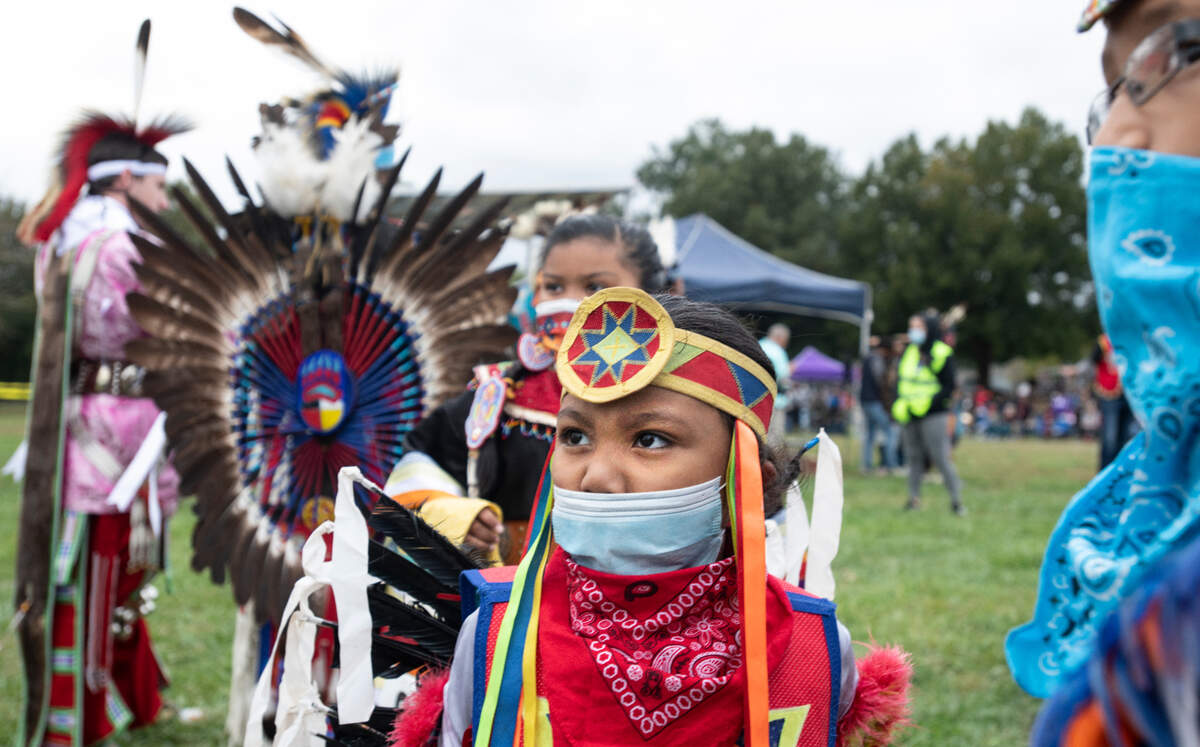
The pow wow was a special event for the Native American dancers, especially after COVID led to many gatherings being canceled.
James Eaglestar, a member of the Dakota Sioux people now living in Cherokee in western North Carolina, said his family used to attend pow wows 30 weekends a year. Saturday’s event in Raleigh was only the second of the year for them.
“We thought that as a family it would be nice to come out here to go out and dance and get that spiritual feeling that we’ve been missing for a year and half,” Eaglestar said.
Johnny Postoak came from Cherokee to dance with his three daughters, ranging in age from 13 to 2. Postoak, a member of the Eastern Band of Cherokee Indians, said it’s important to carry on the family legacy.
“I’ve always done it since I was little,” Postoak said.
With COVID becoming less of an issue, the family will be dancing at a pow wow next weekend in Florida.
“This is what we do throughout the summer as long as we can,” said Amy Postoak, Johnny’s wife.
The pow wow also drew many people who were not Native Americans such as Brian Drumm of Raleigh. He said the family came to introduce their three young children to Native American culture.
“It’s a new experience,” Drumm said. “They can get a feel for everything so they can be more cultured themselves.”
This story was originally published October 30, 2021 at 2:32 PM.