Omicron changes the timing for COVID tests. What to know before holiday gatherings
Many of us mixed households for Thanksgiving gatherings after ensuring our guests were vaccinated — or at least that they received a negative COVID test a few days before the event.
But the emergence of the omicron variant in North Carolina may mean a different strategy for those relying on tests to keep friends and family safe at Christmas.
We talked to a local health expert about how omicron has changed the way we need to test — but they stress that vaccines (and boosters) remain the best way to avoid serious illness and death from the coronavirus, including the omicron variant.
Here’s what to know about COVID testing and holiday gatherings.
NOTE: Be aware that trying to get a traditional COVID test right before holidays might be a little more difficult, due to higher demand. Plan ahead so that you can get an appointment. Wake County, for example, has required appointments for testing for the past few weeks, so more sites in our community have shifted from walk-ins to appointments.
COVID tests are for detection, not prevention
While testing before gatherings can help, especially when gatherings include a mix of vaccinated and unvaccinated attendees, experts warn against relying too heavily on testing.
Health officials stress that getting vaccinated is the best way to keep your family, friends and neighbors safe and protected.
“Testing is a strategy for early detection of new cases, but is not a personal prevention strategy,” Dr. Emily Sickbert-Bennett, the director of UNC Medical Center Infection Prevention, said in a previous report.
“Testing can give false sense of security if individuals mistakenly rely on a previous negative result when they have new symptoms or have had a new high risk exposure since being tested,” she said.
“For vaccinated individuals, it is an extra layer of protection if getting together indoors with a larger group of people than normal,” UNC Family Medicine’s Dr. Amir Barzin said in a previous report.
“When we think of our defense barriers, vaccination and masking are the most important,” Barzin said. “Adding in testing is a helpful add-on safety mechanism to allow for another layer of security, especially in a blended setting.”
Also, keep in mind that the Centers for Disease Control and Prevention strongly cautions against traveling until you are fully vaccinated. (You are fully vaccinated two weeks after the second dose of your Pfizer or Moderna shot, or after your first and only Johnson & Johnson shot.)
62% of eligible North Carolinians have received at least one dose of their COVID vaccine, and 58% of those eligible are fully vaccinated.
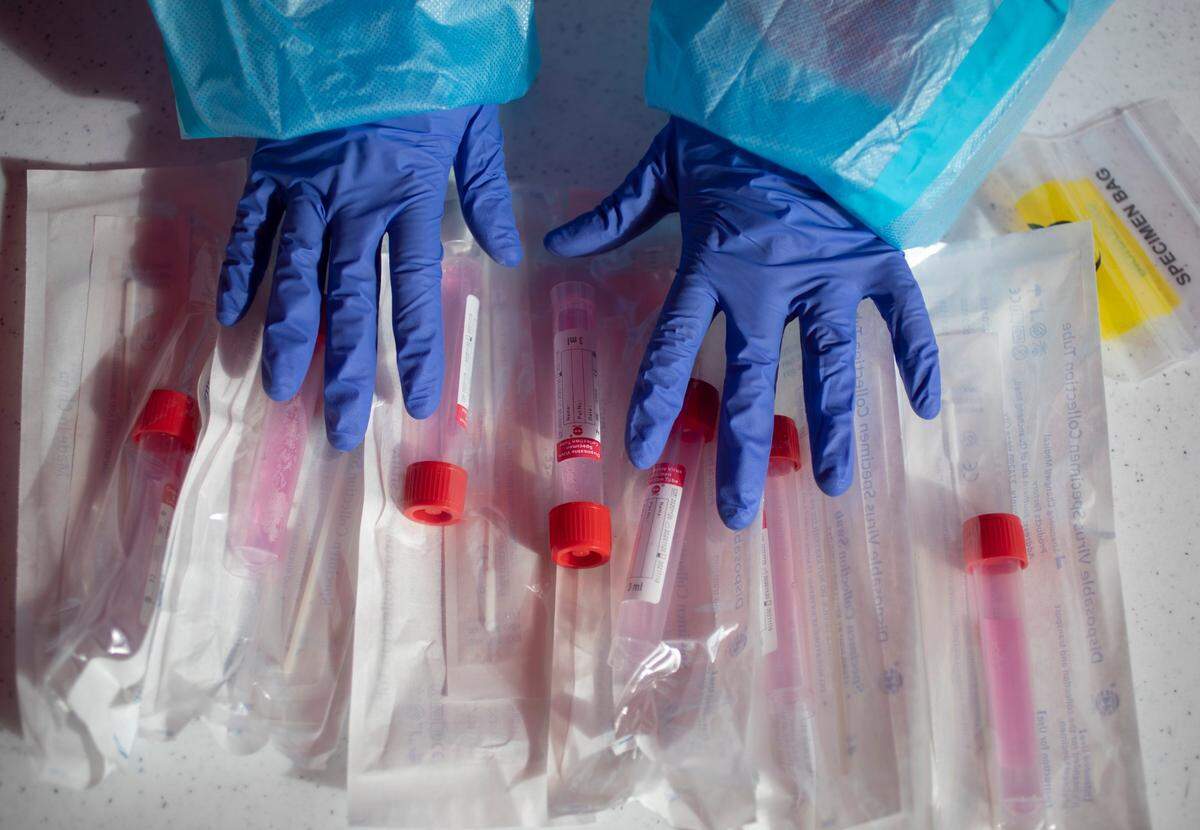
Do COVID tests detect the omicron variant?
Yes, based on the signs so far, per the New York Times.
“Omicron’s spread will put a much greater premium on rapid testing, as will the new oral drugs,” Dr. Robert Wachter of the University of California, San Francisco, told the Times.
But vaccines — and booster shots — are strongly encouraged: “People need to be told to get boosted now and not wait the three to four months for a specific omicron vaccine,” Wachter said.
How should I time a COVID test before a gathering?
The omicron variant can make you infectious more quickly than the delta variant, so experts encourage rapid tests no earlier than a few hours before a gathering, per Yahoo! News.
Dr. David Wohl, from the UNC School of Medicine’s Division of Infectious Diseases, recommends testing twice:
- Three days before gathering: “If you are gathering with others during the holiday and expect to be unmasked indoors with them, I suggest all getting a PCR test at a pharmacy or clinic three days before to give you enough time to get the results back,” he said.
- The day of the gathering: Take a rapid home test.
“These viruses grow fast so testing 1 or 2 days before doesn’t work,” Dr. Michael Mina, an epidemiologist at Harvard and a proponent of rapid testing, Tweeted on Sunday. “It doesn’t matter the type of test, the most important thing is to test just before the event of participation.”
What to know about delta versus omicron
Here’s what you should keep in mind about the delta variant versus the omicron variant, per Wohl:
Delta is still the greatest threat: It is really important that people understand that Delta remains the greatest threat. Being vaccinated and boosted protects people from getting severely ill from both delta and omicron.
Omicron’s threat is still unclear: Omicron will spread but it remains unclear how much of a threat this poses, especially to people who are vaccinated. The data so far suggest that this new variant causes mostly mild disease in people who have had COVID-19 or been vaccinated.
Omicron may make kids sicker: There is increasing concern, though, about kids. Reports from South Africa suggest children there are getting sicker with omicron than they did with delta. It is still early to know for sure, but remember delta also seemed to hit many children hard. This is all the more reason to make sure kids get vaccinated.
Home tests can pick up delta: Right now, the overwhelming majority of COVID-19 infections are due to delta, which the home tests can pick up. As omicron spreads, we will have to see if there are any gaps in the home tests that we are using.
Get your flu shot: Please also do not forget flu shots. Rates of this infection are climbing high and flu can be serious.
What are at-home rapid COVID tests?
Check out The N&O’s full November story about at-home rapid tests. Here are some quick takeaways:
At-home rapid COVID tests:
Can be administered — and give your results — in the comfort of your own home
Tell you if you are actively carrying COVID-19
Give you results in under 20 minutes
Are at-home rapid COVID tests accurate?
“The gold standard for testing is a PCR-based test,” Barzin in a previous report. “With that said, at-home, rapid antigen tests are good tests, especially for those with symptoms.”
Rapid antigen tests are less sensitive than PCR tests, according to the New York Times.
If you take one during the earliest phase of your infection before the virus has widely replicated throughout your body, your test could return a false negative.
Some at-home rapid antigen tests catch infections in roughly 85% of people infected with the virus, missing 15%. In some studies, their real-world performance has been even lower.
Antigen tests are excellent at flagging people who have have a high amount of the virus in their systems — and who are most likely to be actively transmitting it to others, experts told the Times.
Overall, at-home rapid tests are an important tool for public health, even though they have their limitations.
Here are some other points to consider about tests:
▪ At-home rapid tests differ from at-home self-testing kits, as self-testing kits require you to send your sample to a lab for processing.
▪ The rapid kit lets you process at home and get results in minutes.
▪ The U.S. Food and Drug Administration has granted emergency use authorization for molecular and antigen rapid tests. Both of these tests diagnose an active COVID-19 infection, which an antibody test does not do.
Where can I buy an at-home COVID test kit?
Health experts anticipate a higher demand for COVID tests right before and right after the major end-of-year holidays, so in-person tests may become harder to get.
▪ In-store or online? While finding home test kits in stores can be hit or miss, websites like CVS, Walmart and Walgreens seem to have them in stock.
▪ Buy early. Try to get them prior to big holidays — a day-of search will probably be unsuccessful.
New York Times health columnist Tara Parker-Pope recommends searching by brand name: “If a store is sold out of a rapid test, the website may direct you to a different type of test, called a home collection test, that requires you to mail the sample to get the result. But hold out until you find a rapid test.”
How much do at-home rapid COVID tests cost?
A two-pack of rapid tests on Amazon ranges from $23.99 for the Quidel QuickVue to $34.99 for the On/Go test (or Access Bio’s CareStart test), MedPage Today wrote.
Prices for rapid tests start at $23.99 on the websites for CVS, Walgreens, and Rite Aid.
Many health officials believe these prices are too high.
“Paying $25 for a box of two tests is ridiculous,” Dr. Carlos del Rio of Atlanta’s Emory University told MedPage Today. “Frankly, it’s a travesty that in the middle of a pandemic we have such poor access to rapid testing. ... They should cost $5 for two tests.”
Instead of paying for the tests, Barzin recommends going to the NCDHH’s website: “There are many free testing events, and some with rapid antigen tests.” Just remember to plan ahead and be prepared to make an appointment.
When should I take a COVID test?
▪ Unvaccinated people should get tested immediately after finding out they’ve had close contact with someone infected. If this test is negative, the CDC recommends a second test five to seven days later.
▪ If you are vaccinated, you should wait five to seven days before getting tested if you think you’ve been in contact with virus carriers. Get tested immediately if you develop symptoms.
Testing is most effective if you experience symptoms — like a cough, fever, chills or shortness of breath — or have had high-risk exposure, Sickbert-Bennett said.
▪ Test twice: Tests are often sold in two-packs, as the CDC recommends that you perform a second test on yourself a few days after performing the first one. This can help avoid initial false negative or false positive results.
“The FDA wants to remind patients that all tests can experience false negative and false positive results,” an FDA press release says.
“Individuals with positive results should self-isolate and seek additional care from their health care provider. Individuals who test negative and experience COVID-like symptoms should follow up with their health care provider as negative results do not rule out a COVID-19 infection.”
What if you think your rapid COVID test results are incorrect?
When in doubt, take a different kind of test.
Mina told the New York Times that when you have reason to doubt a positive result, you should take another test through a different manufacturer,
You can be confident if the second test’s result is negative, he said.
This story was originally published December 15, 2021 at 7:55 AM.