Omicron variant is just one reason that Triangle hospitals are expecting a hard winter
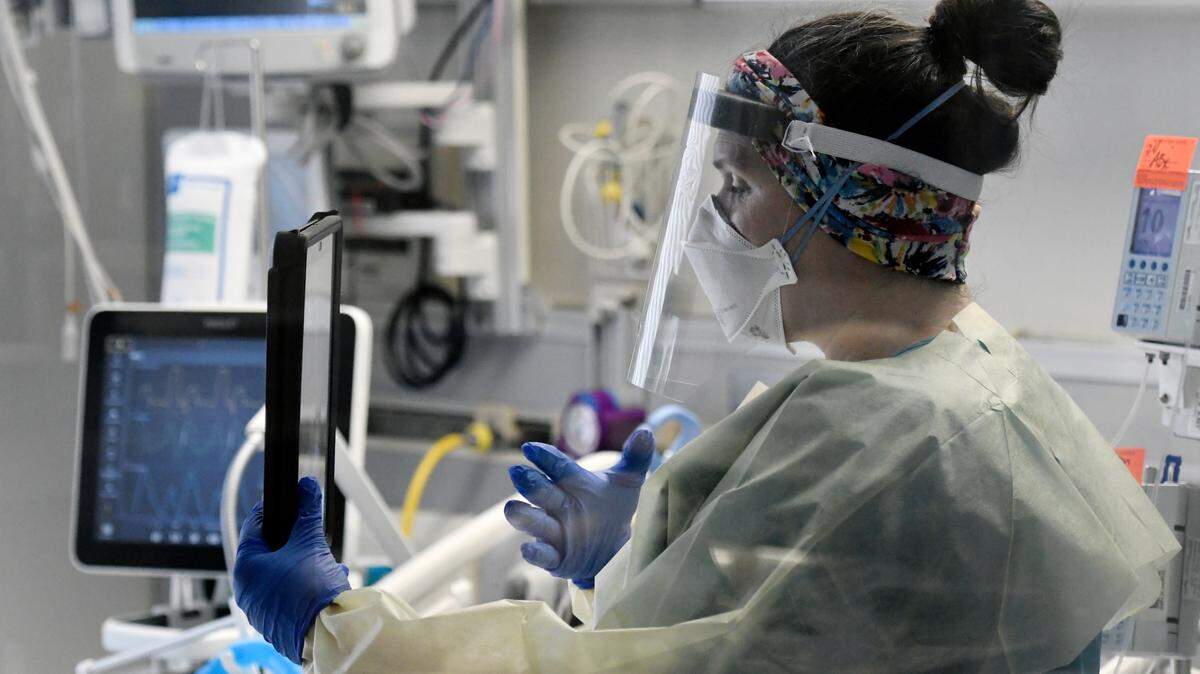
Hospitals in the Triangle are bracing for a surge in COVID-19 patients after the holidays regardless of what the emerging omicron variant of the virus may bring.
Omicron, which is proving even more contagious than the delta variant that fueled last summer’s spike in cases, could make things worse.
Statewide, the number of people hospitalized with COVID-19 has risen more than 55% since mid-November, to 1,630 on Monday. Doctors refer to this as a post-Thanksgiving surge, as people traveled and gathered for the holiday and passed the virus to one another.
They expect the same will happen after Christmas and New Year’s.
“We understand the human need to be together, particularly at the holidays,” said Dr. Lisa Pickett, chief medical officer at Duke University Hospital in Durham. “But they’re being with people that they don’t live with, that they haven’t been with recently. And the normal things are to share food together, which is a high-risk activity for virus transmission. And it’s colder, so it’s harder to do those things outside.”
Duke University Hospital had 40 COVID patients on Monday, double the number it had in early November. The vast majority of those patients were unvaccinated, as are nearly all of the sickest patients who need intensive care, Pickett said.
Other hospitals see the same pattern.
“We maybe have 10% to 15% who are vaccinated,” said Dr. David Kirk, a pulmonologist and critical care specialist at WakeMed in Raleigh. “This is largely a surge of unvaccinated folks who are coming in, which is consistent with previous delta surges.”
About 42% of North Carolina’s 10.7 million residents are not fully vaccinated against COVID-19, according to the state Department of Health and Human Services.
The omicron variant is just beginning to show up in North Carolina. Durham County reported its first cases Monday, and none have been confirmed in Wake yet.
But public health officials say omicron is expected to quickly become the dominant strain of the virus in the United States, as it has in places such as South Africa and the United Kingdom. They say it also appears to cause less severe illness than previous strains of the virus.
Kirk said doctors in the U.S. are looking to other countries like the U.K. to see what impact that combination has on hospitals.
“What happens when you have a very contagious, a very transmissible, disease, but that disease is less severe?” he said. “If you infect many, many more people, even if the severity is less, if you take a fraction of a huge number, those numbers still could be overwhelming.”
Flu is back in NC this winter
Compounding the uncertainty this winter is the return of the flu. Last winter, as COVID-19 cases reached their peak after the holidays, very few people were getting the flu, as masks and social distancing prevented the spread of the influenza virus.
This year, many people have relaxed those precautions, either because they’re simply tired of them or are confident in the COVID-19 vaccines. More people are getting the flu now than at any time since the coronavirus pandemic began in March 2020, according to NCDHHS, and hospitals are beginning to admit patients with severe cases.
“So we’re starting to plan for kind of that twindemic situation where even if COVID is mild and flu is mild, the combination of the two may be pretty painful,” Kirk said.
Hospitals are preparing for the expected spike in COVID-19 patients. They’re making sure they have enough N95 masks and other personal protective equipment and making plans to once again convert units or entire floors to COVID wards.
But the biggest challenge will be staffing, as it was during last summer’s spike in cases. The nationwide shortage of nurses, respiratory therapists and other health care workers hasn’t gone away, said Dr. Linda Butler, the chief medical officer at UNC Rex hospital in Raleigh, where the number of COVID patients has tripled since Thanksgiving.
Nurses, other hospital workers are tired
While COVID-19 hospitalizations have waxed and waned over the past two years, hospital workers have never really had a break, Butler said. When COVID recedes, hospitals get busy treating patients whose care was postponed by the pandemic, she said.
“And as you delay care, people get sicker,” she said. “So in general, we have more patients in the hospital than we’ve ever had before. We’ve opened up every bed that we can open up. People are working extra shifts; they’re tired.”
Kirk said he, too, worries about how hospital workers will hold up under another wave of COVID-19.
“Everybody’s just exhausted,” he said. “Nurses and doctors that were willing to work extra shifts before, it’s just very hard for them to have the mental and physical energy to continue to do it again. So until we ask them, it’s hard to know how much they have left in the tank. That’s my real concern.”
Almost any conversation with a doctor or nurse who treats COVID patients includes a plea to the public to get vaccinated.
Early studies have found that two doses plus a booster shot of the Pfizer-BioNTech and Moderna vaccines are effective at neutralizing the omicron variant and preventing severe illness. But even two shots are better than none, and may be the difference between a mild case and one that lands you in the hospital, Pickett said.
“To think that the numbers are heading back up and to see these statistics that the people coming in are unvaccinated, we just wish that they had been vaccinated and we could have kept them healthy,” she said. “It’s very hard. It’s very sad.”