The ‘silver lining’ of omicron: More hospital patients but fewer in intensive care
If there’s good news in the latest surge of COVID-19 cases in North Carolina, it’s that the widespread omicron variant of the virus doesn’t seem to make people as sick.
That’s playing out in the state’s hospitals, where fewer COVID-19 patients are needing intensive care or help breathing with a ventilator.
COVID-19 hospitalizations have soared in recent weeks, from fewer than 1,100 statewide in mid November to 3,099 on Wednesday, according to the state Department of Health and Human Services. But only about 20% of those patients were in an intensive care unit, down from nearly a third in late October.
The portion of COVID-19 patients needing a ventilator has dropped, too, from 24% in late October to 13% now.
“We are seeing less acuity, less severity, even among the people who do end up hospitalized,” said Dr. David Wohl, an infectious disease specialist at UNC Medical Center in Chapel Hill. “This is the silver lining of omicron. It’s spreading widely; many people are getting infected, but mildly to moderately.”
The UNC Medical Center tends to get some of the sickest COVID-19 patients, many transferred in from smaller hospitals, Wohl noted. But of the just over 100 COVID-19 patients at the medical center Wednesday, only 17 were in the ICU.
“And of the people who are not in the ICU, some of them don’t even have symptoms,” he said. “They just tested positive.”
Because hospitals routinely test patients for the coronavirus, they have always found some infections among people who arrive for other reasons. But with omicron spreading so quickly, often without making people sick, hospitals are discovering more asymptomatic COVID-19 cases, said Dr. Lisa Pickett, chief medical officer at Duke University Hospital in Durham.
“When the community prevalence gets so high, and in particular with this variant that is less severe, people do come in with heart attacks and strokes and trauma and are found to be positive,” Pickett said.
At Pickett’s hospital, 27 of the 112 people with COVID-19 on Wednesday were in the ICU. She noted that a sizable number of the ICU patients were probably sickened with the delta variant, because they arrived before Christmas, when delta still accounted for the majority of cases.
She also noted that more than 90% of COVID patients in the ICU had not been vaccinated, which may point to another reason for the milder impact of the omicron variant. As of Wednesday, 70% of adults and 92% of those 65 and older in North Carolina had at least two doses of the Pfizer-BioNTech or Moderna vaccine or a single dose Johnson & Johnson vaccine, according to DHHS.
‘Omicron is not a wimpy virus’
Other hospitals report a similar pattern, of people who chose not to get vaccinated accounting for the vast majority of severely ill patients. Statewide, more than 87% of ICU patients with COVID-19 are unvaccinated, state Secretary of Health and Human Services Kody Kinsley said Tuesday.
People who are vaccinated and have received a booster shot are “extremely unlikely” to develop a severe case of COVID-19, Wohl said.
“But if you are unvaccinated or under-vaccinated and you have risk factors for COVID-19, you can get very ill,” Wohl said. “People are dying from COVID-19 still. Omicron is not a wimpy virus.”
The portion of patients needing ICU care during the omicron surge could still rise, as some of those newly admitted in recent days get sicker, said Dr. David Kirk, a pulmonologist and critical care specialist at WakeMed in Raleigh.
But the high number of asymptomatic COVID patients suggests the numbers won’t get as bad as during previous surges, Kirk said. At WakeMed on Wednesday, only 35% to 40% of the non-ICU coronavirus patients actually had COVID pneumonia, a significantly smaller portion than in previous waves.
“It’s a very different experience,” Kirk said. “They’re taking care of a lot of COVID-positive patients that are not having COVID pneumonia. They just happen to be COVID positive.”
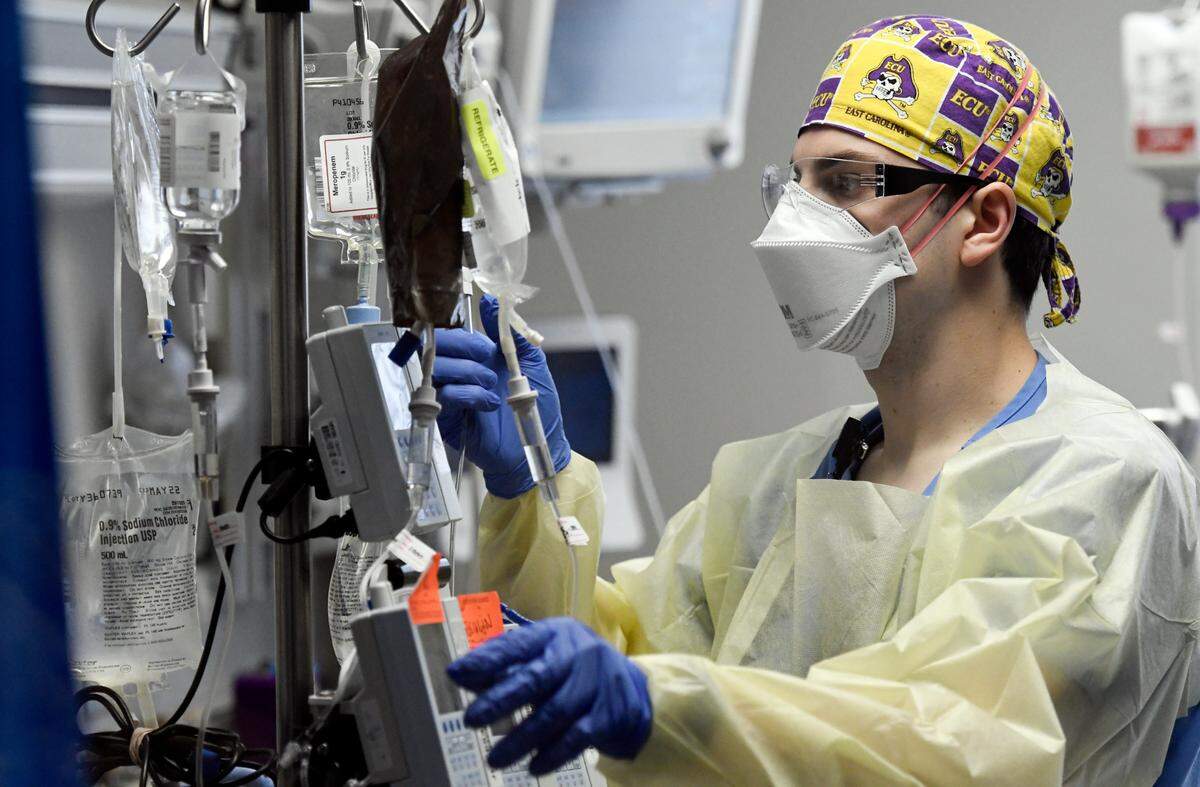
Even if those patients never develop symptoms, hospitals must handle them like any other patient with the highly infectious disease, including isolation and the wearing of masks and other personal protective equipment.
And that creates another challenge for hospitals, Kirk said. Many of the rehabilitation facilities or psychiatric hospitals where WakeMed patients might go after being discharged are not equipped or able to accept people with active COVID infections.
“Just the logistics of getting a COVID-positive person, even if they’re not sick from COVID, are just much more difficult,” he said. “So these incidentally COVID-positive people are certainly slowing down the efficiency of the system.”
Rapid spread of virus depletes hospital staffs
The number of incidentally positive patients is not likely to decline anytime soon. Nearly 32% of coronavirus tests completed statewide Monday were positive, according to DHHS, up from less than 10% before Christmas.
At WakeMed’s hospitals and clinics, Kirk said, one out of every two people tested for the coronavirus are found to be infected, compared to fewer than 20% during the previous surge last summer.
“It’s just crazy how contagious this thing is,” he said.
That rapid spread of the omicron variant creates other problems for hospitals. Just as a growing number of people are testing positive or are exposed to others who do, so are large numbers of hospital workers, who then can’t come to work.
Duke Health has about 800 workers out either because they have COVID-19 or were potentially exposed and are awaiting test results, Pickett said.
“Staffing the beds and making sure that we can do the operations and that we have the right people to take care of people who are sick all the time is a real concern,” she said. “Staffing has been the greatest challenge in the last couple of weeks.”
All sorts of businesses and institutions face a similar problem, Wohl said, but the consequences for hospitals mean people wait longer in emergency rooms or potentially can’t be admitted because there’s not enough workers.
“It really is pulling at the seams of our health care system to have so many people get sick with COVID-19,” he said.