
A love song to Raleigh’s circular Holiday Inn, an oddball ‘pleasure dome’ of the past
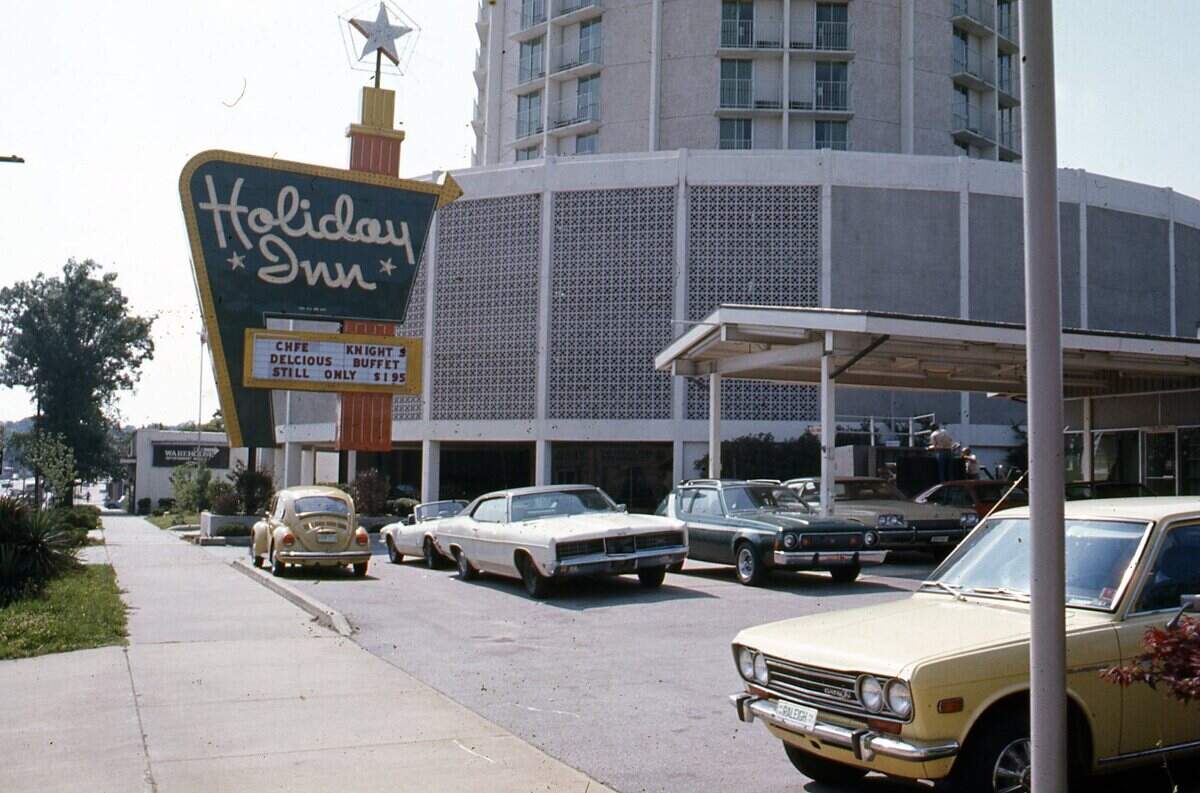
In its day, the Raleigh Holiday Inn on Hillsborough Street boasted a rooftop pool, a 20th-floor lounge and a house piano player nicknamed Will Silver, who wore glittery shirts and sang Howling Wolf songs.
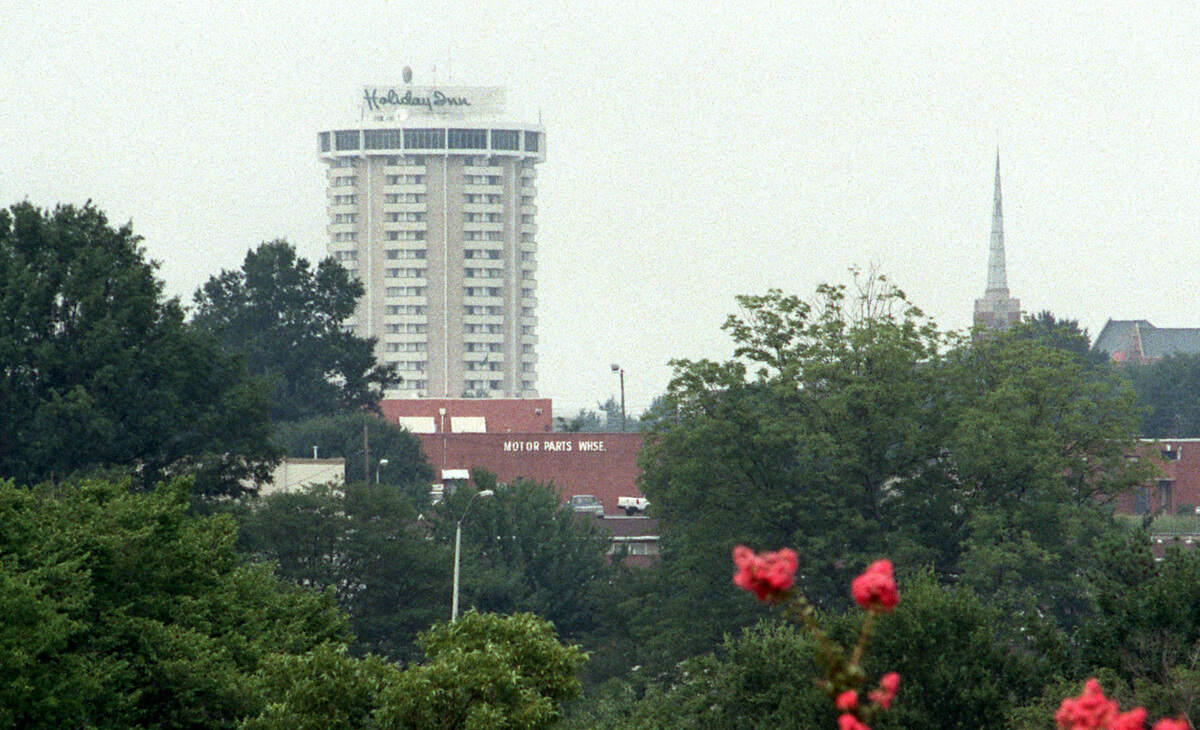
When it opened in 1969, the Holiday Inn topped the list of Raleigh’s tallest buildings — holding its title for eight years.
“The plushest pleasure dome ever decreed here,” raved The News & Observer at the time, gushing over the Maine lobster on its menu, the racing stripes on its white vinyl tile and the “wall-to-wall everything” inside.
But long past its heyday, the Holiday Inn endures with its sore-thumb roundness, a beige cylinder bouncing off its sleek rectangular neighbors. Locals seasoned enough to have seen Southern Culture on the Skids will recall the band played the 20th floor — making it likely fried chicken got thrown there.
Even those who snub it — one architect called it a “dreadful travesty” — nurture a fondness for its out-of place nature. It is the prom jacket Raleigh never threw away.
And now that its last days approach — developers ironically plan to replace the Holiday Inn with a luxury hotel — nostalgia for the oddball cylinder is reaching a new peak. Its likeness already appears on a T-shirt at House of Swank.
“Love it or loathe it, this building sits on Raleigh’s skyline quietly reminding us that things can, and were, done differently,” said Ian Dunn, a state archivist who also sits on the city’s historic preservation commission. “The demolition of this architectural and cultural landmark will not only be a loss to present citizens of Raleigh, but future citizens when they look back on the whimsy Raleigh once had.”
Cylindrical refuge
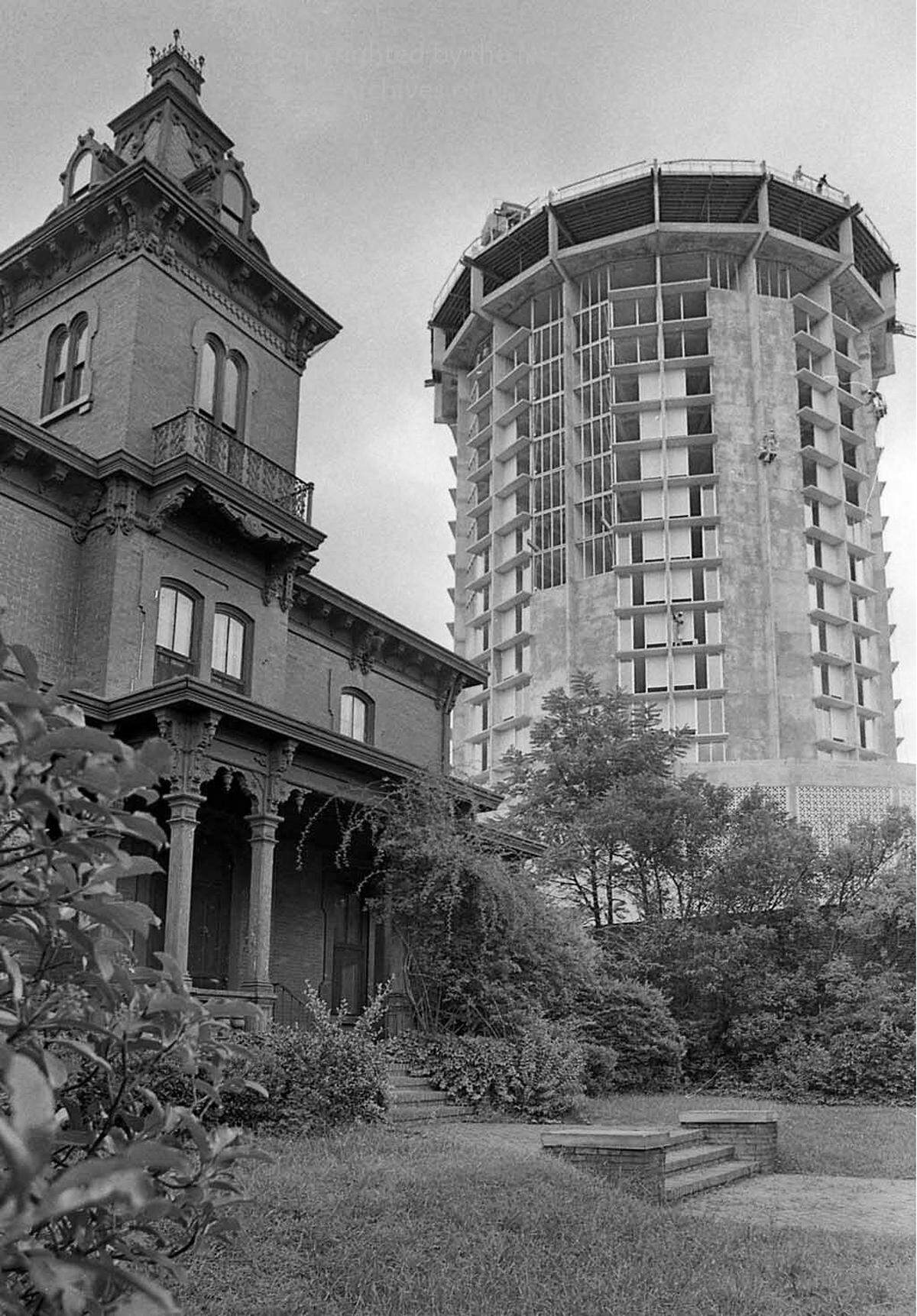
Roughly two dozen round Holiday Inns went up around the nation, some of them with rotating top floors. Though Raleigh’s offered a floor-to-ceiling view uninterrupted by any obstacles, its rooftop stayed put.
And for decades, it provided the backdrop for special days — now being hazily recalled on social media along with news of the hotel’s demise.
Broughton High School graduates reveled inside its rooms, watching the sunrise from the top floor.
Teenagers snuck to the pool, pilfered a Holiday Inn towel and then returned to swim all summer, wrapping their ill-gotten souvenirs around their shoulders to look like guests.
Generations stayed overnight before their first job interviews downtown. And when ice storms struck, Raleigh took cylindrical refuge.
Barbara Buescher recalled her family fleeing there in roughly 2002 when a storm knocked out the power, sneaking in a yapping peekapoo and a pet box turtle.
“Terrified that we’d be discovered,” she said. “Fun times.”
Hundreds more celebrated marriage there, often walking the few blocks from Edenton Street United Methodist Church.
“People waved to us and honked their horns as the 20 or so of us in the bridal party walked over there,” recalled Jennifer Pope Edwards of the day in 1998. “It was just about the only place in town to have a wedding in August. Most places were either outdoors or expensive.”
Gaudy at best
The outpouring of memory comes even as much of Raleigh acknowledges the Holiday Inn looked gaudy at best and tacky in its most honest assessment.
Thomas Barrie, architecture professor at N.C. State University, described it as “moded.”
The Holiday Inn steps back from the street rather than cozying up to the sidewalk with retail windows to catch a pedestrian’s eye — the modern approach.
It stands alongside a parking lot made of dirt, and its circular ramp to parking spaces can be seen from the street, showing that its designers made giant concessions to the automobile.
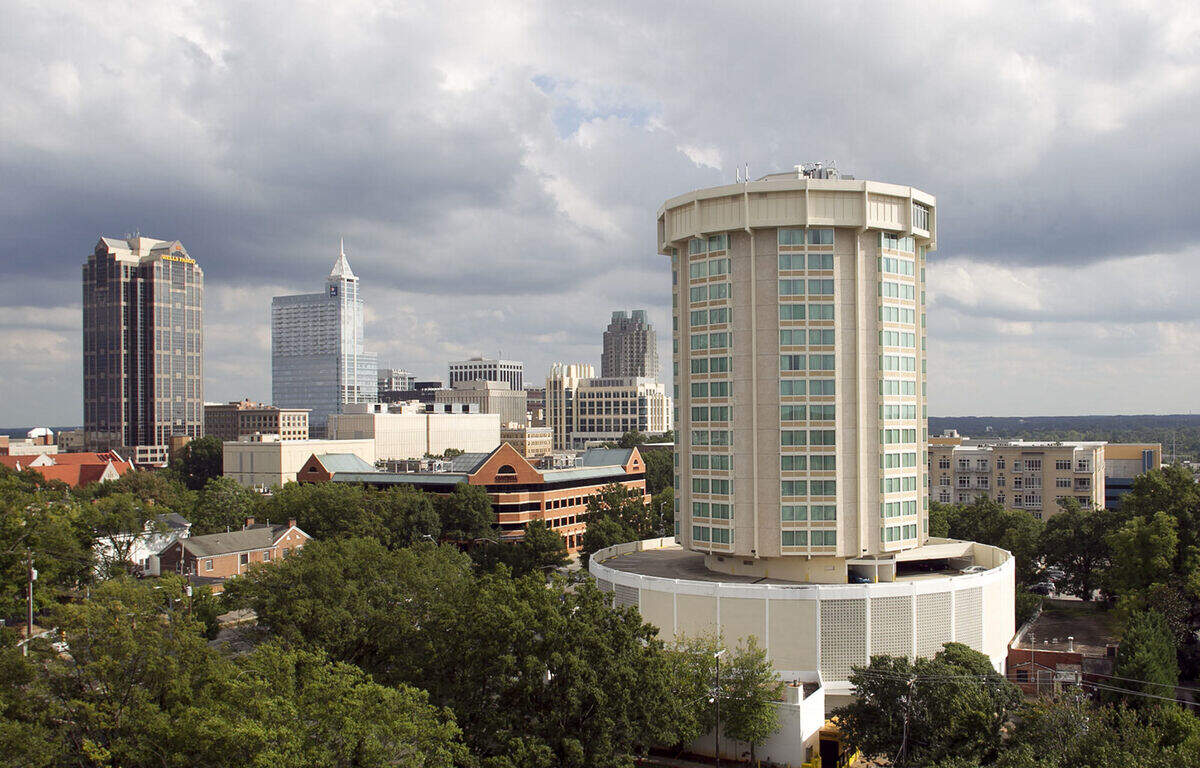
But Hillsborough Street — Raleigh’s main drag before downtown revitalization — has watched a collection of flawed, beloved landmarks fall to the wrecking ball in favor of shinier replacements that seem sterile by comparison because nobody yet loves them.
Sadlack’s. The Velvet Cloak Inn. The Brewery.
Fans of the Holiday Inn shudder to imagine the same luxury considerations taking down Dorton Arena, just as much a relic.
“The Holiday Inn building is iconic in own way in part because it’s a survivor,” Barrie said. “Losing the collective memory that is embodied or materialized in the environment is something we should really be aware of and be careful about.”
Or in other words, when Raleigh memories lack a room to crash in for the night, they just move on, getting smaller as they walk away.
This story was originally published February 17, 2022 at 11:19 AM.