
‘It’s absolutely insane.’ How high is Raleigh’s demand for housing? Watch this video.
With one Facebook posting, Realtor Monique Edwards illustrated Raleigh’s affordable housing problem in jaw-dropping detail.
A line of cars stretching for a block in two directions and dozens of people waiting for a look at a rare opportunity: a house priced under $300,000.
“When we say there is a housing crisis, we really mean it,” said Edwards, the owner/broker at NC Living Realty, panning her phone camera over the crowd in the post. “It’s absolutely insane.”
The video Edwards posted went viral, with over 9,500 shares and over 4,200 comments as of Wednesday evening — and counting.
Edwards wanted her client to see up-close what the market has become.
And when the clock had scarcely struck 5 p.m. Tuesday, they arrived at the house on Lafferty Court — 1,485 square feet listed for $260,000.
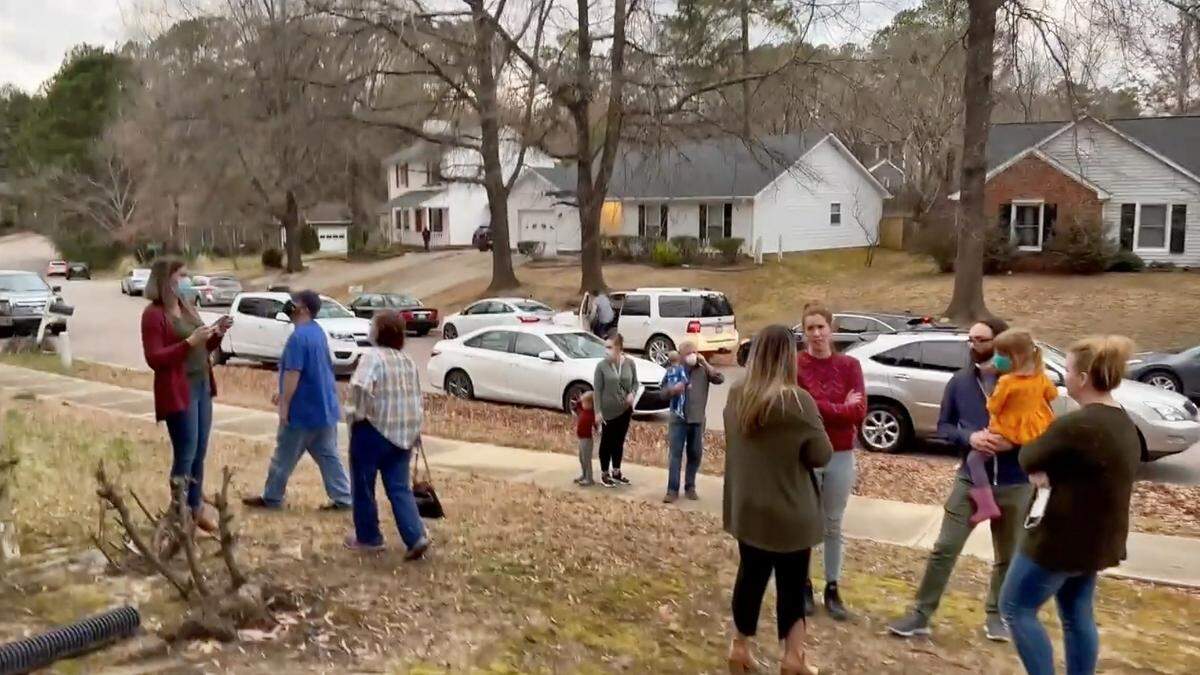
More like a street fair than a home showing
The scene in North Raleigh, not far from U.S. 401 and Interstate 540, looked like a street fair on the Fourth of July more than a home showing.
“I didn’t even show you what was inside the house,” Edwards said. “Sometimes you need to see it for yourself. My biggest concern is how am I going to help these people.”
Raleigh has grown accustomed to houses that size with half-million-dollar price tags close to downtown, but Edwards stressed the scarcity of homes for middle-income families across the region.
Wake County’s median home price recently hit $400,000, and Raleigh qualifies as the third-hottest real estate market in the country, according to Zillow.
Some longtime residents resent how smaller houses inside the I-440 Beltline have vanished, replaced by towering modern houses with impossible price tags.
Two story house with three bedrooms
The Zillow listing on the home Edwards’ client looked at shows three bedrooms and three bathrooms for the two-story house, which sits on a quarter-acre lot inside a cul-de-sac.
But clients new to the market don’t always understand the need to make competitive applications, forgo repairs or — in many cases — agree in advance to pay their offered price when the house’s appraisal falls short.
This house was listed reasonably, Edwards said, and she showed it to her client thinking many potential buyers would be discouraged by the size of the line.
“I wanted to highlight the deficiency we don’t have in the private sector,” she said, “and the private sector is not building it.”
This story was originally published February 23, 2022 at 1:13 PM.