
Pulled from a bathtub, a disabled NC woman dies. Her dad and advocates want answers.
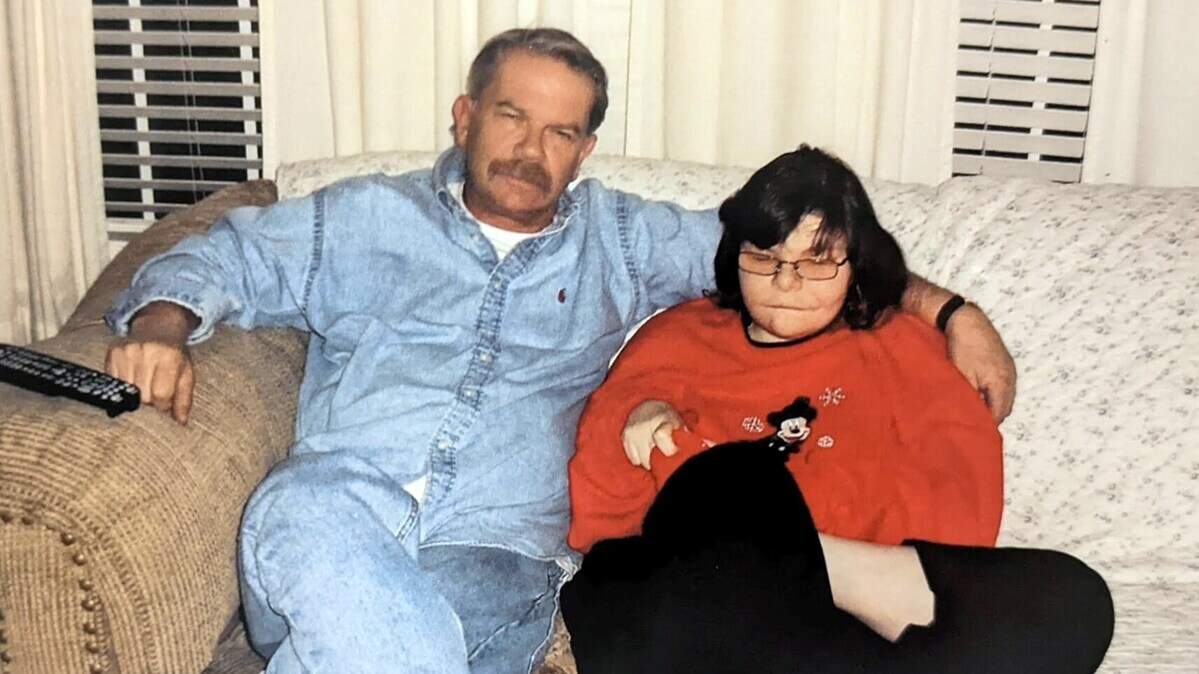
Jessica Price never volunteered to be a public figure. She was born with a genetic abnormality that left her with the mental acuity of a preschool-aged child while an adult.
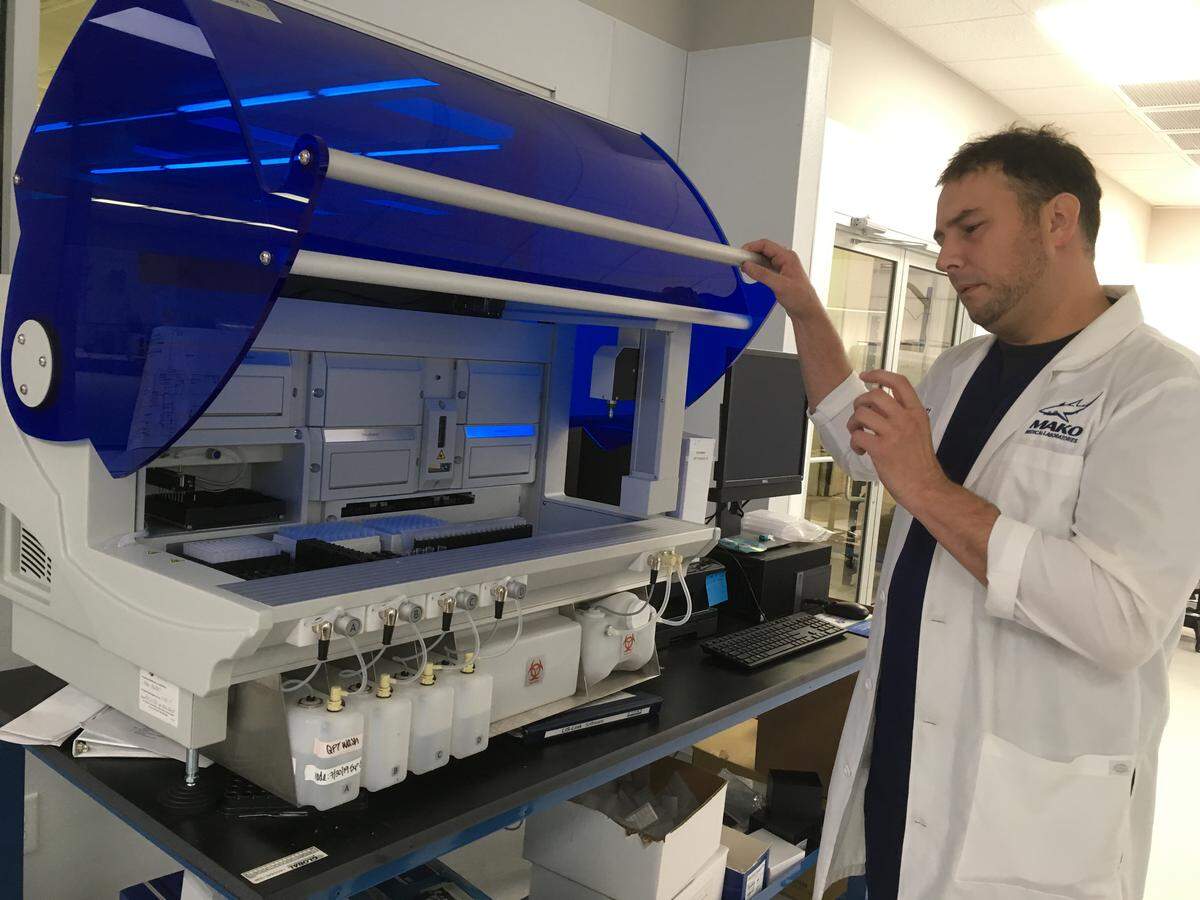
But five years ago, her name began appearing on campaign finance reports showing thousands of dollars in contributions she could not have made. That led her father to file campaign finance complaints against her brother, Mako Medical CEO Chad Price, Jessica’s guardian since 2013.
At age 39, Jessica died Feb. 21 in an East Raleigh townhome, where she was pulled from a bathtub, according to audio from a 911 call. Four months later, state and local agencies are offering scant and sometimes confusing information about how Jessica Price died. An autopsy that may answer some questions hasn’t been released.
People working with advocacy groups for those with developmental disabilities say what is known about Jessica Price’s death raises questions. They and a North Carolina public records law expert say more information should be released. So does Jessica’s father, Larry Price.
“There’s deaths that happen all the time and a lot of information floats out there as far as the circumstances of that death, and then here, it’s like nobody wants to talk about it,” Price said. “What’s the big secret?”
A terrified caller
Jessica Price had long beaten the odds on life expectancy for someone with Trisomy 16, a chromosomal disorder. She needed constant supervision, her father said. But comments to her obituary showed she had a happy-go-lucky personality that touched those who knew her.
Jessica Price lived with her parents most of her life, but Johnston County Clerk of Court Will Crocker named Chad Price her guardian in 2013. Crocker found that Jessica’s mother was too ill to care for her. Larry Price agreed with the change, but later tried and failed to have him and his wife, Susan Price, restored as guardians.
Jessica had become frail from illness in the months before her death, her father said. Photos posted online with her obituary showed she had lost enough weight to appear gaunt.
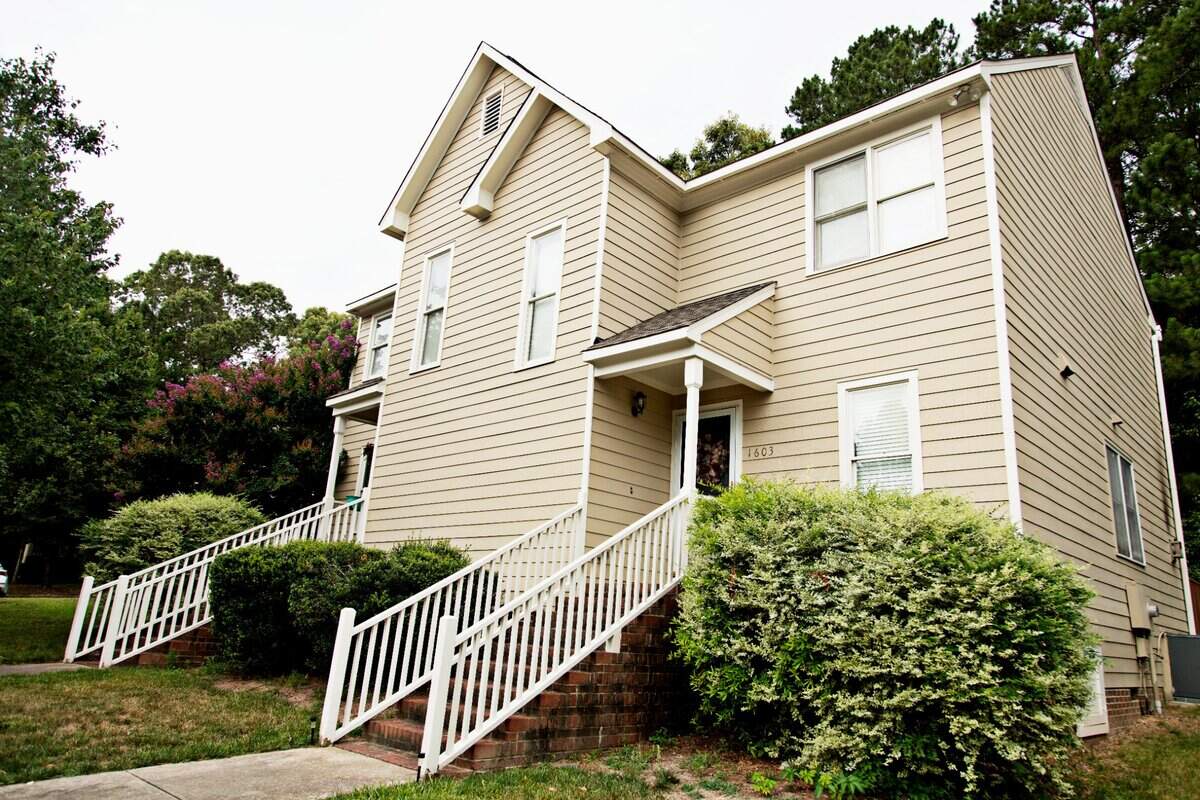
The day Jessica died, she was not at Chad’s home in Apex, but at an East Raleigh townhome he owns, real estate records show. Her death certificate lists it as her residence. A caller to Raleigh’s emergency communications center shortly after 11 a.m. said he had pulled Jessica out of a bathtub after she had fallen asleep. She was not breathing.
“We’ve got a drowning victim. We need you over here immediately,” an unidentified man yelled to a 911 dispatcher, according to audio from the call obtained by the News & Observer.
When a dispatcher asked what happened, the caller said that Price “was in the water, bathtub, and she fell asleep in the water.”
“I just pulled her out,” he added. “She ain’t breathing.”
He told the dispatcher that Price had “special needs.”
A woman audible in the recording said she was performing CPR on Price. The dispatcher instructed her to begin mouth-to-mouth resuscitation.
“Come on Jessica! Come on baby!” the woman cried.
As the woman followed the dispatcher’s instructions, she reported that Price was “gurgling” water. The dispatcher told them to turn Price over on her side to help the water come out and then resume CPR.
Roughly five minutes into the call a rescue crew arrived, and the audio ended.
Lisa Poteat, deputy director of The Arc of North Carolina, and Kristine Sullivan, a supervising attorney for Disability Rights North Carolina, said the 911 call raises a key question: Was Price left alone in the bathtub, and if so, was that allowed under her care plan?
“If it was obvious that she needed support in the bathtub, for instance for personal care, then there should have been someone there,” Poteat said.
Jessica Price’s death certificate doesn’t add more insight. It says the cause was “Ill-defined and unknown.” The manner of death is listed as pending.
A state death database indicates that an autopsy was performed and that there were findings available to complete the cause of death, but state Department of Health and Human Services officials have repeatedly said the autopsy is not complete.
A family divided
Chad Price and his two brothers visited their parents the night after Jessica died, Larry Price said. They told them that Jessica had slumped over during a bath, but didn’t mention a possible drowning, he said.
Larry Price said Chad has not let his parents visit their daughter since 2016. Eager for more information about the day she died, he obtained a subpoena from Wake County Superior Court Clerk Blair Williams to learn more from police, he said.
But Raleigh police Attorney Alice Tejada said in a letter to Larry Price that the subpoena was filed in error and rejected it. The information was protected by an exemption in state law because the records he requested were “generally criminal investigative” in nature, she wrote.
The News & Observer had little success learning more from local and state agencies that provided emergency help or regulate the care of disabled people in home settings.
This is the limited information that is known:
Chad Price owns the townhome where Jessica Price died through NGP Investments, a company he formed in 2020. As Jessica’s guardian, Chad Price could place her there without being required to notify anyone under state law, Sullivan said.
Jessica Price’s online obituary includes messages and pictures from caregivers who worked for ACI Support Specialists, a company that had been arranging care when her parents had custody of her, Larry Price said. Medicaid paid for his daughter’s care then under the Community Alternatives Program, which allowed her to receive services at home, he added.
Larry Price said he does not know if the government health insurance program continued to pay for her care when Chad Price assumed guardianship.
The DHHS and Alliance Health, a Local Management Entity / Managed Care Organization, oversee Medicaid spending on people with developmental disabilities. Neither organization would say whether Jessica Price had continued to receive Medicaid up until her death.
But information with Jessica’s obituary and on a Facebook page suggests ACI continued to arrange care for her.
One obituary picture showed a woman, Marquita Cross, with Jessica in front of the townhouse. Cross’ Facebook page lists her as an ACI employee since 2017; it includes pictures of Jessica and posts about her death.
Other pictures with the obituary include her husband Tyrone Cross.
“Jessica will always be remembered by my husband and I,” Marquita Cross wrote with a picture of the three of them. “She was not just a job or a case she was family.”
A man with a record
State public safety records show Tyrone Cross served six years in prison for felony identity theft and drug possession. He was released in December 2016. The records show a string of convictions, mostly for larceny, that date back to the early 1990s.
Guardians can hire anyone to provide care for their wards, so long as they or the wards pay for care themselves. But when Medicaid helps pay the bills as it often does, rules meant to protect wards come into play.
What rules apply depends on the level of care.
The Community Alternatives Program allows guardians to have wards stay with caregivers who are convicted felons for less than round-the-clock care. Background checks are required for caregivers to assess their suitability, but not for other adults staying in the home.
Medicaid also pays for round-the-clock care in a residential setting through what are known as alternative family living arrangements. In those cases, a provider would have to do background checks on not just the caregivers, but any adult also residing in a home.
Felons could still serve as caregivers or live in the home in these cases, but only after they have been evaluated and cleared by the provider.
Based in Garner, ACI Support Specialists, the company that Marquita Cross lists as her employer on Facebook, provides services for the developmentally disabled and others with special needs. Rita Barnes, the company’s state director, would not say whether Jessica was a client or if the Crosses were employees or contractors.
But Doug Fuller, a spokesman for Alliance, said the townhome listed as her residence was not a “contracted” site for an alternative family living arrangement through ACI, which means if the company was arranging care, it would not have to do a background check on anyone living in the home beyond the caregiver.
Providers such as ACI are required to report deaths of Medicaid recipients to the system under state law. But DHHS, first asked in April, has yet to say whether anyone reported Jessica Price’s death to DHHS’s Incident Response Improvement System.
Poteat of The Arc of North Carolina, said her nonprofit would never allow someone with Tyrone Cross’ criminal background to serve as a caretaker or stay in the home of a client with developmental disabilities.
“I would have sent this right back to our HR folks saying not eligible for hire or eligible for contracting,” she said.
Tyrone Cross declined to comment when a reporter called. He said they were still in mourning over Jessica’s death.
Enough disclosure?
Raleigh police released a one-page “miscellaneous / deceased person” report that appears to be mostly redacted. It shows little more than the address, the time of the call and the officer who responded. It does not state who died, which state law requires, what occurred or who was in the home with Jessica that day.
When asked why the report lacked that information, spokeswoman Laura Hourigan said: “No crime was committed, so there is no ‘victim.’” But she subsequently cited the public records exemption for criminal investigations when asked to provide more information.
Poteat said the lack of information in the police report of the death was “infuriating.” Sullivan called it “bizarre.”
“Can you imagine calling the police and saying someone had drowned in your bathtub and they come and do that sort of report?” Poteat said.
Raleigh Emergency Communications refused to release the 911 audio to the N&O, citing health privacy requirements in the federal law. Brooks Fuller, director of the N.C. Open Government Coalition and Sunshine Center at Elon University, disputed that justified withholding the audio from the public.
The law only requires 911 officials to withhold medical history information, which could be redacted, he said.
Larry Price said he and his wife have fought with governmental agencies in the past to get the services Jessica Price needed. He said he fears that the various agencies involved in the case may not dig deep into Jessica’s death because she had a severe mental disability.
“They are human,” he said. “They have a soul. God put them here for a reason, and that’s just the way it is.”
A public battle
Chad Price and one of his brothers, Adam, who also works for Mako, did not respond to inquiries about their sister’s death. Jessica Price’s third brother, Jonathan, declined to comment.
A combined $17,500 in contributions were made under Jessica Price’s name to five state or federal candidates in four states during the 2017-2018 election cycle.
Crocker, the Johnston County clerk, made Chad Price guardian of the person, and not of her estate, court records show. Timothy Heinle, an attorney and expert on guardianship laws with UNC-Chapel Hill’s School of Government, said guardians of the person cannot spend their ward’s money on campaign donations.
Larry Price’s complaints in 2019 triggered investigations in at least three states and the Federal Election Commission.
Last year, a Kentucky prosecutor said he could not pursue criminal charges because the state’s campaign finance laws were too antiquated. The FEC deadlocked on the case.
Investigations in North Carolina and West Virginia are continuing.
Data editor David Raynor contributed to this report.
This story was originally published June 30, 2022 at 3:43 PM.