
IBMA’s bluegrass festival to end in Raleigh after 2024. Group seeks a new host city.
The IBMA announced Wednesday it will end Raleigh’s week-long bluegrass festival and seek a new host city after 2024, finishing a decade-plus run downtown that drew thousands of fans, raised millions of dollars and elevated the city’s country music profile.
In a joint statement with the city, the International Bluegrass Music Association announced plans to “build on their partnership” with a new festival in Raleigh starting in 2025 featuring gospel, blues and forms of Americana music outside bluegrass.
But the IBMA will not renew what had become the city’s signature event, often drawing more than 200,000 people. The IBMA will cut ties with Raleigh music, handing the new festival off to Raleigh nonprofit PineCone, which has booked and produced the festival in the past.
Raleigh Mayor Mary-Ann Baldwin told The N&O on Wednesday that the city submitted what it considered a fair proposal for a renewed contract that was ultimately not approved by the IBMA board.
“We had a great relationship,” she said. “The sense I got is they are ready to try something new.”
She added in a news release: “While it is always sad to see a wonderful era end, we eagerly anticipate what our great city has planned for 2025 and beyond. We’re grateful to our friends at the IBMA for expanding the roots and branches of bluegrass in Raleigh, and I look forward to a reimagined festival run by PineCone, with a continued focus on diversity and inclusion.”
IBMA officials offered no reason for the decision to relocate.
Loren Gold, executive vice president with the Greater Raleigh Convention & Visitors Bureau, said the city put together a “very competitive” proposal but that Raleigh and IBMA couldn’t agree on a variety of terms.
He emphasized that the festival still has this year and next year downtown, making its 12-year run in Raleigh the longest in any city.
This year’s festival under way
News of its departure arrived on day two of this year’s festival, as the city’s Sir Walter Raleigh statue stood holding a banjo outside the Raleigh Convention Center — an annual nod to bluegrass.
“We appreciate the strong partnership with the City of Raleigh, Wake County, PineCone and the entire community for these 11 years,” said Dan Boner, IBMA Board Chair. “And we look forward to being here through 2024. It has been a mutually beneficial relationship for the IBMA and the City of Raleigh. Our decision is a mission-driven one to move our unparalleled week of bluegrass music to other communities to build and serve new audiences just as we have in the past.”
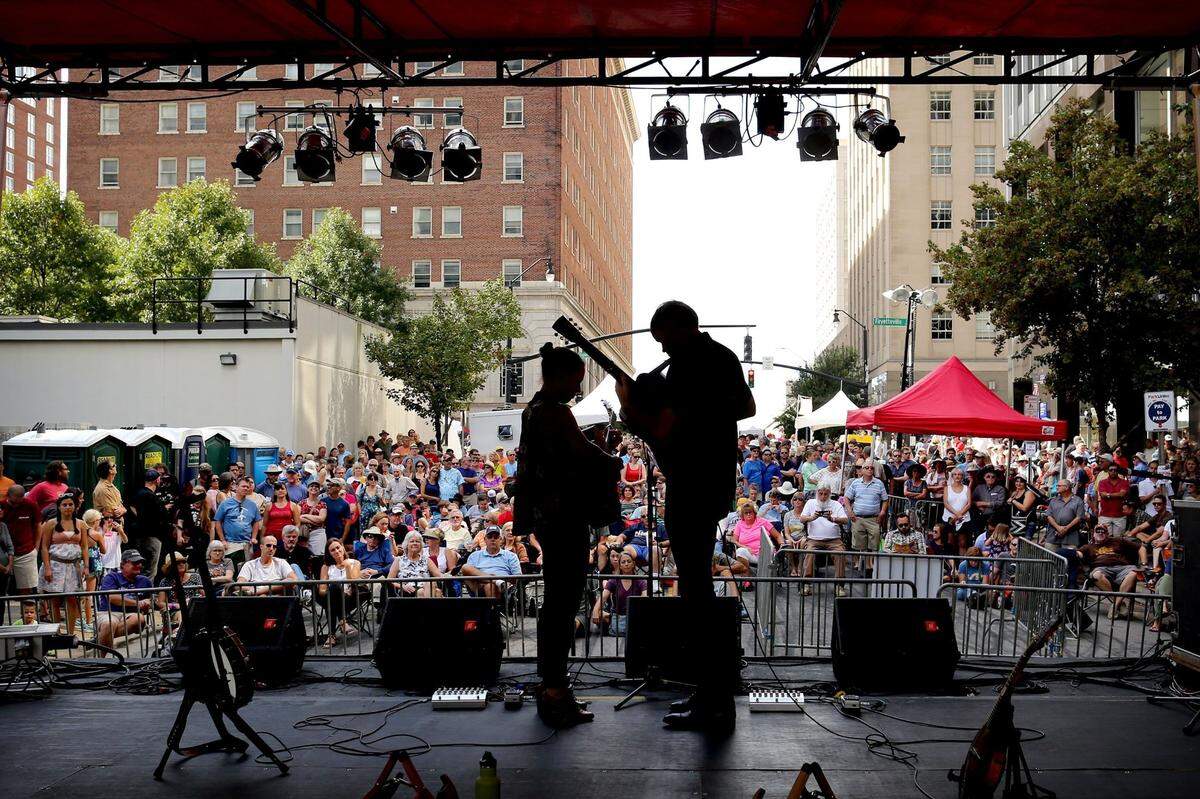
But musicians already lining the sidewalks outside the Convention Center on Wednesday expressed confusion at the sudden change.
“I like Raleigh,” said Eric Langejans of the Michigan group Full Cord. “I’m in walking distance of everything. I’m in walking distance of food. Everything kind of revolves around this, this time of year. This location. It changes everything for the fans, and it changes everything for us, depending on where it’s going to be.”
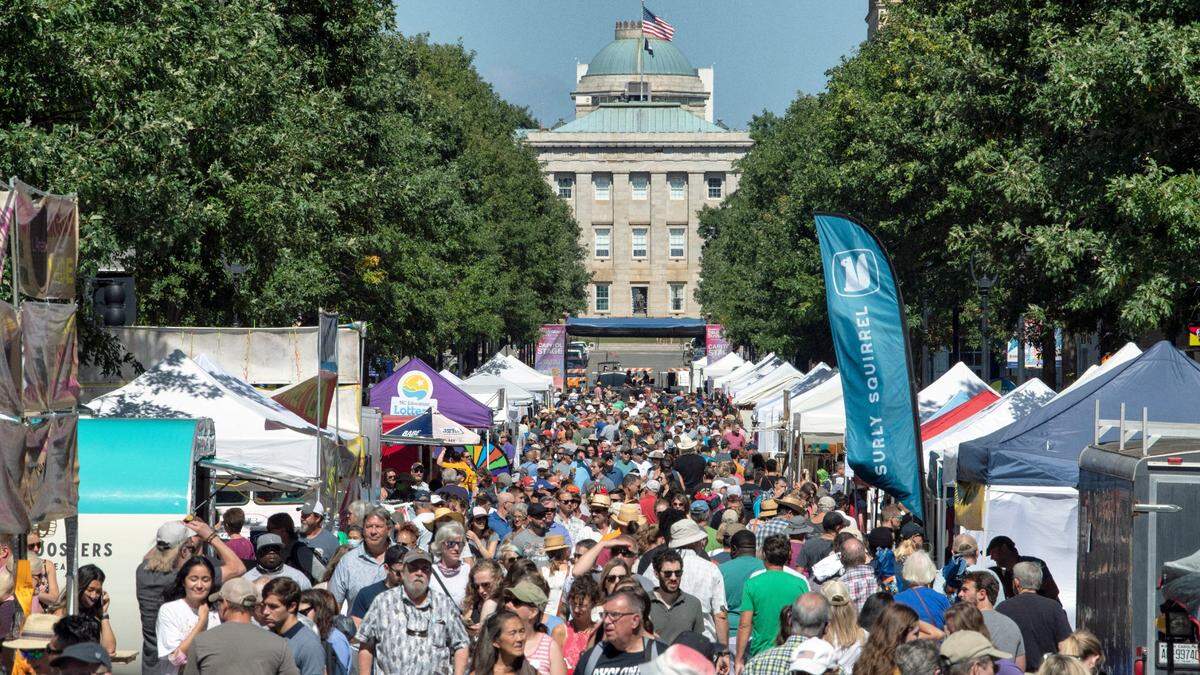
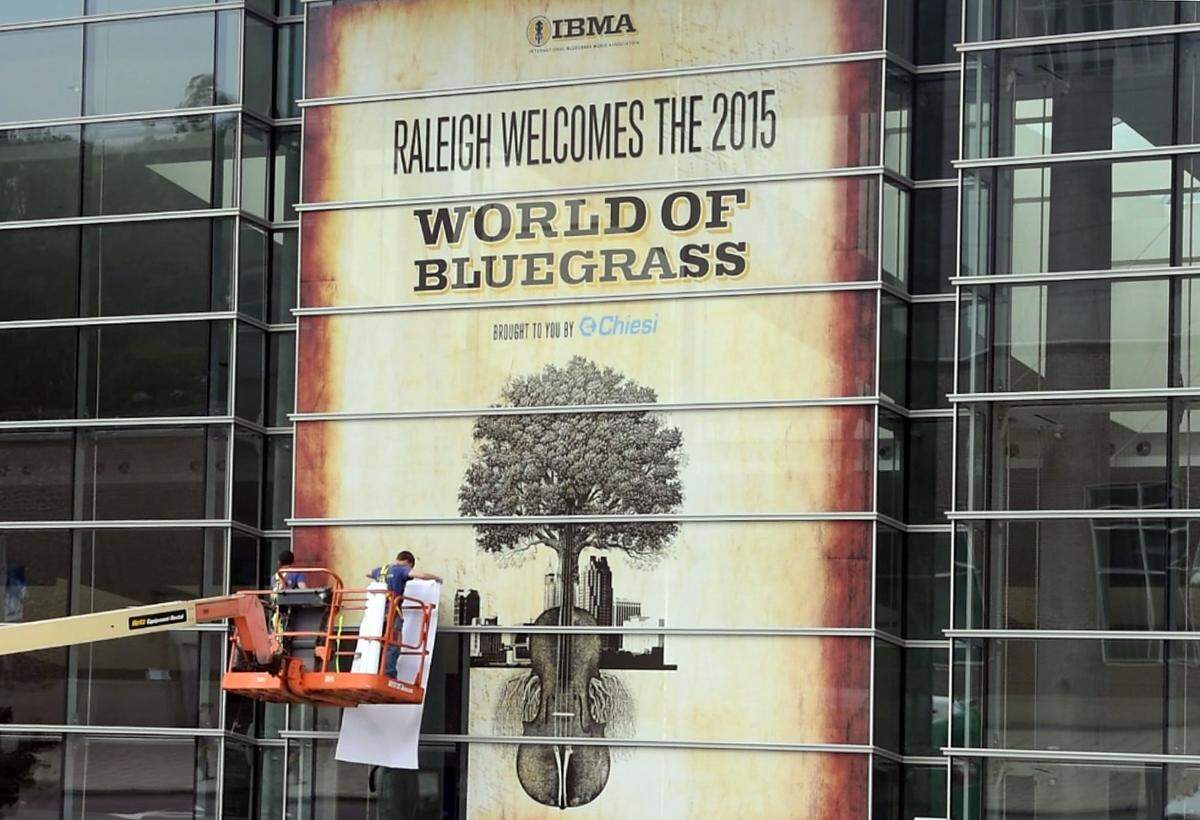
Starting in 2013, the World of Bluegrass Festival brought some of the greatest banjo pickers, fiddlers and voices to Raleigh stages, and thousands of novices enjoyed two days of free music on stages stretching the length of Fayetteville Street.
In those years, the festival generated more than $88 million in direct economic impact, peaking at $18.65 million in 2019. Rainy weather forced bluegrass performers indoors both last year and in 2015, and the COVID-19 pandemic canceled the festival along with most everything else in 2020.
Last year, Visit Raleigh did not calculate economic impact numbers because of the impact from Hurricane Ian during the festival week.
Raleigh and the IBMA last negotiated a three-year contract in 2021, as part of which the city agreed to provide $180,000 in planning funds over that stretch.
Festival hailed as a coup when it first came
When the IBMA chose Raleigh in 2012, relocating from Nashville, the news was hailed as a coup for the city, having drawn the highest-profile bluegrass event back to its historic home.
“The city’s musical history is compelling,” N&O writers David Menconi and Thomas Goldsmith wrote at the time. “Raleigh’s bluegrass past includes local stints by acts that include ‘Father of Bluegrass’ Bill Monroe and brother Charlie in the 1930s, and Lester Flatt and Shelby native Earl Scruggs, who were regulars on radio station WPTF in the 1950s.”
Still, Menconi noted in a 2013 story that a music columnist for the Nashville Tennessean “wrote a witheringly condescending column in which he called Raleigh a fine city, noted its basketball virtues and concluded, ‘What does that have to do with bluegrass? Well, nothing at all.’ “
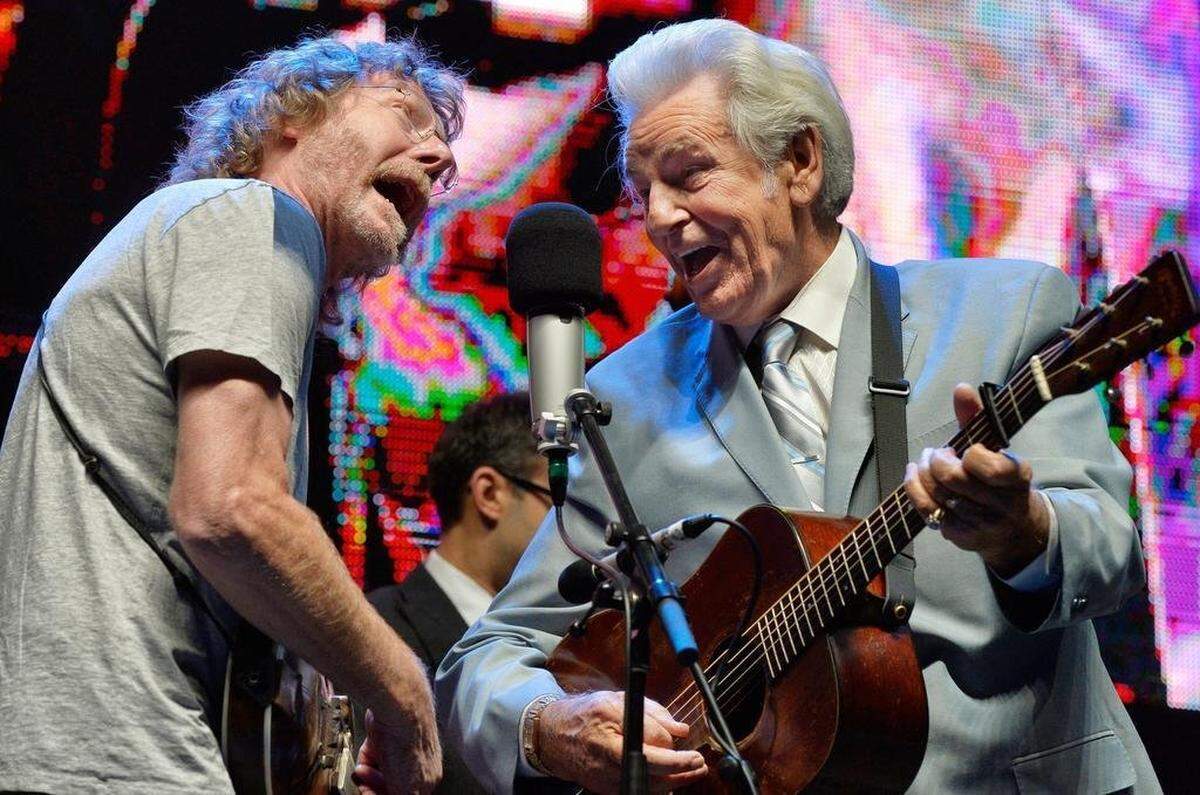
To the surprise of some, Raleigh packed the streets and music halls, enough that Del McCoury offered a personal thanks for being made to feel so welcome, the city’s Shimmer Wall flickering in front of him.
“I like it a lot better here,” said Morrie Elston, a board member for the California Bluegrass Association at the time. “It’s a friendlier atmosphere than Nashville, and also economically more advantageous. Hotels and restaurants are cheaper here; you can walk to things. It’s been great here this week.”
Raleigh embraced the surprise of its own success, said David Brower, executive director of PineCone, and has a chance to expand on that surprise with a wider definition of roots music.
“We can broaden our cultural palate,” he said. “We still love bluegrass and will be fully committed, but it’s not all going to be that. We’re going to branch out and work with some of the phenomenal gospel and blues artists from Eastern North Carolina and, believe it or not, South Carolina.”
The IBMA bluegrass festival continues downtown through Saturday.
This story was originally published September 27, 2023 at 12:59 PM.