
A 1920s historic house in Cary is getting a restaurant. And the chicken coop?
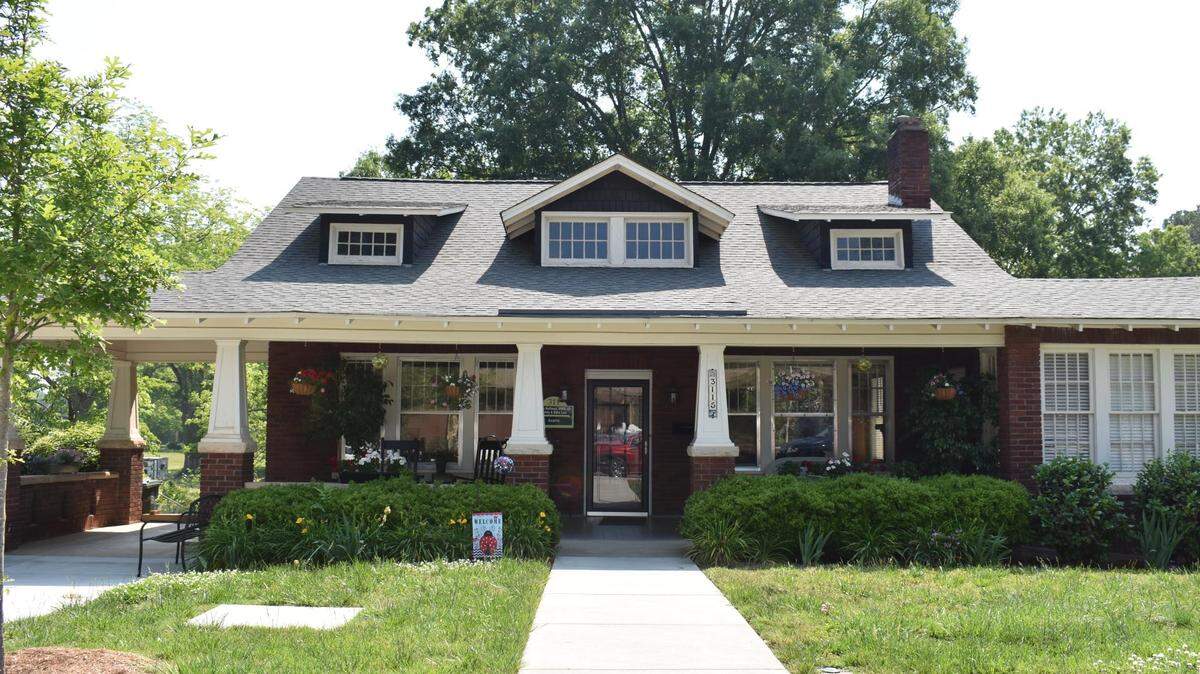
When downtown Cary was farmland and dirt roads, there was a chicken coop that belonged to a doctor who lived on South Academy Street.
Dr. John Pullen Hunter and his family were the first occupants of the home, built i.n 1925, at 311 S Academy St. Their chicken coop has been noted by local historians as an example of the town’s early self-sufficiency and rural life.
Today, the coop sits unattended to, with deteriorated siding and century-old nails holding it mostly intact. A new owner wants to breathe new life into the space.
“It’s ready for some TLC,” said Amit Malrotra.
The Detroit native plans to add a restaurant and pub to the house, which sits on roughly a half-acre about 215 feet from Downtown Cary Park and is in the town’s social district where people can walk and drink. The coop could serve items like chicken sandwiches, while the basement will become a pub.
The first floor is occupied by a law firm.
“We just want to make sure that whatever goes there complements the park well,” Malrotra said. “We want it to feel like it’s part of the park.”
Cary has three places on the National Register of Historic Places. Though the Pullen Hunter House is not on that list, it is one of 12 places designated by the town as a historic landmark. Several, like the Cotton House that houses a bar, now serve as gathering places for residents and visitors.
“Things like that really kind of make properties unique, and what makes them special is what’s going to keep downtown Cary exciting and not just a cookie-cutter downtown,” Malrotra said. “We’re super excited.”
Preserving the old, bringing in the new
Hunter, a doctor in Cary from 1920 to 1959, served on the Town Board, the Wake County Board of Education, the town’s Chamber of Commerce and the Masonic Lodge. He was a descendant of Issac Hunter, who owned a tavern in Wake County where the 1788 Constitutional Convention met, said Katie Drye, Cary’s assistant planning director.
Malrotra said he jumped at the chance to buy the the house in 2021 because of its location. He bought it for $1.5 million, county records show. Osterlund Architects, a Raleigh firm he’s working with, has designed projects including the Pullen Aquatic Center in Raleigh and Happy + Hale on Raleigh’s Fayetteville Street.
Malrotra must follow the town’s guidelines for how to care for its old homes. He is familiar with the process having renovating the Dr. Peter H. Williams House in Raleigh’s historic district. That home was built in the 19th century and suffered damage in 2011 after a tornado.
“For Cary historic landmarks, a certificate of appropriateness is required for alterations and projects that are not routine maintenance,” Drye said. “Any repair or replacement where there is a change in the design, materials or general appearance is defined as an alteration.”
Malrotra hopes to begin construction this year and open next year if all plans are approved by the town’s Historic Preservation Commission.
Downtown Cary has been shifting its appearance with new additions and older spaces being preserved for new uses. Most recently, the Ashworth Drugs building was sold and will become a new home for a Once in a Blue Moon Bakery. The area is also primed for new apartments and condos, and a mixed-use development on the corner of West Chatham Street and South Harrison Avenue.
“Cary needs more of those things,” Malrotra said. “I think people are looking for a place to go that maybe isn’t Glenwood or Franklin Street. ... This is a great place to live and great place where people are moving to. Change is naturally going to happen.”