NC’s copperhead season is here. What to know about the common venomous snake
After a few warm days last week, central North Carolina is cooling off again.
But copperheads don’t wait for consistently warm temperatures. These snakes — the only venomous snakes you’re likely to see in the Triangle and central North Carolina — appear with the warm weather.
If you do come across one, don’t panic. Best practices for living in this neck of the woods include:
- Keeping an eye open for snakes while outside.
- Watching where you step, especially if you’re wearing sandals.
- Wearing gloves if you’re reaching into weeds, bushes or pine straw.
- Monitoring dogs who poke their noses into areas where copperheads may be resting.
- Leaving the snakes alone, if you see them.
What do copperhead snakes look like?
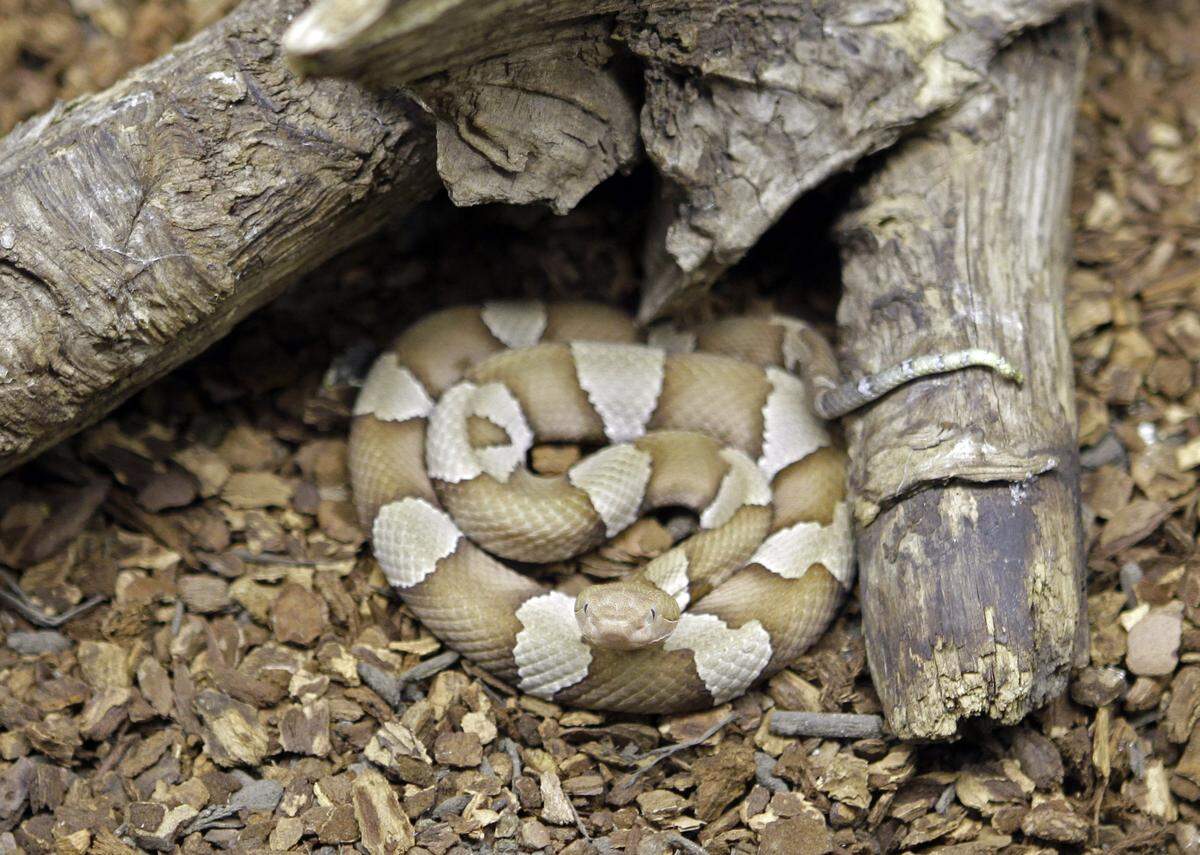
Copperhead snakes, which grow to about 3 feet long, are brownish-gray in color and have an hourglass-shaped pattern on their backs, similar to a Hershey’s Kiss.
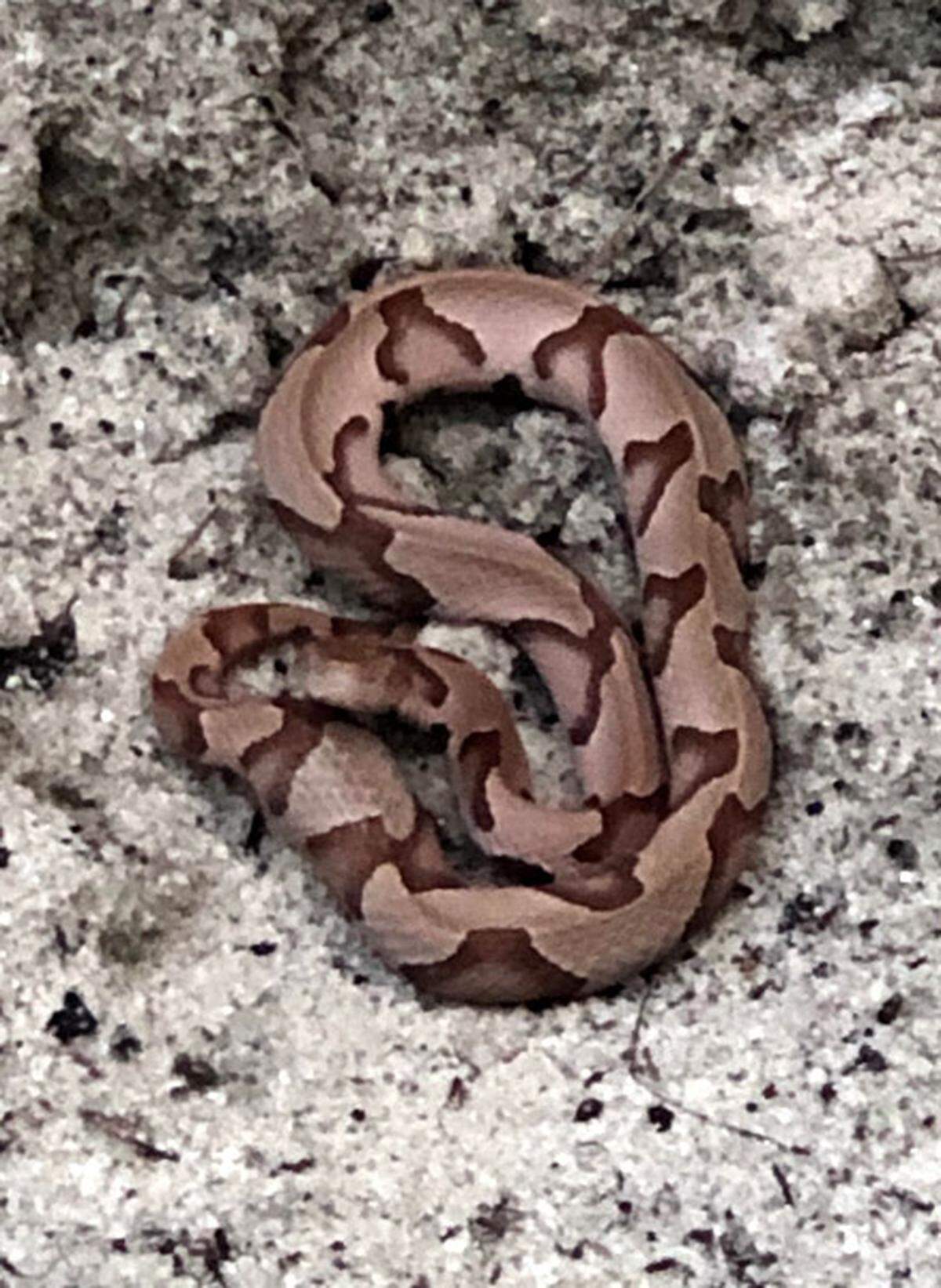
Newborn or very young copperheads will resemble their parents, except they’ll have a bright yellow or greenish-tipped tail.
Myths about venomous snakes
You might have heard these misleading tips about identifying venomous snakes:
- Tip No. 1: Most venomous snakes have a triangular or diamond-shaped head, while nonvenomous snakes have a tapered head. The problem with relying only on that test is that some nonvenomous snakes can mimic the triangular shape of venomous snakes by flattening their heads when threatened.
- Tip No. 2: Venomous snakes have oblong pupils that look like slits, while nonvenomous snakes have a round pupil. But that test, too, is a generalization and can fail. Venomous coral snakes, for example, have round pupils.
The best way to know if a snake is venomous is to know which venomous snakes are common where you live, and know what they look like.
Are copperhead snake bites deadly?
A bite from a copperhead snake is rarely fatal to humans, but bites can be painful and expensive to treat.
Dr. Eugenia Quackenbush, an emergency physician with UNC Medical Center, previously told The News & Observer that copperhead bites can range in severity — dry bite, mild, moderate and severe. Antivenom treatment, while not always required, can speed recovery and reduce the need for opiate pain medications.
Most mild copperhead bites will progress to moderate or severe bites, and antivenom treatment is associated with better patient outcomes, Dr. Charles Gerardo, an emergency medicine specialist with Duke Health, previously told The N&O.
Call NC Poison Control (1-800-222-1222) with questions about snake bites.
How to avoid copperhead snakes
Use caution when working or playing outside, particularly around areas where snakes are likely to be found.
While copperheads are active during the day or night, they are mostly nocturnal during hot weather, so be careful at dawn or dusk. If you need to walk the dog or take out the trash, wear shoes that cover your feet.
Copperheads may be encountered anywhere there is potential habitat.
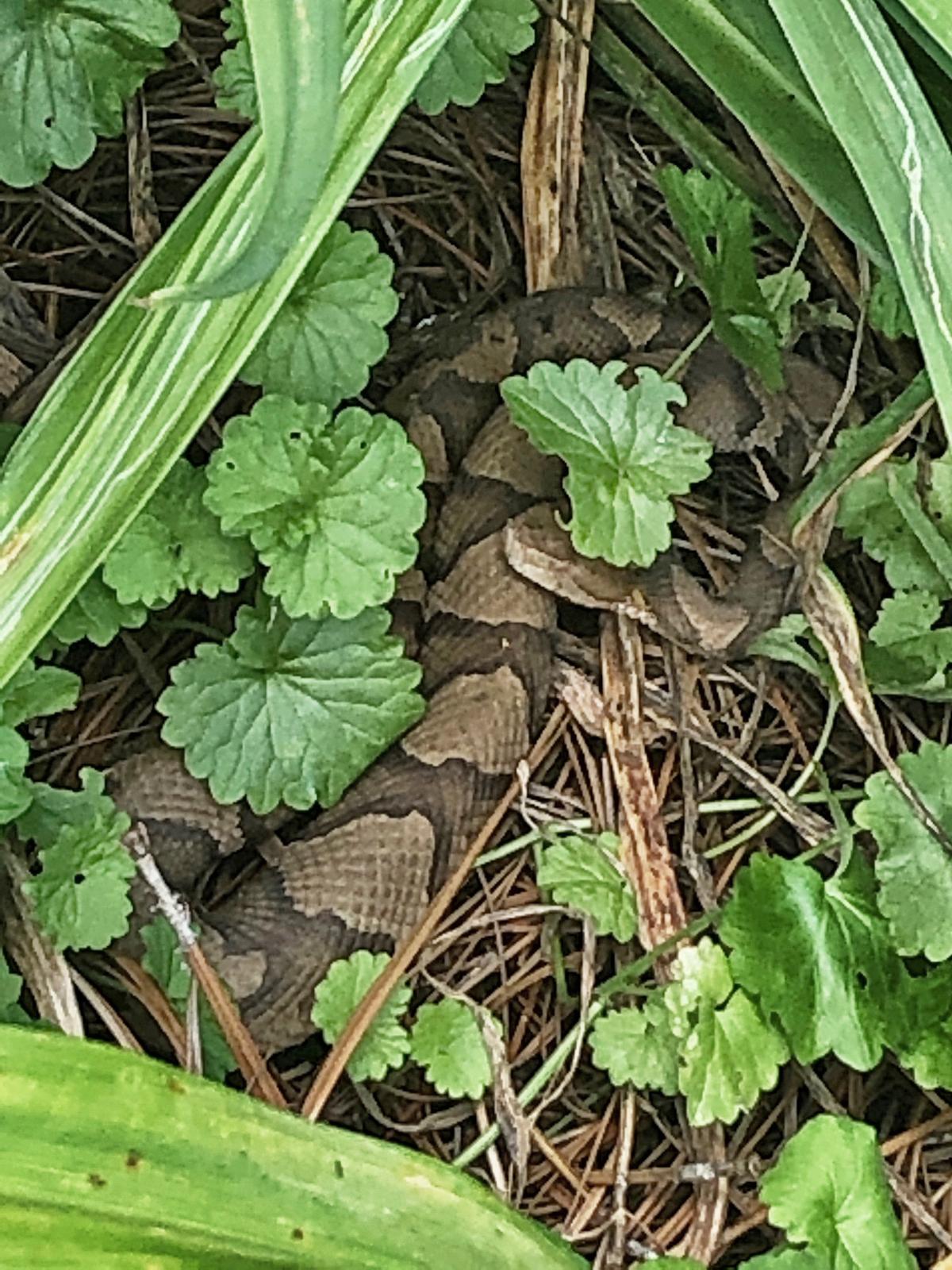
- Favored snake habitats: Copperheads love pine straw, dried leaves or brush, or dense, low-growing ground cover like English ivy. They also love wood piles and dry stack walls (stacked pieces of slate without mortar).
- Favored snake foods: Copperheads (and other snakes) eat rodents, shrews, lizards, snakes, frogs, salamanders and even insects, such as large caterpillars and cicada nymphs. Anywhere you might see those creatures, snakes could be nearby.
Jeff Beane, a herpetology collection manager at the N.C. Museum of Natural Sciences in Raleigh, previously shared with The N&O some tips for avoiding bites:
- Don’t put your body parts into places you can’t see, and don’t put your hands underneath wood piles.
- Don’t walk through thick vegetation.
- Don’t go barefoot at night, but do use a flashlight.
In general, the best thing to do if you see a copperhead is to leave it alone. While many bites occur when someone accidentally puts a hand or foot near a copperhead, NC Wildlife notes that a large percentage of bites occur when a person is trying to kill or remove a copperhead.
“Admire them from a safe distance and leave them alone,” Beane previously told The N&O. “Many bites and other injuries have occurred while people were attempting to kill snakes. No one was ever bitten by a snake while they were leaving it alone.”
When are copperhead snakes born?
Copperheads are often born in late August or early September, but a few may be born as early as mid-August or as late as early October, Beane said.
“Weather, geography, region and other factors can influence the exact time of birth,” Beane said.
Copperhead babies are born live and do not hatch from eggs.
According to the North Carolina Wildlife Resources Commission, female copperheads can have one litter per year. The litters can range from two to 18 snakes, which are 8 to 10 inches long when born.
Is a baby copperhead bite more dangerous?
You may have heard that a bite from a baby copperhead is more dangerous than a bite from an adult because the baby can’t control the amount of venom it uses.
Beane said young copperheads may be less likely to control or withhold the amount of venom they inject, but they don’t have as much venom as a mature snake.
▪ Defensive bites vs. prey-seeking bites: A copperhead will bite to kill and eat prey or to defend itself.
When striking prey to kill it and eat it, Beane said, a baby copperhead will inject as much venom as necessary to do so. When a copperhead bites a human, that’s a defensive bite; the snake isn’t likely to use as much venom in those cases. And sometimes, it doesn’t inject any venom.
“It is not advantageous for snakes to waste venom — it’s metabolically expensive to make, so they don’t want to bite anything other than prey items,” Beane said.
Whenever a snake bites, it’s an instinctive response, and that the snake doesn’t “reason it out,” Beane said. A snake’s primary reason for biting is to kill and eat prey, so they only bite people out of self-defense.
“They would be unlikely to mistake something 100 times their size as a prey item,” Beane said.
▪ More concentrated venom? Beane said a newborn’s venom “may or may not be slightly more concentrated than adult’s.” But because a larger copperhead has more venom to inject, the larger snake would probably more than make up for any differences in chemical composition.
Plus, Beane said, a larger or more mature copperhead has longer fangs, which can penetrate a sock or thick skin, so it has more “delivery capacity” than a juvenile snake.
A mature copperhead can also “strike a greater distance and with more force and accuracy,” Beane said.
▪ Baby copperhead bites aren’t as common.
“I don’t hear much about people being bitten by newborns,” Bean said. “Personally, if I had to choose being bitten by a newborn copperhead or an adult, I would choose a newborn because of the potentially much smaller quantity of venom.”
What happens if you’re bitten by a snake?
If you’re bitten by a copperhead or another venomous snake, North Carolina Poison Control in Charlotte has the following advice:
- Sit down and stay calm.
- Gently wash the area with warm, soapy water.
- Remove any jewelry or tight clothing near the bite site.
- Keep the bitten area still, if possible, and raise it to heart level.
- Call NC Poison Control at 1-800-222-1222.
Here’s what not to do:
- Cut the bitten area to try to drain the venom.
- Ice the area. That can cause tissue damage.
- Make and apply a tourniquet or tight bandage. It’s better for the venom to flow through the body than for it to stay in one area.
- Suck or use a suction device to remove the venom.
- Attempt to catch or kill the snake.
If a snakebite victim is having chest pain, difficulty breathing, face swelling or has lost consciousness, call 911.
Dr. Michael Beuhler, NC Poison Control’s medical director, told The N&O for a separate story about snake bite treatment that antivenom is only sometimes necessary. The high cost of antivenom and risk of allergic reaction are two deciding factors against administering the drug, he said.
“You’re doing a risk to benefit ratio. Is the cost of antivenom worth it?” Beuhler said. “Most of the time, antivenom just gets you on your feet a few days quicker — is it necessary to spend this much money administering antivenom when you’ll be fine by the next month anyway?”
Reporting by The News & Observer’s Brooke Cain and Kimberly Cataudella Tutuska contributed to this story.
This story was originally published April 7, 2025 at 2:25 PM.