
Remembering ‘The Peanut Man,’ fixture of downtown Raleigh, haunted WWII veteran
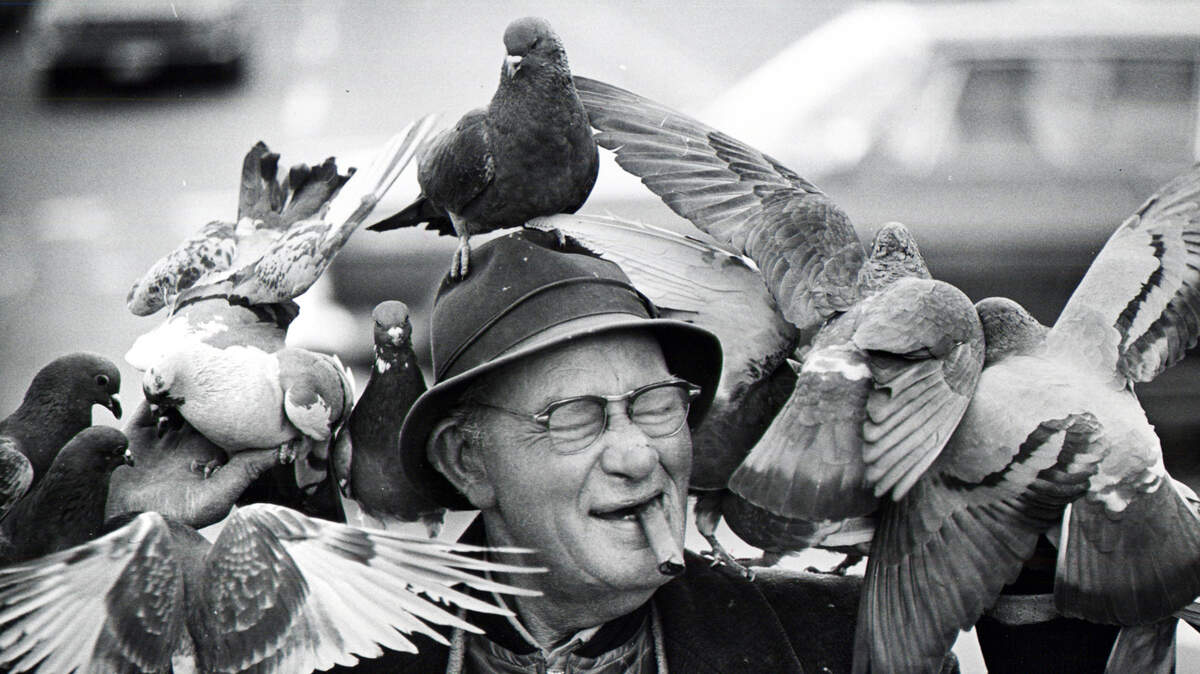
For almost 40 years, an old man in a gray fedora pushed his silver cart around the Capitol grounds, chewing a half-smoked cigar while the pigeons ate from his hands, perched on his shoulders and roosted on top of his head — companions through rain, snow and bad memories.
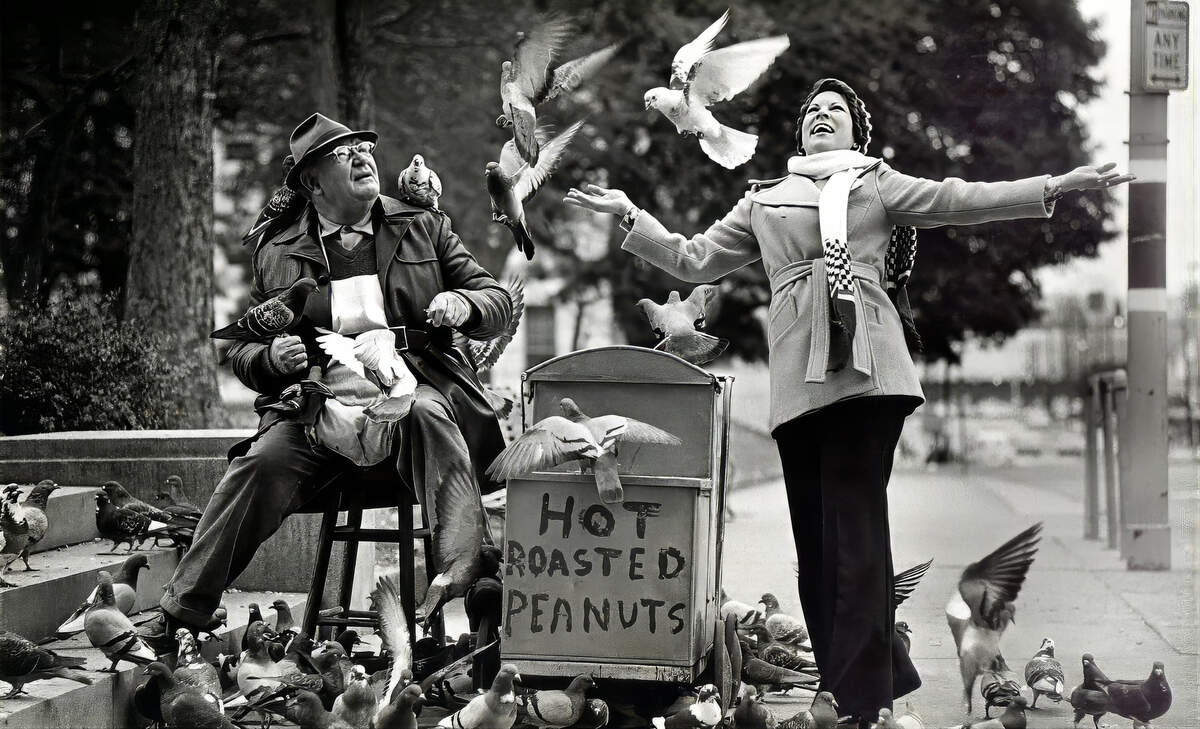
They called him “The Peanut Man,” a nickname inspired by the snacks he roasted over a charcoal fire and sold for one quarter a bag, or free to customers with feathers.
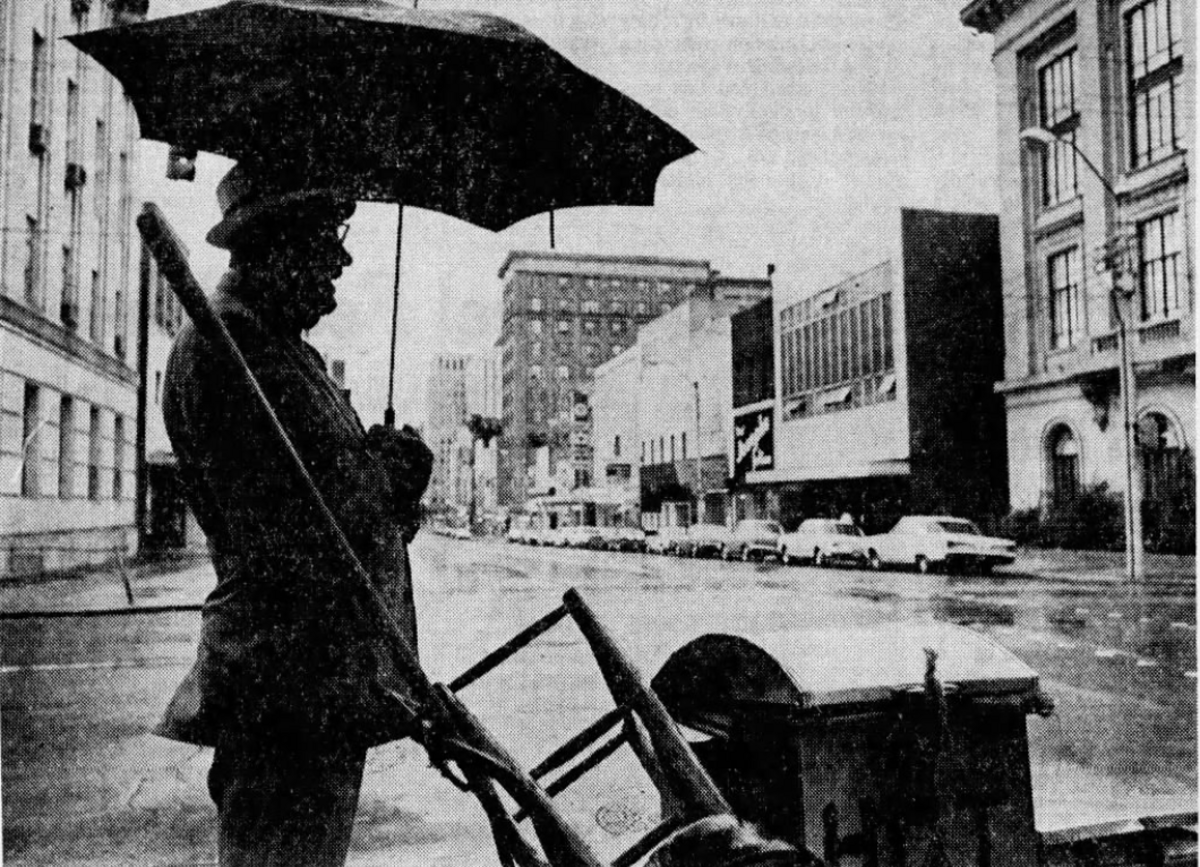
Anyone who passed through downtown — governors, panhandlers, kids on bikes — knew him from 100 paces away, a sort of Southern Mary Poppins shading himself under a black umbrella, tending the birds he knew by names like Speck and Spot.
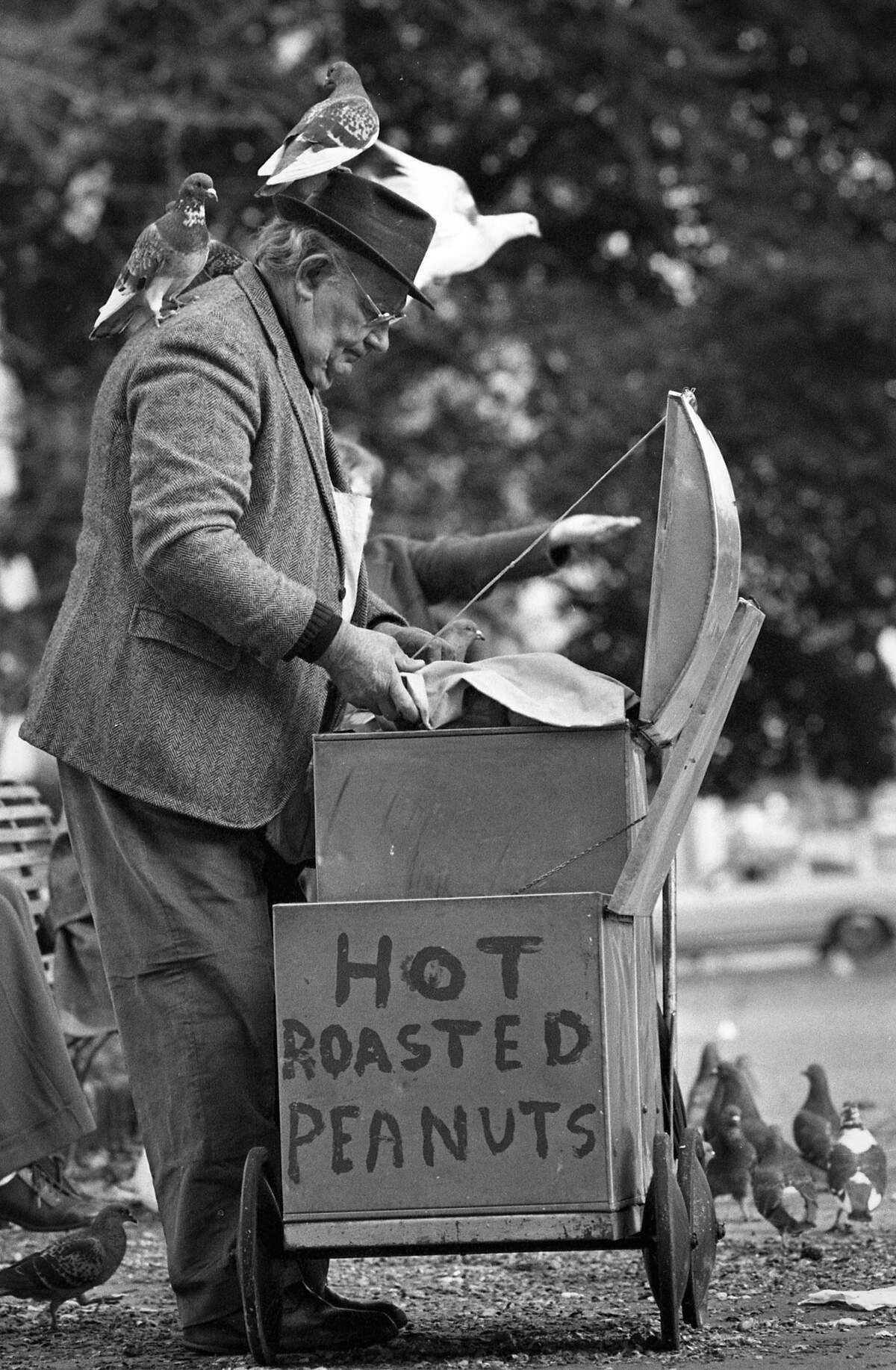
But few knew much else about Jesse Broyles, who seldom spoke about his past, especially not his years in the Marine Corps and absolutely not the month he spent fighting on Iwo Jima. Before he became “The Peanut Man,” Broyles spent roughly 20 years holed up in his family’s house on East Street, slowly piecing himself back together, recovering from what he’d seen.
He only emerged as an elderly man with a peanut cart, reborn among ordinary birds.
“He never talked about the war,” said his niece Frances Nowell in Wilson. “Never.”
From Nicaragua to China
I resurrect The Peanut Man’s memory today because we now know a great deal more about his long life, thanks to a distant cousin, Robert Broyles, who decided to go digging through the archives as a retirement pursuit.
In The Peanut Man’s military record, and in a few of his personal belongings, Robert Broyles discovered a boy from Mississippi who lit out for adventure as a young and headstrong man — likely estranged from his father, a prominent Methodist minister.
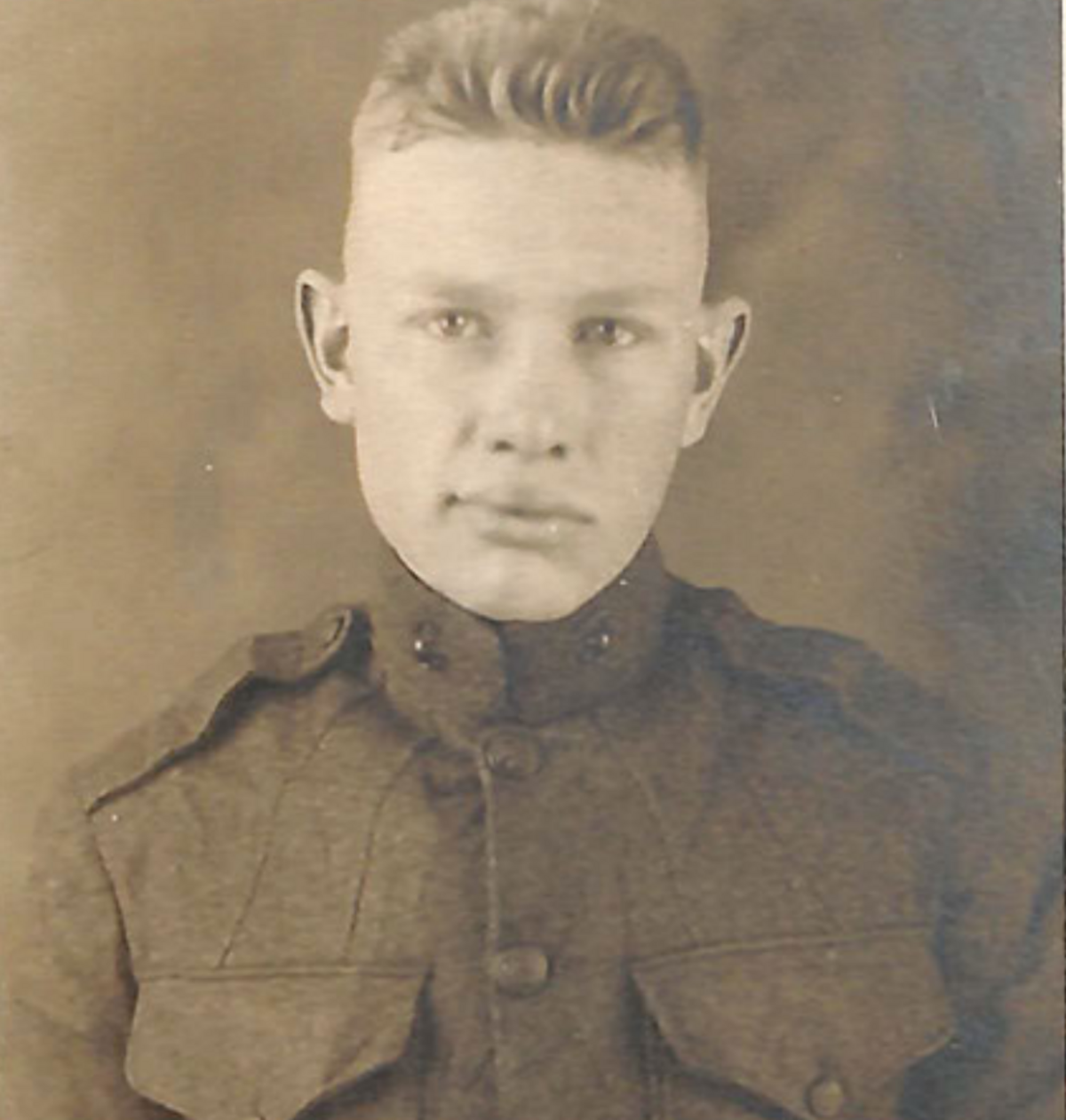
He spent 10 years in the Marines starting in 1924, serving through the U.S. intervention Nicaragua as part of what would later be called the “Banana Wars,” then sailing to China, where he likely witnessed the raging cabaret scene in Shanghai.
I found a fellow Marine’s account of the city in 1933, the year of Broyles’ deployment:
“Rickshaws and automobiles seem to be crazily dashing in every direction with random recklessness,” he wrote. “People getting knocked down or run over getting up smiling if they can and no one caring anything about it. Honestly there is so much excitement going on and so many strange and usual sights and happenings that it is useless for me to try and describe it in less than a book.”
Having seen all of this, The Peanut Man took an honorable discharge in 1934, settled in Raleigh as a carpenter and married Elsie, his wife for nearly 50 years. But this time of peace did not last. When Pearl Harbor came under attack, the Marines came looking for men with military experience.
The Peanut Man went to war at 35.
The Pacific
Broyles spent much of his wartime in Hawaii, building barracks.
But in 1944, he joined the fighting for small islands in the Pacific, all the while getting farther from Pearl Harbor and closer to Japan. First came Roi and Namur, then Saipan and Tinian — all of which brought praise from superior officers.

Then came Iwo Jima, a monthlong campaign that stands as the bloodiest in Marine Corps history, killing 6,800 Americans and wounding another 20,000 — making casualties of nearly 1 in 3 who landed there.
Robert Broyles guesses his distant cousin did not serve on the front lines and was not among the first to hit the beach. His commendation for that battle cites the important role he played in sanitation, which sounds as though he played a janitorial role but actually meant far more.
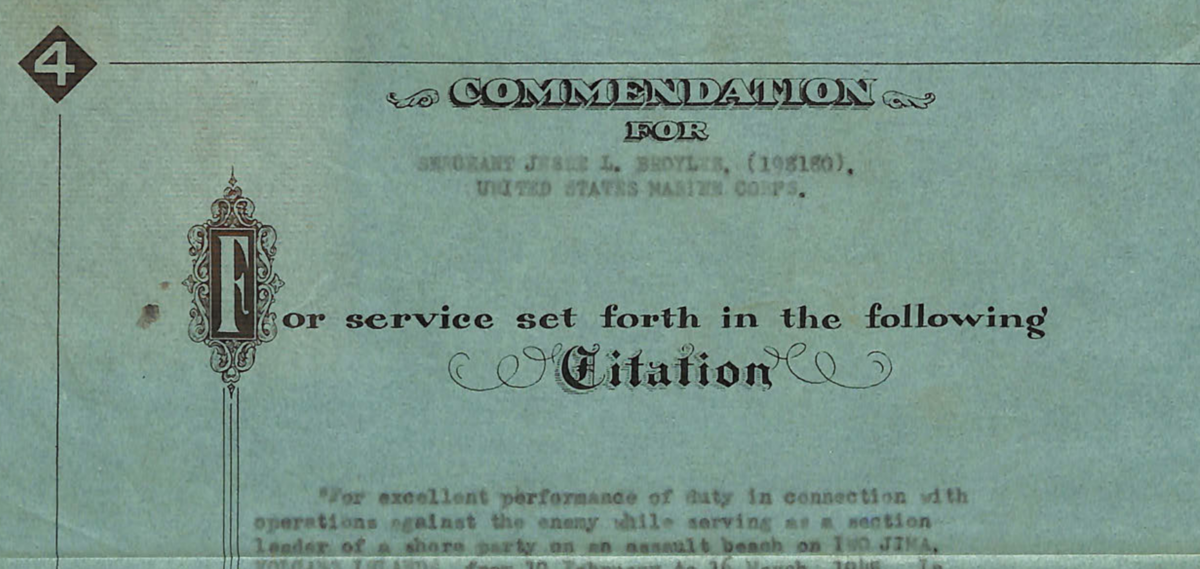
Iwo Jima was littered with dead and wounded men lying among battered and burned equipment. Infection and disease were rampant and fresh water was scarce. Anyone tending to those duties would have seen pure carnage. Among The Peanut Man’s personal photographs collected in archives are two pictures of a dead Marine hauled out of the water, drenched in blood.
“I do remember his nightmares the early years after he came home,” said his niece, Frances Nowell. “I remember more about my aunt talking about them and being afraid of him when he woke up fighting.”
A new person
In the 1940s, nobody talked about post-traumatic stress disorder. They called it shell-shock or combat fatigue, if anything. More than 500,000 servicemen suffered a psychiatric breakdown, according to the National World War II Museum, and roughly 40% of medical discharges happened due to psychiatric conditions.
But most men clammed up and suffered through their pain silently. The Peanut Man certainly fit this category. He never spoke about his family in Mississippi, and when his father died in Georgia, he did not list Broyles among the survivors. Whatever mental health cure The Peanut Man employed, he did it largely by himself.
By his own recollection, in an interview with The N&O, Broyles ventured back into civilization in about 1960. By then he was nearly 60, always dressed in a suit and hat. His niece considered him a new person in his Peanut Man role, driven by kindness to man and bird.
“He was a soft-spoken gentle man that loved me,” she said, “and that I loved.”
Photographers couldn’t resist him. Broyles ended up on the back cover of Life magazine, not to mention dozens of pages of The N&O.
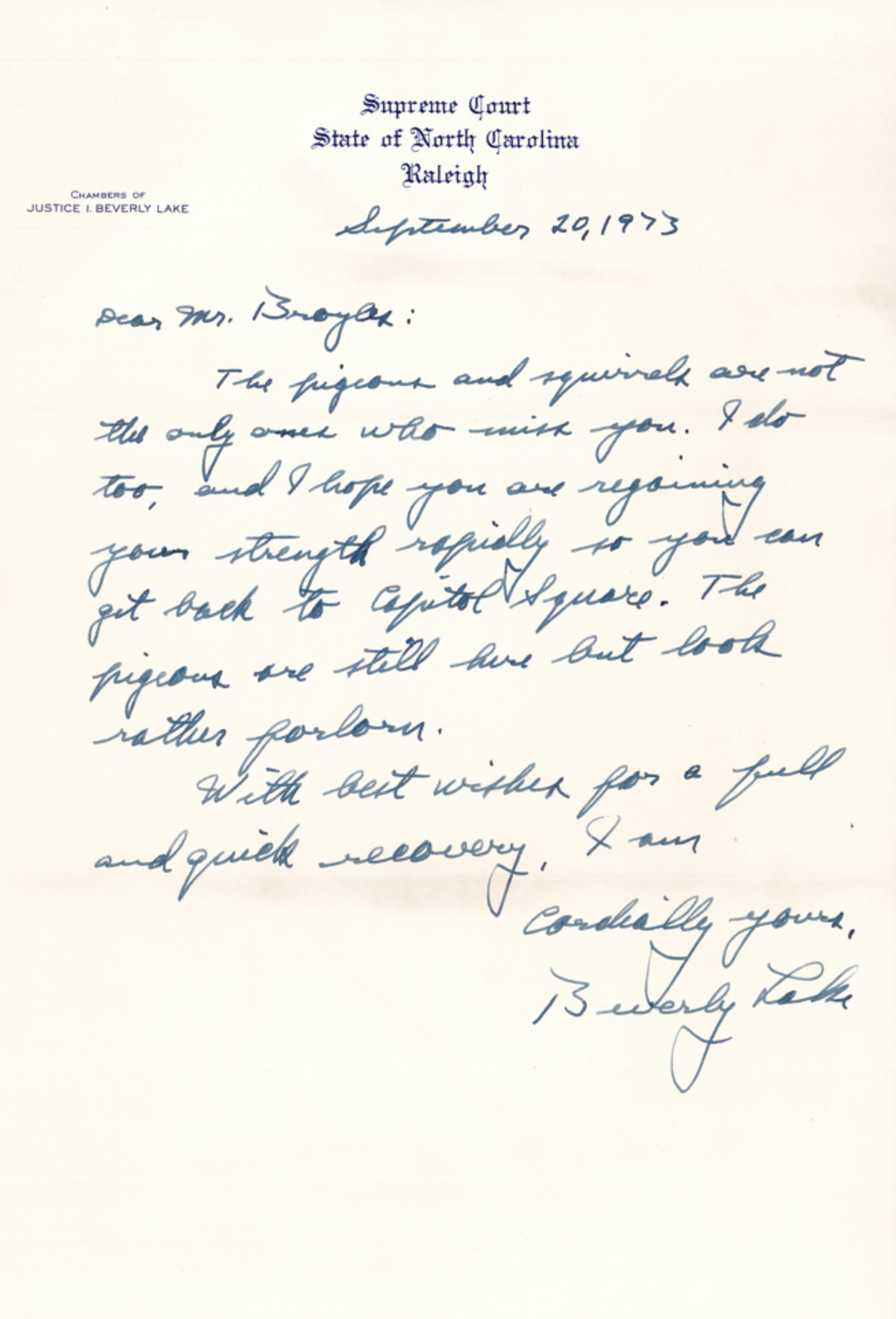
When he took briefly ill in 1973, no less than an NC Supreme Court justice hand-wrote him a get-well letter.
“The pigeons and squirrels are not the only ones who miss you,” wrote Justice I. Beverly Lake. “I do, too. ... The pigeons are still there but look rather forlorn.”
By 1989, the city was chasing The Peanut Man out of its downtown squares, fearing his shells would attract rats. He spent his last years in nursing homes, dying in 2003 at age 96. His grave in Oakwood Cemetery still gets visitors.
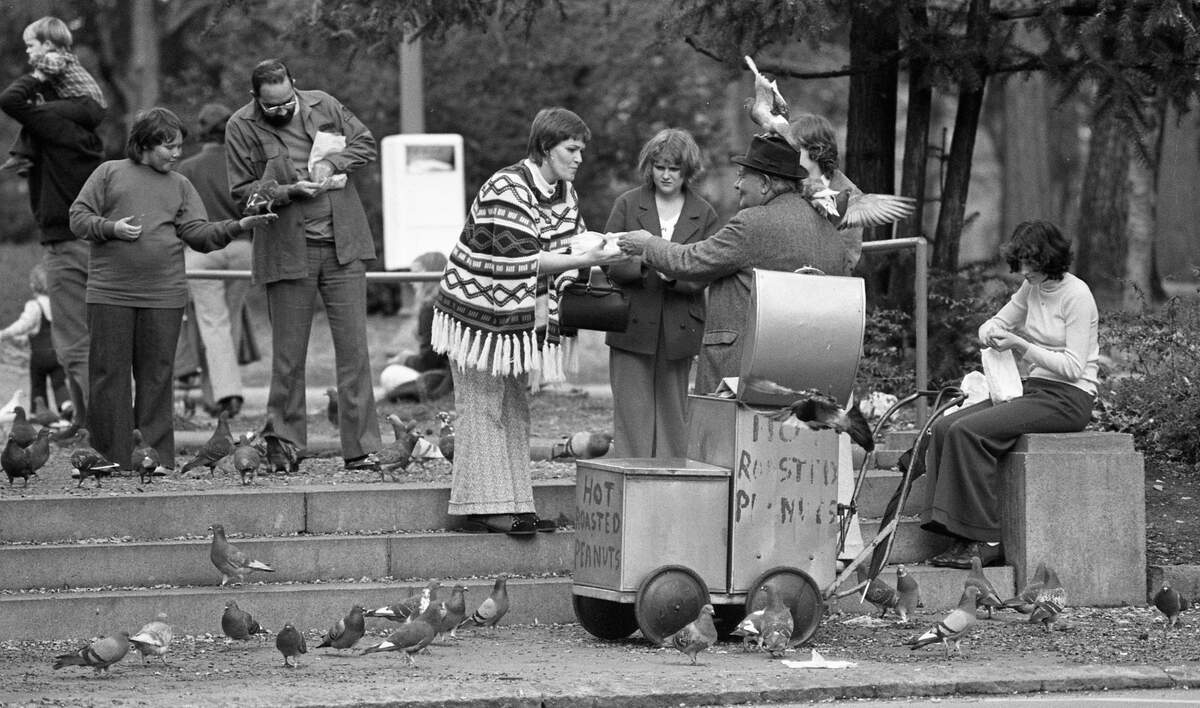
The Peanut Man lived much of his life as a curiosity, a familiar person nobody knew. But thanks to Robert Broyles’ research, I think his story gets richer and his appeal grows wider.
Here, we meet an eyewitness to human cruelty so overpowering it forced him to shut out the world altogether, and when he finally emerged, the greatest allies he could find were the pigeons downtown, flocking together, scratching out what sustenance they could find.
Uniquely NC is a News & Observer subscriber collection of moments, landmarks and personalities that define the uniqueness (and pride) of why we live in the Triangle and North Carolina.
This story was originally published April 28, 2025 at 5:00 AM.