Carrboro residents didn’t live in a FEMA flood zone. Chantal still took everything.
AI-generated summary reviewed by our newsroom.
- Tropical Storm Chantal flooded Carrboro's Weatherhill Pointe, displacing dozens.
- FEMA maps excluded the area from high-risk zones, leaving most without insurance.
- Outdated flood maps and gaps in NFIP coverage exposed major financial risks.
Between 8 and 10 p.m. on July 6, tropical storm flood waters pushed through Carrboro’s Weatherhill Pointe neighborhood near Morgan Creek. In less than two hours, it turned streets into rivers, covering mailboxes and sweeping away cars in a torrent of mud, waste and debris.
Outside Jennifer Johnson’s house, the five-foot surge reached up to her waist, trapping her family inside — including her son, Rey, 22, and mother, Steffi Cooper, 82, both of whom are disabled.
“We tried to make a human chain, but the current was so strong, it grabbed me,” said the 52-year-old full-time caregiver. “I knew it was bad when I saw my neighbor’s car floating by.”
The 80-unit subdivision sits less than two miles east of University Lake. As the storm raged, it overwhelmed the lake’s dam, sending a torrent of water downstream into the creek and neighborhood.
In the middle of the night, the Johnsons were among 57 water rescues from Weatherhill Pointe alone. They escaped with just the clothes on their back and $100 in wet bills.
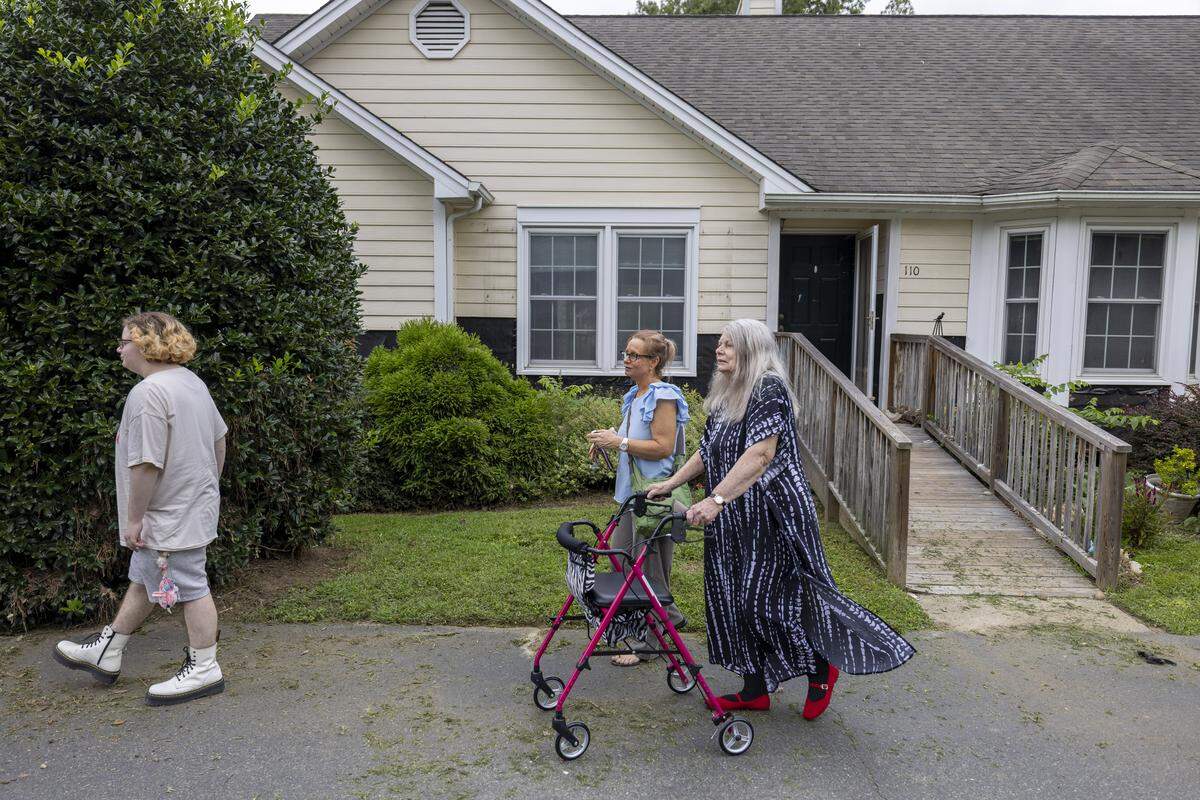
Two months later, they’re still displaced, paying $1,000 a week for a short-term rental. Like most North Carolinians, they didn’t have flood insurance. Their home sits just outside the Federal Emergency Management Agency’s special flood hazard area where insurance is required. Their insurer, State Farm, offered $18,000 for their totaled car. But apart from that, they’re not covered, paying out of pocket.
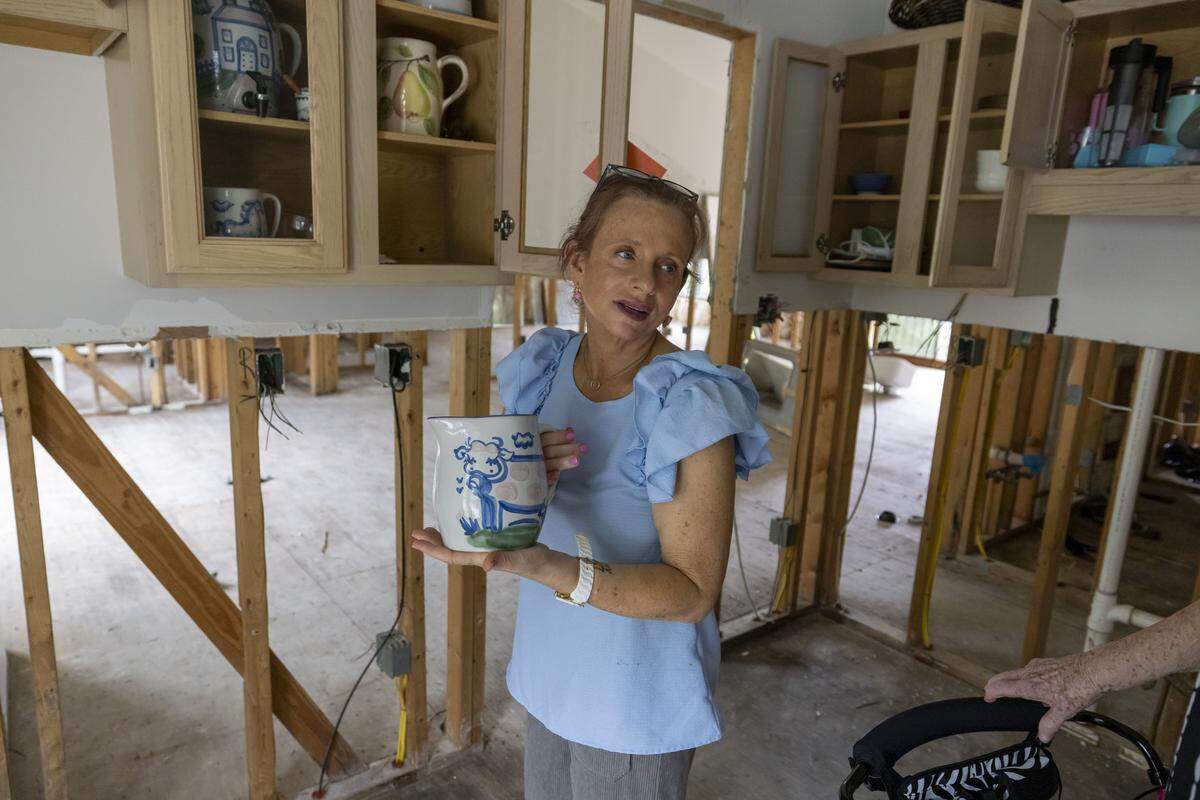
“At this point, we’re scared about getting liens on our house,” Johnson says, standing in her dried-out home, walls gone, stripped to the studs.
Even after $40,000 in remediation work, it’s unlivable. They estimate $350,000 in damages and repairs. Most of their neighbors are also displaced. At least a quarter of the subdivision completely flooded.
“It’s like a ghost town,” she said.
When Tropical Storm Chantal hit Central North Carolina in early July, it dumped as much as 9 to 12 inches of rain in some locations, stressing stormwater systems, damaging homes and businesses, and displacing dozens overnight. Preliminary damage assessments have totaled more than $42 million.
It blindsided Weatherhill Pointe residents.
Unlike well-known flood zones, such as Chapel Hill’s Eastgate Mall and Camelot Village, most homes in this 1990s blue-collar subdivision lie just across the street from a FEMA-designated flood zone. On its website, it’s advertised as Carrboro’s “best-kept” secret. Check North Carolina’s Flood Risk Information System, and most homes are listed as Zone X (minimal flood risk). Apart from a brief flood in 2018 during Hurricane Florence, it had no history of flooding.
In 2022, when the Johnsons purchased their 1,680-square-foot detached home for $500,000, they thought they’d hit the lottery, she said. “We looked on FEMA maps. It didn’t show it in the flood zone. We heard from multiple sources. We didn’t need flood insurance.”
But experts warn that millions of properties face flood risk that FEMA’s maps don’t capture. Between 1996 and 2020, roughly 43% of North Carolina buildings flooded outside high-risk zones, a newly released UNC-Chapel Hill study showed.
“Not all places that flood are mapped or regulated,” the report’s co-author, Antonia Sebastian, told The News and Observer.
For many, including the Johnsons, Chantal’s aftermath has been more devastating than the flood itself — revealing hidden risks, outdated maps, and gaps in insurance coverage. As climate-related risks mount, FEMA’s National Flood Insurance Program (NFIP) is set to expire at the end of September, adding to the uncertainty. Many wonder if it’s worth rebuilding. Others are rushing to cut their losses, selling their damaged properties to investors or cash buyers at steep discounts.
Just around the corner, a three-bedroom 1,625-square-foot home at 306 Berryhill Drive is currently listed “as is” for $308,000, down $36,000.
For the Johnsons, it’s tempting. On this Thursday morning, they’re stuck in a holding pattern, unable to access emergency funds.
“We’ve got to keep our options open,” she said.
“It scares me that lower-income families are being pushed out for investors,” she added. “We don’t want to sell. But the bank is fighting us every step of the way. There’s just a feeling of hopelessness.”
How Carrboro neighborhood got blindsided
FEMA’s National Flood Insurance Program (NFIP) accounts for more than 88% of the nation’s flood insurance. It covers 4.7 million policies totaling $1.28 trillion in property value, anchoring mortgage eligibility in flood zones.
As part of its role, FEMA maintains flood insurance rate maps, which designate special flood hazard areas with a 1% or greater annual chance of flooding, also known as a “100-year flood zone,” meaning at least one major flood is expected every 100 years.
With little exception, flood insurance is required to obtain a mortgage for a property in a high-risk zone. Outside those areas, it’s optional.
In 2017, FEMA revised Carrboro’s flood map, adjusting the size of hazard areas in some neighborhoods and reducing them in others, Carrboro Fire Chief Will Potter told The News and Observer. As part of the overhaul, FEMA delisted most homes in Weatherhill Pointe, records show.
“The changes were determined by FEMA, not by the town,” Potter said.
Almost a decade later, residents say those actions bypassed protections designed to safeguard them. It also exposed buyers to growing flood losses in areas deemed “safe” by outdated or narrow maps.
As of 2024, roughly 84% of FEMA flood maps are outdated, according to a new reported from First Street, a New York-based research firm specializing in climate risk. The maps also fail to account for intense rain events and sea-level rise and are not quickly updated, it said.
The result: a “significant insurance bubble,” leaving millions of at-risk properties exposed without financial protection. Due to gaps in FEMA’s flood modeling and limited regulatory enforcement, First Street estimates nearly 10 million properties outside FEMA’s designated hazard areas have significant flood risk, but likely lack insurance.
In North Carolina, almost 654,000 properties, about 12% of the state’s total properties, are in 100-year flood zones, based on First Street’s modeling.
That’s almost three times higher than FEMA’s latest analysis.
These areas are often excluded from preparedness efforts, insurance requirements and infrastructure planning, “despite events like Helene, Chantal and others clearly demonstrating their vulnerability,” said Georgina Sanchez, a research associate at NC State’s Center for Geospatial Analytics, who released a similar study earlier this year.
“For many, the risk comes as a complete surprise.”
Less than 1% of households in Wake, Durham and Chatham counties are covered by the NFIP, according to a News and Observer analysis of Census Bureau and NFIP data. In Orange County, it’s only slightly better at 1.5%.
Across the state, the lack of flood insurance is “a huge problem,” Insurance Commissioner Mike Causey told the News and Observer last December after Hurricane Helene.
“We had flood education classes around the state in 2019. That education effort increased the number of flood policies by 25% but we’re still just scratching the surface,” Causey said.
The question over rebuilding looms
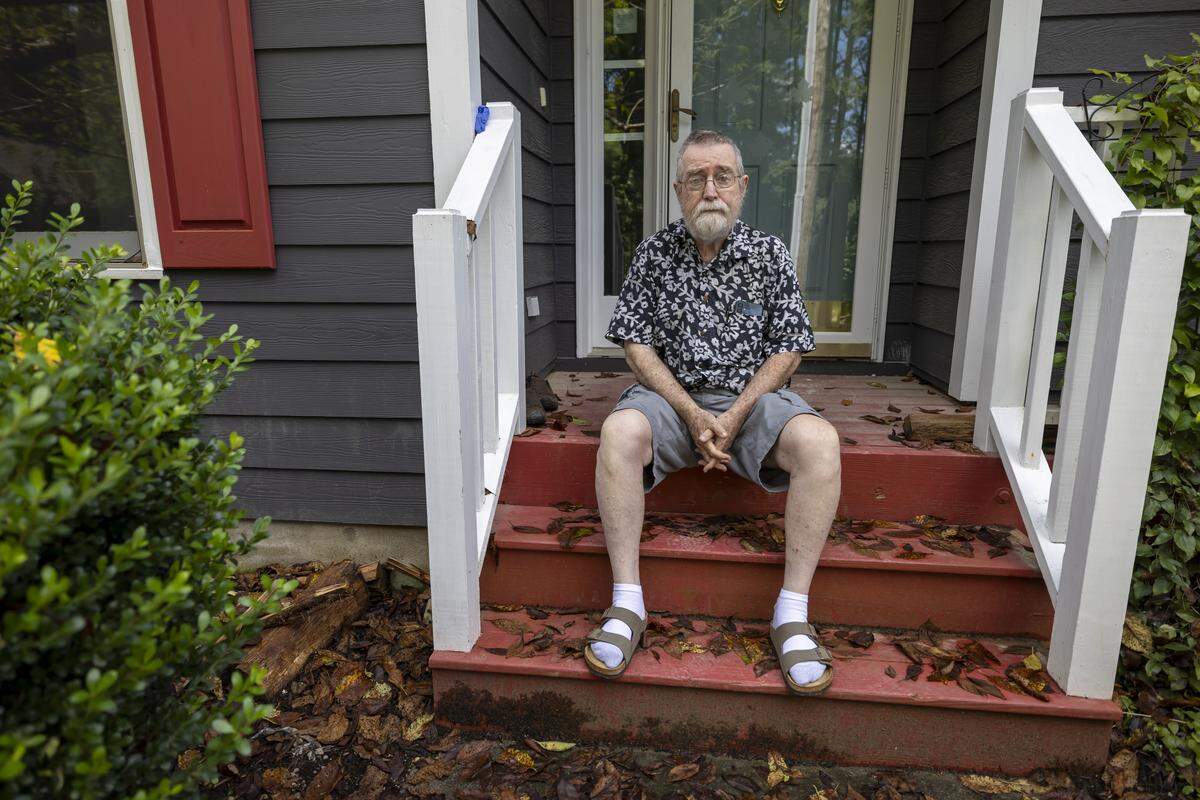
For retiree Peter Burke, 80, it’s a little too late.
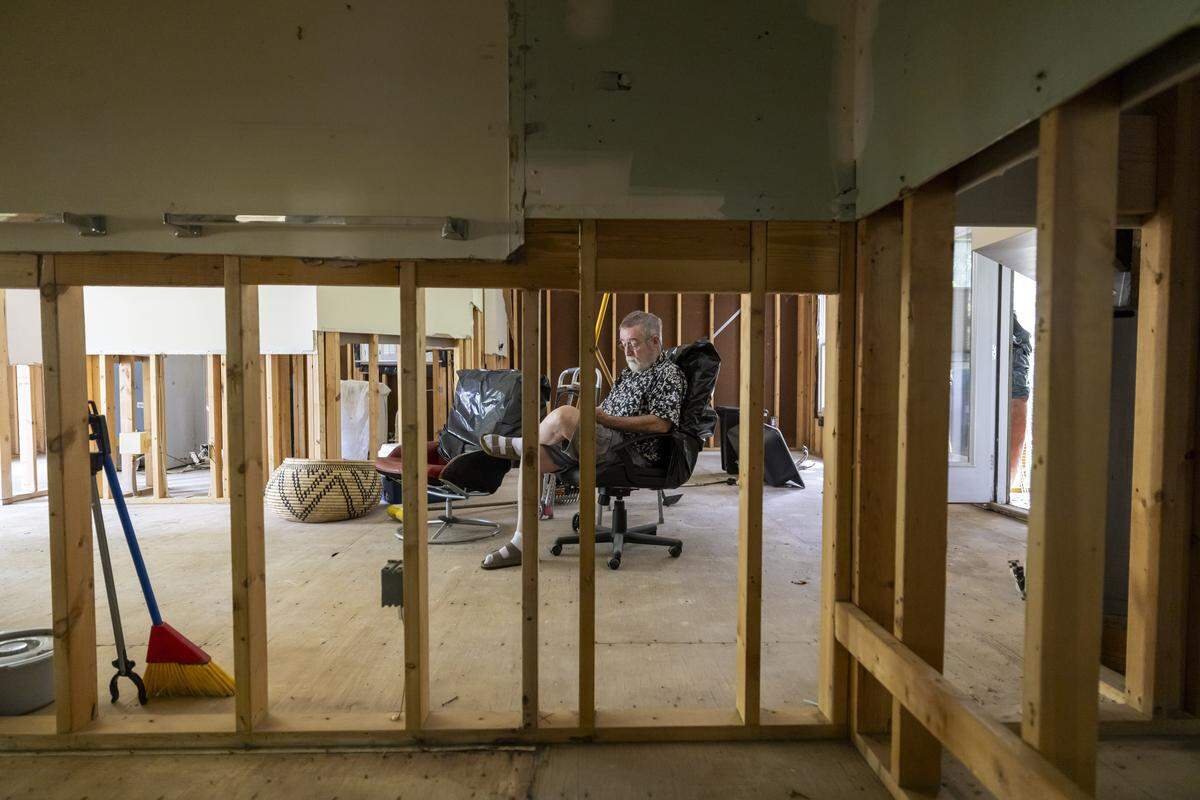
For the last 14 years, he’s lived in Weatherhill Pointe, directly across the street from the Johnsons. During the storm, he took refuge with his 79-year-old wife in the attic.
For the last eight weeks, they’ve stayed at a friend’s home near Southpoint Mall. Uninsured, they’re trying to piece together a plan.
“What’s next? That’s the big question,” he said. “The task of rebuilding is Herculean.”
On this sticky morning, he walks through the shell of his home, knocking on exposed wood frames. “Good bones,” he says, jokingly. But he can’t hide his anguish.
“We’re living on Social Security and three small pensions, two of which we’ve had to close. We’re trying to be abstemious as possible.”
They’re working with Habitat For Humanity to rebuild. At this point, obtaining flood insurance in case it happens again isn’t the top priority.
“Nothing computes,” he said.
This story was originally published September 4, 2025 at 5:00 AM.