
A tribute to Booker T. Spicely, shot for defying Jim Crow on a Durham bus
AI-generated summary reviewed by our newsroom.
- Booker T. Spicely challenged Jim Crow on a Durham bus and was shot in 1944.
- An all‑white jury acquitted driver Herman Lee Council after a brief 1944 trial.
- Durham museum, state markers honor Spicely; library event marks his 116th birthday.
In 1944, a bus driver rolling through downtown Durham demanded that all Black passengers move to the rear, clearing their seats for three white soldiers who had just stepped on-board.
The crowd moved wordlessly back, except for an Army private named Booker T. Spicely, who questioned out loud why one man in uniform should lower himself before another.
“I thought I was fighting a war for democracy,” he said, as one witness recalled. “But it looks like it doesn’t work down here.”
This moment of daring would cost Spicely his life.
Driver Herman Lee Council shot him twice — once through the dog tags that dangled from his neck — then left him to die in the street.
“I returned to my seat in the bus,” he would later testify, “and told the passengers that it would be best for me to continue my route to avoid any more trouble.”
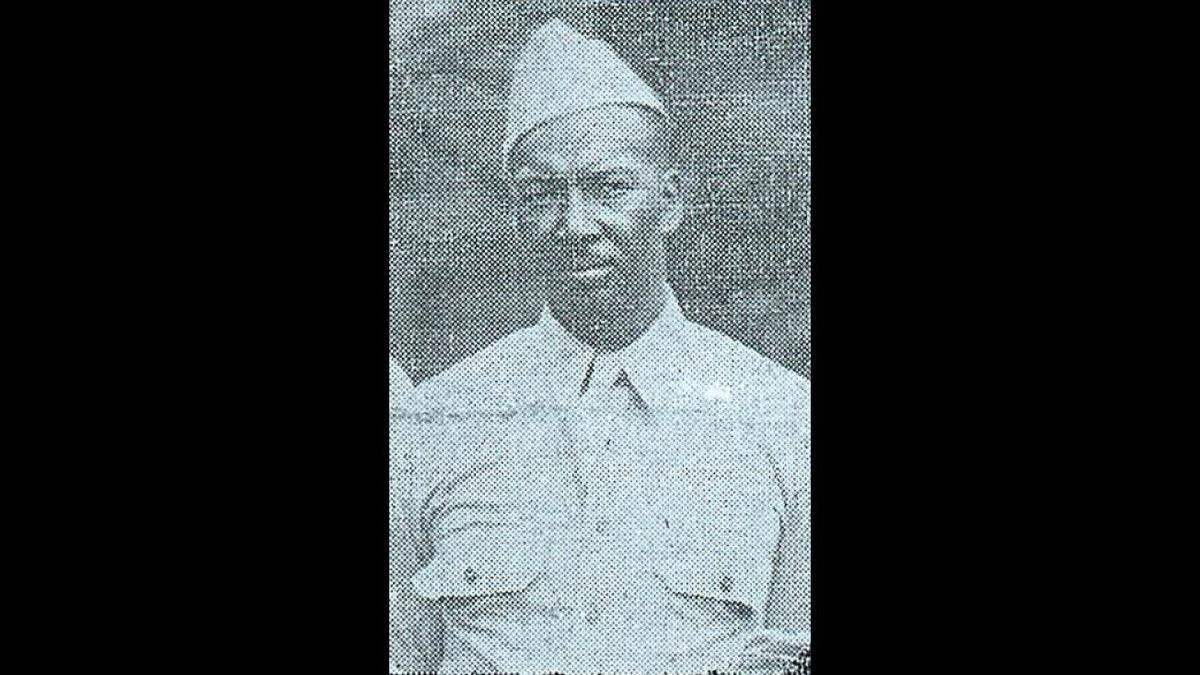
After 81 years, the world has largely forgotten Booker T. Spicely, who challenged Jim Crow more than a decade before anyone knew the name Rosa Parks.
But on Monday, in honor of his 116th birthday, the Museum of Durham History will hold a special program to remember the bold stance he took on Club Boulevard. The free 6 p.m. event at Durham County Library will include conversations with two surviving members of his family.
“My mom just said one thing: ‘You had a cousin that was shot by a bus driver.’ No details, no nothing,” Cynthia Mitchell, one of Monday’s speakers, told The N&O in 2023. “I guess you just don’t focus in on stuff like that. You just keep moving. You just keep going forward.”
What witnesses reported
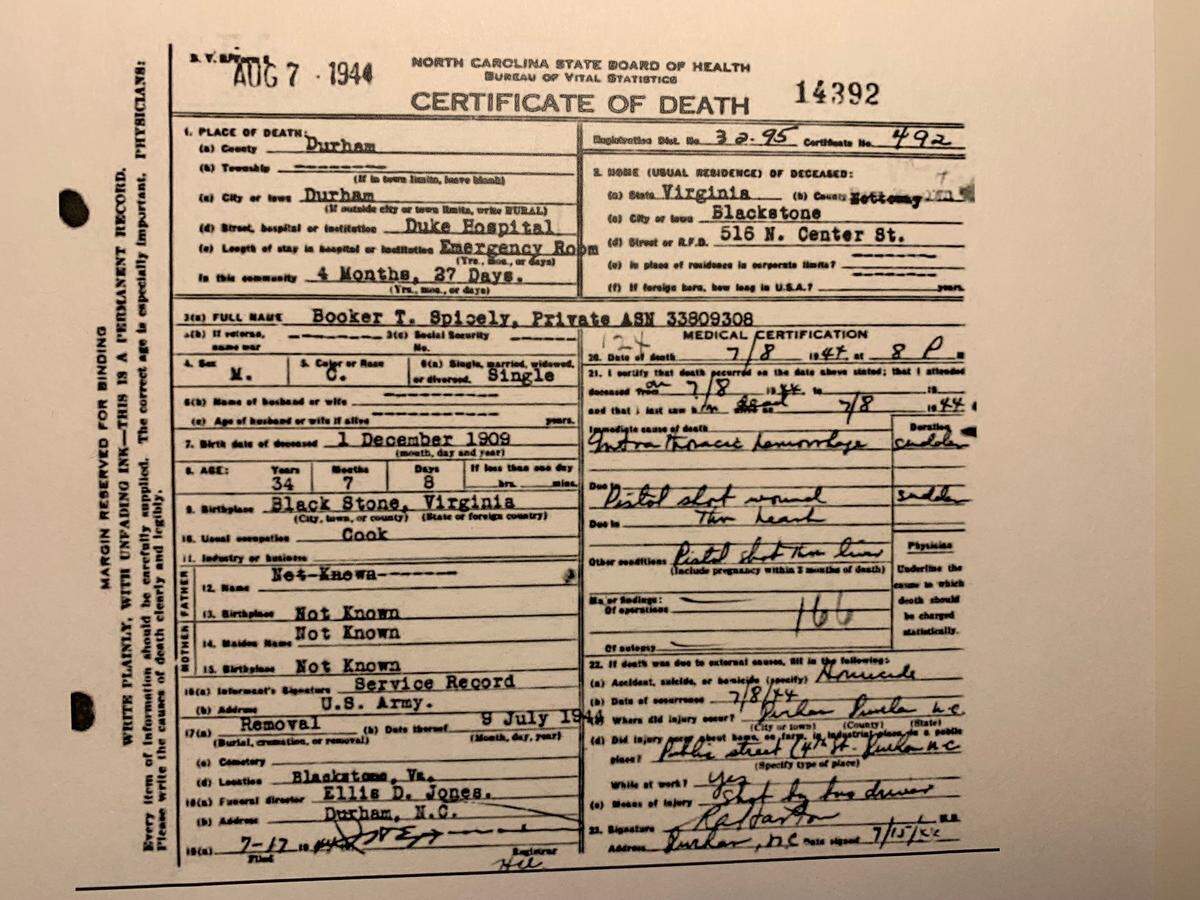
Among the more terrible details of Spicely’s deadly confrontation is his being shot not for disobeying the Jim Crow laws of Durham, but merely for questioning them out loud.
It took an all-white jury just 28 minutes to find Council not guilty at his murder trial two months after the soldier’s death. It would appear they accepted his word that Spicely had cursed, threatened and advanced toward him despite numerous witnesses to the contrary.
Spicely came from Philadelphia, and though he served as a cook in a segregated Army, he did not grow up under Jim Crow’s official thumb. He served at Camp Butner nearby and was wearing his uniform on his last day in Durham.
One witness reported that Spicely told Council, “In Pennsylvania, we pay our fare and sit where we please,” to which he replied, “Shut up or get off the bus.”
Others said Spicely moved to the back, muttering to himself, but exited the bus telling Council, “I’m sorry if I offended you.”
But one woman, who was both deaf and mute, testified through a translator that Spicely appeared to be angry, which she could judge by his facial expressions.
A woman who worked in the treasury office at Duke University said Spicely threatened to kill a pair of white soldiers if they ever traveled to Pennsylvania, and he loudly complained about having to move for soldiers who were fighting the same war.
The bus driver, though, needed no one to back him. He said the Black soldier had caused trouble on his bus before, refusing to pay his full fare and issuing vague threats.
“Spicely said he’d paid his fare and would sit where he damned please,” he said from the witness stand. “He said he didn’t care about the damned law.”
28 minutes
In his closing arguments, prosecuting attorney C.J. Gates read from the book of Samuel, telling jurors, “He that ruleth over men must be just, ruling in the fear of God.”
They came back in less than a lunch break.
“Here’s this soldier in uniform, who’s supporting this country’s war efforts, and he asks these reasonable and sensible questions,” Mitchell said in 2023. “’Am I not wearing the same uniform as those white soldiers? Do I not run the risk of stopping a bullet just like those white soldiers? Why are you treating us like this?’”
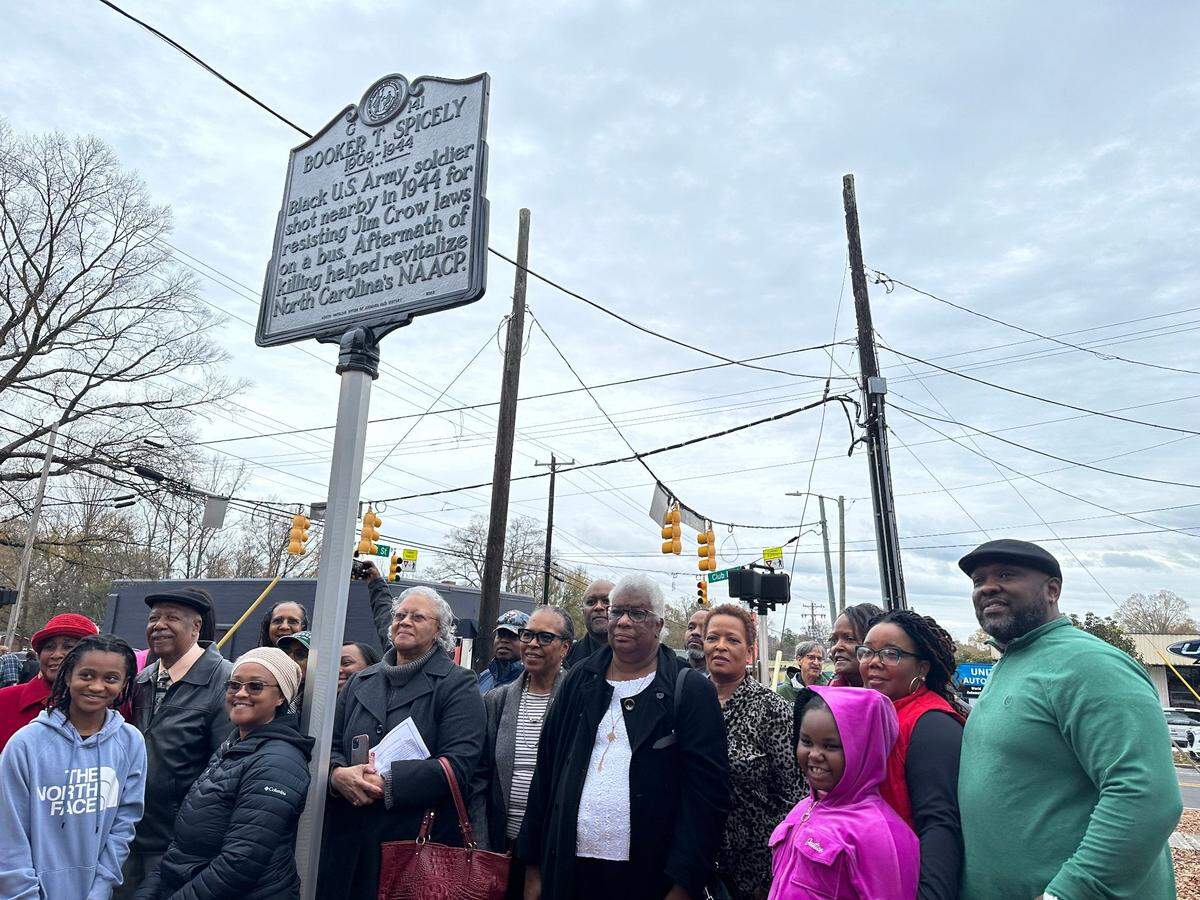
Two years ago, the state placed a historic marker at West Club Boulevard and Broad Street around the spot where Spicely died.
The bus still runs nearby.
The free and public event for Booker T. Spicely will be at 6 pm in the Durham County Main Library Auditorium at 300 N. Roxboro St.
This story was originally published December 1, 2025 at 5:00 AM.