
Hidden skatepark in Raleigh celebrates the sport’s fallen heroes
AI-generated summary reviewed by our newsroom.
- Project 303 DIY Skatepark occupies a hidden bridge square and functions as a memorial.
- Twenty-eight skaters’ names and mosaics commemorate local and global skate icons.
- Built by local skateboarders after Graveside’s loss; the site remains unofficial.
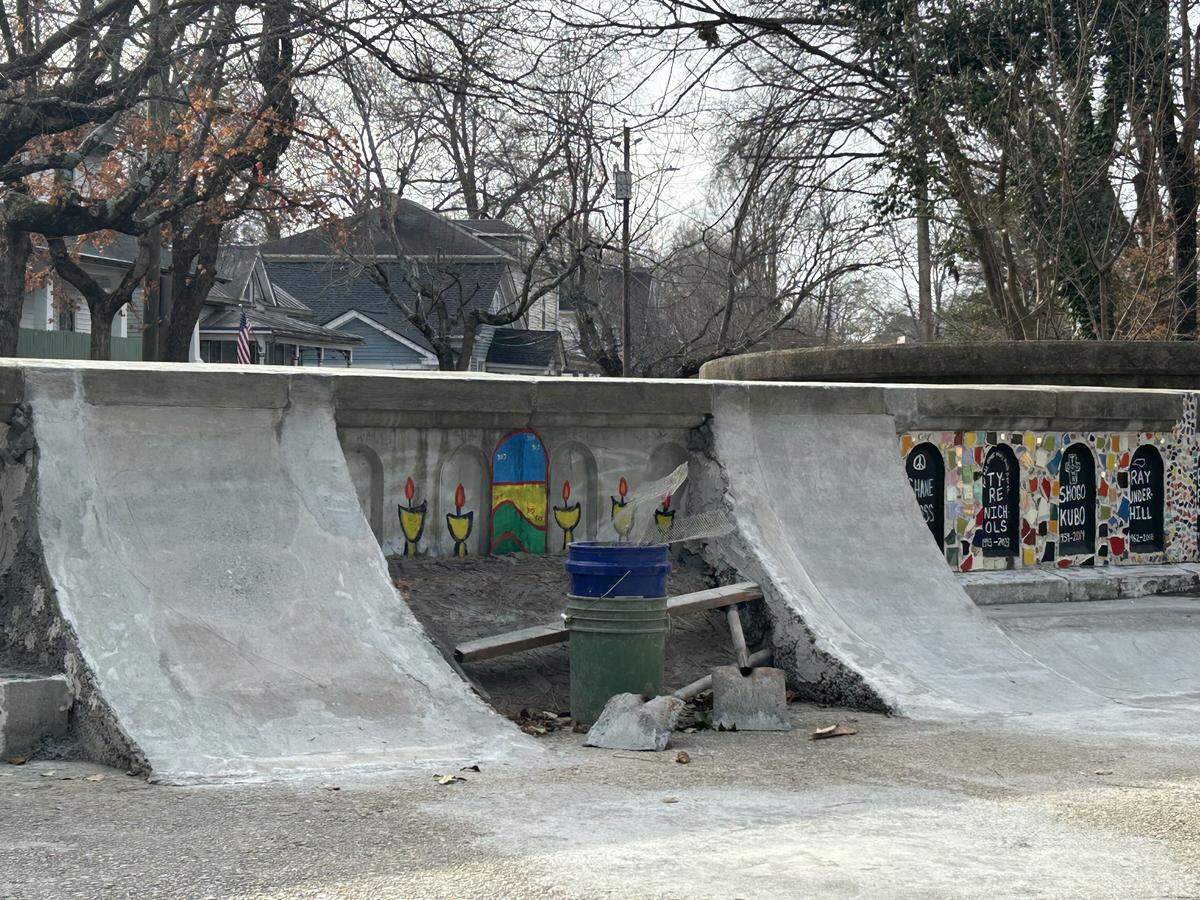
It sits on a square of concrete no bigger than a volleyball court, hidden on a railroad bridge nobody uses anymore, close enough to Central Prison that you can reach up and touch the razor wire.
On this secret patch, Raleigh’s truest fans of skateboarding built not just a park but a shrine to all their fallen champions — a tribute to rides cut short.
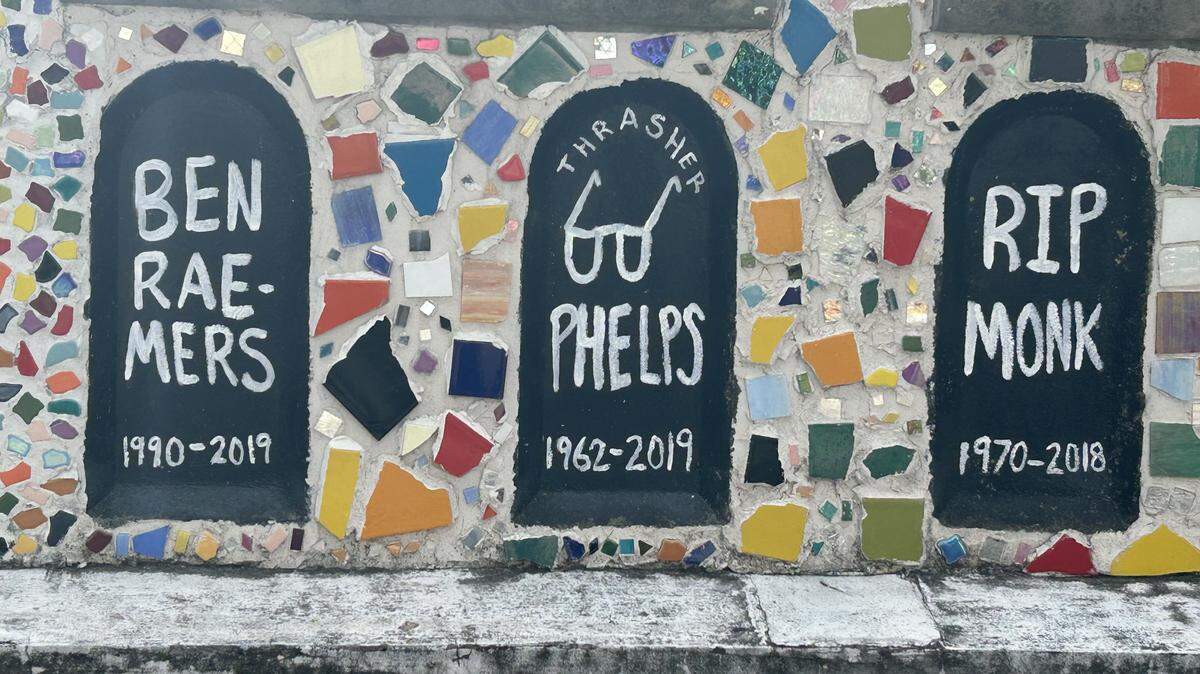
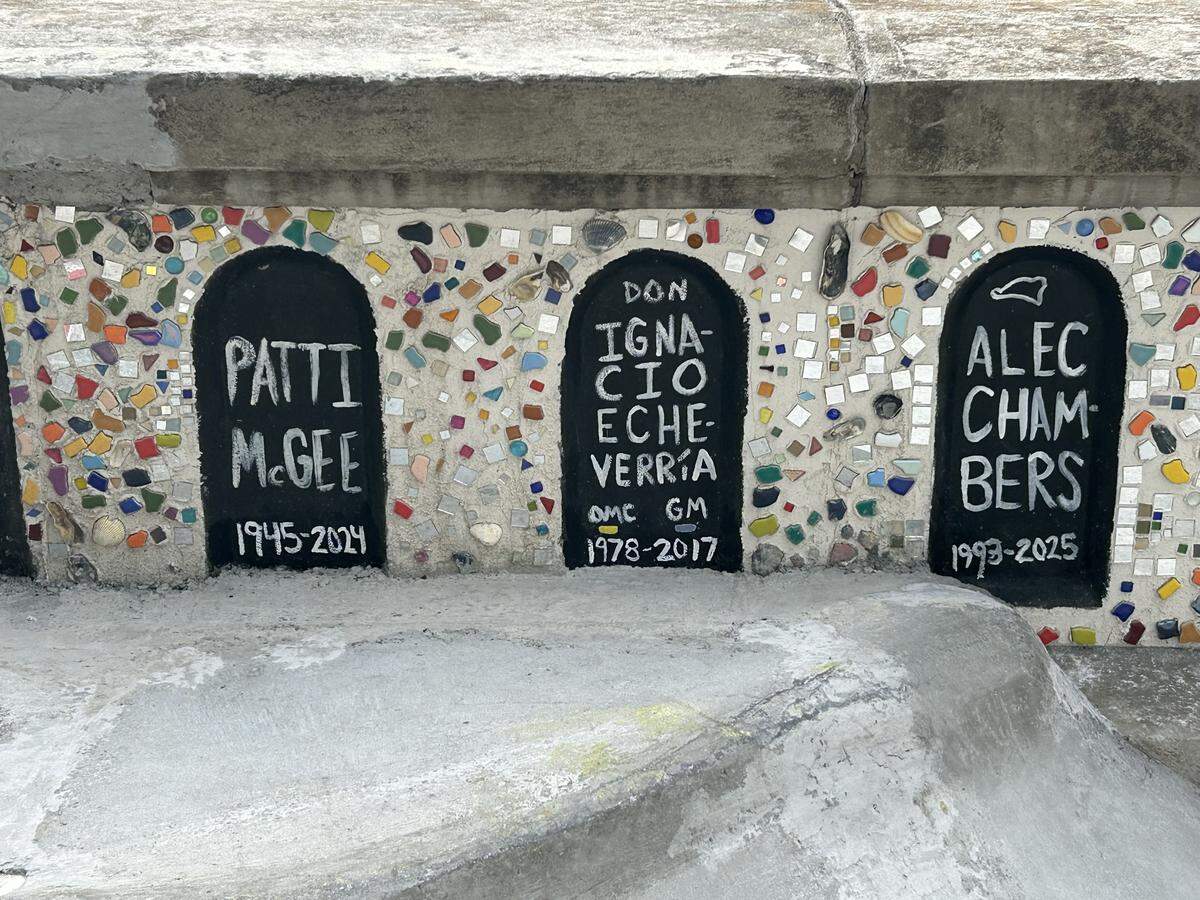
Twenty-eight names appear on a low wall, painted inside a row of stone arches, each surrounded by a handmade mosaic of seashells and colored glass:
Patti McGee, who died of a stroke in 2024, the first woman to skate professionally, who learned on a board her brother made in shop class, set a world speed record and graced both the cover of Life magazine and “The Johnny Carson Show.”
Ignacio Echeverria, who died of stab wounds in 2017 when he fought off a terrorist attack on London Bridge — using his skateboard.
And Alec Chambers, a pro skater from Wilmington who died just six days ago, struck by an alleged drunk driver.
Show some respect
A small sign stuck to the back of a traffic arrow and dated 2023 explains that Project 303 DIY Skatepark “was built entirely by local skateboarders using their own time, money and labor.”
It asks visitors to skate or just linger respectfully, noting that the park borders neighbors in Boylan Heights, the prison, an active railroad and the underside of a bridge where homeless people obviously sleep.
The timing suggests Project 303 is meant at least as partial replacement for Graveside DIY, the popular collection of ramps off Mid Pines Road, which never got officially sanctioned and left a hole in the skating community when developers bought and destroyed it last year.
But with the names and dates of 28 prominent skaters, all of them gone, this place feels more like hallowed ground — probably not anxious for the kind of publicity I’m giving it, hence my decision to be vague about its exact location.
Johnny Romano, the youngest-ever pro skateboarder, who rode with a hospital band on his wrist while fighting leukemia, which took him in 2008 at age 10.
Shane Cross, who skated down a vertical wall and performed a 360-degree flip before he died in a motorcycle crash in 2007.
The preciousness
My only experience on a skateboard left five stitches and a permanent dent in my chin. But I appreciate this secret sanctuary for another reason: It makes something special out of otherwise unusable space.
Nobody could walk, drive, picnic or build much of value on this obscure little square, but they could pour themselves into a sport that requires the perseverance of a spawning salmon and a high tolerance for ankle sprains.
And I have a name the park’s memorial should include:
In 2007, a car struck Raleigh skater John Randolph Buchanan Jr. on Hillsborough Street, and for a while, his board hung on a nearby telephone pole as a tribute.
I remember these words from a friend of his, Travis Knapp-Prasek, whom I interviewed shortly afterward because he was a relentless advocate for Raleigh’s first skate park at Marsh Creek.
“If he was here, he’d be really stoked right now,” he said. “Life. The preciousness.”
I’ll add Knapp-Prasek’s words here in Buchanan’s memory in hopes someone will paint his name in Boylan Heights.