
NC’s first mosque, once visited by Malcolm X, gets a historic marker in Durham
When she was just 5 years old, Dr. Rhonda Muhammad followed her father south to Durham, where he led North Carolina’s first mosque from a storefront on Pettigrew Street — an outpost for Islam and civil rights in the thick of Jim Crow.
“It was scary,” she said Friday, the memory clear after 70 years. “I’d never seen “Whites Only” or “For Colored Only” so it was scary. We had a storefront. We had a car wash. When my parents came, they washed cars.”
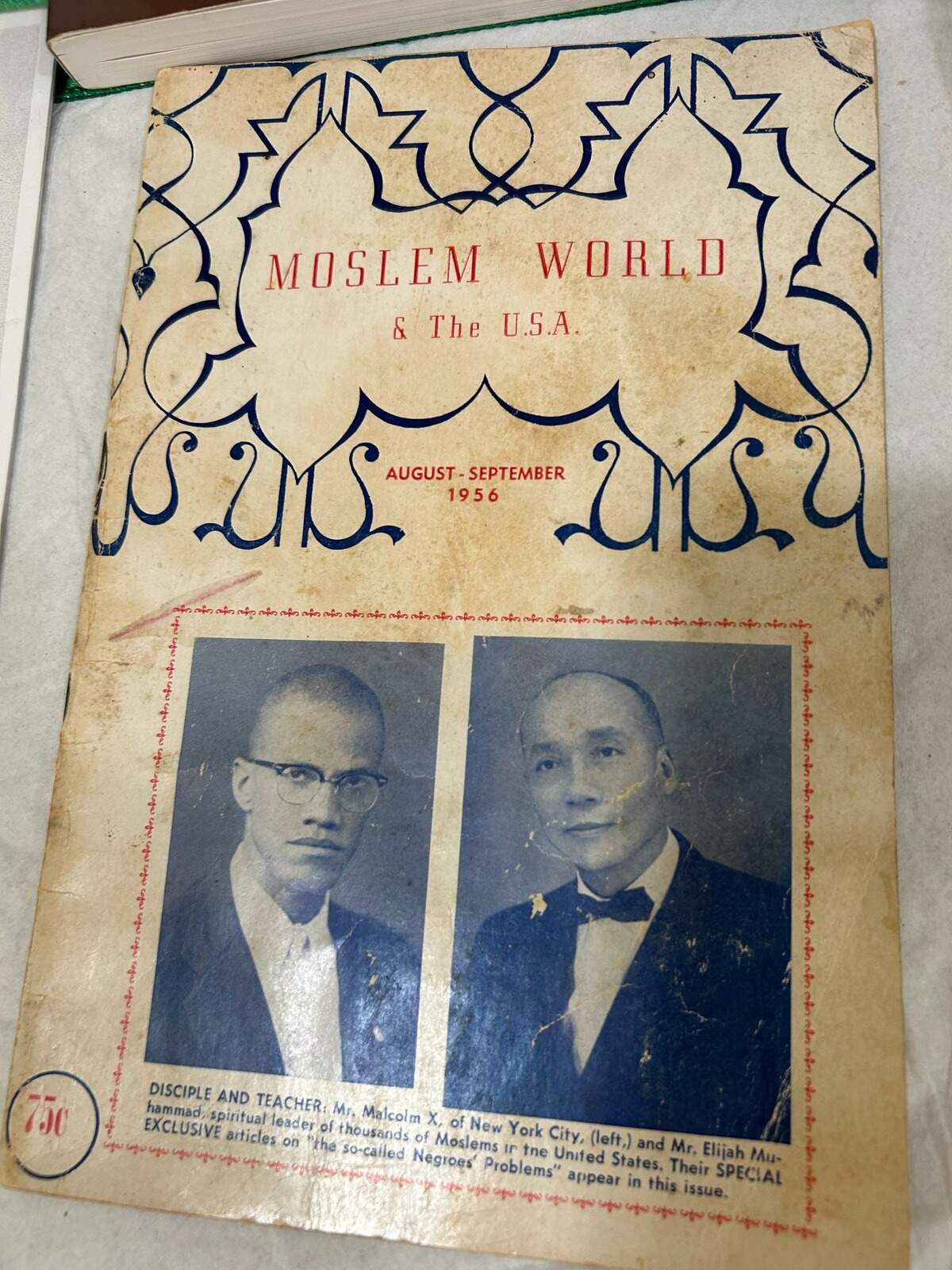
That was 1960, when Muhammad’s Mosque #34 boasted only about a dozen Muslims. But before long, it drew a visit from Malcolm X, who spoke at Page Auditorium when the city barred him from its community center, and who bunked at her house in Raleigh — unable to stay in Durham’s hotels.
Four years later, she said, Muhammad Ali spent the night.
“Little old Rhonda would be the celebrity for the week,” she said, still excited by the memory. “ ‘I heard that Muhammad Ali came to your house!’ It was just all of that. It was just amazing.”
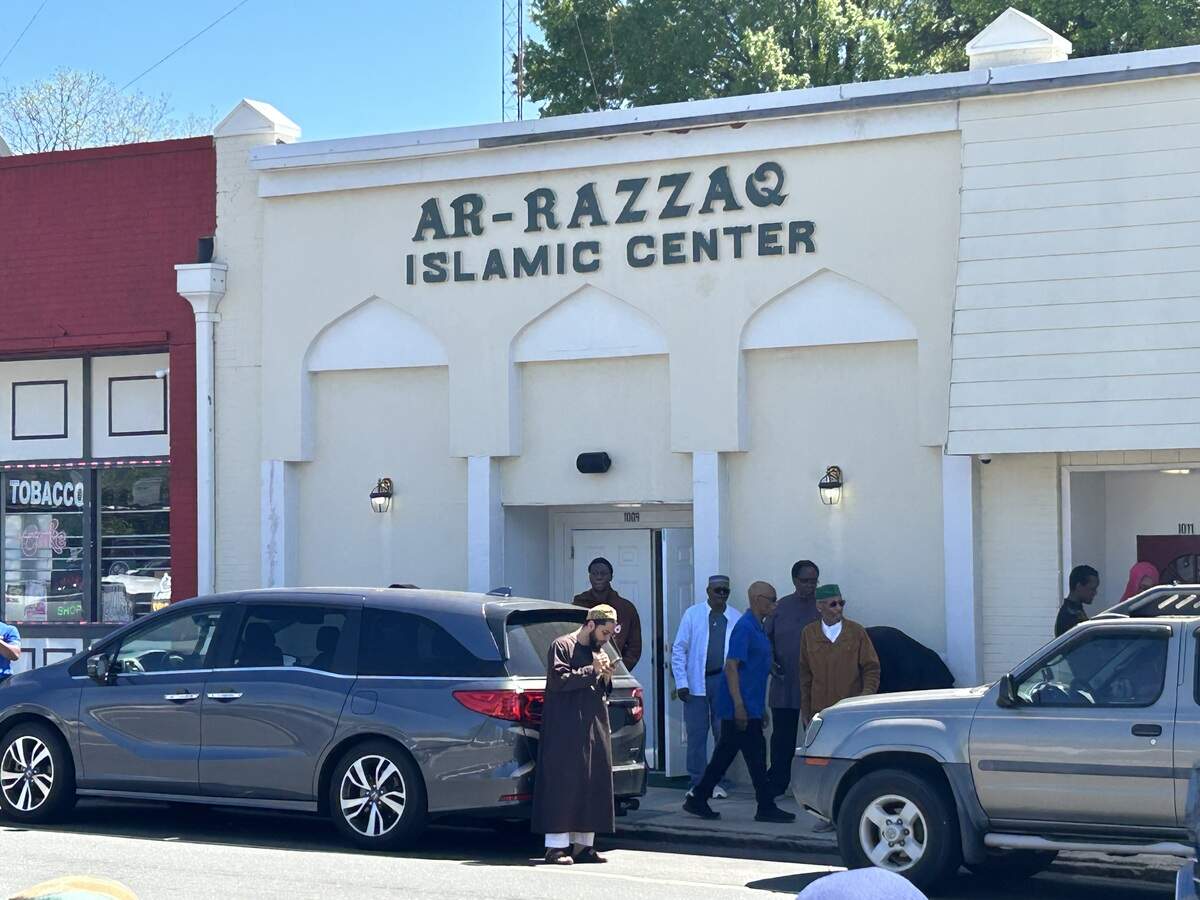
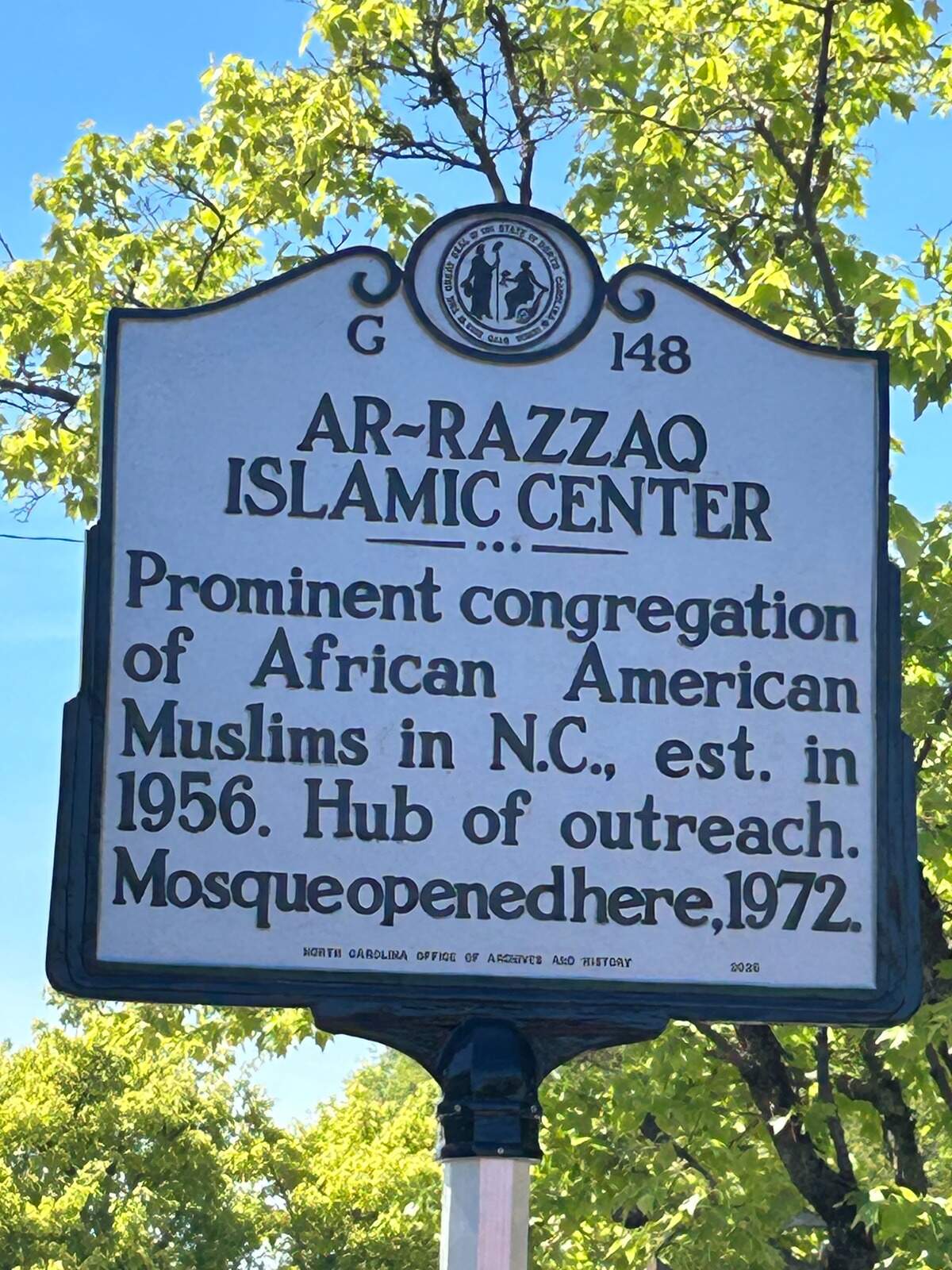
These thoughts flashed through Muhammad’s mind Friday as her family’s mosque — long-since renamed Ar-Razzaq Islamic Center — earned an NC historic marker on its 70th birthday.
“Momentous”
Dozens of pioneering members stood beneath the new sign on West Chapel Hill Road, inviting North Carolina into the hard-fought victories of their past.
“It’s momentous,” Muhammad said, “because it has been the efforts of people who weren’t expected to make marks in society. My father, Kenneth Murray Muhammad, moved his family here from Baltimore, Md., and we did not want to come. In his spirit, in his memory, he did not do this for aggrandizement. He did it because he saw a need.”
Ar-Razzaq started with a handful of families in 1956 as Islam started taking hold in North Carolina, helping it spread from the blocks in Durham known as “Black Wall Street,” spawning the first Muslim school and mosque in Raleigh by 1971, then more in Fayetteville, Greenville and Kinston.
White neighbors predictably bristled at the Muslims’ arrival. When he stayed with the Muhammad family on Fayetteville Street in Raleigh, across from Mount Hope Cemetery, Malcolm X advised them to get a gun.
The Durham Sun did not mention the historic mosque in its pages until 1962, when a reporter described it as a “Negro cult” and stressed that police were keeping a watchful eye.
“Aloof and wary”
The News & Observer finally took interest a year later, dispatching a correspondent not long after Malcolm X first raised eyebrows there.
“The Durham mosque, squashed tightly into the row of squalid storefronts and cafes that comprise the main street of the city’s Negro section, is now more than a year old,” The N&O wrote. “Among Durham’s Fruit of Islam is a tall, muscular youth of about 25 who calls himself Samuel X. ... Aloof and wary, Samuel X met questions about the temple and its leader with polite silence of evasion.”
The sweeping cultural change and racial attitudes show clear when, 25 years later, The N&O named her father its Tar Heel of the Week, noting not only that he brought thousands to Islam but that he found his own faith as a jazz guitarist in the 1940s, part of Baltimore’s swing scene with the Ken Murray Sextet.
“There was a drummer by the name of Daoud Hassan whom we called “Weak Knees,” and he brought Brother Yusuf into the faith,” he told The N&O in 1987. “Then Brother Yusuf brought me into the faith. He said he knew where a swinging session was going on and I should go with him. I was sure we were going to a musical set.
“I was sitting there waiting for the session to start,” he continued, “when a brown-skinned man wearing glasses and a beautiful suit jumped up and began to teach Islam. It was a beautiful experience. I wasn’t just looking for God, I was looking for freedom, justice and equality, and the teaching I heard that day brought that out to me.”
“Broadened our scope”
In the early 1970s, the Durham mosque transitioned from Nation of Islam to Al-Islam, taking a different turn and adopting the name it now carries.
“Everything has a time and a phase,” Muhammad said. “Islam for us during the 50s and 60s was about the struggle that Black people were having here in America. And then, when the Hon. Elijah Muhammad passed, and his son Warith Deen Muhammad came into leadership, he introduced us to Islam not just a social perspective but from a religious perspective.
“It broadened our scope,” she continued. “We no longer saw white people as the devil. As a young woman, I was ready.”
Seven decades later, the marker in Durham leads both to the history showing in a mirror held backward and the mystery that lies up ahead, connected by all the life in between.