Canada geese causing traffic problems? Here’s what to know in the Triangle
AI-generated summary reviewed by our newsroom.
- Harming Canada geese can bring NC fines up to $1,000 and federal penalties.
- Property owners can deter geese with fencing, herding dogs, statues, and loud noises.
- Drivers should slow to a near‑stop and coax geese without making contact to avoid harm.
Canada geese can be a nuisance when they block traffic or take over yards, but harming them carries serious legal consequences at both state and federal levels.
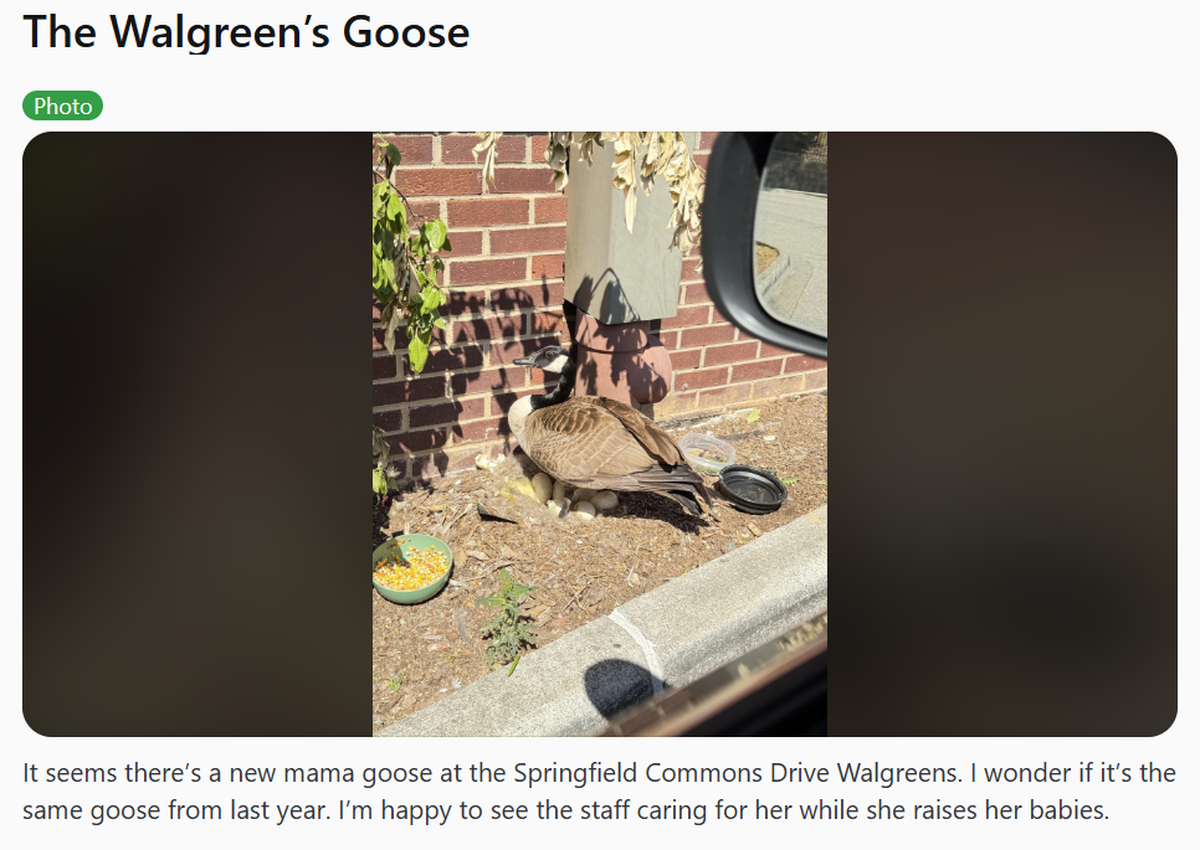
Geese are on the mind after a viral Reddit post in early May showed a Canada goose nesting in a Raleigh Walgreens parking lot, protecting her eggs mere inches from traffic, The News & Observer reported. Wildlife experts say geese increasingly and intentionally choose big-box parking lots to start their families because the commotion scares off predators.
Here’s what The N&O has previously reported about the safe, legal ways to coexist with these protected birds:
- Canada geese are protected by the Migratory Bird Treaty Act, and intentionally harming them can result in fines up to $1,000 and a court appearance under North Carolina law, while federal misdemeanor charges carry up to six months in jail and a $15,000 fine.
- Property owners can deter geese by making areas unattractive to them, installing short fencing, hiring herding dogs with trained border collies or using statues and loud noises to frighten them away.
- Geese instinctively return to where they were born and learned to fly, so consistent hazing efforts early in the season work best at training them to avoid an area, said Falyn Owens, an extension wildlife biologist with the NC Wildlife Resources Commission.
- Drivers should never hit geese blocking the road, but can slow to a near-stop and gently coax them out of the way without making contact, teaching the birds that cars won’t always stop for them.
- Nesting geese will defend their eggs by flapping and biting, so it’s best to stay away from a single goose standing guard near another goose laying quietly, Owens said.
- Residents with goose problems can call the NC Wildlife Helpline at 866-318-2401 on weekdays from 8 a.m. to 5 p.m. or email HWI@ncwildlife.org for expert guidance.
The summary points above were compiled with the help of AI tools and edited by journalists. The source reporting referenced above was written and edited entirely by journalists.