Armadillos in the Triangle? Yep, and the ‘tactical possums’ are here to stay
AI-generated summary reviewed by our newsroom.
- 42 counties confirmed; likely to spread to all 100 counties in 10–20 years.
- Wildlife Commission seeks sightings via NC Armadillo iNaturalist, email, or phone.
- Hunting is year‑round; trapping limited Nov 1–Feb 28 unless depredation permit.
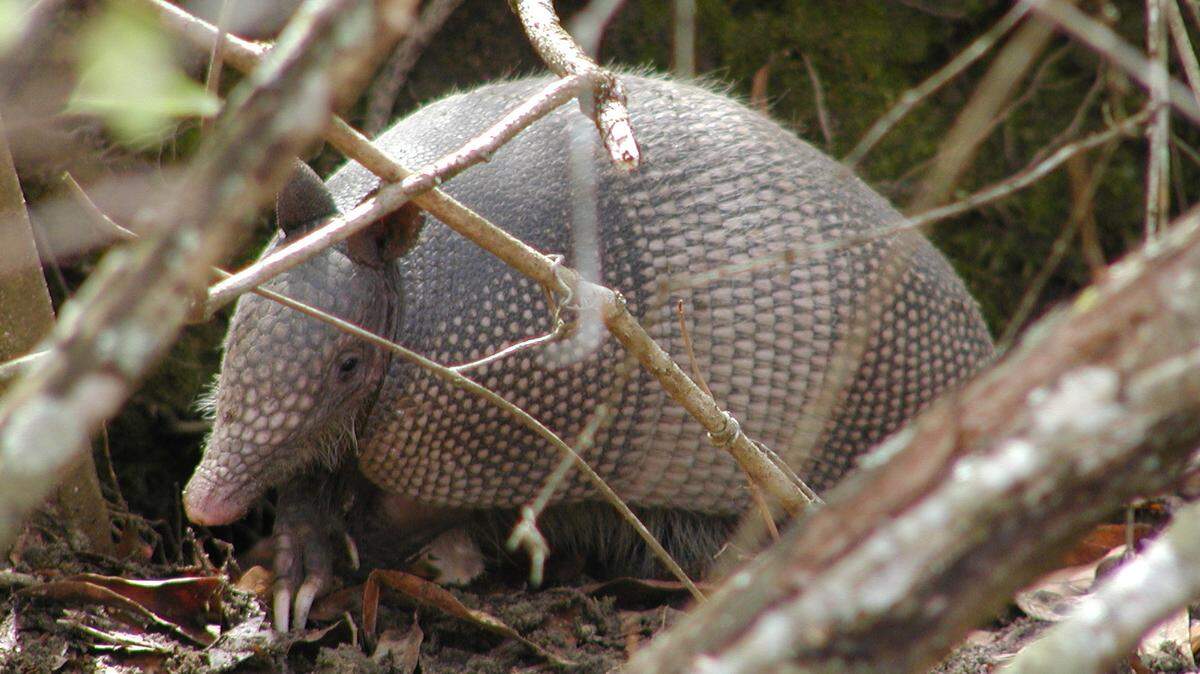
Pocket dinosaur. Tactical opossum. Texas speed bumps.
All are nicknames for the nine-banded armadillo, which experts say will inevitably expand throughout all of North Carolina, including the Triangle.
“Armadillos are our newest resident,” said Colleen Olfenbutel, game mammals and surveys supervisor for the North Carolina Wildlife Resources Commission. “Even though they’re non-native, they’re here to stay. We anticipate that probably in the next 10 to 20 years we’ll have observations from all 100 counties.”
The Wildlife Resources Commission is asking the public to submit any sightings for the hard-shelled critter.
Where are armadillos in North Carolina?
The first credible report of an armadillo in the state was in Macon County in 2007.
“We have armadillos confirmed, meaning there was evidence such as a photo or video or actual armadillo in hand, in 42 of the 100 counties of North Carolina,” Olfenbuttel said.
Most of those counties are in western North Carolina, which borders states with armadillo populations, but it took years before they were frequently seen by residents.
“If you go to far western North Carolina, such as Franklin or Andrews, it’s not uncommon to see a dead armadillo on the side of the road,” Olfenbuttel said.
There have been a handful of sightings in the Triangle, including in Wake County, and residents will start seeing them more frequently.
“I do expect we will start to see an increase in observation,” she said. “It might take another five or 10 years, though.”
Armadillos are incredibly adaptable, and that’s contributed to their ability to spread to head north across the United States.
Are armadillos dangerous?
They’re likely more of a nuisance than a danger.
Armadillos aren’t known to bite humans, Olfenbuttel said, and will often run away or burrow into the ground if approached by a human.
The creatures are also known to carry leprosy, but it’s not as common as people might think with studies finding armadillo populations have leprosy rates anywhere from zero to 10%, she said.
“I jokingly always tell people you don’t have to worry about leprosy as long as you don’t pick up the armadillo and try and kiss it or lick it,” Olfenbuttel said.
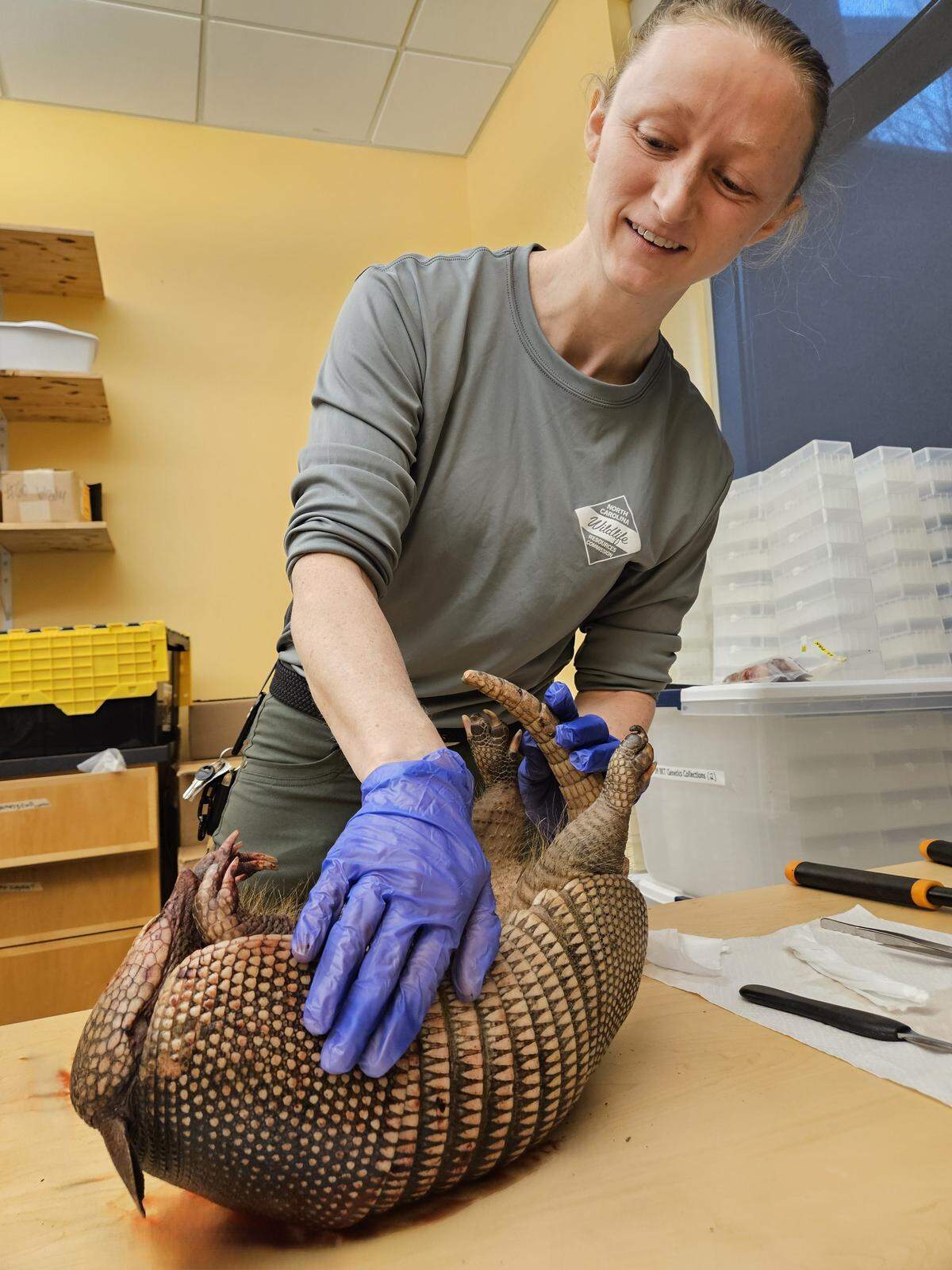
If you have to pick up an armadillo, like removing a dead one from your yard or a road, you should wear gloves.
How to protect your yard from armadillos
Armadillos forage for insects, fire ants and earthworms, digging shallow holes that are known to frustrate homeowners.
“It can be extensive,” Olfenbuttel said. “I’ve seen yards in which it looked like 100 little landmines went off.”
They can climb over or burrow under small fences, but barriers can be helpful in preventing the creatures from foraging in yard, according to Texas A&M AgriLife Extension Service, which provides research and training to growers across Texas.
“A fence slanted outward at a 40-degree angle, with at least 18 inches buried, usually will deter them,” according to AgriLife Extension. “If a large area needs to be protected, this method may not be practical because of the cost.”
There aren’t repellents registered to prevent armadillos, according to AgriLife Extension, but an insecticide could be used to cut down on their food supply.
Can you hunt or trap armadillos in North Carolina?
Yes, armadillos can be hunted or trapped in North Carolina.
They, along with beavers, groundhogs, opossums and raccoons, can be trapped Nov. 1 through Feb. 28 or with a depredation permit.
However, it’s illegal to relocate an armadillo to another property, so people either need to be prepared to kill the animal or release it in a different part of the property.
Armadillos can be hunted year-round, and may be “a more effective solution if an armadillo is causing property damage,” according to the North Carolina Wildlife Resources Commission.
How to report an armadillo sighting in North Carolina
The North Carolina Wildlife Resources Commission wants to know if you see an armadillo.
The observation can submitted one of three ways:
- Submit it on the NC Armadillo Project in iNaturalist, which has more than 300 observations in the state.
- Email the observation to armadillo@ncwildlife.gov
- Call the NC Wildlife Helpline at 866-318-2401.
People are asked to include the following:
- A photo or video of the animal, if possible.
- The location where the animal was found. The more specific the better.
- The date the animal was observed.
- Whether it was alive or dead.