
Durham council members pledge more police cuts at meeting with community groups
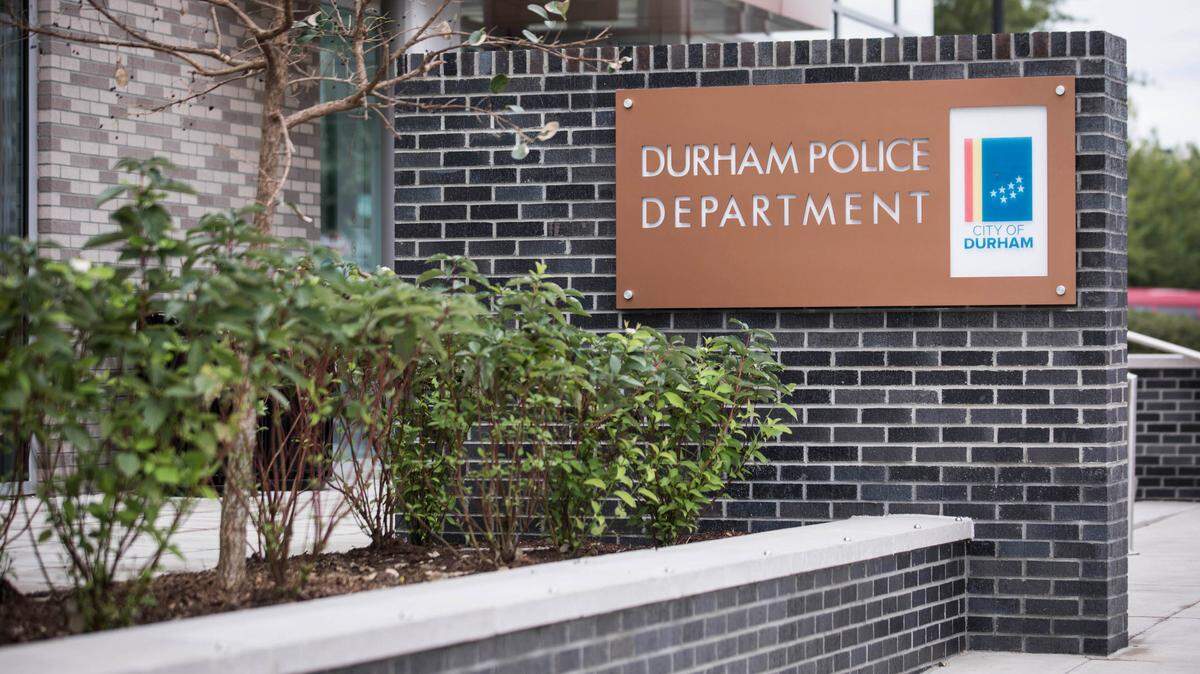
A majority of Durham City Council members pledged at a community meeting last week to move funding for 20 vacant police officer positions into a new city department in the upcoming budget.
Their pledge would shift 15 more positions than the five transfers that City Manager Wanda Page has proposed in her recommended budget.
The May 20 gathering of elected leaders and two community groups was not on the city’s weekly meeting calendar, and the City Clerk’s office did not provide a public notice of it last week on the city website.
By not notifying the public ahead of time, and then saying how they planned to vote on the budget, city leaders may have violated the spirit of the state’s Open Meetings Law, Robert Joyce, a UNC School of Government professor, said Monday.
“It seems to me that what happened in this instance is not clearly a violation,” Joyce said, when told how individual City Council members answered questions one at a time without engaging in a formal discussion.
“But it is also not clearly within the spirit of the statute,” he continued. “So how a court might come out, if it came to a court challenge, would be kind of hard to predict sitting here right now. It’s best simply to avoid something like this.”
The community groups had invited Mayor Steve Schewel, the City Council, and the Durham County Board of Commissioners to join the virtual gathering. All of the leaders attended with the exception of Schewel and Council member Mark-Anthony Middleton.
At the meeting, Shanise Hamilton, an organizer for Durham For All, asked each attending City Council member one-by-one, if they would advocate and vote for a budget that reallocates 60 police officer vacancies into unarmed positions in the Community Safety Department.
Page proposed the safety department during her budget presentation last week. It would house public safety initiatives outside of the police department.
Hamilton first asked Mayor Pro Tem Jillian Johnson, who responded by suggesting a plan to transfer 60 vacant positions from the police department over three years, moving 20 positions annually, beginning with the next budget.
Three more council members — Javiera Caballero, Charlie Reece and Pierce Freelon — supported Johnson’s plan.
Council member DeDreana Freeman did not commit to the request.
The Durham Police Department had 71 vacancies among its 556 allocated sworn positions, police spokesperson Kammie Michael told The N&O in April.
Schewel did not attend the gathering, but met with several Durham For All members on Zoom last week, he told The N&O in a text message.
He told the group he supports Page’s budget recommendation, which would transfer four sworn-officer vacancies and one civilian vacancy to the new department, he wrote.
He is open to hearing from his colleagues and the public during the city’s budget deliberations, he wrote.
Two years ago, Durham Police Chief C.J. Davis said the department needed 72 additional officers over three years. The council, in two 4-3 votes, rejected a request for 18 officers and then nine officers. Last year it approved six new positions after officers were transferred to the gang unit. The department had been filling the gap with overtime.
4 council members support moving positions
Johnson said she supported Durham For All and Durham Beyond Policing’s request.
“I think moving 60 positions from the police department to community safety is a great start,” she said. “I think we’ll actually need much more than that for this work to really be successful long term.”
Johnson said she was less worried about giving the new department too much to work than with not giving it enough. Then, she suggested moving 20 vacant police positions per year over three years.
“I think that gives the department a strong foundation that we can build on and the flexibility to scale up as we learn and refine our work,” she said, adding she would advocate for it with the city manager.
Caballero supported Johnson’s idea. “It’s something that I can fully get on board with,” she said.
Freelon expressed enthusiasm about the idea.
“Thank you for the work you’ve done,” he told the community groups. “I feel so proud and privileged to be in this position, to use my vote on our collective behalf.”
Reece said Johnson had proposed a “fantastic plan.”
“I think we’ve got to move every piece of sort of logistical, technical, bureaucratic stuff out of the way to get there,” he said. “For better or worse, there are going to be limitations placed on this, this process, by bureaucracy, by state law, by the choices that we make to contract with folks instead of bringing on full-time employees.”
He expressed gratitude to the community groups for their advocacy.
“Thank you to my colleagues for being on this call and to committing to this model of co-governance,” he said.
Near the end of the meeting, Freeman said she would not agree to the groups’ request that night, and wants to see how the Community Safety Department’s initiatives pan out before making a commitment.
Did council members follow Open Meetings Law?
The state’s open meetings law defines an “official meeting” as any gathering, at any time or place, including through electronic communication, of a majority of members of a public body, “for the purpose of conducting hearings, participating in deliberations, or voting upon or otherwise transacting the public business within the jurisdiction, real or apparent, of the public body,” according to N.C. statutes.
City Attorney Kimberly Rehberg told The N&O an “informal poll” by community activists of elected officials at a community forum does not constitute taking an official vote.
“However, to the extent the discussion veered into a discussion of the City’s budget, and how Council Members feel about various components of the budget or how they might vote on a City budget, my feeling is that an assemblage of a majority (or more) of City Council having that kind of conversation meets the definition of an ‘official meeting’ because they are ‘participating in deliberations,’” Rehberg wrote in an email.
“If that is what in fact occurred, then the Open Meetings statute was triggered, and the statute was violated if the notice and access requirements were not met,” she wrote.
She did not attend the virtual forum and does not know what the City Council members said, she wrote.
Frayda Bluestein, a professor at UNC School of Government, published a blog post about board majorities attending external meetings in 2016. In it, she advised: “Members of the public body should be reminded that if a group comprising a majority engage in conversation or deliberation about public business at such an event they will be violating the OML.”
Request to county commissioners
Manju Rajendran, an organizer with Durham Beyond Policing, asked all five Durham County commissioners if they would advocate and vote for a budget that reallocates 10% of county funding “budgeted within policing and jails,” to strengthen mental health access.
A majority of commissioners expressed support for the groups’ goal, but did not appear to commit to a specific allocation of funding from one budget line to another.
This story was originally published May 25, 2021 at 5:45 AM.